Needles of stone
 71
71

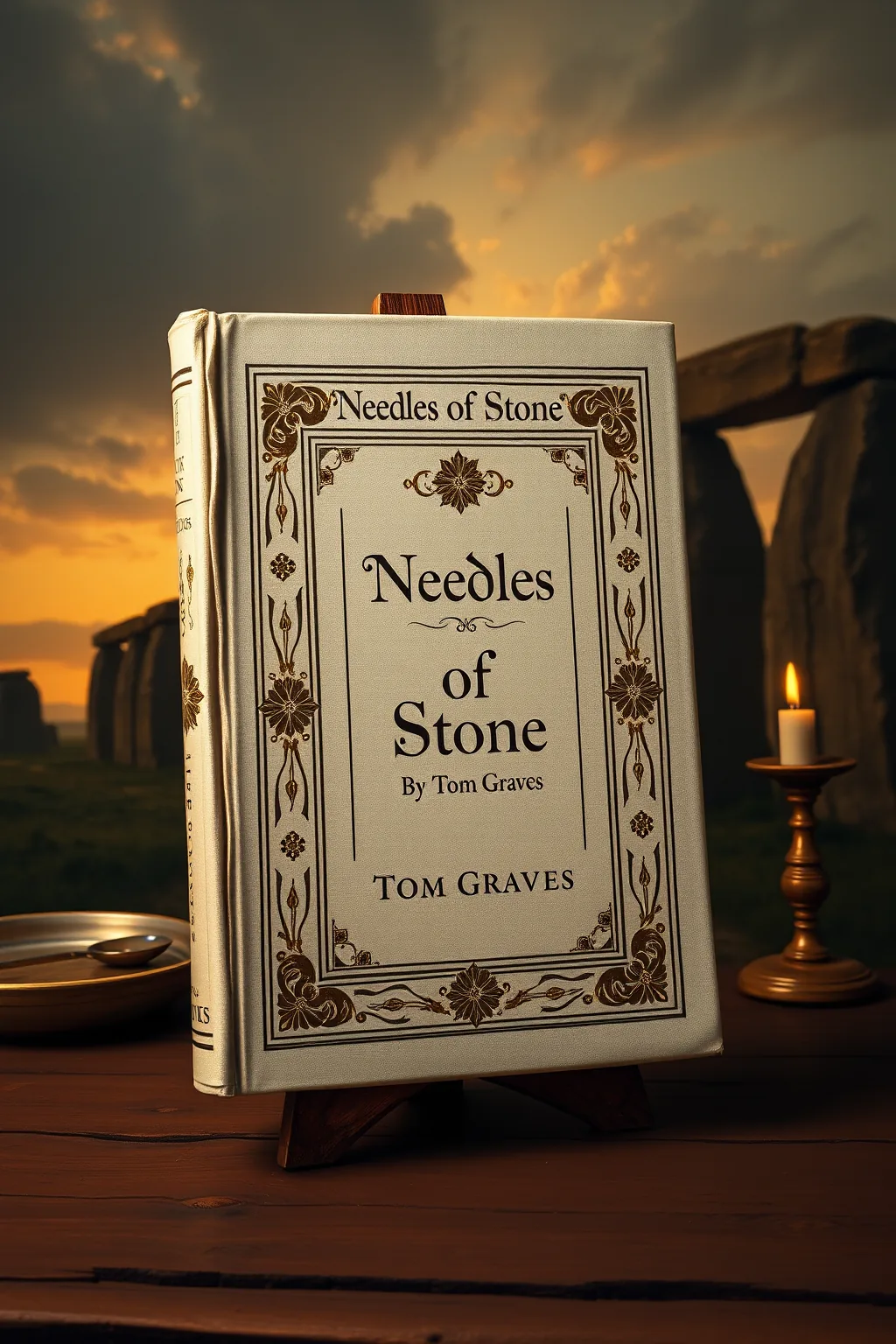
Needles of stone
Tom Graves' "Needles of Stone" offers a bracingly unsentimental examination of esoteric traditions. Unlike much popular occult literature, it avoids grand pronouncements, instead focusing on dissecting the mechanics of belief and practice. The strength lies in its analytical rigor, particularly in its engagement with the historical development of magical ideas. For instance, Graves' discussion of how certain symbols acquire power over time, referencing specific historical shifts, is particularly sharp. However, the book's dense prose and occasional abrupt shifts in focus can make it a challenging read. It demands significant prior knowledge, sometimes assuming familiarity with concepts that are not explicitly defined within its own pages. The work is a valuable, if demanding, contribution for those already steeped in occult studies.
📝 Description
71
Tom Graves published 'Needles of Stone' in 1978, a dense examination of disparate occult systems.
Published in 1978, Tom Graves' 'Needles of Stone' examines hidden traditions and practices by drawing connections between various occult systems. It avoids presenting a single doctrine, instead offering a mosaic of ideas. The book encourages readers to view ancient wisdom through a modern, critical lens. Its dense content requires careful study, not passive reading.
This text is suited for serious students of Western esotericism, occult history, and comparative religion. A prior understanding of concepts like Hermeticism, Gnosticism, or folk magic is beneficial for grasping its arguments. The work is not for those seeking simple introductions to occultism. It demands engagement from readers willing to wrestle with complex symbolic language and historical references.
Emerging in 1978, 'Needles of Stone' appeared during a resurgence of interest in occultism and alternative spiritualities, a period following the 1960s counterculture. This era saw numerous esoteric writings, both academic and practical. Graves' work distinguished itself through its rigorous approach, referencing earlier scholars and practitioners. It engaged with European esoteric currents, similar to how authors like Idries Shah examined Sufi traditions and their Western interpretations, though Graves maintained a more focused attention on European occultism.
💡 Why Read This Book?
• Gain a critical perspective on the evolution of esoteric symbols, understanding how their meanings shift and acquire potency across historical periods, as explored in the book's analysis of specific motifs. • Understand the structural similarities and differences between various Western esoteric traditions, appreciating Graves' method of comparing their foundational concepts and practices from 1978 onwards. • Develop a more discerning approach to magical theory by examining Graves' critique of established paradigms, learning to question assumptions and prioritize direct experience.
⭐ Reader Reviews
Honest opinions from readers who have explored this book.
❓ Frequently Asked Questions
When was Tom Graves' 'Needles of Stone' first published?
Tom Graves' "Needles of Stone" was first published in 1978, a period marked by a resurgence of interest in esoteric studies and alternative philosophies.
What kind of esoteric traditions does 'Needles of Stone' explore?
The book examines various Western esoteric traditions, including elements of Hermeticism, folk magic, and comparative occult systems, analyzing their historical development and underlying structures.
Is 'Needles of Stone' a practical guide to magic?
No, "Needles of Stone" is primarily an analytical and critical work. It explores the theory and history of esoteric practices rather than offering direct instructions for magical workings.
Who would benefit most from reading 'Needles of Stone'?
Serious students of Western esotericism, occult history, and comparative religion who possess a foundational understanding of these subjects will find the book most beneficial.
What is the writing style of 'Needles of Stone' like?
The writing style is dense, analytical, and often critical, requiring focused attention from the reader. It is not intended for casual reading but for in-depth study.
Does the book discuss specific historical figures?
While not always a primary focus, the work engages with the historical context of esoteric thought, implicitly referencing or building upon the ideas of various historical thinkers and movements.
🔮 Key Themes & Symbolism
Symbolic Evolution
Graves meticulously traces how symbols within esoteric traditions acquire and shed meaning over time. He examines the process by which seemingly simple objects or concepts can become potent focal points for magical belief and practice. The work suggests that a symbol's power is not inherent but constructed through collective historical and cultural engagement, particularly evident in the analysis of recurring motifs across different schools of thought originating from European occultism.
Critique of Esoteric Structures
A central theme is the critical deconstruction of established esoteric systems. Graves questions the accepted narratives and organizational principles of various occult movements, highlighting potential areas of dogma or misinterpretation. He encourages readers to adopt an analytical stance, evaluating the logic and historical grounding of different teachings rather than accepting them at face value. This approach is particularly applied to the study of magical societies and their theoretical underpinnings.
The Nature of Magical Theory
The book interrogates the very foundation of magical theory. Graves probes what constitutes 'knowledge' in the occult sphere and how it is transmitted. He emphasizes the distinction between theoretical constructs and lived experience, suggesting that true understanding often requires direct engagement rather than passive assimilation of doctrine. This perspective challenges purely intellectual approaches to magic, advocating for a more integrated and experiential understanding.
Comparative Occultism
Graves employs a comparative method to explore the relationships between various esoteric streams. By juxtaposing different traditions, he reveals common threads, divergences, and the potential for cross-pollination of ideas. This comparative lens is crucial for understanding how different historical periods and cultural contexts have shaped and reshaped occult philosophies, offering a nuanced view of the esoteric landscape.
💬 Memorable Quotes
Direct passages from the work, attributed to the author.
“The power of a symbol lies not in itself, but in the collective agreement to imbue it with significance.”
— This interpretation highlights Graves' view that symbols in occult traditions derive their potency from shared belief and historical reinforcement rather than intrinsic magical properties. It underscores a critical, analytical approach to symbolism.
“Tradition is often a cage of forgotten intentions.”
— This suggests that established esoteric lineages can become restrictive, with practitioners adhering to old forms without understanding their original purpose or adapting them to new contexts. It calls for re-examination of inherited practices.
“Disentangling the threads of influence requires a mind willing to follow the less obvious paths.”
— This points to the book's method of tracing connections between disparate esoteric movements, emphasizing the need for careful research and an openness to unconventional historical linkages.
“Theory without practice risks becoming sterile dogma.”
— This highlights Graves' belief that occult knowledge must be grounded in personal experience and application; purely intellectual pursuits, divorced from practical engagement, are seen as insufficient for genuine understanding.
“The history of magic is a history of interpretation.”
— This suggests that the meaning and practice of magic have always been subject to subjective understanding and reinterpretation by individuals and groups throughout history.
🌙 Esoteric Significance
Tradition
The work draws heavily from the Western Esoteric Tradition, particularly its Hermetic, Gnostic, and alchemical currents, while also incorporating elements of folk magic and comparative mythology. Graves does not adhere strictly to one lineage but instead seeks to identify underlying patterns and structural commonalities across diverse practices. His approach departs from dogmatic adherence, emphasizing critical analysis and historical context over unverified claims of ancient authority.
Symbolism
Central symbols explored include the 'needle' itself, representing a piercing insight or a tool for focusing intent, and 'stone,' signifying foundational reality, endurance, or the material world that can be transmuted. The book likely analyzes how these and other motifs function within different magical frameworks, such as their representation in alchemical processes or their use in ritualistic contexts to bridge the mundane and the sacred.
Modern Relevance
Contemporary practitioners and scholars interested in critical occultism, historical analysis of magical practices, and the semiotics of esoteric symbols find value in Graves' work. Thinkers who explore the cultural construction of belief systems and the evolution of spiritual methodologies can draw upon its analytical framework. Its emphasis on discernment remains pertinent in an era saturated with easily accessible, often unverified, spiritual information.
👥 Who Should Read This Book
• Students of Western Esotericism seeking a critical historical perspective on magical traditions, moving beyond introductory texts. • Researchers in comparative religion or folklore interested in the evolution and cross-pollination of occult symbols and practices. • Discerning practitioners of magic or spirituality who value analytical rigor and historical context in their understanding of esoteric subjects.
📜 Historical Context
Published in 1978, "Needles of Stone" emerged from a fertile period for esoteric inquiry, following the cultural shifts of the late 1960s. The intellectual climate was receptive to explorations of consciousness and alternative spiritualities, though often with a degree of skepticism. Graves’ work positioned itself within this milieu, offering a more analytical and historically grounded perspective than many contemporary popularizations. It contrasted with the more mystical or purely experiential accounts prevalent at the time, such as those emerging from the New Age movement. The book engaged with the legacy of earlier occult revivalists and scholars, implicitly debating their findings and methodologies. Its reception likely appealed to a segment of the readership seeking a more critical engagement with occult subjects, differentiating it from straightforward introductions or purely devotional texts.
📔 Journal Prompts
The symbolic weight of the 'needle' and 'stone' in your personal esoteric framework.
Analyze a tradition's core symbols: how have their meanings shifted over time?
Critique a widely accepted esoteric concept: what are its historical roots and potential flaws?
Reflect on the interplay between theory and practice in your own spiritual or magical path.
Identify a lineage of thought you follow; what are its defining characteristics and potential limitations?
🗂️ Glossary
Esotericism
A broad category of spiritual or mystical traditions characterized by their hidden or secret nature, often requiring initiation or specialized study for full comprehension. It encompasses diverse practices and philosophies.
Hermeticism
A philosophical and religious tradition based primarily upon writings attributed to Hermes Trismegistus. It emphasizes divine wisdom, the interconnectedness of all things, and the potential for human spiritual ascent.
Gnosticism
A diverse set of religious ideas and systems, originating in the first few centuries CE, that emphasizes knowledge (gnosis) of the divine and the spiritual world as the means of salvation, often viewing the material world as flawed or evil.
Symbolism
The practice or study of using symbols—objects, images, or words—to represent abstract ideas or qualities, particularly significant in religious, mystical, and esoteric contexts.
Magical Theory
The conceptual framework, principles, and beliefs that underpin the practice of magic, exploring its alleged mechanisms, goals, and relationship to the natural and supernatural worlds.
Occultism
A general term for systems of belief and practice concerning hidden or secret knowledge, often involving supernatural, spiritual, or magical elements, and typically distinct from mainstream religious or scientific explanations.
Comparative Mythology
The study of myths and legends from different cultures and historical periods to identify common themes, archetypes, and patterns in human storytelling and belief systems.
🔮 Readers Also Liked
Browse all →








More by Tom Graves
All books →





More Free Occult Philosophy Books
View all →