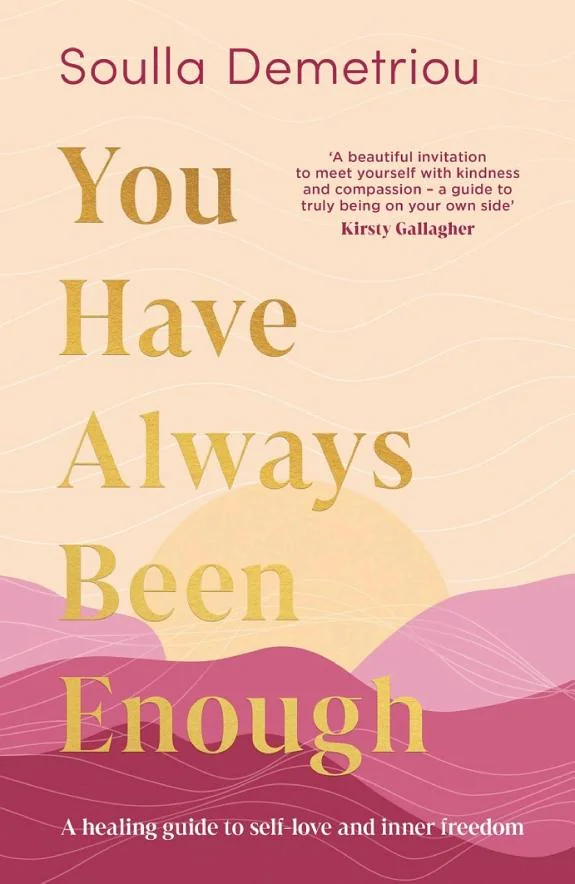
You Have Always Been Enough: A healing guide to self-love and inner freedom
 77
77

You Have Always Been Enough: A healing guide to self-love and inner freedom
Soulla Demetriou’s "You Have Always Been Enough" tackles the perennial challenge of self-acceptance with a directness that cuts through much of the genre's usual platitudes. The book’s strength lies in its methodical approach to identifying the roots of self-criticism, particularly how societal pressures and internalized narratives contribute to feelings of inadequacy. Demetriou’s exploration of the ‘inner critic’ as a distinct entity is particularly effective, offering a tangible target for reframing. However, the work occasionally falters in its practical application, sometimes relying on broad affirmations rather than detailed, actionable steps for navigating deeply ingrained patterns. A passage discussing the concept of 'shadow work' as it relates to self-forgiveness hints at deeper psychological territory that could have been further explored. Ultimately, "You Have Always Been Enough" offers a valuable perspective for those seeking to cultivate self-compassion, though its utility is amplified when paired with further therapeutic exploration.
📝 Description
77
Soulla Demetriou's 2026 book argues that individuals possess inherent worth, independent of external validation.
You Have Always Been Enough, published in 2026, provides a guide to personal healing, emphasizing the development of self-love and inner freedom. Demetriou structured the book to help readers dismantle limiting beliefs and build a kinder internal dialogue. It addresses those who struggle with self-doubt and unconditional self-acceptance. The work is useful for people engaged in personal growth, therapy, or spiritual study, offering concrete methods to alter self-talk and emotional states.
The book counters the notion that value comes from external achievements. It posits that inherent worth is not tied to what others think or what one accomplishes. This perspective offers a contrast to earlier self-help approaches that often prioritized external success. The core message is that a person's value is intrinsic and present regardless of circumstances.
This guide fits within contemporary spiritual development traditions that draw on psychological insights. It connects with ideas of inherent worth found in various contemplative practices, encouraging a direct experience of self-acceptance rather than pursuing it as an achievement. The book's focus on dismantling internal barriers aligns with contemplative approaches that seek to quiet the ego's critical voice and foster a more present, compassionate awareness.
💡 Why Read This Book?
• You will learn to identify and challenge the internalized voices of criticism, a skill specifically detailed in the book's chapter on 'Deconstructing the Inner Judge,' enabling a more objective self-perception. • You will gain practical techniques for cultivating self-compassion, inspired by the book’s exploration of the 'Radical Acceptance' principle, allowing for a gentler approach to personal setbacks. • You will understand the concept of inherent worth beyond external validation, a core tenet emphasized throughout the 2026 publication, fostering a foundation of unconditional self-regard.
⭐ Reader Reviews
Honest opinions from readers who have explored this book.
❓ Frequently Asked Questions
What is the central message of Soulla Demetriou's 'You Have Always Been Enough'?
The central message is that an individual's worth is inherent and pre-exists any external achievements or societal validation. The book, published in 2026, guides readers toward recognizing and embracing this innate value to foster self-love and inner freedom.
When was 'You Have Always Been Enough' originally published?
The book 'You Have Always Been Enough' by Soulla Demetriou was first published on April 9, 2026. This 2026 publication date places it within the contemporary discourse on mental well-being and personal growth.
Who is the author of 'You Have Always Been Enough'?
The author of 'You Have Always Been Enough' is Soulla Demetriou. The book was released in 2026 and is presented as a healing guide focused on self-love and inner freedom.
What kind of practices does 'You Have Always Been Enough' suggest for self-healing?
The guide suggests practices centered around cultivating self-compassion, identifying and reframing negative self-talk, and embracing radical self-acceptance. These methods aim to help readers achieve a greater sense of inner freedom and peace.
Is 'You Have Always Been Enough' suitable for someone new to self-help books?
Yes, the book's direct approach and focus on fundamental concepts like self-love and inner freedom make it accessible for newcomers. Its 2026 publication date also means it addresses contemporary challenges in self-perception.
Does the book offer specific exercises or just theoretical concepts?
The book aims to provide practical guidance, incorporating exercises and reflections designed to help readers apply its core concepts of self-love and inner freedom to their own lives.
🔮 Key Themes & Symbolism
Radical Self-Acceptance
This theme posits that true healing and freedom stem from accepting oneself entirely, without reservation. Demetriou's work encourages readers to move beyond conditional self-love, which is often tied to external validation or perceived perfection. By embracing all aspects of oneself, including perceived flaws and past mistakes, individuals can dismantle the internal barriers that prevent genuine self-esteem. This concept is presented as a foundational practice for achieving lasting inner peace and liberation from self-judgment.
The Inner Critic
The book identifies the 'inner critic' as a distinct, often internalized voice that perpetuates self-doubt and inadequacy. Demetriou guides readers in recognizing this critical voice, understanding its origins—often rooted in past experiences or societal conditioning—and learning to challenge its pronouncements. The aim is not to silence the critic entirely, but to diminish its power and influence, replacing its harsh judgment with a more compassionate and rational internal dialogue.
Inherent Worth
Central to the book's philosophy is the concept that every individual possesses inherent worth, independent of their accomplishments, status, or external appearances. This theme serves as an antidote to societal pressures that equate value with productivity or material success. Demetriou argues that this inherent worth is a birthright, and recognizing it is key to unlocking a profound sense of self-love and freedom from the constant need for external validation.
Pathways to Inner Freedom
This theme focuses on the practical application of self-love and acceptance to achieve a state of inner freedom. It involves understanding how limiting beliefs and negative self-perceptions create internal constraints. The book outlines actionable steps and mental reframing techniques designed to liberate individuals from these psychological prisons, fostering a sense of agency and emotional resilience. Inner freedom is presented not as an absence of problems, but as the capacity to navigate life's challenges with self-compassion and equanimity.
💬 Memorable Quotes
Direct passages from the work, attributed to the author.
“Your worth is not a prize to be won, but a truth to be remembered.”
— This statement expresses the book's core message: self-value is intrinsic and pre-existing, not something earned through external validation. It contrasts the idea of achieving worth with the act of remembering one's fundamental, inherent value.
“The harshest judge you will ever face resides within your own mind.”
— This highlights the significant impact of the 'inner critic.' It suggests that the most damaging self-criticism comes from within, emphasizing the need to address and reframe these internal narratives for personal healing.
“Self-compassion is not a weakness; it is the foundation of resilience.”
— This challenges the common misconception that self-compassion is a sign of indulgence or lack of strength. Instead, it positions it as a crucial element for building the inner fortitude needed to withstand adversity.
“You are not defined by your past mistakes, but by your present capacity for growth.”
— This emphasizes a forward-looking perspective, shifting focus from past failures to future potential. It encourages readers to see themselves as beings in process, capable of learning and evolving, rather than being permanently labeled by their errors.
💡 Key Ideas
Editorial paraphrase of the work's core concepts — not direct quotes.
Freedom begins when you stop seeking permission to exist.
This quote speaks to the concept of inner freedom as an act of self-authorization. It implies that true liberation comes from within, by ceasing to seek external validation or approval for one's own right to be.
🌙 Esoteric Significance
Tradition
While not strictly tied to a single esoteric lineage, "You Have Always Been Enough" draws parallels with Gnostic concepts of inherent divinity obscured by worldly illusion and with certain Hermetic principles emphasizing the power of the mind to shape reality. Its focus on internal transformation and the discovery of an unshakeable inner truth aligns with perennial philosophies that posit an essential, unchanging self beneath the layers of personality and societal conditioning.
Symbolism
The book frequently employs the metaphor of 'shedding layers' to represent the process of releasing societal conditioning and negative self-perceptions. This evokes imagery of an onion or a chrysalis, symbolizing the uncovering of an essential self. Another recurring motif is the idea of 'inner light' or 'spark,' representing the inherent worth and divine potential within each individual, often obscured but never extinguished.
Modern Relevance
Demetriou's work resonates strongly with contemporary mindfulness and self-compassion movements, particularly those influenced by secularized Buddhist principles and somatic psychology. Therapists and coaches working with issues of anxiety, depression, and imposter syndrome often reference the book's core tenets. Its emphasis on radical self-acceptance provides a valuable framework for individuals working through the pressures of late-stage capitalism and the often-unrealistic standards presented in digital media.
👥 Who Should Read This Book
• Individuals struggling with chronic self-doubt and imposter syndrome, who will find practical strategies for dismantling negative self-talk and building a more resilient sense of self-worth. • Seekers of personal growth and inner peace, who can utilize the book's concepts to cultivate self-compassion and move towards greater emotional freedom. • Those interested in contemporary psychology and self-help literature, who will benefit from Demetriou's accessible approach to complex psychological concepts published in 2026.
📜 Historical Context
Soulla Demetriou's "You Have Always Been Enough," published in 2026, arrives at a cultural moment characterized by increased awareness of mental health and the persistent challenges of digital-age self-esteem. The work enters a well-established self-help genre, building upon the legacy of figures like Louise Hay and Brené Brown, who have previously explored themes of self-love and vulnerability. Demetriou's approach, however, distinguishes itself by its direct confrontation with internalized criticism and its emphasis on inherent worth as a non-negotiable foundation, a concept that gained traction throughout the 2010s and 2020s. In an era where external validation is amplified by social media platforms, her work offers a potent counter-narrative. Unlike earlier therapeutic models that might have focused on pathology, Demetriou's guide leans into a positive psychology framework, advocating for self-acceptance as a primary driver of well-being, a perspective that gained significant academic and popular following in the early 21st century.
📔 Journal Prompts
The concept of the 'inner critic' and its origins.
Reflections on the practice of radical self-acceptance.
Identifying moments where external validation was sought instead of internal acknowledgment.
Exploring the meaning of 'inherent worth' in daily life.
The relationship between self-compassion and resilience.
🗂️ Glossary
Inner Critic
The internalized voice of judgment and self-doubt, often stemming from past experiences, societal conditioning, or perceived failures. The book guides readers to identify, understand, and reframe this voice.
Radical Self-Acceptance
The practice of embracing all aspects of oneself—positive, negative, and neutral—without judgment or the need for external approval. It is presented as a foundational element for healing and inner freedom.
Inherent Worth
The belief that an individual's value is intrinsic and exists independently of their achievements, appearance, or the opinions of others. This is presented as a fundamental truth to be recognized and embraced.
Self-Compassion
Treating oneself with the same kindness, care, and understanding that one would offer to a dear friend, especially during times of difficulty or perceived failure.
Inner Freedom
A state of psychological and emotional liberation achieved through self-acceptance and the release of limiting beliefs and external dependencies. It is the capacity to navigate life with peace and equanimity.
Deconstructing the Inner Judge
A process outlined in the book for analyzing and understanding the origins and patterns of one's self-critical thoughts, enabling a reduction in their power and influence.
This book appears in 1 collection
🔮 Readers Also Liked
Browse all →









From the “Oracle Cards” Collection
View all →









More Free Occult Philosophy Books
View all →