Mysticism
 79
79

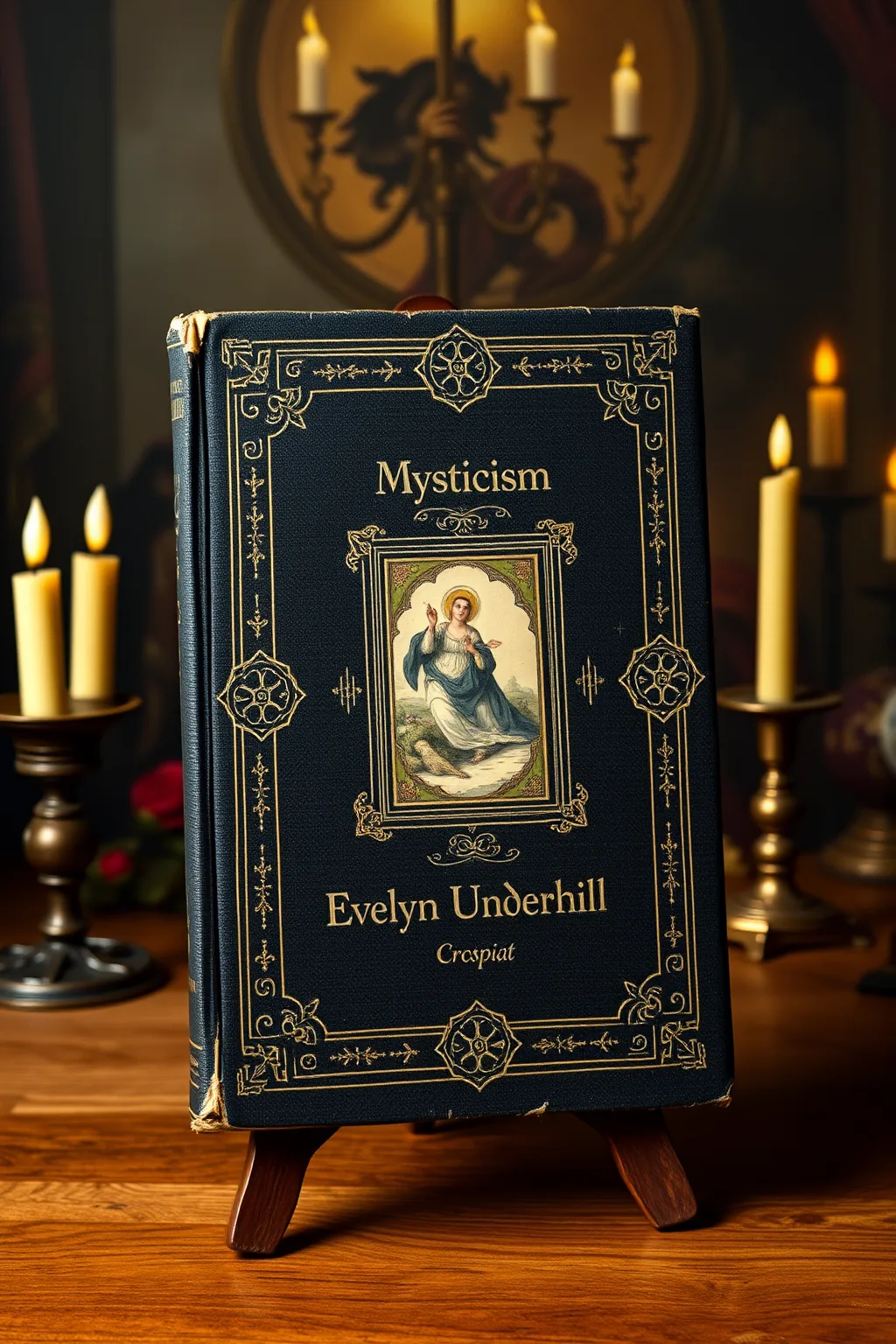
Mysticism
Evelyn Underhill's "Mysticism" remains a foundational text, presenting a lucid and systematic exploration of the spiritual journey. Its primary strength lies in its rigorous scholarship and clear articulation of complex concepts, particularly its detailed charting of the Purgative, Illuminative, and Unitive stages. Underhill's ability to draw from a wide array of Christian mystics, from Plotinus to the mystics of the Middle Ages and Renaissance, is impressive. However, the book's focus is almost exclusively on the Christian tradition, which limits its scope for readers interested in a broader comparative study of global mystical practices. While it offers a comprehensive framework, its academic tone might feel distant to those seeking a more personal devotional experience. Nevertheless, for understanding the architecture of the Western mystical tradition, it is an indispensable resource. It provides a scholarly map of a landscape often described anecdotally.
📝 Description
79
Evelyn Underhill's "Mysticism" was first published in 1922.
Evelyn Underhill's "Mysticism," published in 1922, surveys the history and theory of mystical experience, primarily within the Christian tradition. The book systematically examines the stages of the mystical path, from initial awakening and purification to illumination and union with the Divine. It is structured as an academic study of this human phenomenon, not a personal spiritual guide.
Published after World War I, a time of spiritual searching, the work contributed to the study of religion. It engaged with contemporary psychology and consciousness, influenced by thinkers like William James. Underhill aimed to establish a rigorous, scholarly framework for understanding mystical phenomena, moving beyond anecdotal accounts. The book sought to legitimize the study of religious experience in academic settings.
Key concepts include the Purgative, Illuminative, and Unitive ways, the stages of the mystical path. Underhill details the "Dark Night of the Soul," a concept from St. John of the Cross, as a vital phase of spiritual purification. She also analyzes "mystical consciousness," distinguishing it from ordinary perception and highlighting its transformative power and paradoxes.
Evelyn Underhill's "Mysticism" is a foundational academic work within the study of Western esotericism, specifically focusing on Christian contemplative traditions. Published in 1922, it sought to provide a systematic analysis of mystical experience, placing it within historical and psychological contexts. The book examines concepts like the stages of the soul's union with the divine and the transformative phases of spiritual development, drawing on figures like St. John of the Cross. It aimed to legitimize the study of these profound inner experiences within scholarly discourse, bridging the gap between devotional practice and academic inquiry.
💡 Why Read This Book?
• Gain a structured understanding of the historical Christian mystical path, detailing its Purgative, Illuminative, and Unitive stages, a framework not found in generic spiritual introductions. • Explore the concept of the "Dark Night of the Soul," a specific transformative phase elucidated through the works of figures like St. John of the Cross, offering psychological and spiritual depth. • Appreciate the scholarly approach to religious experience, distinguishing mystical consciousness from ordinary perception, a perspective crucial for academic study or critical self-reflection on faith.
⭐ Reader Reviews
Honest opinions from readers who have explored this book.
❓ Frequently Asked Questions
When was Evelyn Underhill's 'Mysticism' first published?
Evelyn Underhill's seminal work, 'Mysticism,' was first published in 1922, offering a comprehensive study of the spiritual path within the Christian tradition.
What are the main stages of the mystical path described in Underhill's book?
Underhill details the Purgative, Illuminative, and Unitive ways as the primary stages of the mystical journey, providing a structured framework for understanding spiritual progression.
Does 'Mysticism' by Evelyn Underhill cover non-Christian mystical traditions?
While "Mysticism" draws on Neo-Platonism, its primary focus and extensive examples are drawn from the Christian mystical tradition, particularly medieval and Renaissance mystics.
What is the 'Dark Night of the Soul' as explained by Evelyn Underhill?
Underhill interprets the "Dark Night of the Soul" as a critical phase of purification and spiritual testing, essential for growth and eventual union with the Divine, heavily influenced by St. John of the Cross.
Is 'Mysticism' by Evelyn Underhill suitable for beginners in spirituality?
While comprehensive, its scholarly depth and historical focus make it best suited for those with a serious interest in religious history or theology, rather than absolute beginners seeking practical guidance.
What other authors or concepts are discussed in Evelyn Underhill's 'Mysticism'?
The book references numerous mystics such as Plotinus, St. Augustine, St. Bernard of Clairvaux, St. Teresa of Ávila, and St. John of the Cross, exploring concepts like contemplation and divine union.
🔮 Key Themes & Symbolism
The Stages of the Spiritual Path
Underhill meticulously maps the journey of the mystic through distinct phases: the Purgative Way, focused on self-discipline and purification; the Illuminative Way, characterized by deeper spiritual understanding and infused contemplation; and the Unitive Way, culminating in a profound union with the Divine. This structured approach provides a clear framework for understanding the progression of spiritual development, moving from initial detachment from worldly concerns to the highest forms of divine communion.
Mystical Consciousness and Experience
The work examines the nature of mystical consciousness, differentiating it from ordinary sensory perception and intellectual reasoning. Underhill explores how mystics experience a direct, intuitive apprehension of reality, often described in paradoxical or ineffable terms. She examines the role of contemplation, ecstasy, and the ultimate sense of divine presence as central elements that define this altered state of awareness and its transformative impact on the individual.
The Role of Suffering and Purification
A significant theme is the necessity of suffering and purification, epitomized by the concept of the "Dark Night of the Soul." Underhill presents this not as a punitive experience but as an essential crucible through which the ego is dissolved, allowing for deeper spiritual receptivity. This phase, deeply explored through figures like St. John of the Cross, is crucial for shedding spiritual pride and preparing the soul for divine union, highlighting the active role of divine action in the purification process.
The Christian Mystic Tradition
While discussing broader concepts, Underhill's "Mysticism" is firmly rooted in the Western, primarily Christian, tradition. She draws extensively from a lineage of saints, mystics, and theologians, including Neo-Platonists, Desert Fathers, medieval mystics like Bernard of Clairvaux and Hildegard of Bingen, and Renaissance figures such as Teresa of Ávila and John of the Cross. This focus provides a deep dive into a specific, rich vein of contemplative spirituality and its historical development.
💬 Memorable Quotes
Direct passages from the work, attributed to the author.
“The true mystic is not one who has visions, but one who loves God.”
— This statement emphasizes that the core of mysticism lies not in extraordinary phenomena or ecstatic experiences, but in the fundamental orientation of the soul towards divine love. It reframes the pursuit of mysticism from seeking supernatural events to cultivating a deep, abiding relationship with the Divine.
“The Dark Night of the Soul is a period of passive purification.”
— This highlights a key concept from St. John of the Cross, as interpreted by Underhill. It signifies a stage where the soul undergoes a profound cleansing, not through active effort, but through a divinely-guided, often painful, process of detachment from spiritual consolations and self-will.
“Mysticism is the art of union with Reality.”
— This concise definition frames mysticism as a practice aimed at achieving a direct, experiential connection with ultimate reality. It suggests that mysticism is not merely theoretical but an active pursuit, an 'art' that can be cultivated, leading to a profound realization of the Divine.
“The spiritual life is a life of relationship.”
— Underhill underscores that true spirituality is not an isolated or individualistic pursuit, but fundamentally about connection. This relationship is primarily with the Divine, but also extends to how one relates to the world and others through that divine connection.
“The goal is the fusion of the human will with the Divine Will.”
— This points to the culmination of the mystical path as described in the Unitive Way. It signifies a state where the individual's desires and intentions are perfectly aligned with the will of God, representing the highest form of spiritual integration and surrender.
🌙 Esoteric Significance
Tradition
While "Mysticism" is primarily a scholarly work on Christian spirituality, its systematic approach to the stages of spiritual development and its exploration of altered states of consciousness place it within the broader Western esoteric tradition. It provides an accessible entry point for those interested in the contemplative aspects of Hermeticism, Christian Gnosticism, and Rosicrucianism, offering a historical and theological grounding for practices that often emphasize direct experience of the Divine.
Symbolism
Underhill frequently discusses how mystics use symbolism to express the ineffable. Concepts like the "Dark Night" serve as powerful symbols of spiritual trial and purification, representing the stripping away of ego and sensory attachments. The "Divine Union" itself functions as a supreme symbol of the soul's ultimate homecoming, a state of oneness that transcends duality, often described through metaphors of light, love, and marriage within the Christian context.
Modern Relevance
Contemporary spiritual seekers, particularly those interested in contemplative prayer, Christian meditation, or the integration of psychology and spirituality, find "Mysticism" invaluable. Thinkers and practitioners in fields like depth psychology, comparative religion, and mindfulness movements often reference Underhill's work for its clear articulation of spiritual phenomenology and its historical perspective on achieving states of heightened awareness and inner peace.
👥 Who Should Read This Book
• Students of Western Religious History: Will gain a structured overview of Christian mystical thought from Neo-Platonism through the Renaissance, understanding key figures and concepts. • Contemplative Practitioners: Can deepen their understanding of the stages and challenges of the spiritual path, particularly the concepts of purification and union. • Comparative Religion Scholars: Benefit from a detailed case study of one major tradition's approach to mystical experience, providing a robust framework for analysis.
📜 Historical Context
Evelyn Underhill's "Mysticism" emerged in 1922, a period marked by a profound societal shift following World War I and a surge of interest in spiritual and psychological exploration. The intellectual climate was influenced by figures like William James, whose "The Varieties of Religious Experience" (1902) had already legitimized the academic study of religious phenomena. "Mysticism" offered a more systematic and historically grounded approach within the Christian tradition, contrasting with the more individualistic and sometimes sensationalist spiritualism popular at the time. It sought to provide a rigorous academic framework for understanding contemplative experience, engaging with theological debates and philosophical underpinnings of faith. The work was a significant counterpoint to burgeoning secularization, offering a considered defense of the depth and reality of mystical experience.
📔 Journal Prompts
The Purgative Way's emphasis on self-discipline and detachment.
The Illuminative Way's experience of infused contemplation.
The nature of the 'Dark Night' as a purification process.
The concept of 'union' with the Divine as described by mystics.
Underhill's distinction between mystical consciousness and ordinary perception.
🗂️ Glossary
Purgative Way
The initial stage of the mystical path, focused on moral and spiritual purification, detachment from worldly distractions, and the discipline of the senses and desires.
Illuminative Way
The second stage, characterized by a deeper understanding of spiritual truths, increased receptivity to divine grace, and the experience of infused contemplation or divine 'illumination'.
Unitive Way
The final stage, representing the culmination of the mystical journey, where the soul achieves a profound and abiding union with the Divine, often described as mystical marriage or ecstatic union.
Dark Night of the Soul
A concept popularized by St. John of the Cross, describing a phase of intense spiritual trial and purification, where the soul feels abandoned by God, leading to profound inner transformation.
Contemplation
A form of prayer or spiritual practice involving a deep, wordless, and intuitive awareness of God or ultimate reality, distinct from discursive meditation.
Mystical Consciousness
An altered state of awareness characterized by direct, intuitive apprehension of divine or ultimate reality, often experienced as ineffable and transformative.
Divine Union
The ultimate goal of the mystical path, a state of profound oneness or communion between the soul and the Divine, experienced with varying degrees of intensity and permanence.
🔮 Readers Also Liked
Browse all →








More by Evelyn Underhill
All books →





More Free Spiritual Development Books
View all →