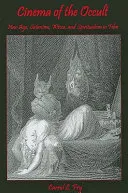
Cinema of the Occult
 78
78

Cinema of the Occult
Carrol Lee Fry's Cinema of the Occult is an ambitious undertaking, attempting to bridge the analytical rigor of occult scholarship with the visual language of cinema. The book's strength lies in its commitment to defining esoteric principles before dissecting their cinematic manifestations. Fry correctly identifies that understanding *The Wicker Man* (1973), for instance, requires more than just noting its pagan imagery; one must grasp the underlying folk magic and societal ritual. However, the selection of films, while broad, occasionally feels arbitrary, and the commentary can sometimes lean more towards plot summary than deep philosophical engagement. The chapter on Crowley and film is particularly insightful, offering a nuanced perspective on the filmmaker's often sensationalized legacy. Despite its occasional unevenness, the work offers a valuable lens for appreciating how celluloid attempts to capture the ineffable.
📝 Description
78
Carrol Lee Fry's 2008 book examines occult belief systems as depicted in film.
Cinema of the Occult, published in 2008 by Carrol Lee Fry, critically analyzes how occult belief systems appear and are understood within cinema. The book serves both as an introduction to various esoteric traditions and as an assessment of their translation to the filmic medium. Fry grounds her discussion in the actual practices and philosophies of occultism, then evaluates the accuracy and influence of their cinematic portrayals.
This work is for readers interested in the connection between film studies and esoteric philosophy. It will appeal to those seeking a deeper understanding of how occult concepts, from ceremonial magic to Eastern mysticism, are shown on screen. It is especially useful for viewers who want to look past superficial cinematic depictions and engage with the spiritual and philosophical currents that often inspire or are hinted at in movies.
The book covers the portrayal of concepts like initiation, astral projection, ritual magic, and the nature of consciousness in narrative films. Fry analyzes how filmmakers interpret these often complex or subtle spiritual ideas, sometimes accurately reflecting established doctrines and other times creating new mythologies. The work investigates the cultural resonance of these portrayals and their impact.
Published in 2008, Cinema of the Occult arrived during a time of growing public interest in spirituality and the occult, often amplified by internet culture and a renewed focus on pre-Christian European traditions and Eastern philosophies. The early 21st century saw many films engage with mystical themes, making Fry's work a relevant analysis of the cultural mood. It appeared as academic film criticism began to more seriously consider non-mainstream spiritualities.
💡 Why Read This Book?
• Gain clarity on specific occult doctrines like ceremonial magic, understanding their tenets before analyzing their cinematic adaptations, as discussed in relation to films potentially inspired by Aleister Crowley's work. • Develop a more critical eye for how spiritual and magical concepts are translated to the screen, learning to discern authentic representation from Hollywood embellishment, exemplified by Fry's analysis of folk magic in 1970s cinema. • Appreciate the cultural impact of film in shaping public perception of esoteric traditions, recognizing how specific cinematic portrayals, such as those concerning paganism, can influence societal understanding.
⭐ Reader Reviews
Honest opinions from readers who have explored this book.
❓ Frequently Asked Questions
What occult religions are discussed in Cinema of the Occult?
The book examines various occult religions and paths, including but not limited to ceremonial magic, folk magic traditions, and potentially elements of Eastern mysticism, as they appear in selected films.
When was Cinema of the Occult first published?
Cinema of the Occult by Carrol Lee Fry was first published in 2008, reflecting on cinematic representations of the occult during a period of growing interest in esoteric topics.
Does the book analyze specific movies?
Yes, the book provides commentary on selected films, analyzing their adaptations and interpretations of occult religions and philosophies, offering background on these paths and their cinematic relevance.
Is Cinema of the Occult suitable for beginners in occult studies?
The book offers useful background information on occult religions, making it accessible for beginners interested in how these beliefs are represented in popular culture through film.
What is the main focus of Carrol Lee Fry's analysis?
The primary focus is on applying discussions of occult religions to selected films, providing commentary on adaptations and their relevance to understanding broader cultural perceptions of the esoteric.
Can this book help understand contemporary culture?
By analyzing how occult themes are portrayed in cinema, the book aims to offer insights into our culture's fascination with and understanding of mystical and esoteric subjects.
🔮 Key Themes & Symbolism
Film as Esoteric Mirror
This theme explores how cinema acts as a mirror, reflecting, distorting, or useful esoteric beliefs and practices. Fry examines films not just as entertainment but as cultural artifacts that engage with and shape perceptions of occult traditions. The analysis considers how cinematic techniques—visuals, narrative structure, character archetypes—are employed to represent concepts like ritual, initiation, and altered states of consciousness, offering insights into how the collective unconscious grapples with these hidden currents through the medium of film.
Accuracy of Occult Portrayals
A central concern is the fidelity with which films depict occult religions. Fry contrasts cinematic interpretations with the actual doctrines and historical contexts of various esoteric paths, such as ceremonial magic or folk practices. This theme questions whether films serve to educate audiences about genuine spiritual traditions or perpetuate stereotypes and misunderstandings. The work evaluates specific films based on their ability to convey the essence of these paths, providing context for both accurate and inaccurate representations.
Cultural Significance of Esoteric Cinema
This theme investigates why occult and mystical themes capture the public imagination and how their cinematic presence contributes to cultural dialogues about spirituality, the unknown, and alternative belief systems. Fry assesses the relevance of these filmic explorations to understanding contemporary society's relationship with the esoteric. By analyzing how films engage with these subjects, the book sheds light on broader cultural anxieties, desires, and the enduring human quest for meaning beyond the material world.
The Philosophy Behind the Frame
This theme focuses on the philosophical underpinnings of both occult traditions and filmmaking. Fry connects the symbolic language of esoteric thought with the symbolic potential of cinema. It explores how filmmakers grapple with complex metaphysical ideas and how audiences interpret these on screen. The discussion highlights the inherent challenges in translating abstract spiritual concepts into a visual medium, examining the intentionality and reception of such cinematic explorations of the occult.
💬 Memorable Quotes
Direct passages from the work, attributed to the author.
“The work explores how films can serve as accessible entry points into complex occult doctrines.”
— This concept highlights the book's premise that cinema, despite its potential for sensationalism, can introduce audiences to the foundational ideas of esoteric traditions, prompting further study.
“Fry discusses the challenge of representing subtle spiritual experiences cinematically.”
— This points to the inherent difficulty in visually depicting non-material phenomena like astral projection or mystical states, often requiring creative interpretation by filmmakers.
“The book provides background on occult paths before analyzing their film adaptations.”
— This emphasizes the author's methodical approach: establishing a factual basis in esoteric knowledge before critically examining its cinematic translation.
“Commentary is offered on film adaptations and their cultural relevance.”
— This suggests the book goes beyond simple plot analysis, assessing how movies depicting occult themes impact societal understanding and discourse surrounding these subjects.
“Readers will find perceptive commentary on cinematic representations of esoteric beliefs.”
— This interpretation suggests that the book offers insightful critiques, helping readers to analyze films with a deeper understanding of the occult concepts they engage with.
🌙 Esoteric Significance
Tradition
The work primarily engages with the broad spectrum of Western esotericism, touching upon ceremonial magic, folk magic, and various spiritual philosophies that have influenced popular culture. It fits within the tradition of comparative religion and cultural studies applied to esoteric movements. While not strictly adhering to a single lineage like Hermeticism or Gnosticism, it draws upon the historical and practical aspects of these traditions to evaluate their cinematic representations, offering an accessible bridge for those outside specialist circles.
Symbolism
Key symbols analyzed include the pentagram, often depicted simplistically or inaccurately in film, versus its complex ritualistic meanings in Western esotericism. Another motif is the archetype of the magician or occultist, frequently portrayed as either a malevolent sorcerer or a wise, Gandalf-like figure, reflecting cultural archetypes rather than nuanced practitioners. The concept of the 'sacred landscape' or ritual space in film also receives attention, examining how cinematic settings are used to evoke the power and otherworldliness associated with occult practices.
Modern Relevance
Contemporary thinkers and practitioners in fields like occult-inspired art, comparative mythology, and critical studies of spirituality often reference or engage with the ideas presented in works like *Cinema of the Occult*. It remains relevant for understanding how modern media shapes perceptions of esoteric traditions, influencing discussions in online communities dedicated to occultism and film analysis. The book's approach informs analyses of how contemporary streaming services and digital platforms continue to popularize and sometimes misrepresent occult themes.
👥 Who Should Read This Book
• Students of comparative religion and film studies seeking to understand the intersection of esoteric beliefs and cinematic narrative. • Individuals curious about how occult traditions like ceremonial magic are popularly depicted, wanting to distinguish cultural myth from actual practice. • Film enthusiasts interested in a deeper analysis of movies that engage with mystical, magical, or spiritual themes beyond surface-level plot points.
📜 Historical Context
Published in 2008, *Cinema of the Occult* arrived amidst a burgeoning popular interest in spirituality and esoteric subjects, a trend amplified by the internet and a renewed fascination with pre-Christian European traditions and Eastern philosophies. The early 21st century saw a significant increase in films engaging with mystical and occult themes, making Carrol Lee Fry's work a timely intervention. It emerged as academic film criticism was beginning to more seriously consider the influence of non-mainstream spiritualities on cinematic production and reception. Contemporaries like Joscelyn Godwin were publishing extensively on esoteric history, providing a scholarly backdrop against which Fry's film-focused analysis could engage. The book's relevance was underscored by the growing cultural visibility of figures like Aleister Crowley, whose life and work continued to inspire both fascination and controversy, prompting critical examination of his cinematic portrayals.
📔 Journal Prompts
The portrayal of ritual magic in film versus its historical practice.
How cinematic archetypes of the magician shape public perception.
Analyzing the representation of initiation ceremonies in cinema.
The cultural impact of films depicting folk magic traditions.
Evaluating the accuracy of astral projection depicted on screen.
🗂️ Glossary
Ceremonial Magic
A system of magic involving elaborate rituals, often incorporating specific tools, invocations, and symbolic actions, aiming to invoke spiritual entities or achieve altered states of consciousness.
Folk Magic
Traditional magical practices passed down through generations within specific communities or regions, often distinct from more formalized or scholarly magical systems.
Initiation
A ritual or process by which an individual is formally admitted into a group, order, or spiritual path, often involving symbolic death and rebirth or the conferral of knowledge.
Astral Projection
The concept of the spirit or consciousness leaving the physical body to travel in a non-physical realm, often referred to as the astral plane.
Esotericism
Belief systems and practices focused on achieving spiritual enlightenment or hidden knowledge, often through direct experience or mystical insight, typically concealed from the general public.
Gnosticism
A diverse set of religious ideas and systems originating in the early Christian era, emphasizing spiritual knowledge (gnosis) as the path to salvation and liberation from the material world.
Theosophy
A spiritual movement founded in the late 19th century, drawing from various religious and philosophical traditions to uncover the hidden wisdom underlying all religions.