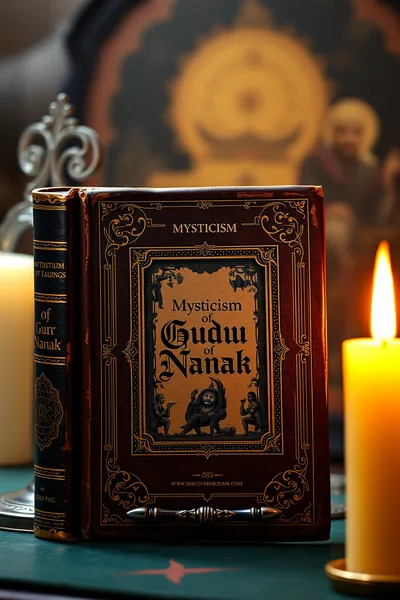
Mystical dimensions of Islam

 83
83

Mystical dimensions of Islam
Annemarie Schimmel's "Mystical Dimensions of Islam" offers a remarkable breadth of knowledge, meticulously detailing the manifold expressions of Islamic mysticism. The book's strength lies in its comprehensive cataloging of Sufi orders, key figures, and theological concepts, particularly the elaborate discussion of *fana* and *baqa*. However, its sheer density can sometimes make it a challenging read for those unfamiliar with Islamic terminology. Schimmel's account of Rumi's poetry, for instance, is both informative and evocative, illustrating the ecstatic dimensions of the Sufi path. While the work meticulously documents, it occasionally lacks a strong interpretive voice guiding the reader through the vast landscape of Sufi thought. Nevertheless, it remains an indispensable reference for serious students of Islamic esotericism.
📝 Description
83
Annemarie Schimmel published 'Mystical Dimensions of Islam' in 1990, detailing Sufi cosmology and practices.
Annemarie Schimmel's 1990 book, 'Mystical Dimensions of Islam,' is a detailed examination of the esoteric and devotional currents within Islamic tradition. It moves past legalistic interpretations to focus on the vibrant inner life of the faith, meticulously outlining the Sufi path. The work covers Sufi cosmology, devotional practices, and the philosophical foundations that have influenced Islamic spirituality for centuries.
The book is written for those seeking a deep understanding of Islamic mysticism, including scholars of comparative religion and students of Sufism. It offers in-depth analysis supported by primary sources and historical context. Readers interested in how poetry, philosophy, and spiritual practice intersect within Islam will find significant material.
Schimmel's study situates Sufism as a central mystical tradition within Islam, distinct from purely legal or political interpretations. It highlights the Sufi emphasis on direct experience of the divine, often achieved through ascetic practices, contemplation, and the guidance of a spiritual master. The book treats Sufism not as a fringe element but as an integral, deeply spiritual dimension that has shaped Islamic thought and practice across diverse historical periods and regions.
💡 Why Read This Book?
• Gain a comprehensive understanding of Sufism's core tenets, including concepts like *fana* and *baqa*, which are central to the annihilation of the self in the divine presence, as detailed in chapters exploring Sufi metaphysics. • Discover the symbolic language of Islamic mysticism, learning how divine names and attributes are interpreted within traditions like the Naqshbandi order, offering unique insights into spiritual cosmology. • Appreciate the role of mystical poetry and music in Islamic spirituality, understanding their function as conduits for direct divine experience, as exemplified by Schimmel's analysis of figures like Rumi.
⭐ Reader Reviews
Honest opinions from readers who have explored this book.
❓ Frequently Asked Questions
What is the significance of 'fana' and 'baqa' in Islamic mysticism as discussed by Schimmel?
Annemarie Schimmel explains 'fana' as the annihilation of the ego or self in the divine presence, a core Sufi concept. 'Baqa' refers to the subsequent subsistence or abiding in God, representing a state of spiritual permanence achieved after ego-dissolution.
When was Annemarie Schimmel's 'Mystical Dimensions of Islam' first published?
Annemarie Schimmel's seminal work, 'Mystical Dimensions of Islam,' was first published in 1990, making it a relatively modern yet foundational text in the study of Islamic esotericism.
Which Sufi orders does Schimmel's book detail?
Schimmel's work provides extensive detail on numerous Sufi orders, including prominent ones like the Naqshbandi, Qadiri, and Chishti, illustrating their unique practices and theological nuances.
How does 'Mystical Dimensions of Islam' approach the concept of the 'Perfect Man'?
The book explores the concept of 'al-insan al-kamil' (the Perfect Man), a significant figure in Islamic mysticism representing the archetype of divine humanity, embodying the totality of God's attributes.
What role does poetry play in the mystical dimensions of Islam according to this book?
Schimmel highlights the crucial role of mystical poetry, particularly by figures like Rumi, as a vehicle for expressing ecstatic states, divine love, and the esoteric understanding of Islamic teachings.
Is this book suitable for beginners in Islamic studies?
While comprehensive, the book is dense. It is best suited for those with some foundational knowledge of Islam or comparative religion, or for dedicated students of Sufism seeking an in-depth exploration.
🔮 Key Themes & Symbolism
The Sufi Path of Love
Central to Schimmel's exploration is the concept of divine love (*ishq*) as the driving force of the Sufi path. The book details how this love manifests through practices aimed at achieving union with the Divine, moving beyond mere intellectual understanding to experiential knowledge. It covers the stages of the spiritual journey, emphasizing devotion, surrender, and the transformative power of encountering the Beloved.
Cosmology and Divine Manifestation
Schimmel studies the complex cosmology of Islamic mysticism, explaining how the universe is viewed as a manifestation of God's attributes and names. Concepts like the 'Light of Muhammad' and the idea of God's immanence are explored. The book examines how Sufis interpret creation as a divine play (*ta'alluh*), reflecting the hidden beauty and oneness of the Creator.
Symbolism in Sufi Practice
The work illuminates the rich symbolic language employed in Sufism. From the spiritual significance of the Kaaba and the Hajj pilgrimage to the esoteric meanings of Arabic letters and numbers, Schimmel unpacks layers of interpretation. The book emphasizes how symbols are not mere decorations but are integral tools for contemplation and spiritual ascent.
The Role of the Spiritual Guide
A critical theme is the indispensable role of the Shaykh or spiritual master in guiding disciples through the often perilous terrain of the mystical path. Schimmel details the qualities of an ideal guide and the importance of the disciple's obedience and devotion (*bay'ah*) as essential components for spiritual progress and attainment.
💬 Memorable Quotes
Direct passages from the work, attributed to the author.
“The goal is not to die, but to live in God.”
— This interpretation captures the essence of *baqa*, the state of abiding in God after the ego's annihilation (*fana*). It signifies that spiritual attainment is not about ceasing to exist but about transforming one's existence into a vessel for the divine.
“Poetry is the language of the soul's longing for the Divine.”
— This concept underscores the function of mystical poetry, as analyzed by Schimmel, in expressing the ineffable yearning of the human spirit for union with God, articulating emotions and experiences that ordinary language cannot convey.
“The universe is a mirror reflecting God's beauty.”
— This statement reflects the Sufi understanding of creation as a divine emanation, a cosmic reflection of God's attributes. It suggests that by contemplating the created world, one can gain insights into the Creator.
“The Shaykh transmits the spiritual inheritance.”
— This highlights the crucial role of the spiritual guide in the transmission of esoteric knowledge and spiritual authority within Sufi lineages, ensuring the continuity of the tradition from master to disciple.
💡 Key Ideas
Editorial paraphrase of the work's core concepts — not direct quotes.
Sufism is the science of the heart.
This paraphrase emphasizes Sufism's focus on direct, experiential knowledge and spiritual purification rather than solely relying on external law or dogma. It highlights the centrality of inner transformation and divine intuition.
🌙 Esoteric Significance
Tradition
Schimmel's work is deeply rooted in the esoteric tradition of Sufism, the mystical dimension of Islam. While distinct from Western Hermeticism or Gnosticism, Sufism shares common ground with these traditions in its pursuit of direct divine knowledge and inner transformation. Schimmel's scholarship positions Sufism as a vibrant, living esoteric lineage within a major Abrahamic faith, detailing its unique cosmology, practices, and philosophical underpinnings.
Symbolism
Key symbols explored include the concept of divine light (*nur*), often associated with the Prophet Muhammad and the divine essence, and the symbolic journey of the soul represented by the flight of birds in Attar's "Conference of the Birds." The book also analyzes the esoteric meaning of Arabic letters and numbers, which are seen as keys to unlocking divine secrets and understanding the structure of reality.
Modern Relevance
Contemporary thinkers and practitioners within New Age spirituality and comparative mysticism often draw upon Schimmel's work to understand Islamic esoteric traditions. Movements emphasizing interfaith dialogue and the universal aspects of spirituality find her comprehensive scholarship invaluable. Furthermore, contemporary Sufi orders themselves often refer to her work as an authoritative overview of their rich spiritual heritage.
👥 Who Should Read This Book
• Students of comparative religion and Islamic studies seeking a rigorous, scholarly overview of Sufism's esoteric dimensions. • Aspiring mystics and spiritual seekers interested in understanding the devotional and philosophical depths of Islamic tradition beyond legalistic interpretations. • Scholars of world religions and cultural history looking to grasp the influence of Islamic mysticism on art, literature, and philosophy across various cultures.
📜 Historical Context
Published in 1990, Annemarie Schimmel's "Mystical Dimensions of Islam" emerged during a period of burgeoning academic interest in Islamic spirituality, separate from political and legalistic studies. It provided a much-needed, comprehensive synthesis of Sufi thought for an English-speaking audience, engaging with the work of scholars like R.C. Zaehner and Seyyed Hossein Nasr. While not facing direct censorship, the work served as a vital corrective to Orientalist tropes that often depicted Islam as monolithic and devoid of inner spiritual life. Its detailed exploration of figures like Rumi and Ibn Arabi offered a nuanced perspective that countered prevalent, simplified views, and it has since become a foundational text cited extensively in comparative religion and Islamic studies.
📔 Journal Prompts
The concept of *fana* as ego-annihilation: how might this relate to contemporary ideas of self-transcendence?
Reflecting on the role of the Shaykh: consider parallels with mentorship in other spiritual or intellectual traditions.
The symbolic language of divine names: explore a single divine name and its potential esoteric meanings.
Rumi's ecstatic poetry: how can such expressions of divine love inform one's personal spiritual practice?
The cosmology of divine manifestation: contemplate the universe as a reflection of divine attributes.
🗂️ Glossary
Fana
A central Sufi concept signifying annihilation of the ego or self in the divine presence. It represents a stage of spiritual development where the individual's consciousness is dissolved into God's.
Baqa
Following *fana*, this term denotes subsistence or abiding in God. It is the state of spiritual permanence where the individual exists in and through the Divine, having transcended ego-consciousness.
Shaykh
An Arabic term for an elder, a learned man, or a spiritual guide in Sufism. The Shaykh is crucial for initiating and guiding disciples on the mystical path.
Al-Insan al-Kamil
The Perfect Man, a concept in Sufism representing the archetype of divine humanity, embodying the totality of God's attributes and serving as a spiritual model.
Ishq
Divine love, a central theme in Sufism. It signifies an intense, passionate longing for and devotion to God, driving the spiritual journey towards union.
Nur Muhammad
The Light of Muhammad, a concept referring to the primordial spiritual light from which all creation is believed to have emanated in certain Sufi traditions.
Bay'ah
The oath of allegiance or spiritual pact between a disciple and a Shaykh in Sufism, signifying commitment to the spiritual path and the guide's authority.
🔮 Readers Also Liked
Browse all →







More by Annemarie Schimmel
All books →




More Free Mysticism & Contemplation Books
View all →