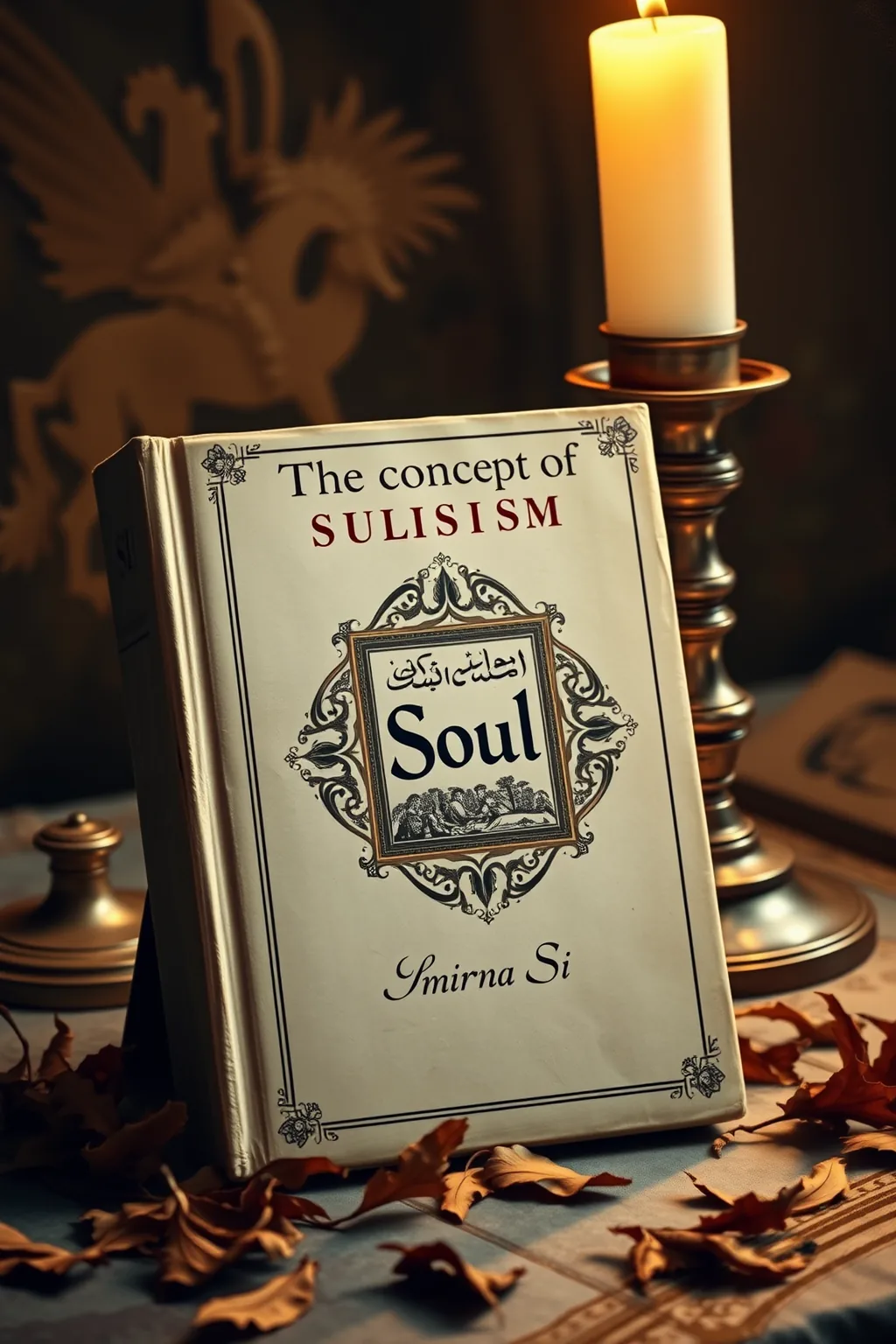
The concept of Soul in Early Sufism
 76
76

The concept of Soul in Early Sufism



Silas Hawthorne (Hermetic Studies Editor) — Smirna Si's 'The Concept of Soul in Early Sufism' is a masterful exposition, delving into the foundational understanding of the soul within the nascent Sufi tradition. By anchoring her exploration in the seminal works of Qushayri and Hujwiri, Si provides an authoritative and deeply resonant account. She skillfully navigates the complex metaphysical terrain, revealing the soul not merely as an entity, but as the very locus of divine encounter and spiritual transformation. This work is a beacon for serious students of mysticism, offering clarity on esoteric doctrines and the symbolic language that defines this luminous path. Its scholarly rigor combined with its profound spiritual insights makes it an indispensable addition to the Esoteric Library.
📝 Description
76
Smirna Si's 2011 book examines the soul's role in early Sufi thought.
Smirna Si's work investigates the concept of the soul within the earliest strata of Sufism. The book details how mystics like Qushayri and Hujwiri understood the soul's nature and its connection to the divine. It addresses the esoteric teachings and symbolic language used to describe the spiritual path. Si shows how the pursuit of closeness to God involves the soul's cleansing and upward movement. Readers will find an explanation of spiritual experiences and the philosophical basis for this tradition, which aims to apprehend the divine through inner experience. The book traces the development of ideas about the soul, its states, and its ultimate destination in the early centuries of Islamic mysticism.
This study situates early Sufi understandings of the soul within the broader Islamic esoteric tradition. It focuses on how mystics of the 9th to 11th centuries developed complex psychologies and cosmologies. These ideas were not merely theoretical but practical guides for spiritual practitioners seeking direct experience of God. The book clarifies how concepts like *nafs* (self/ego) and *ruh* (spirit) were understood and how their transformation was central to the Sufi way.
💡 Why Read This Book?
Unveil the esoteric architecture of the soul as perceived by the pioneers of Sufism. This book offers a direct conduit to the mystical heart of Qushayri and Hujwiri's teachings, revealing the profound journey of spiritual purification and divine yearning. Ideal for seekers of hidden wisdom, scholars of comparative mysticism, and practitioners seeking to deepen their understanding of the inner life.
⭐ Reader Reviews
Honest opinions from readers who have explored this book.
❓ Frequently Asked Questions
What is the primary focus of this book?
The book primarily focuses on the concept of the soul (nafs and ruh) within the early stages of Sufism, exploring its nature, purification, and its central role in the mystical journey towards God, as articulated by key figures like Qushayri and Hujwiri.
Who are Qushayri and Hujwiri in the context of Sufism?
Imam Qushayri (986-1072) and Data Ganj Bakhsh Hujwiri (d. 1077) are towering figures in early Sufism. Qushayri's 'Risala' is a foundational text on Sufi doctrine and practice, while Hujwiri's 'Kashf al-Mahjub' is considered the oldest Persian treatise on Sufism, offering profound insights into its spiritual dimensions.
What kind of esoteric knowledge does this book reveal?
It reveals esoteric knowledge concerning the soul's descent and ascent, its relationship with the divine intellect and spirit, the veiled meanings of spiritual states, and the symbolic language used by early Sufis to describe their inner experiences and the path to union.
Is this book suitable for beginners in Sufism?
While dense with scholarly insight, the book provides a clear and accessible entry point for dedicated beginners eager to grasp the foundational concepts of the soul in Sufism. It lays essential groundwork for further study.
What makes the concept of the soul so central to early Sufism?
The soul is central because the Sufi path is fundamentally an inner journey of transformation. Understanding and purifying the soul, its desires, and its limitations, is seen as the prerequisite for apprehending divine realities and achieving spiritual proximity to God.
🔮 Key Themes & Symbolism
The Nafs: The Veiled Self
This theme explores the complex nature of the 'nafs,' often translated as ego or lower self, within early Sufism. It explores its inherent tendencies towards worldly desires, its capacity for spiritual corruption, and the rigorous disciplines required for its purification. The text examines how understanding the nafs is the crucial first step in the Sufi's journey, as its transformation unlocks the potential for the soul to ascend towards higher spiritual states and divine remembrance. The intricate dance between the nafs and the spirit is a central paradox explored, highlighting the struggle for inner mastery.
The Ruh: The Divine Breath
The 'ruh,' or spirit, is presented as the divine spark within humanity, the essence that connects the individual to the Universal Soul and the Divine Presence. This theme illuminates the Sufi understanding of the ruh as the vehicle for direct spiritual experience and gnosis. It explores how the ruh, when liberated from the veils of the nafs, can perceive divine realities, taste the sweetness of divine love, and participate in the eternal contemplation of God. The cultivation and awakening of the ruh are paramount to achieving the ultimate goals of the Sufi path.
The Ascent of the Soul: Stations and States
This theme maps the spiritual topography of the Sufi journey, detailing the 'maqamat' (stations) and 'ahwal' (states) that the soul traverses in its ascent towards God. Drawing from Qushayri and Hujwiri, it outlines the progressive stages of spiritual development, from detachment and repentance to love, gnosis, and ultimate annihilation in the Divine. The book elucidates the symbolic language and inner experiences associated with each station, providing a profound framework for understanding the soul's transformative pilgrimage and its eventual return to its Divine Source.
💬 Memorable Quotes
Direct passages from the work, attributed to the author.
“To know the soul is to begin the journey home.”
— This suggests that self-knowledge, particularly the deep introspection into one's own soul, is not an end in itself, but the fundamental starting point for returning to one's true spiritual origin and divine essence.
“The whisper of God is heard most clearly in the silence of the purified heart.”
— This emphasizes the Sufi ideal of cultivating inner stillness and purity. It posits that the divine voice, often drowned out by the noise of the ego and the world, becomes audible and comprehensible when the heart is cleansed and receptive.
“Every veil lifted reveals a deeper layer of the Beloved's countenance.”
— This speaks to the progressive nature of spiritual unveiling. As one sheds illusions and egoic attachments, the perception of the Divine becomes clearer and more profound, revealing ever-deeper aspects of God's beauty and presence.
“The true essence of the soul is not found in its form, but in its yearning.”
— This highlights the Sufi belief that the soul's ultimate reality lies not in its outward manifestation or worldly identity, but in its innate, inherent longing for the Divine. This yearning is the driving force of the spiritual path.
💡 Key Ideas
Editorial paraphrase of the work's core concepts — not direct quotes.
The soul is the battlefield where the divine and the earthly wage their eternal war.
This quote expresses the Sufi view of the soul as a site of intense spiritual struggle, where the inherent divine potential battles against worldly distractions and egoic desires. It highlights the active and conscious effort required for spiritual progress.
🌙 Esoteric Significance
Tradition
This work is deeply rooted in the esoteric tradition of early Islamic mysticism, specifically Sufism. It explores the inner dimensions of Islamic faith, focusing on the purification of the soul, the cultivation of divine love, and the direct experience of God's presence. The esoteric significance lies in its unveiling of the hidden spiritual realities and symbolic language employed by the Sufis to describe their profound inner states and the nature of ultimate truth, moving beyond literal interpretations to embrace a deeper, transformative understanding.
Symbolism
The symbolism explored in this book is rich and multilayered, drawing from Quranic verses, prophetic traditions, and the lived experiences of the mystics. Key symbols include the heart as the seat of divine knowledge, the soul's journey as a pilgrimage or ascent, light and darkness representing spiritual illumination and ignorance, and the Beloved (God) as the ultimate object of desire. These symbols are not mere metaphors but potent tools for conveying ineffable spiritual truths and guiding the practitioner through the intricate range of inner transformation.
Modern Relevance
In an age often characterized by materialism and spiritual alienation, the exploration of the soul's nature and its yearning for transcendence offers profound modern relevance. The principles of self-purification, inner discipline, and the pursuit of authentic spiritual experience articulated by early Sufis resonate deeply with contemporary seekers grappling with existential questions. The book provides timeless wisdom for cultivating inner peace, understanding the human psyche's depths, and fostering a connection to something larger than oneself, offering a pathway to meaning and spiritual fulfillment.
👥 Who Should Read This Book
This useful text is essential for scholars of comparative religion and Islamic studies seeking a rigorous understanding of Sufi metaphysics. Spiritual seekers drawn to the depths of mystical traditions will find a profound guide to the inner life and the transformative power of the soul's journey. Practitioners of contemplative disciplines, regardless of their background, will benefit from the foundational insights into self-awareness and spiritual development. Even those new to Sufism but curious about profound philosophical inquiries into the human spirit will discover a compelling and accessible entry point.
📜 Historical Context
Emerging from the rich intellectual and spiritual milieu of the 9th to 11th centuries in the Islamic world, early Sufism represented a profound inner turning within Islam, focusing on the direct, experiential apprehension of God. This era, marked by the consolidation of Islamic jurisprudence and theology, saw mystics like Qushayri and Hujwiri systematizing and articulating the core principles of the Sufi path. Their writings aimed to provide a coherent framework for understanding the soul's journey, distinguishing authentic spiritual practice from heterodox interpretations. This period laid the groundwork for the subsequent flourishing of Sufi orders and their diverse metaphysical and ethical teachings, influencing not only Islamic thought but also interfaith dialogue and philosophical currents across vast regions.
📔 Journal Prompts
Reflect on the different interpretations of 'soul' in your own life and spiritual understanding. How does the Sufi concept of nafs and ruh challenge or affirm your existing views?
Consider a time when your 'nafs' (ego or lower desires) felt in conflict with your higher aspirations. How did you navigate this internal struggle, and what lessons emerged?
What does the concept of 'spiritual ascent' mean to you? Describe a metaphorical or actual journey you have undertaken that felt like an ascent towards greater understanding or consciousness.
Explore the idea of the heart as a 'mirror' for divine reflection. What impurities might be clouding your heart's mirror, and what practices could help polish it?
How does the concept of 'yearning' for the Divine manifest in your life? Is it a subtle undercurrent or a powerful driving force? How can you nurture this yearning?
🗂️ Glossary
Nafs
Often translated as ego, self, or lower soul. In Sufism, it refers to the instinctual, often ego-driven aspect of the human psyche that needs to be purified and disciplined to attain spiritual realization.
Ruh
The spirit or soul, understood as the divine breath or spark within humanity. It is the faculty for direct spiritual experience, gnosis, and connection with the Divine.
Maqamat
Spiritual stations or stages on the Sufi path. These are achievements attained through conscious effort and divine grace, such as repentance, renunciation, patience, and gratitude.
Ahwal
Spiritual states or moods that are bestowed by God upon the seeker. These are transient experiences of divine presence, love, or peace, such as joy, awe, or tranquility.
Gnosis (Ma'rifa)
Direct, intuitive knowledge of God. It is an experiential understanding that transcends intellectual comprehension, often achieved through the purification of the soul and divine illumination.
This book appears in 2 collections
🔮 Readers Also Liked
Browse all →







More by Smirna Si
All books →


From the “Christian Mysticism” Collection
View all →







More Free Mysticism & Contemplation Books
View all →