Morals and Dogma
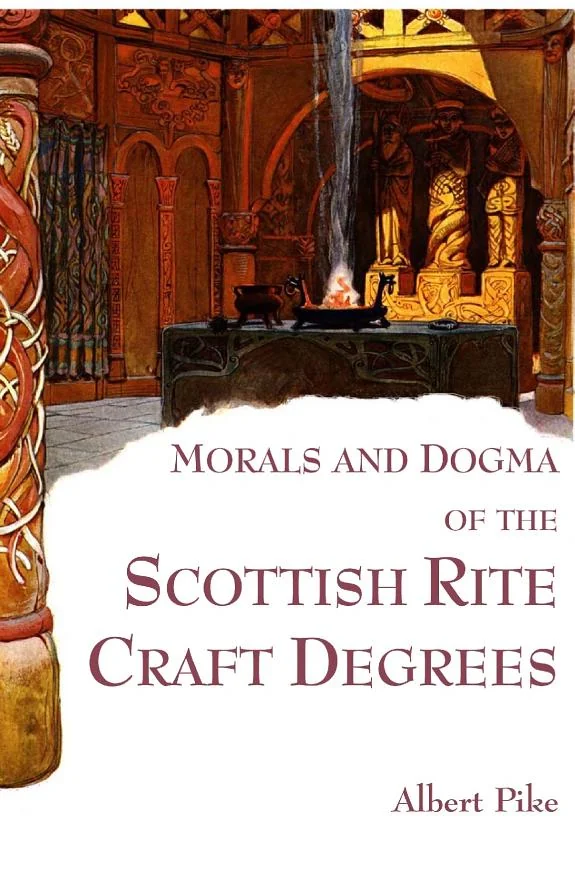
 72
72

Morals and Dogma
Albert Pike's 'Morals and Dogma' is less a book and more an intellectual labyrinth. Its sheer scope is staggering, a deep dive into the symbolic language of the Scottish Rite of Freemasonry that draws from a bewildering array of historical and philosophical sources. Pike's exploration of the concept of the 'Absolute' and its relation to human striving, particularly as presented in the section on the 29th degree, 'Scottish Knight of St. Andrew,' is a notable example of his intricate allegorical method. However, the text's density and its reliance on obscure references can make it an arduous read, even for seasoned students of esotericism. The 1871 publication date means its intellectual framework is firmly rooted in 19th-century scholarship and esoteric interpretations, which may not align with contemporary philosophical or critical perspectives. Despite these challenges, its detailed exposition of Masonic symbolism remains unparalleled for those dedicated to understanding its intricacies. The work is an indispensable, if demanding, reference for the serious Masonic scholar.
📝 Description
72
Albert Pike published Morals and Dogma in 1871, detailing the Scottish Rite's philosophical structure.
Morals and Dogma, first released in 1871, is Albert Pike's extensive exposition on the ritual and philosophy of the Scottish Rite of Freemasonry. It is not a narrative but a compilation of essays and commentaries that examine the symbolism, history, and moral lessons within the Masonic degrees. Pike's writing is dense, drawing on a wide range of philosophical, religious, and mystical sources to explain the rite's teachings.
The book is structured to align with the progression through the 32 degrees of the Scottish Rite. Each chapter often connects to a specific degree, unpacking its symbolic meaning and moral implications. Pike synthesized diverse influences, including Neoplatonism, Kabbalah, and comparative mythology, to create a complex philosophical framework for Freemasonry. This work appeals to serious students of Freemasonry, particularly those interested in the Scottish Rite, as well as scholars of Western esotericism, comparative religion, and intellectual history.
Published in 1871, Morals and Dogma reflects the 19th-century Western esoteric revival. This period saw a renewed interest in ancient mysteries, Neoplatonism, Kabbalah, and occult philosophies, often linked with comparative mythology. Pike integrated these diverse traditions into a coherent philosophical system for Freemasonry, mirroring a broader trend of seeking esoteric knowledge in historical and religious texts, similar to contemporaries like Eliphas Lévi.
💡 Why Read This Book?
• Gain an understanding of the symbolic language and philosophical underpinnings of the Scottish Rite, as detailed in Pike's extensive analysis of its degrees, beginning with the 1st degree. • Explore 19th-century interpretations of ancient traditions like Gnosticism and Kabbalah as applied to moral and spiritual development, offering a unique historical perspective. • Discover Pike's specific allegorical method for reinterpreting universal themes through the lens of Masonic ritual, providing a framework for personal moral reflection.
⭐ Reader Reviews
Honest opinions from readers who have explored this book.
❓ Frequently Asked Questions
When was Albert Pike's 'Morals and Dogma' originally published?
Albert Pike's 'Morals and Dogma' was first published in 1871. It was compiled over many years and represents his comprehensive interpretation of the Scottish Rite's degrees.
What is the primary focus of 'Morals and Dogma'?
The book's primary focus is to expound upon the philosophical, moral, and symbolic teachings of the Ancient and Accepted Scottish Rite of Freemasonry, particularly as understood in the 19th century.
Is 'Morals and Dogma' suitable for non-Masons?
While written for Masons, its exploration of comparative religion, philosophy, and esoteric symbolism makes it of interest to scholars and students of Western esotericism and intellectual history.
What kind of language and style can I expect in 'Morals and Dogma'?
Pike's writing style is formal, academic, and often dense, filled with classical allusions and references to a wide range of historical and philosophical texts. It requires focused reading.
Does 'Morals and Dogma' cover the higher degrees of Freemasonry?
Yes, the book is structured to correspond with the degrees of the Scottish Rite, from the 1st degree up to the 32nd degree, providing commentary and philosophical interpretation for each.
Where does Albert Pike draw his philosophical influences from in this work?
Pike draws heavily from Neoplatonism, Gnosticism, Hermeticism, Kabbalah, ancient mystery religions, and various philosophical traditions, synthesizing them into his Masonic interpretation.
🔮 Key Themes & Symbolism
Symbolic Interpretation of Degrees
The work meticulously dissects the symbolism inherent in each of the 32 degrees of the Scottish Rite. Pike treats Masonic rituals and allegories not as mere historical ceremonies but as vehicles for profound philosophical and ethical instruction. He interprets symbols like the Blazing Star, the Double-Headed Eagle, and the various tools of operative masonry as representing spiritual truths, moral virtues, and the progress of the soul toward enlightenment. This approach positions Freemasonry as a system of esoteric education.
Comparative Philosophy and Religion
Pike masterfully synthesizes a vast spectrum of philosophical and religious thought to illuminate Masonic principles. He draws parallels between Masonic teachings and ancient Egyptian mysteries, Greek philosophy (particularly Neoplatonism), Gnosticism, Kabbalah, and Eastern religions. This comparative method aims to demonstrate the universality of certain spiritual truths and the ancient lineage of Masonic wisdom, positioning it within a long tradition of esoteric inquiry.
Moral and Spiritual Development
Fundamentally, Morals and Dogma is a treatise on human perfectibility. Pike outlines a path of moral self-improvement and spiritual ascent through the understanding and application of Masonic virtues. Concepts such as self-knowledge, the pursuit of truth, justice, temperance, and brotherly love are presented as essential components of the Mason's journey. The ultimate aim is the elevation of the individual and, by extension, society, towards a more enlightened state.
The Nature of the Absolute
A recurring theme is the exploration of the Divine or the Absolute Principle. Pike grapples with concepts of God, the Infinite, and the relationship between the Creator and the created. He uses complex theological and metaphysical language to articulate the ineffable nature of the ultimate reality and humanity's striving to comprehend or connect with it. This metaphysical inquiry underpins the moral and symbolic lessons presented throughout the degrees.
💬 Memorable Quotes
Direct passages from the work, attributed to the author.
“The Blue degrees teach the common forms of morality; the degrees of the Scottish Rite teach the philosophy of religion.”
— This statement captures Pike's view that the foundational Masonic degrees focus on basic ethical conduct, while the higher Scottish Rite degrees study deeper metaphysical and theological questions, offering a more complex understanding of existence.
“The Absolute is the ultimate end of all intelligence.”
— This expresses a metaphysical concept central to Pike's philosophy, suggesting that the pursuit of ultimate truth and understanding, represented by the Absolute, is the highest purpose of human intellect and inquiry.
“Man is divine, and therefore immortal.”
— This interpretation of human nature reflects a belief in inherent divinity and the soul's eternal nature, a concept often explored through Gnostic and Neoplatonic lenses within Masonic philosophy.
“Truth is the greatest of all things; it is the foundation of virtue.”
— This aphorism highlights the supreme importance Pike places on truth as the bedrock upon which all moral conduct and spiritual understanding are built, a guiding principle throughout the work.
“Masonry is the embodiment of the ancient Mysteries.”
— This statement suggests that the practices and teachings of Freemasonry are a continuation or reflection of the esoteric wisdom traditions found in the ancient mystery schools of antiquity.
🌙 Esoteric Significance
Tradition
Morals and Dogma is deeply rooted in the Western Esoteric Tradition, particularly drawing from Hermeticism, Neoplatonism, Gnosticism, and Kabbalah. Pike sought to present Freemasonry, specifically the Scottish Rite, as a modern continuation of these ancient wisdom lineages. He interprets Masonic symbols and rituals through the lens of these traditions, framing the Craft as a path of initiation designed to lead the aspirant toward spiritual illumination and self-knowledge, mirroring the ancient mystery schools.
Symbolism
Key symbols explored include the Double-Headed Eagle, representing duality and the reconciliation of opposites, a common motif in Hermeticism and alchemy. The Blazing Star (Pentagram) is interpreted as a symbol of humanity's divine spark and the microcosm reflecting the macrocosm. Pike also extensively analyzes the symbolic meaning of Masonic tools, such as the square and compasses, as allegories for moral conduct, spiritual discipline, and the construction of a virtuous character.
Modern Relevance
Contemporary practitioners of Western Esotericism, particularly those within Masonic study groups and independent esoteric orders, continue to engage with Pike's work. Scholars of religion and philosophy analyze it for its historical insights into 19th-century thought and its synthesis of diverse traditions. Modern occultists and ritualists may draw inspiration from its symbolic language and metaphysical framework, even if they reinterpret specific doctrines or historical claims.
👥 Who Should Read This Book
• Dedicated students of the Scottish Rite of Freemasonry seeking a comprehensive philosophical interpretation of its degrees and symbolism. • Scholars of Western Esotericism and comparative religion interested in 19th-century Masonic thought and Pike's synthesis of ancient traditions. • Individuals exploring the history of philosophy and moral theology who are curious about how esoteric systems articulate concepts of virtue and the divine.
📜 Historical Context
Albert Pike's 'Morals and Dogma,' published in 1871, emerged from a vibrant 19th-century intellectual landscape deeply interested in esoteric traditions and comparative religion. The era saw a proliferation of Masonic writings that sought to codify and philosophize the Craft's teachings, often drawing heavily from Hermeticism, Kabbalah, and Neoplatonism. Pike's work was particularly influential within the Scottish Rite, offering a complex, allegorical interpretation of its degrees. It appeared during a time when figures like Eliphas Lévi were also revitalizing occult studies in Europe. While Pike synthesized various ancient traditions, his work stood in contrast to more empirically-minded philosophical movements gaining traction. The book was not without its critics, but its comprehensive nature solidified its status as a foundational text for Scottish Rite Masons and students of Western esotericism alike, shaping Masonic thought for generations.
📔 Journal Prompts
The concept of the 'Absolute' as discussed in the higher degrees.
Pike's interpretation of the Blazing Star symbol.
The moral philosophy presented in the 'Perfect Master' (20th) degree.
Reflections on the synthesis of Gnostic and Hermetic ideas within Masonic ritual.
The journey from 'common morality' to 'philosophy of religion' as described by Pike.
🗂️ Glossary
Scottish Rite
A branch of Freemasonry that offers a series of higher degrees beyond the basic three degrees conferred in the symbolic lodge, focusing on philosophical and allegorical teachings.
Neoplatonism
A philosophical system originating with Plotinus in the 3rd century AD, emphasizing the One (the ultimate reality) from which all existence emanates and toward which the soul strives to return.
Gnosticism
A diverse set of religious movements in the early Christian era that emphasized personal spiritual knowledge (gnosis) for salvation, often viewing the material world as flawed or created by a lesser deity.
Kabbalah
A body of Jewish mystical teachings that explore the nature of God, the creation of the universe, and the relationship between the divine and the human, often using symbolic interpretations of scripture.
Hermeticism
A religious, philosophical, and esoteric tradition based on writings attributed to Hermes Trismegistus, emphasizing principles like 'As above, so below,' and seeking divine wisdom and spiritual transformation.
Allegory
A story, poem, or picture that can be interpreted to reveal a hidden meaning, typically a moral or political one. Pike frequently uses allegory to explain Masonic symbols.
The Absolute
In metaphysics, the ultimate reality, unconditioned, infinite, and perfect; the supreme principle or being from which all existence derives or is dependent.
This book appears in 1 collection
🔮 Readers Also Liked
Browse all →



From the “Freemasonry” Collection
View all →







More Free Freemasonry & Secret Societies Books
View all →