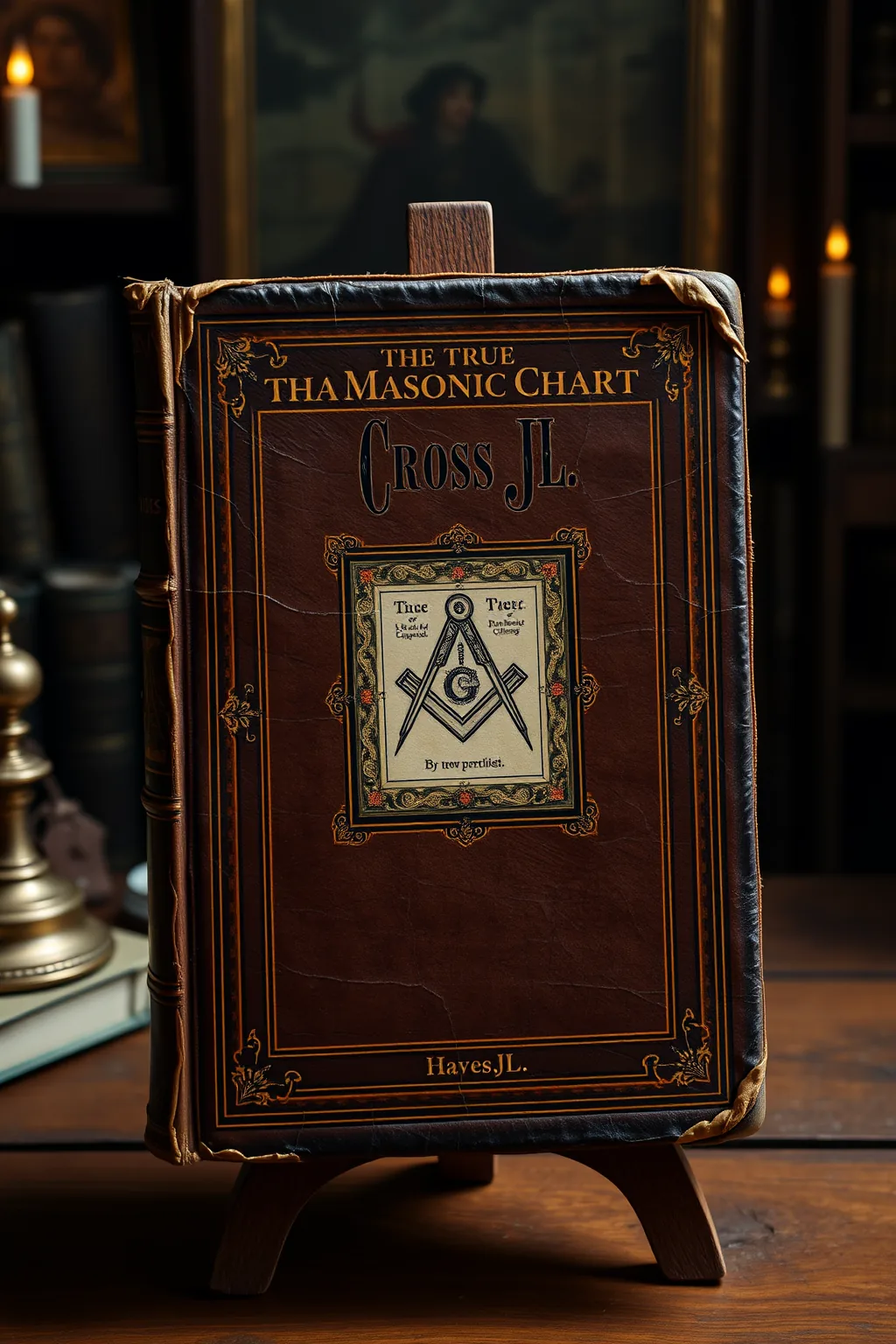
Cross JL The True Masonic Chart Or Hieroglyphic Monitor 1826 New Haven Conn
 71
71

Cross JL The True Masonic Chart Or Hieroglyphic Monitor 1826 New Haven Conn

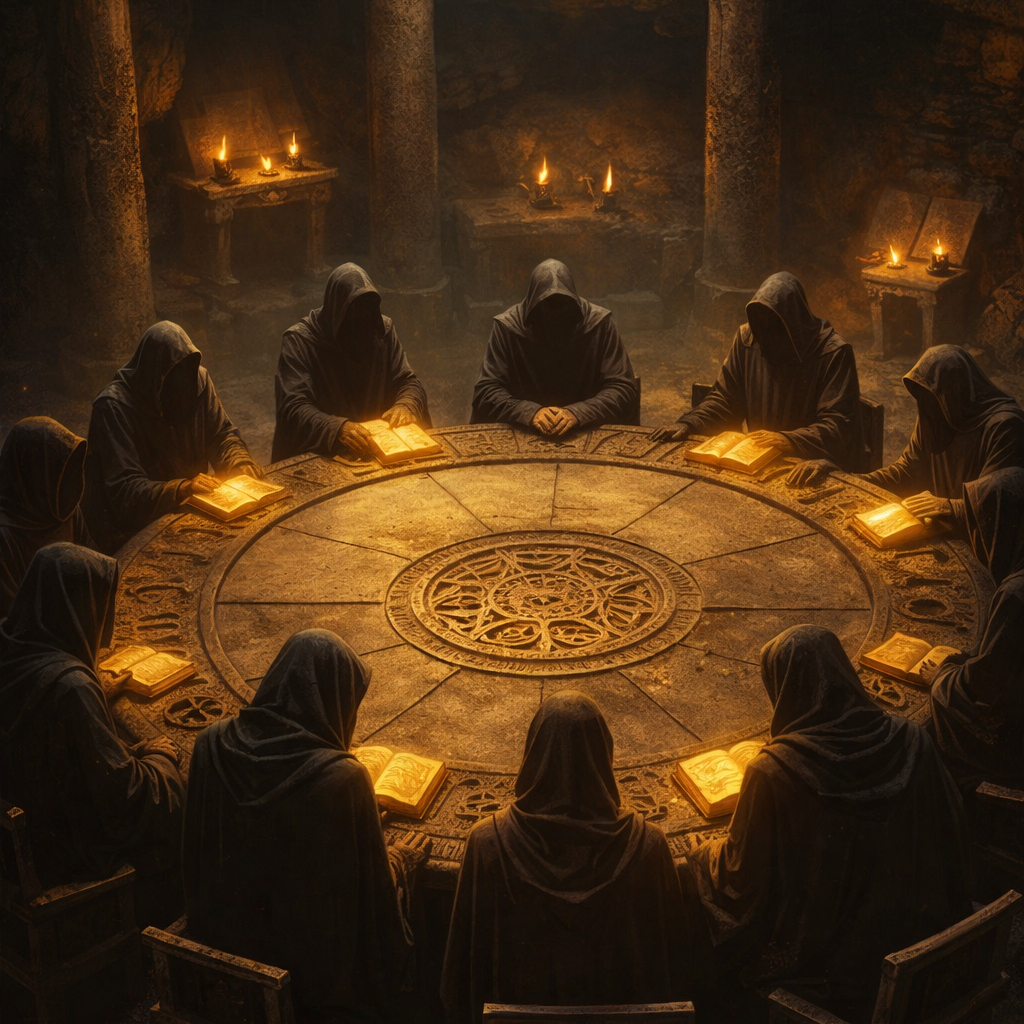

Silas Hawthorne, Hermetic Studies Editor: "The True Masonic Chart Or Hieroglyphic Monitor" is an indispensable repository for anyone seeking to penetrate the esoteric strata of Freemasonry. This 1826 edition, originating from the fertile intellectual soil of New Haven, offers a rare glimpse into the symbolic lexicon of the Craft. Its strength lies in its comprehensive exposition of allegorical figures and their profound philosophical underpinnings, transcending mere ritualistic recitation. It is a treasure trove for the dedicated student, the seasoned practitioner, and the academic scholar alike, providing fertile ground for contemplation on the universal truths concealed within Masonic tradition. A truly illuminating work.
📝 Description
71
"The True Masonic Chart Or Hieroglyphic Monitor" appeared in New Haven, Connecticut, in 1826.
This 1826 publication, "The True Masonic Chart Or Hieroglyphic Monitor," presents a system of Masonic symbolism. It uses allegorical images and esoteric glyphs to convey philosophical ideas and principles of spiritual development within the Craft. The book aims to decode the symbolic language of Freemasonry, making its core tenets accessible to those studying its rituals and emblems.
It functions as a guide for earnest students seeking a more thorough grasp of the Great Architect's design and humanity's place within it. The work encourages engagement with the symbolism embedded in Masonic practice. For readers receptive to its visual and symbolic language, the Monitor offers a way to understand foundational Masonic concepts and pursue self-knowledge.
Published in 1826, this work belongs to the tradition of Masonic esoteric literature that sought to systematize and illustrate the symbolic teachings of the fraternity. It follows in a lineage of texts that used visual allegories and coded imagery to transmit philosophical and spiritual knowledge, often drawing parallels with older mystery traditions. The book's focus on hieroglyphs and symbolic interpretation aligns with a broader esoteric interest in ancient languages and hidden meanings as keys to understanding universal principles.
💡 Why Read This Book?
Uncover the hidden philosophical architecture of Freemasonry through its potent symbolism. This 1826 "Hieroglyphic Monitor" is essential for seekers of ancient wisdom, scholars of secret societies, and practitioners aiming to deepen their understanding of ritualistic allegory. It offers a direct pathway to interpreting the visual language of the Craft and its profound spiritual implications.
⭐ Reader Reviews
Honest opinions from readers who have explored this book.
❓ Frequently Asked Questions
What is the primary purpose of this Masonic Monitor?
Its primary purpose is to serve as a guide to the symbolic language and allegorical teachings of Freemasonry, deciphering the meaning behind its rituals, emblems, and architectural metaphors for initiated brethren and serious students.
Is this book suitable for non-Masons?
While written with Masonic initiates in mind, "The True Masonic Chart" offers profound insights into symbolism and philosophy that can be appreciated by anyone interested in esoteric traditions, comparative religion, or the history of secret societies.
What makes the 1826 edition significant?
The 1826 edition represents an early, authoritative compilation of Masonic symbolism, reflecting the established understanding and presentation of these mysteries at a crucial period in Masonic history, making it a valuable historical and esoteric document.
How does this book relate to Masonic ritual?
This monitor is intrinsically linked to Masonic ritual, serving as a visual and textual key to understanding the allegorical lessons and moral teachings embedded within the ceremonies of the various degrees.
What kind of symbolism can be found within?
Expect to find rich symbolism derived from geometry, architecture, biblical narratives, classical mythology, and alchemical principles, all presented to illustrate moral and spiritual truths.
🔮 Key Themes & Symbolism
The Architecture of the Soul
This theme explores the Masonic concept of the individual as a spiritual edifice, to be built and perfected through moral discipline and the application of divine principles. The Monitor uses architectural metaphors—tools, structures, and their symbolic functions—to represent the stages of personal development, the challenges of character building, and the ultimate goal of constructing a virtuous inner temple, aligned with the cosmic order. It emphasizes the transformative power of ritual and self-cultivation as the 'stones' and 'mortar' of spiritual architecture.
The Language of Symbols
Central to this work is the understanding that Freemasonry communicates profound truths not through direct exposition, but through a meticulously crafted symbolic language. This theme looks at how geometric shapes, celestial bodies, tools of craft, and allegorical figures are employed to convey complex philosophical and ethical concepts. The Monitor acts as a lexicon, deciphering these glyphs to reveal layers of meaning, from the mundane to the sublime, encouraging the reader to engage in contemplative interpretation and personal revelation.
The Quest for Light and Truth
This recurring motif traces the journey of the aspirant from darkness towards illumination, symbolizing the pursuit of knowledge, wisdom, and spiritual enlightenment. The Monitor illustrates this progression through various symbolic representations of light, often contrasted with ignorance or confusion. It highlights the Masonic path as a continuous endeavor to seek and embrace truth, guided by principles of reason, morality, and divine revelation, ultimately leading to a deeper understanding of oneself and the universe.
💬 Memorable Quotes
Direct passages from the work, attributed to the author.
“The rough ashlar must be made a perfect ashlar.”
— This fundamental Masonic metaphor signifies the transformation of an unrefined individual into a perfected, morally upright character through the discipline and teachings of the Craft.
“The square teaches us to square our actions.”
— This highlights the practical application of Masonic principles, using the symbolic tool of the square to ensure one's conduct is just, equitable, and in alignment with moral law.
“Let the plumb line guide your steps.”
— Representing rectitude and uprightness, the plumb line symbolizes the importance of maintaining integrity and moral steadfastness in all endeavors and life choices.
“Wisdom builds her house.”
— This allegorical statement suggests that true spiritual and intellectual structures are founded upon wisdom, requiring careful construction and adherence to foundational principles for lasting strength and beauty.
💡 Key Ideas
Editorial paraphrase of the work's core concepts — not direct quotes.
As we advance in knowledge, we ascend in our labors.
This quote emphasizes that spiritual and intellectual growth are intertwined, with increased understanding leading to greater capacity for virtuous action and deeper engagement with esoteric truths.
🌙 Esoteric Significance
Tradition
This work is deeply rooted in the Western Esoteric Tradition, drawing heavily from Hermeticism, Neoplatonism, and Kabbalistic thought, as well as ancient mystery religions and operative Masonry's symbolic heritage. It represents an attempt to synthesize these diverse streams into a coherent system of moral and spiritual instruction, emphasizing the hidden correlations between the macrocosm and the microcosm, and the potential for human spiritual evolution through symbolic engagement.
Symbolism
The Monitor is a veritable lexicon of Masonic symbolism. Key symbols include the geometric figures (square, compasses, triangle), architectural tools (level, plumb line, trowel), celestial bodies (sun, moon, stars), and allegorical figures (temple, pillars, apron). Each symbol is imbued with multiple layers of meaning, representing virtues, cosmic principles, stages of initiation, and the divine order, serving as keys to unlock deeper philosophical and spiritual insights.
Modern Relevance
Despite its 19th-century origins, "The True Masonic Chart" remains remarkably relevant. In an era often characterized by superficiality and disconnection, its emphasis on introspection, moral development, and the profound power of symbolism offers a valuable counterpoint. It continues to guide modern seekers in understanding the perennial wisdom embedded in ritual and allegory, providing a framework for self-discovery, ethical living, and a connection to timeless spiritual truths that transcend cultural and historical boundaries.
👥 Who Should Read This Book
This important work is important for Freemasons seeking to deepen their understanding of their Craft's symbolic language and philosophical underpinnings. Scholars of secret societies and comparative religious studies will find it a critical primary source for understanding early American Masonic thought. Spiritual seekers and practitioners of esoteric disciplines will appreciate its rich allegorical content and its exploration of universal moral and metaphysical principles. Beginners curious about the esoteric dimensions of Freemasonry will find it an informative, albeit challenging, introduction.
📜 Historical Context
Published in 1826, "The True Masonic Chart Or Hieroglyphic Monitor" emerged during a period of significant Masonic activity and intellectual ferment in the United States. Following the Revolutionary War, Freemasonry became deeply entwined with the nation's foundational ideals, seen by many as a bedrock of civic virtue and moral instruction. The early 19th century was also a time when esoteric traditions, including Hermeticism and Rosicrucianism, were actively studied and integrated into various fraternal orders. This "Monitor" reflects a desire to codify and disseminate the rich symbolic language that had been developing within Freemasonry, making its profound teachings accessible through visual allegory. Its appearance in New Haven, Connecticut, a hub of intellectual and religious thought, underscores its role in articulating a complex system of philosophy and ethics for a burgeoning republic seeking moral guidance and ordered society.
📔 Journal Prompts
Reflect on a personal 'rough ashlar' in your life. What virtues or disciplines are needed to 'smooth' it?
Choose one symbol from the Monitor and explore its meaning in your daily life. How does it guide your actions?
Consider the concept of 'light' in your spiritual journey. What has been your greatest source of illumination?
How can the principles of 'rectitude' and 'uprightness' (represented by the plumb line) be better integrated into your decision-making processes?
What 'architectural' elements (foundations, structure, embellishments) are you currently building in your own life, and what is their purpose?
🗂️ Glossary
Ashlar
In Masonic symbolism, the 'rough ashlar' represents the unrefined state of human nature, while the 'perfect ashlar' signifies the perfected individual, shaped by moral discipline and spiritual enlightenment through the teachings of the Craft.
Monitor
A guide or manual that explains the rituals, symbols, and allegorical teachings of a particular order or system. In this context, it refers to a book designed to illuminate the esoteric meaning of Masonic practices.
Hieroglyphic
Relating to or denoting a system of writing using pictorial symbols. In this book's title, it emphasizes the use of visual symbols to convey profound knowledge and spiritual truths.
Allegory
A story, poem, or picture that can be interpreted to reveal a hidden meaning, typically a moral or political one. Masonic teachings often employ allegory to convey complex spiritual and ethical lessons.
Esoteric
Intended for or likely to be understood by only a small number of people with a specialized knowledge or interest. This pertains to the hidden, inner meanings of Masonic teachings and symbols.
This book appears in 2 collections
🔮 Readers Also Liked
Browse all →









From the “Secret Societies” Collection
View all →






More Free Freemasonry & Secret Societies Books
View all →



![Gould R F History Of Freemasonry Throughout The World V 4 [ 1936 Ed][ 417p]](/img/thumb/gould-r-f-history-of-freemasonry-throughout-the-world-v-4-1936-ed-417p.webp)