Morals and Dogma of the Ancient and Accepted Scottish Rite of Freemasonry
 71
71

Morals and Dogma of the Ancient and Accepted Scottish Rite of Freemasonry


Albert Pike's 'Morals and Dogma of the Ancient and Accepted Scottish Rite of Freemasonry' is a foundational text for anyone delving into the esoteric and occult dimensions of Freemasonry. Pike's meticulous research and profound insights make this book an invaluable resource for modern esoteric seekers. The text is dense with symbolic language and philosophical depth, requiring a patient and contemplative approach to fully appreciate its wisdom. For those new to Freemasonry or the occult, 'Morals and Dogma' may initially seem daunting, but its rewards are immense. Pike's ability to weave together diverse mystical traditions creates a rich tapestry of spiritual knowledge that resonates with seekers across different paths. The book's enduring relevance lies in its timeless exploration of moral and philosophical questions, making it a valuable addition to any esoteric library. In summary, 'Morals and Dogma' is a must-read for serious students of the occult and Freemasonry, offering deep insights and spiritual nourishment.
📝 Description
71
Albert Pike published 'Morals and Dogma' in 1871, outlining the Scottish Rite's philosophical teachings.
Albert Pike's 'Morals and Dogma' serves as a comprehensive exposition of the degrees of the Ancient and Accepted Scottish Rite of Freemasonry. First published in 1871, it compiles lectures and interpretations that explain the moral and philosophical underpinnings of the Rite's rituals and symbolism. Pike draws upon a wide array of sources, including classical philosophy, Gnosticism, Jewish Kabbalah, and Hermeticism, to illustrate the allegorical meanings embedded within Masonic degrees.
The book addresses themes of human nature, the pursuit of knowledge, and the relationship between the individual and the divine. Pike's prose aims to guide the Mason toward a deeper understanding of the ethical principles and spiritual aspirations that the Rite seeks to cultivate. It is structured around the forty-nine lectures, each corresponding to a degree, making it a systematic study for those initiated into the Scottish Rite.
Published in 1871, 'Morals and Dogma' is a significant text within 19th-century Masonic esoteric literature. Pike synthesizes various streams of Western esotericism, including Hermeticism, Kabbalah, Neoplatonism, and Gnosticism, into a framework for understanding the Scottish Rite. The work reflects a broader trend of seeking deeper, hidden meanings within religious and fraternal traditions, connecting Masonic practices to ancient mysteries and philosophical systems believed to hold universal truths.
✍️ Author
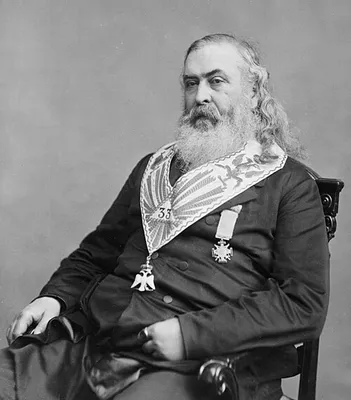
Pike, Albert
Albert Pike (December 29, 1809 – April 2, 1891) was an American author, poet, orator, editor, lawyer, jurist and Confederate States Army general who served as an associate justice of the Arkansas Supreme Court in exile from 1864 to 1865. He had previously …
💡 Why Read This Book?
Reading 'Morals and Dogma of the Ancient and Accepted Scottish Rite of Freemasonry' today provides a profound exploration of the esoteric and occult traditions that have shaped Western mysticism. Modern readers will gain a deeper understanding of the philosophical and moral foundations of Freemasonry, enriching their spiritual journey. The book's timeless insights into wisdom, divinity, and moral responsibility make it a valuable resource for anyone seeking spiritual enlightenment. Additionally, 'Morals and Dogma' offers a historical perspective on the intellectual and spiritual currents of the 19th century, providing context for contemporary esoteric studies.
⭐ Reader Reviews
Honest opinions from readers who have explored this book.
❓ Frequently Asked Questions
What is the main focus of 'Morals and Dogma'?
The main focus of 'Morals and Dogma' is the esoteric and occult teachings of the Scottish Rite of Freemasonry. It explores philosophical, moral, and mystical principles through a series of lectures corresponding to different Masonic degrees.
Is this book suitable for beginners in Freemasonry?
While 'Morals and Dogma' is a foundational text for Freemasons, its dense symbolic language and philosophical depth may be challenging for beginners. However, it offers immense rewards for those willing to engage deeply with its content.
How does 'Morals and Dogma' contribute to modern esoteric studies?
The book provides a rich tapestry of ancient and medieval mystical sources, making it a valuable resource for modern esoteric seekers. Its exploration of moral and philosophical questions remains relevant and enriching for contemporary spiritual journeys.
🔮 Key Themes & Symbolism
Esoteric Symbolism
Pike looks at the detailed symbolism of Freemasonry, revealing the hidden meanings behind its rituals and emblems. He draws from various esoteric traditions to illustrate how these symbols reflect ancient wisdom and spiritual truths.
Philosophical Foundations
The book explores the philosophical underpinnings of Freemasonry, discussing themes such as morality, ethics, and the nature of reality. Pike's insights offer a profound understanding of the philosophical significance of Freemasonry's teachings.
Ancient Wisdom
Pike combines ancient wisdom from Hermeticism, Kabbalah, and other mystical traditions to illuminate the esoteric dimensions of Freemasonry. This synthesis of knowledge provides a comprehensive view of the hidden truths that have shaped human thought and spirituality.
💬 Memorable Quotes
Direct passages from the work, attributed to the author.
“Masonry is a succession of lessons, conveyed in a succession of symbols.”
— Pike highlights the educational aspect of Freemasonry, where symbols serve as vehicles for transmitting esoteric knowledge.
“The Masonic system teaches that a man, to work out his own salvation, must unite himself to God.”
— Pike emphasizes the spiritual journey of the individual, stressing the importance of personal growth and union with the divine.
💡 Key Ideas
Editorial paraphrase of the work's core concepts — not direct quotes.
The spirit of Masonry is to teach men the great moral duties they owe to God, to themselves, and to their neighbors.
This quote underscores the ethical and spiritual dimensions of Freemasonry, emphasizing its role in fostering moral development and community.
The true Mason is not a mere spectator of life, but an actor in its drama.
This quote encourages active engagement with the spiritual and philosophical teachings of Freemasonry, urging readers to apply these insights to their daily lives.
Masonry is the sublimest system of morality, veiled in allegory and illustrated by symbols.
This quote underscores the mystical and allegorical nature of Freemasonry, where symbols and rituals convey deep moral and spiritual truths.
🌙 Esoteric Significance
Tradition
This book belongs to the Hermetic and Kabbalistic traditions, drawing from ancient wisdom to illuminate the esoteric dimensions of Freemasonry. Pike's synthesis of these traditions provides a comprehensive view of the hidden truths that underpin Freemasonry's teachings.
Symbolism
Key symbols in 'Morals and Dogma' include the compass, square, and all-seeing eye, each of which carries profound spiritual and philosophical meanings. These symbols are explored in depth to reveal their esoteric significance and role in Freemasonry's rituals and teachings.
Modern Relevance
The insights offered in 'Morals and Dogma' remain relevant to modern practitioners of esoteric traditions. Many contemporary scholars and spiritual seekers continue to study Pike's work to gain a deeper understanding of the mystical dimensions of Freemasonry and their application to personal growth and spiritual development.
👥 Who Should Read This Book
Beginners may find 'Morals and Dogma' challenging due to its depth and complexity, but it is an invaluable resource for those with some prior knowledge of Freemasonry and esoteric studies. Scholars of the occult and mystical traditions will find it a rich source of insights and philosophical reflections. Spiritual seekers and practitioners of Hermeticism, Kabbalah, and other esoteric traditions will benefit from Pike's synthesis of ancient wisdom and its application to modern spiritual development.
📜 Historical Context
Published in 1871, 'Morals and Dogma' emerged during a time of significant intellectual and spiritual ferment. The 19th century saw a renewed interest in esoteric and occult studies, with many seeking to uncover the hidden knowledge of ancient civilizations. Pike's work was instrumental in shaping the understanding of Freemasonry as a mystical and philosophical tradition, drawing from a wide range of esoteric sources. Its influence can be seen in the development of modern esoteric movements and the ongoing exploration of the occult and mystical dimensions of Freemasonry.
📔 Journal Prompts
How do the symbols and rituals of Freemasonry reflect ancient wisdom and spiritual truths?
In what ways does 'Morals and Dogma' challenge or affirm your understanding of esoteric traditions?
How can the philosophical insights of Freemasonry be applied to personal growth and spiritual development?
What role does morality play in the teachings of Freemasonry, and how does this relate to modern ethical dilemmas?
How does Pike's synthesis of esoteric traditions enrich your understanding of the mystical dimensions of Freemasonry?
🗂️ Glossary
Hermeticism
An esoteric tradition based on the writings attributed to Hermes Trismegistus, emphasizing the pursuit of spiritual enlightenment and the unity of all things.
Kabbalah
A mystical tradition within Judaism that explores the hidden meanings of scripture and the nature of the divine.
All-Seeing Eye
A symbol representing divine providence and the omnipresence of God, often associated with Freemasonry and other esoteric traditions.
Allegory
A literary device where abstract ideas are represented by characters, events, or settings, often used in esoteric literature to convey hidden truths.
Symbolism
The use of symbols to represent abstract ideas or qualities, a key aspect of Freemasonry's teachings and rituals.
This book appears in 2 collections
🔮 Readers Also Liked
Browse all →



From the “Secret Societies” Collection
View all →




More Free Freemasonry & Secret Societies Books
View all →