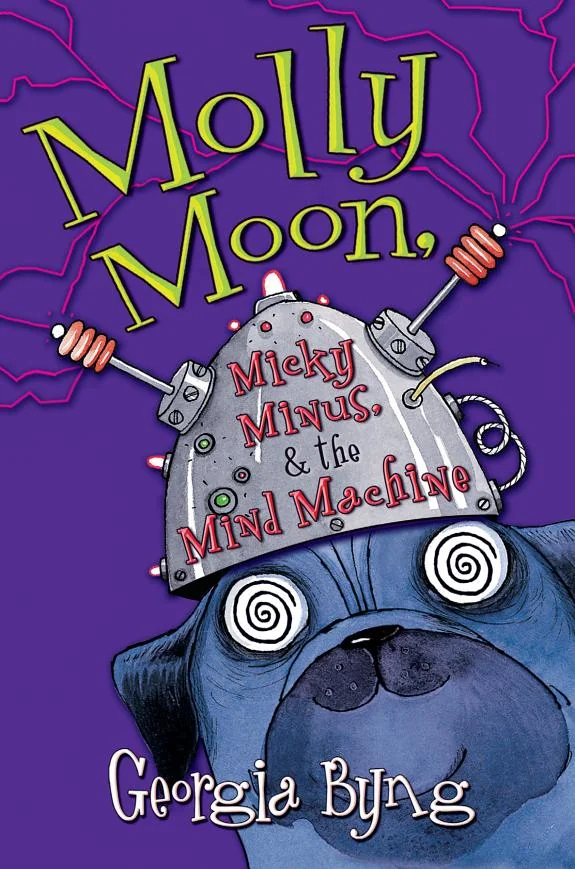
Molly Moon, Micky Minus, & the Mind Machine
 71
71

Molly Moon, Micky Minus, & the Mind Machine
Georgia Byng’s decision to equip Molly Moon with telepathy in "Molly Moon, Micky Minus, & the Mind Machine" elevates the series beyond its earlier hypnotic premises. The introduction of Micky Minus and the titular Mind Machine offers a fresh antagonism, testing Molly’s evolving abilities. Byng’s strength lies in her ability to imbue fantastical scenarios with a child’s perspective, particularly Molly’s internal struggles with the ethics of knowing what others think. A limitation, however, is the pacing in the middle act, which occasionally gets bogged down in exposition regarding the Mind Machine's mechanics. The depiction of Molly’s struggle to maintain her own identity while bombarded by others’ thoughts is particularly well-rendered, showing a nuanced understanding of psychic intrusion. The book serves as a compelling exploration of mental boundaries and the burden of omniscience, albeit a limited one.
📝 Description
71
In 2007, Georgia Byng's Molly Moon series introduced the Mind Machine, amplifying telepathic abilities.
This 2007 installment, "Molly Moon, Micky Minus, & the Mind Machine," sees Molly's telepathic powers grow substantially. The story moves beyond simple hypnosis to examine the complex effects of reading and influencing minds. Molly faces new antagonists and personal challenges that push her understanding of herself and the world. The introduction of the "Mind Machine" adds a technological angle, connecting consciousness with invention.
Readers familiar with the earlier Molly Moon books will find a more developed story. It is suitable for young adults and pre-teens interested in protagonists with supernatural gifts and intricate plots. The book also offers material for those considering the ethics of mental influence and the responsibility that comes with extraordinary abilities. It serves as an introduction to ideas of mind control, empathy, and the consequences of power for younger readers.
Published in 2007, this novel taps into a modern fascination with psychic abilities within young adult fiction. It reflects a broader cultural interest in the potential for mental powers, often explored through fantasy narratives that blend the magical with relatable adolescent experiences. The series examines telepathy not just as a supernatural gift, but as a force that raises questions about control, empathy, and the ethical use of extraordinary faculties, aligning with contemporary explorations of mind and consciousness in speculative fiction.
💡 Why Read This Book?
• Gain insight into the ethical tightrope walk of telepathy, as Molly grapples with the consequences of reading minds, a concept central to her character arc. • Explore the symbolic representation of the "Mind Machine" as a tool for both control and potential liberation, offering a unique perspective on technological influence. • Understand the narrative's exploration of identity formation under psychic pressure, exemplified by Molly's internal conflicts and her interactions with Micky Minus.
⭐ Reader Reviews
Honest opinions from readers who have explored this book.
❓ Frequently Asked Questions
When was Molly Moon, Micky Minus, & the Mind Machine first published?
Molly Moon, Micky Minus, & the Mind Machine was first published in October 2007, marking the fourth installment in the popular Molly Moon series by Georgia Byng.
What new ability does Molly Moon gain in this book?
In this installment, Molly Moon gains the ability of telepathy, allowing her to read and influence the thoughts of others, a significant expansion from her previous hypnotic powers.
Who is the main antagonist introduced in this novel?
The main antagonist introduced is Micky Minus, who becomes a formidable opponent for Molly, particularly in relation to the mysterious "Mind Machine."
What is the 'Mind Machine' in the context of the book?
The 'Mind Machine' is a device featured in the book that plays a crucial role in the plot, involving the manipulation or amplification of mental abilities and consciousness.
Is this book suitable for young readers?
Yes, the book is generally suitable for young readers aged 9-12, offering an engaging story with themes of friendship, responsibility, and overcoming challenges, presented in an accessible style.
Does this book continue the story from the previous Molly Moon novel?
Yes, 'Molly Moon, Micky Minus, & the Mind Machine' is a direct continuation of the Molly Moon series, with Molly returning from her adventures in the future, bringing her developed abilities with her.
🔮 Key Themes & Symbolism
Telepathy and Mental Influence
The novel looks at the complexities of telepathy, presenting it as a double-edged sword. Molly's newfound ability to read minds forces her to confront not only external threats but also the internal ethical dilemmas of wielding such power. The book explores how understanding others' thoughts can lead to empathy but also to manipulation, questioning the boundaries of consent and free will. This theme is amplified by the introduction of the "Mind Machine," a technological apparatus that externalizes and potentially weaponizes psychic influence, pushing the narrative into speculative territory about the intersection of consciousness and invention.
Identity and Self-Perception
Central to Molly's journey is the struggle to maintain her sense of self when exposed to the inner lives of others. The constant influx of thoughts and emotions from those around her threatens to erode her own identity. The narrative examines how external perceptions and the ability to 'know' them can impact one's self-worth and decision-making. Molly's growth involves learning to filter this mental noise, to discern her own thoughts and feelings from those she absorbs, highlighting the importance of internal grounding amidst external psychic pressures.
Responsibility of Power
Georgia Byng consistently emphasizes the moral obligations that accompany extraordinary abilities. Molly's telepathic powers, unlike the more overt hypnotic suggestions of earlier books, carry a subtler yet more profound weight. The book explores the responsibility of using knowledge gained through psychic means, questioning when it is appropriate to intervene and when observation is sufficient. The presence of Micky Minus and the Mind Machine serves as a foil, representing the corrupting potential of power, contrasting with Molly's ongoing efforts to use her abilities for good, albeit with considerable internal conflict.
Technology and Consciousness
The introduction of the "Mind Machine" in "Molly Moon, Micky Minus, & the Mind Machine" bridges the gap between innate psychic abilities and technological augmentation. This element introduces a science-fiction undertone, exploring how external devices might interact with or amplify human consciousness. It prompts questions about whether technology can replicate or enhance natural psychic phenomena, and what the implications are for human agency. The machine acts as a catalyst, forcing Molly to confront a more advanced form of mental manipulation than she has previously encountered.
💬 Memorable Quotes
Direct passages from the work, attributed to the author.
“She knows what you're thinking . . . . no really, she knows what you're thinking.”
— This phrase, part of the original blurb, captures the core premise of Molly's enhanced abilities in this novel. It signals a significant escalation from her previous powers, directly addressing the reader and emphasizing the invasive nature of her new telepathic talent.
“Micky Minus poses a significant challenge to Molly's abilities.”
— This interpretation of the character's role emphasizes the antagonistic force Molly faces. Micky Minus is presented not just as an obstacle but as someone who specifically tests the limits and ethical boundaries of Molly's telepathic powers.
“The narrative expands beyond simple hypnotic suggestion.”
— This statement contrasts the current installment with earlier books in the series, indicating a thematic and plot progression. It suggests a deeper, more nuanced exploration of mental influence and its consequences, moving beyond basic mind control.
💡 Key Ideas
Editorial paraphrase of the work's core concepts — not direct quotes.
Molly Moon is back from the future—and this time, she can read minds.
This quote highlights the continuity and evolution of the series. It signifies Molly's return with amplified powers, setting the stage for a narrative that explores the challenges and ethical considerations of telepathy, building upon her established character.
The 'Mind Machine' introduces a technological element to the psychic landscape.
This paraphrased concept points to the novel's exploration of the intersection between innate psychic abilities and external technological devices. It suggests a narrative that looks at how technology might interact with, amplify, or even control consciousness.
🌙 Esoteric Significance
Tradition
While not explicitly tied to a single historical esoteric lineage like Hermeticism or Gnosticism, the Molly Moon series, particularly this installment, engages with themes common in Western esotericism concerning psychic abilities and the nature of consciousness. The exploration of telepathy and mind manipulation can be seen as a popular, albeit simplified, manifestation of concepts found in parapsychology and earlier occult traditions that explored mental projection and influence. It departs from traditional esoteric frameworks by grounding these powers within a narrative aimed at young adults and incorporating technological elements, making the esoteric accessible through a contemporary lens.
Symbolism
The "Mind Machine" serves as a potent symbol in the narrative, representing the externalization and potential mechanization of consciousness. It embodies the ambition to quantify and control the intangible aspects of the mind, a theme that appeals to alchemical pursuits of transformation and modern technological endeavors to understand brain function. Molly herself, with her evolving psychic abilities, can be seen as a symbol of innate potential, highlighting the internal journey required to master such gifts responsibly, contrasting with the external, artificial means offered by the machine.
Modern Relevance
Contemporary interest in neuroscience, artificial intelligence, and the ethics of digital influence provides fertile ground for the themes explored in "Molly Moon, Micky Minus, & the Mind Machine." Thinkers and practitioners in fields ranging from transhumanism to applied psychology might find the book's exploration of consciousness manipulation and technological augmentation relevant. While not a primary text in academic esoteric circles, its accessible narrative about mental powers and their ethical dimensions makes it a point of discussion for those interested in how esoteric concepts are translated into popular culture and younger audiences' understanding of the mind.
👥 Who Should Read This Book
• Young adult readers aged 9-13 seeking engaging fantasy adventures featuring a strong, intelligent female protagonist with extraordinary mental abilities. • Fans of the earlier Molly Moon books looking to follow her continued development and more complex challenges involving telepathy and mind control. • Parents and educators interested in introducing discussions about ethics, responsibility, and the potential impact of technology on the mind through accessible storytelling.
📜 Historical Context
Published in 2007, "Molly Moon, Micky Minus, & the Mind Machine" arrived during a vibrant period for children's and young adult literature, characterized by a surge in fantasy and speculative fiction. The early 21st century saw authors like J.K. Rowling and Philip Pullman redefine the genre, paving the way for complex narratives with morally ambiguous characters and intricate world-building. Georgia Byng’s series tapped into this cultural moment, offering a distinct blend of psychic powers, adventure, and a touch of social commentary. While not directly engaging with major intellectual currents like the resurgence of interest in Jungian archetypes in popular psychology, the book's focus on mind control and telepathy echoed broader societal fascinations with the untapped potential of the human mind and the ethical implications of expanding our mental capabilities. The reception of the series as a whole was positive, contributing to the growing market for imaginative fiction aimed at younger readers seeking protagonists with extraordinary gifts and relatable challenges.
📔 Journal Prompts
Molly's struggle with telepathy and identity.
The ethical implications of the 'Mind Machine'.
Micky Minus's motivations and methods.
The contrast between innate psychic power and technological augmentation.
Consequences of knowing what others are thinking.
🗂️ Glossary
Telepathy
The purported ability to communicate thoughts or feelings between minds without the use of the senses. In the book, Molly gains this power, allowing her to read and sometimes influence what others are thinking.
Mind Machine
A fictional device featured in the novel that plays a significant role in the plot, often associated with the manipulation or amplification of mental abilities and consciousness.
Micky Minus
A character introduced in this book who serves as a primary antagonist, posing a significant challenge to Molly Moon and her developing psychic abilities.
Hypnosis
A state of consciousness where suggestion is accepted more readily than usual. While Molly used hypnosis in earlier books, this novel focuses on her more advanced telepathic powers.
Psychic Abilities
Powers of the mind that are considered beyond the normal scope of human sensory and cognitive faculties, such as telepathy or precognition. Molly develops significant psychic abilities throughout the series.
Ethical Dilemma
A situation where a difficult choice has to be made between two or more options, neither of which resolves the situation in an ethically acceptable fashion. Molly frequently faces these regarding her powers.
Identity
The qualities, beliefs, personality, looks and/or expressions that make a person or group. Molly's sense of identity is challenged by her telepathic abilities.
This book appears in 1 collection
🔮 Readers Also Liked
Browse all →









From the “Telepathy” Collection
View all →




More Free Occult Philosophy Books
View all →