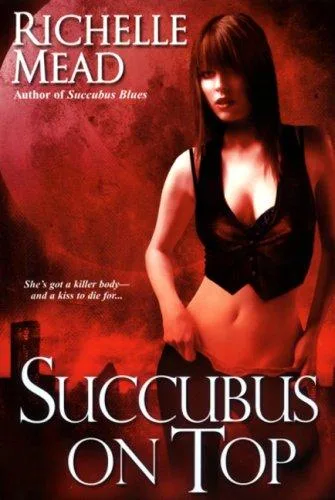
Succubus On Top
 81
81

Succubus On Top
Richelle Mead’s Succubus On Top presents a fascinating, albeit sometimes uneven, exploration of infernal liaisons. The novel’s strength lies in its willingness to depict the succubus not as a mere temptation, but as a complex character with her own motivations and internal struggles. Mead effectively portrays the psychological toll such relationships exact, particularly in passages detailing the protagonist’s internal conflict between her nature and her developing affections. However, the narrative pacing occasionally falters, particularly in the middle sections, where certain plot points feel repetitive. A notable moment occurs when the protagonist grapples with the ethical implications of her actions, a scene that offers a glimpse into the deeper philosophical underpinnings of the story. Despite its occasional narrative stumbles, the book offers a compelling, dark take on supernatural romance.
📝 Description
81
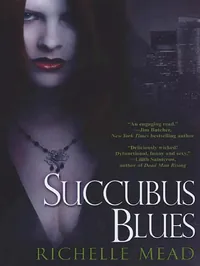
Richelle Mead's 2008 novel, Succubus On Top, centers on Georgina Kincaid's life as a succubus in Seattle.
Published in 2008, Succubus On Top situates demonic figures within human relationships, examining the consequences of these interactions. The narrative eschews conventional morality, instead focusing on the psychological and emotional fallout for its characters. Georgina Kincaid, the succubus protagonist, navigates her existence in Seattle, dealing with her demonic nature alongside everyday human concerns.
The book suits adult readers who enjoy dark fantasy and paranormal romance that pushes boundaries. Those who appreciate characters wrestling with intense desires and supernatural pressures will find this material engaging. It moves away from lighthearted stories or predictable romantic arcs, offering a more complex and morally gray perspective.
This novel emerged during a period of growing interest in paranormal and urban fantasy. The early 21st century saw many stories featuring supernatural beings in modern settings, often with romantic or action elements. Succubus On Top adds to this trend with its mature take on demonology and relationships.
Succubus On Top engages with lore surrounding succubi, traditionally depicted as demonic entities that seduce humans. The book reinterprets this archetype, positing succubi as beings with complex inner lives, capable of forming genuine, albeit complicated, relationships. It touches on themes of infernal pacts and the influence of supernatural beings on human destiny, presenting a modern, urban fantasy take on these older occult concepts.
💡 Why Read This Book?
• Gain insight into the nuanced portrayal of supernatural desire, moving beyond simplistic seduction to explore the psychological complexities of a succubus's existence, as seen in the depiction of Georgina Kincaid's internal conflicts. • Understand the early 21st-century evolution of paranormal fiction, specifically how works like this in 2008 began to explore darker, more morally ambiguous themes within the genre. • Explore the concept of infernal pacts and supernatural influence through narrative examples, examining how these ancient ideas are recontextualized within modern relationships and societal structures.
⭐ Reader Reviews
Honest opinions from readers who have explored this book.
❓ Frequently Asked Questions
What are the main themes explored in Succubus On Top by Richelle Mead?
The book delves into themes of desire, power dynamics between supernatural beings and humans, the nature of temptation, and the psychological impact of infernal relationships. It questions traditional morality by portraying complex characters.
When was Succubus On Top first published?
Succubus On Top was first published in 2008, placing it within the surge of paranormal and urban fantasy literature that gained popularity in the early 21st century.
Is Succubus On Top part of a series?
Yes, Succubus On Top is part of the 'Succubus' series by Richelle Mead, focusing on the character Georgina Kincaid and her supernatural experiences.
What kind of supernatural elements are present in the book?
The book features succubi, demons, and other infernal entities, exploring their interactions with the human world and the unique challenges they face, including their relationships and personal struggles.
What is the general tone of Succubus On Top?
The tone is generally dark, sensual, and often witty, with elements of urban fantasy and paranormal romance. It balances humor with serious explorations of desire and consequence.
Who is Georgina Kincaid?
Georgina Kincaid is the protagonist of Succubus On Top and the 'Succubus' series. She is a succubus working as a writer who must navigate her demonic nature alongside her human-like desires and relationships.
🔮 Key Themes & Symbolism
The Nature of Desire
The book dissects desire not merely as a physical urge but as a complex force that can shape identity and relationships. It examines how both human and supernatural beings are driven by their desires, and the often-unforeseen consequences that follow. Georgina Kincaid's role as a succubus inherently places her at the center of this exploration, forcing her to confront the ethical and emotional implications of her very existence and her interactions with mortals and other entities.
Power Dynamics and Agency
Succubus On Top scrutinizes the ebb and flow of power in relationships, particularly those involving supernatural beings. It questions who truly holds power: the entity that possesses supernatural abilities or the mortal who might wield influence through emotion or circumstance. The narrative explores themes of consent, manipulation, and the struggle for autonomy, especially from the perspective of Georgina, who battles to assert her own agency against her inherent nature and external pressures.
Moral Ambiguity and Identity
The work challenges conventional binary understandings of good and evil. By centering a succubus as its protagonist, the book forces readers to consider the complexities of identity and morality. Georgina's journey involves reconciling her demonic heritage with her personal growth and developing relationships, blurring the lines between victim and perpetrator. This exploration of moral greyness is a hallmark of the book's contribution to the paranormal genre.
Supernatural Existence in the Modern World
Succubus On Top places ancient, often mythologized, beings into a contemporary setting. It explores the practicalities and psychological realities of supernatural entities living amongst humans in the 21st century. The narrative addresses how these beings might adapt, form relationships, and maintain their existence while grappling with modern societal norms and their own unique natures, offering a fresh perspective on classic folklore.
💬 Memorable Quotes
Direct passages from the work, attributed to the author.
“My job is to make people want things they shouldn't.”
— This statement expresses the core function and identity of a succubus within the narrative. It highlights the inherent conflict between natural human morality and the supernatural role of temptation that Georgina embodies.
“Sometimes, the monsters are the ones who want love the most.”
— This interpretation suggests a subversion of typical monster tropes. It implies that supernatural beings, often perceived as inherently evil, may harbor complex emotions and a deep-seated desire for connection, challenging the reader's assumptions.
“I'm not just a demon; I'm also a writer. And I have deadlines.”
— This highlights the juxtaposition of the supernatural and the mundane. It humorously points out that even infernal beings must contend with the practicalities and pressures of everyday life, like professional obligations.
“Temptation isn't always about sin; sometimes it's about choosing your own path.”
— This redefines the concept of temptation, suggesting it can be a catalyst for self-discovery and the assertion of personal will rather than solely an act of succumbing to evil.
💡 Key Ideas
Editorial paraphrase of the work's core concepts — not direct quotes.
Falling in love is a dangerous game, especially when your heart belongs to hell.
This quote speaks to the central conflict of the protagonist, Georgina. It underscores the perilous nature of romantic relationships when one's fundamental identity or 'nature' is tied to infernal origins.
🌙 Esoteric Significance
Tradition
While not directly a treatise on occult philosophy, Succubus On Top draws upon demonological lore that has roots in various esoteric traditions, including aspects of Abrahamic demonology and Neoplatonic ideas about lesser spiritual beings. It reinterprets the succubus, a figure historically associated with temptation and spiritual corruption, within a modern narrative framework. The work engages with the concept of infernal hierarchies and the nature of spirits, albeit through a fictional lens rather than a strictly academic or ritualistic one.
Symbolism
The succubus herself is a potent symbol, representing forbidden desire, the allure of the forbidden, and the duality of nature (infernal versus personal identity). The act of 'making people want things they shouldn't' symbolizes the seductive power of temptation and the potential for external forces to influence human will. Furthermore, the narrative's exploration of relationships can be seen as symbolizing the constant negotiation between primal urges and the desire for genuine connection.
Modern Relevance
Contemporary paranormal romance and urban fantasy authors continue to explore similar themes of morally ambiguous supernatural beings navigating human society and relationships. Works that feature complex 'monsters' with relatable human emotions echo the approach taken in Succubus On Top. The book's exploration of identity, desire, and the blurring of lines between 'good' and 'evil' remains relevant to modern discussions on character complexity and thematic depth in genre fiction.
👥 Who Should Read This Book
• Adult fans of dark fantasy and paranormal romance seeking complex protagonists who challenge traditional notions of morality. • Readers interested in modern reinterpretations of demonic lore and supernatural beings within contemporary settings. • Those who appreciate narratives that explore themes of desire, power dynamics, and the struggle for identity with a blend of sensuality and wit.
📜 Historical Context
Richelle Mead's Succubus On Top, published in 2008, arrived during a significant boom in the paranormal and urban fantasy genres. This period saw authors like Charlaine Harris (The Southern Vampire Mysteries, starting 2001) and Laurell K. Hamilton (Anita Blake, starting 1993) exploring supernatural beings in contemporary settings, often with romantic elements. Mead's work contributed to this trend by focusing on a succubus protagonist, a figure often relegated to villainous roles in earlier literature. While many contemporaries focused on vampires or werewolves, Mead's choice to center a demon offered a distinct, albeit still within the broader 'dark fantasy' umbrella, narrative. The reception of such works generally favored their appeal to a young adult and adult audience drawn to romance, action, and supernatural intrigue, though some critics debated the literary merit of genre fiction compared to more 'literary' contemporaries.
📔 Journal Prompts
Georgina Kincaid's internal conflict between her succubus nature and personal desires.
The concept of 'making people want things they shouldn't' as a form of supernatural influence.
Navigating power dynamics in relationships, whether human or supernatural.
Reconciling one's 'nature' with personal growth and ethical choices.
The role of desire in shaping identity and relationships.
🗂️ Glossary
Succubus
In folklore and demonology, a succubus is a female demon who seduces men, often in their dreams, to engage in sexual activity. In this book, the concept is expanded to explore their existence and relationships in a modern context.
Infernal
Relating to hell or the underworld. In the context of the book, it refers to the demonic nature or origin of certain characters and their associated powers or realms.
Paranormal
Beyond what is explainable by scientific understanding. It encompasses phenomena or beings such as ghosts, vampires, demons, and other supernatural entities that feature in the book's narrative.
Urban Fantasy
A subgenre of fantasy that features supernatural or magical elements within an urban or modern setting, often blending elements of mystery, horror, and romance.
Demonology
The study of demons or beliefs about demons. The book draws on demonological concepts to create its characters and world, though often with fictionalized interpretations.
Moral Ambiguity
The presence of unclear or conflicting moral principles. The book explores this by portraying characters who do not fit neatly into categories of 'good' or 'evil'.
Agency
The capacity of individuals to act independently and make their own free choices. The protagonist's struggle for agency is a key theme.
🔮 Readers Also Liked
Browse all →![Bidayah al-Hikmah (Arab-English) [The Elements of Islamic Metaphysics]](/img/thumb/bidayah-al-hikmah-arab-english-the-elements-of-islamic-metaphysics-allama-muhammad-husayn-tabatabai.webp)







More by Richelle Mead
All books →




More Free Occult Philosophy Books
View all →