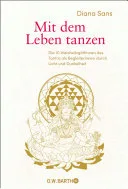
Mit dem Leben tanzen
 72
72

Mit dem Leben tanzen
Diana Sans’s Mit dem Leben tanzen offers a refreshing perspective on the often-misunderstood realm of Tantric goddesses. Instead of resorting to sensationalism or overly academic detachment, Sans presents these powerful figures with clarity and grounded wisdom, a feat achieved through her extensive personal practice and scholarly engagement. The strength of the book lies in its accessible yet profound interpretation of the ten major goddesses, framing them as vital archetypes for modern self-discovery. For instance, the way she unpacks the fierce aspect of a goddess like Kali, moving beyond common fear to reveal her role in liberation, is particularly illuminating. A minor limitation might be that the sheer breadth of ten goddesses means each receives a focused but not exhaustive treatment, leaving some readers perhaps wanting more in-depth exploration of a single archetype. Nevertheless, Sans skillfully translates ancient wisdom for contemporary seekers, offering practical resonance without sacrificing depth. The book serves as a valuable guide for anyone looking to connect with the potent energies of the divine feminine.
📝 Description
72
Diana Sans's 2024 book, Mit dem Leben tanzen, introduces ten great wisdom goddesses of Tantra.
Mit dem Leben tanzen (Dancing with Life) examines ten great wisdom goddesses from Tantra, presenting them as reflections for the soul. Author Diana Sans, with over twenty years of yoga practice and Tantric philosophy study, views these powerful feminine archetypes through a modern perspective. The book moves past simple descriptions, showing goddesses that embody a range of energies, from wild and challenging to gentle and even fearsome.
This work is for individuals seeking a deeper understanding of the divine feminine within Tantric traditions. It will appeal to yoga and meditation practitioners wanting to incorporate archetypal wisdom into their personal development. Scholars of comparative religion and esotericism who are interested in contemporary views of ancient goddesses will also find value. Readers feeling stuck or looking for new ways to approach life's problems may find inspiration here.
The subject matter of Tantric goddesses has a lineage stretching back centuries, with roots in Indian spiritual traditions. This book engages with the historical development of Tantra, particularly its philosophical and devotional aspects. It acknowledges the evolution of Tantric thought, distinguishing modern interpretations from earlier, often more esoteric or ritualistic practices. The work implicitly addresses the historical tendency to either oversimplify or exoticize Tantra, aiming for a balanced, accessible presentation.
💡 Why Read This Book?
• Gain a nuanced understanding of ten specific Tantric goddesses, moving beyond simplistic portrayals to explore their complex archetypal roles, as presented in Diana Sans's modern interpretation. • Discover practical ways to integrate these potent feminine energies into your daily life, learning how to 'dance with life' through the wisdom offered by these ancient figures. • Explore the historical and philosophical underpinnings of Tantra through a contemporary lens, as detailed in the 2024 publication, providing context for these powerful divine feminine archetypes.
⭐ Reader Reviews
Honest opinions from readers who have explored this book.
❓ Frequently Asked Questions
What makes Diana Sans's approach to Tantric goddesses unique in 'Mit dem Leben tanzen'?
Diana Sans, with over 20 years of yoga practice, offers a modern, grounded interpretation of ten great Tantric goddesses. She presents them as dynamic archetypes mirroring the soul, moving beyond stereotypes to reveal their multifaceted energies for personal growth.
What is the primary goal of exploring the Tantric goddesses in this book?
The book aims to help readers encounter life in new ways by understanding the ten great wisdom goddesses of Tantra as mirrors of the soul, encouraging personal integration and a deeper connection to feminine archetypes.
How does 'Mit dem Leben tanzen' relate to traditional Tantric philosophy?
It provides a profound and modern interpretation of Tantric philosophy, focusing on the archetypal wisdom of ten goddesses. Sans leverages her extensive knowledge of the tradition to make these ancient concepts accessible and relevant today.
Who is the author, Diana Sans, and what are her credentials?
Diana Sans is an experienced expert with over 20 years of dedicated yoga practice and comprehensive knowledge of Tantric philosophy and tradition. Her background informs her deep and contemporary insights into the subject matter.
What kind of reader would benefit most from 'Mit dem Leben tanzen'?
Individuals interested in esoteric literature, yoga practitioners, those exploring feminine archetypes, scholars of comparative religion, and anyone seeking inspiration to approach life with new perspectives will find this book valuable.
When was 'Mit dem Leben tanzen' first published?
The book 'Mit dem Leben tanzen' by Diana Sans was first published on September 2, 2024.
🔮 Key Themes & Symbolism
The Ten Wisdom Goddesses
The central theme explores ten major Tantric goddesses, presented as profound archetypes. Diana Sans moves beyond simplistic interpretations, revealing their complex nature—wild, gentle, challenging, and nurturing. These figures are positioned as spiritual guides, offering wisdom that reflects the many-sided aspects of the human soul and the spectrum of life experiences. The book encourages readers to recognize these goddesses not as distant deities but as immanent forces within their own psyche and the world around them.
Archetypes as Soul Mirrors
A significant concept is the framing of these goddesses as 'mirrors of the soul.' This perspective invites readers to engage in self-reflection, using the archetypal energies of the goddesses to understand their own inner landscape. Sans suggests that by confronting and integrating the qualities embodied by these divine figures, individuals can achieve greater self-awareness and emotional balance, fostering a more authentic engagement with existence.
Modern Tantric Interpretation
This work offers a contemporary lens on Tantric philosophy, distinguishing itself from purely historical or ritualistic accounts. Sans leverages her extensive practice and study to present Tantric wisdom in a way that is relevant to modern life. The focus is on the psychological and spiritual integration of these ancient concepts, making the teachings accessible without diluting their inherent power or esoteric depth.
Embracing Life's Full Spectrum
The title itself, 'Dancing with Life,' expresses the theme of embracing all aspects of existence. The book champions an attitude of active engagement rather than passive acceptance, encouraging readers to find joy and meaning even amidst challenges. The goddesses, with their diverse and sometimes contradictory attributes, serve as exemplars of this holistic approach to living fully.
💬 Memorable Quotes
Direct passages from the work, attributed to the author.
“The goddesses of Tantra are not distant figures but vibrant energies within us.”
— This statement emphasizes the immanent nature of the divine feminine as presented in the book. It suggests that the power and wisdom attributed to these goddesses are not external but accessible within the reader's own psyche and experience.
“Encountering these archetypes challenges our stereotypes of the feminine.”
— This highlights the book's aim to present a more complex and authentic portrayal of feminine power. It suggests that the goddesses embody a range of qualities that defy conventional, often limiting, societal expectations of women and femininity.
“Each goddess reflects a unique facet of our own potential and challenges.”
— This interpretation focuses on the 'mirror' aspect of the goddesses. It implies that by studying these figures, readers can gain insight into their own inherent strengths, weaknesses, and the various paths their lives might take.
“Wildness and gentleness coexist within the divine feminine.”
— This captures the non-dualistic nature of the archetypes explored. It suggests that the divine feminine, as represented by the Tantric goddesses, encompasses seemingly opposing qualities, reflecting the full spectrum of existence.
💡 Key Ideas
Editorial paraphrase of the work's core concepts — not direct quotes.
Yoga practice and Tantric philosophy intertwine to illuminate the soul's journey.
This paraphrase underscores the author's integrated approach, linking her extensive yoga background with her understanding of Tantric thought. It implies that these disciplines together offer a path to deeper self-understanding and spiritual development.
🌙 Esoteric Significance
Tradition
This work is rooted in the broad umbrella of Tantra, a complex and diverse spiritual tradition originating in India. While often associated with Hinduism and Buddhism, its esoteric dimensions have influenced various global spiritual movements. Sans's approach leans towards the philosophical and archetypal interpretations, making it accessible within contemporary Western esoteric circles interested in goddesses and feminine power, rather than focusing on specific lineages like Kaula or Shri Vidya in their most technical forms.
Symbolism
Key symbols include the ten great wisdom goddesses themselves, each embodying specific cosmic principles and psychological states. For instance, a goddess representing fierce liberation might symbolize the destruction of egoic illusions, while another embodying nurturing creation could represent the generative power of the universe. The concept of 'dancing with life' itself serves as a metaphor for embracing the dynamic, cyclical nature of existence, integrating both its joys and sorrows.
Modern Relevance
Contemporary thinkers and practitioners in fields like archetypal psychology, feminist spirituality, and embodied consciousness studies find resonance in Sans's work. Her accessible presentation of Tantric goddesses as internal archetypes aligns with modern efforts to reclaim and understand feminine power in a balanced, integrated way. Practices focused on self-awareness, shadow work, and the integration of divine feminine principles often draw inspiration from such interpretations of ancient wisdom.
👥 Who Should Read This Book
• Practitioners of yoga and meditation seeking to deepen their understanding of feminine archetypes and integrate them into their practice, benefiting from Diana Sans's 20+ years of experience. • Students of comparative religion and esoteric studies interested in modern, accessible interpretations of Tantric philosophy and its rich pantheon of goddesses. • Individuals on a path of personal growth who are looking for empowering perspectives on life's challenges and a more nuanced understanding of the divine feminine within themselves.
📜 Historical Context
Published in 2024, Diana Sans's *Mit dem Leben tanzen* emerges in an era of renewed interest in esoteric spirituality and the divine feminine, yet it distinguishes itself by grounding its exploration in deep Tantric philosophy. The book engages with a lineage of thought that has evolved significantly since its origins in ancient India. While early Tantric texts often focused on complex rituals and cosmology, Sans taps into the psychological and archetypal interpretations that gained prominence in the 20th century, influenced by figures like Carl Jung and later esoteric writers. This approach positions her work within a broader contemporary movement seeking to integrate Eastern spiritual traditions with Western psychological frameworks. Unlike some popular interpretations that might sensationalize Tantra, Sans offers a scholarly yet accessible perspective, drawing on over two decades of practice. Her work implicitly navigates the historical reception of Tantra, which has often been subject to misunderstanding and exoticization, aiming for a balanced portrayal that respects its profound philosophical depth.
📔 Journal Prompts
Reflect on the 'mirrors of the soul' concept concerning the ten wisdom goddesses.
Consider how the archetypal energies of a specific goddess might manifest in your daily challenges.
Explore the balance between 'wildness and gentleness' as embodied by the Tantric goddesses.
Journal about integrating the concept of 'dancing with life' into your routine.
How does the modern interpretation of Tantra presented by Diana Sans differ from prior understandings you've encountered?
🗂️ Glossary
Tantra
A complex spiritual tradition originating in India, encompassing a wide range of philosophies and practices aimed at liberation and transformation, often involving the worship of divine energies and the integration of all aspects of existence.
Archetype
In psychology and esotericism, a universal, primordial image, pattern, or symbol that recurs across cultures and time, representing fundamental human experiences or divine forces.
Divine Feminine
The concept of the sacred feminine principle present in the universe and within individuals, often associated with creation, intuition, nurturing, power, and wisdom, as embodied by goddesses in various traditions.
Wisdom Goddesses
Specific powerful female deities within Tantric traditions, recognized for their profound knowledge, transformative power, and role in guiding spiritual seekers toward enlightenment or self-realization.
Soul Mirror
A metaphorical concept suggesting that certain spiritual figures or archetypes can reflect an individual's inner state, providing insights into their own psyche, potential, and challenges.
Yoga Practice
The physical, mental, and spiritual disciplines derived from the Indian subcontinent, aimed at achieving union of mind, body, and spirit. In this context, it informs the author's understanding of embodied wisdom.
Tantric Philosophy
The philosophical underpinnings of Tantra, which explore concepts such as consciousness, energy (Shakti), the cosmos, and the human experience, often emphasizing the non-dualistic nature of reality.