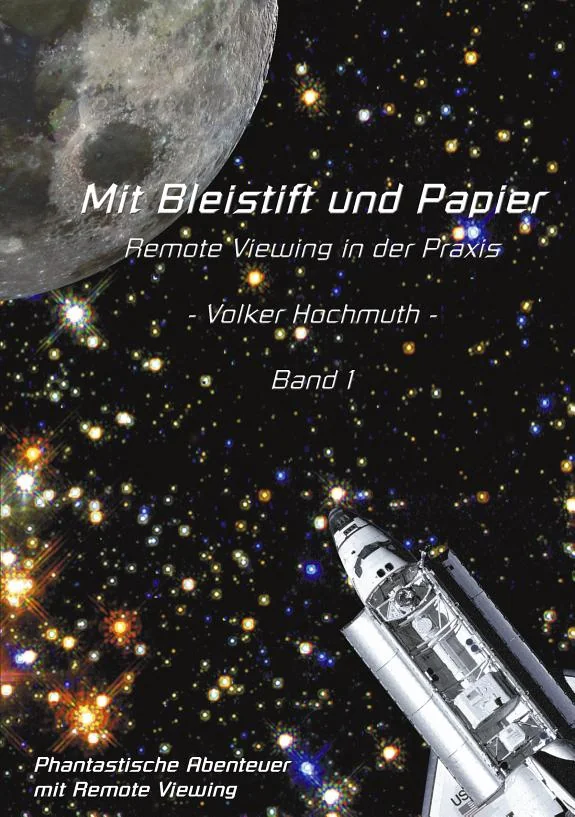
Mit Bleistift und Papier - Remote Viewing in Der Praxis. Band 1
 72
72

Mit Bleistift und Papier - Remote Viewing in Der Praxis. Band 1
Volker Hochmuth's "Mit Bleistift und Papier" offers a grounded perspective on remote viewing, eschewing grandiosity for direct application. The author's methodology, relying solely on "pencil and paper," is elegantly simple, allowing the reader to focus on the observational data. His personal accounts of investigating the Columbia disaster or the Giza pyramids are compelling, providing concrete examples of the technique's potential application to real-world events and historical mysteries. A notable strength is the author's candidness about his process and findings. However, the book's focus on personal projects, while engaging, might leave some readers wanting a more systematic, structured curriculum for developing their own remote viewing skills. The work presents a valuable case study in applied psychic perception.
📝 Description
72
Volker Hochmuth's 2003 book, Mit Bleistift und Papier, details a practical method for remote viewing using only pencil and paper.
This first volume of Mit Bleistift und Papier by Volker Hochmuth presents a hands-on approach to remote viewing, a psychic ability. Hochmuth emphasizes that the only tools needed are common writing implements, pencil and paper, to access information from afar or from different times. The book focuses on Hochmuth's own research and experiences, giving a personal view of his remote viewing activities. It is intended for those interested in parapsychology, the study of consciousness, and developing psychic skills. Readers with some knowledge of remote viewing or those seeking a practical guide will find this useful, especially those interested in firsthand accounts and case studies of psychic phenomena.
The book follows in the tradition of earlier remote viewing research, which saw increased interest after US government studies. It connects with the wider exploration of consciousness and psi phenomena common in esoteric and parapsychological discussions from the late 20th and early 21st centuries. Hochmuth's work aligns with that of researchers such as Ingo Swann and Hal Puthoff. The central idea is remote viewing itself: the capacity to get information about a distant or hidden target through extrasensory means. Hochmuth demonstrates this through his own projects, tackling specific, sometimes debated, subjects.
Published in 2003, Mit Bleistift und Papier, Volume 1, emerged during a period of sustained interest in remote viewing. This practice gained significant public attention following government research programs in the United States. The book contributes to the ongoing examination of consciousness and psi phenomena that marked esoteric and parapsychological discourse in the late 20th and early 21st centuries. Hochmuth's work is situated within this lineage, following researchers like Ingo Swann and Hal Puthoff, who were key figures in the scientific and experimental study of psychic abilities.
💡 Why Read This Book?
• Learn a focused approach to remote viewing using only basic tools, as demonstrated in Hochmuth's personal investigations into topics like the Giza pyramids. • Gain practical insights into how to record and interpret psychic impressions, directly from the author's experience with "pencil and paper" protocols. • Explore specific case studies, such as the author's examination of the Columbia catastrophe, to understand how remote viewing can be applied to complex events.
⭐ Reader Reviews
Honest opinions from readers who have explored this book.
❓ Frequently Asked Questions
What is the primary methodology presented in Mit Bleistift und Papier?
The book centers on remote viewing, emphasizing a direct method using only "pencil and paper" for recording psychic impressions and gathering information from distant targets.
What kind of subjects does Volker Hochmuth investigate in this book?
Hochmuth details personal remote viewing projects concerning topics such as the "earthly moon" rumors, the Columbia space shuttle disaster, and observations about the Pyramids of Giza.
When was Mit Bleistift und Papier first published?
The first edition of Mit Bleistift und Papier was published in 2003.
Is this book suitable for absolute beginners in remote viewing?
While it offers practical examples, the book is best suited for those with some foundational understanding of remote viewing concepts, as it focuses on personal application and interpretation.
What distinguishes Hochmuth's approach to remote viewing?
Hochmuth's approach is characterized by its minimalist requirement of just "pencil and paper," focusing on the direct experience and personal analysis of perceived information.
Does the book offer theoretical explanations for remote viewing?
The primary focus is on practical application and personal case studies rather than extensive theoretical discourse, though it implicitly engages with the concept of consciousness exploration.
🔮 Key Themes & Symbolism
Applied Remote Viewing
This theme explores the practical application of remote viewing, moving beyond theory to direct engagement with targets. Hochmuth stresses that only basic tools, "pencil and paper," are necessary for the viewer to access information. The book showcases this through his personal projects, detailing how the process unfolds from initial perception to recorded data. It highlights the potential for remote viewing to investigate specific events, historical sites, and even speculative phenomena, offering a tangible method for exploring the unseen.
Consciousness as a Tool
The work implicitly positions human consciousness as a potent instrument for information gathering, independent of conventional sensory input. By using "pencil and paper" as the sole interface, Hochmuth suggests a direct conduit from the subconscious or intuitive mind to conscious awareness and externalization. This theme underscores the idea that the universe's vastness can be accessed through focused mental states, challenging materialist paradigms and pointing towards the expansive capabilities of the human psyche.
Investigating Anomalies
Hochmuth applies remote viewing to subjects that lie on the fringes of mainstream understanding, such as rumors surrounding the "earthly moon" or the mysteries of the Giza Pyramids. The book demonstrates a method for tackling these anomalies, not necessarily to provide definitive answers, but to explore the process of psychic inquiry itself. The Columbia catastrophe serves as another example of applying this technique to significant, albeit tragic, real-world events.
Personal Case Studies
A significant aspect of the book is its reliance on Hochmuth's personal remote viewing projects. These narratives form the backbone of the work, offering readers direct insight into his experiences, interpretations, and conclusions. This approach provides a subjective yet detailed account of the remote viewing process, allowing readers to follow the author's unique journey and potentially draw parallels with their own intuitive experiences or investigative interests.
💬 Memorable Quotes
Direct passages from the work, attributed to the author.
“Bleistift und Papier - mehr benötigt der Remote Viewier nicht um in die unendlichen Weiten des Universums vorzudringen.”
— This opening statement from the blurb sets the core philosophy of Hochmuth's approach: the essential simplicity of the tools required for remote viewing. It emphasizes that the primary instrument is the viewer's consciousness, augmented by basic recording implements, rather than complex technology.
“Der Autor beschreibt seine eigenen Remote Viewing Projekte auf eine besondere Weise.”
— This highlights the personal and unique nature of Hochmuth's presentation. It suggests that readers will encounter not just a technical manual, but a narrative of individual exploration and application of remote viewing techniques within his specific investigations.
“Im vorliegenden Buch hat der Autor seine persönlichen Themen wie zum Beispiel die Gerüchte um den irdischen Mond, die Columbia Katastrophe und Feststellungen um die Pyramiden in Giza beschrieben.”
— This points to the specific, often intriguing, targets Hochmuth chose for his remote viewing experiments. It indicates the book's content will cover a range of subjects, from speculative astronomical theories to major historical and tragic events, showcasing the versatility of the practice.
“mehr benötigt der Remote Viewier nicht”
— This phrase, meaning 'nothing more is needed,' reinforces the minimalist philosophy. It suggests that the power of remote viewing lies not in external aids but in the internal capabilities of the individual practitioner and their focused intent.
“Feststellungen um die Pyramiden in Giza”
— This phrase, translating to 'findings concerning the Pyramids of Giza,' indicates a specific, real-world application of remote viewing to a well-known historical site, suggesting the book will present observational data related to this ancient wonder.
🌙 Esoteric Significance
Tradition
This work fits within the modern esoteric and parapsychological tradition, drawing from the lineage of consciousness exploration that gained prominence in the latter half of the 20th century. While not strictly tied to ancient traditions like Hermeticism or Kabbalah, it taps into the universal esoteric theme of humanity's latent psychic potential. It departs from purely mystical contemplation by focusing on a structured, albeit self-developed, methodology for empirical psychic investigation.
Symbolism
The core symbol is the "pencil and paper" itself, representing the tangible interface between the unseen world and manifest reality. It symbolizes direct perception and the act of externalizing inner experience. The subjects investigated—the Pyramids of Giza, the Columbia disaster—also carry symbolic weight, representing ancient mysteries, human ambition, and profound tragedy, serving as complex targets for psychic exploration.
Modern Relevance
Hochmuth's emphasis on accessible tools and personal application appeals to contemporary interest in self-development and the exploration of consciousness outside of institutional frameworks. His work can be seen as a precursor or parallel to current trends in mindfulness, biofeedback, and intuitive development practices that seek to harness inner potential. Thinkers and practitioners focused on non-local consciousness and applied psi phenomena continue to find value in such firsthand accounts.
👥 Who Should Read This Book
• Aspiring remote viewers seeking practical, no-frills guidance on methodology and personal application, particularly those interested in Hochmuth's case studies. • Students of parapsychology looking for firsthand accounts of remote viewing investigations into specific events and historical sites like the Giza Pyramids. • Individuals interested in the exploration of consciousness and psychic perception who appreciate a grounded, experiential approach over purely theoretical discourse.
📜 Historical Context
Published in 2003, "Mit Bleistift und Papier" emerged during a period where remote viewing, though no longer a formally funded government program in the US, continued to be explored by independent researchers and enthusiasts. The late 20th and early 21st centuries saw a broader interest in consciousness studies and parapsychology, influenced by figures like J.Z. Knight and the ongoing discourse surrounding psychic phenomena. Hochmuth's work can be seen as part of this wave of personal exploration, following the groundwork laid by pioneers of remote viewing such as Ingo Swann, who developed many of the foundational protocols in the 1970s and 80s. While not a mainstream scientific endeavor, remote viewing maintained a niche presence, with books like Hochmuth's offering practical accounts distinct from the more academic or government-oriented research of earlier decades. The reception was primarily within the esoteric and parapsychological communities, where personal accounts often hold significant weight.
📔 Journal Prompts
The simplicity of "pencil and paper" for psychic exploration.
Your initial impressions of investigating the "earthly moon" rumors via remote viewing.
How Hochmuth's approach to the Columbia catastrophe differs from conventional reporting.
Reflecting on the recorded data from the Pyramids of Giza project.
The potential of consciousness as a tool for information gathering.
🗂️ Glossary
Remote Viewing
A psychic technique used to perceive information about a distant or unseen target, object, person, or event using extrasensory perception, typically recorded via writing or sketching.
Target
In remote viewing, the specific object, location, person, or event that the viewer attempts to perceive information about.
Perception
The process of becoming aware of something through the senses or through extrasensory means. In remote viewing, it refers to the psychic impressions received.
Sketching
The practice of drawing or illustrating perceived impressions during a remote viewing session, often used in conjunction with written notes.
Intuition
The ability to understand something immediately, without the need for conscious reasoning. Often considered a key component of psychic perception.
Case Study
A detailed examination of a specific instance or event, used here to describe Hochmuth's personal remote viewing projects.
Extrasensory Perception (ESP)
Perception of information by means other than the recognized human senses, such as through telepathy or clairvoyance.
This book appears in 1 collection
🔮 Readers Also Liked
Browse all →









From the “Remote Viewing” Collection
View all →



More Free Occult Philosophy Books
View all →