The Bhagavad-Gita
 83
83

The Bhagavad-Gita
The Bhagavad-Gita presents a potent distillation of Hindu spiritual thought, framed by a dramatic battlefield encounter. Its enduring power lies in Krishna's direct address to Arjuna's existential angst. The text excels at presenting complex philosophical ideas through accessible dialogue, particularly its emphasis on Nishkama Karma – action without attachment to its fruits. This is a singular strength, offering a practical path for spiritual engagement in the world. However, some translations and interpretations can obscure the raw immediacy of the original Sanskrit verses, requiring careful selection of editions. The core message concerning the balance of duty and detachment, however, remains remarkably potent. It serves as a profound guide for anyone questioning their purpose and place in the unfolding cosmic play.
📝 Description
83
The Bhagavad-Gita, composed between the 5th and 2nd centuries BCE, is a dialogue on duty and the divine.
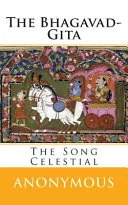
The Bhagavad-Gita is a scripture embedded within the Indian epic Mahabharata. It presents a conversation between the warrior Arjuna and his charioteer Krishna, set on the battlefield of Kurukshetra. Arjuna faces a moral dilemma about fighting his relatives. Krishna's teachings address this crisis, offering guidance on duty, action, and the nature of the supreme.
This text is not a historical account but a spiritual treatise. It addresses the human condition, ethical dilemmas, and existential questions. The Gita offers counsel for those seeking inner peace while engaged in the world. It appeals to readers interested in comparative religion, Eastern philosophies, and applying spiritual principles to daily life.
Emerging from ancient India during a period of philosophical ferment, the Bhagavad-Gita synthesized Upanishadic thought with devotional practices. It engaged with contemporary schools like Samkhya and early Vedanta. Its integration into the Mahabharata ensured its wide dissemination, making it a central text for millions and a key scripture in the development of Hindu thought and spiritual practice.
💡 Why Read This Book?
• You will learn the principle of Nishkama Karma, as taught by Krishna to Arjuna on the battlefield of Kurukshetra, enabling you to act with purpose without being bound by outcomes. • You will gain an understanding of Dharma, the inherent duty and righteous path, crucial for navigating complex ethical decisions and fulfilling your societal role. • You will explore the concept of Moksha, the ultimate spiritual liberation, and the diverse paths (Bhakti, Jnana, Karma Yoga) Krishna outlines for its attainment.
⭐ Reader Reviews
Honest opinions from readers who have explored this book.
❓ Frequently Asked Questions
What is the origin of the Bhagavad-Gita?
The Bhagavad-Gita likely originated in ancient India, with scholarly consensus placing its composition between the 5th and 2nd centuries BCE. It was later incorporated into the epic Mahabharata.
Who are the main characters in the Bhagavad-Gita?
The primary characters are Arjuna, a Pandava prince and warrior, and Krishna, his charioteer and divine guide who imparts the central teachings of the text.
What does 'Dharma' mean in the context of the Bhagavad-Gita?
Dharma refers to one's righteous duty, essential nature, and the cosmic law that upholds the universe. Krishna advises Arjuna to fulfill his Kshatriya (warrior) dharma.
What is the main philosophical message of the Bhagavad-Gita?
The central message is to perform one's duties with detachment from the fruits of action (Nishkama Karma), understanding the eternal nature of the soul (Atman) and pursuing spiritual liberation (Moksha).
Is the Bhagavad-Gita a religious text or a philosophical one?
It is both. It is a sacred scripture within Hinduism, deeply devotional, yet it also presents profound philosophical concepts concerning ethics, metaphysics, and the nature of reality.
When was the first known publication date for this specific edition?
The original blurb indicates a first publication date of 2014-12-25 for this particular edition.
🔮 Key Themes & Symbolism
The Battlefield of Duty
The Gita frames its spiritual teachings within the immediate, urgent context of Arjuna's moral dilemma on the battlefield of Kurukshetra. This setting is not incidental; it represents the internal and external conflicts individuals face when confronted with their responsibilities. Krishna's counsel to Arjuna to fulfill his Kshatriya duty highlights the esoteric principle that spiritual growth often occurs not by avoiding worldly obligations, but by engaging with them consciously and with equanimity, transforming the mundane into a path toward the divine.
Action Without Attachment (Nishkama Karma)
A central tenet of the Gita is the practice of Nishkama Karma, or selfless action. This involves performing one's prescribed duties (Dharma) without being attached to the rewards or consequences of those actions. Krishna teaches Arjuna that such action purifies the mind and leads to spiritual liberation (Moksha). This concept is crucial in esoteric thought, suggesting that the external world of action is a field for inner transformation, rather than something to be escaped.
The Nature of the Self (Atman)
The Gita posits the existence of an eternal, unchanging self (Atman) distinct from the physical body and mind. Krishna explains that the Atman is unborn, immortal, and unaffected by birth or death. This understanding is fundamental to overcoming fear and attachment to the transient material world. Recognizing the true nature of the self allows one to perceive the divine within and without, fostering a sense of unity and detachment from worldly suffering.
Paths to Liberation (Moksha)
The scripture outlines multiple yogic paths toward Moksha, the ultimate goal of spiritual freedom. These include Karma Yoga (the path of action), Jnana Yoga (the path of knowledge), and Bhakti Yoga (the path of devotion). Krishna emphasizes that these paths are not mutually exclusive and can be integrated. This pluralistic approach to liberation is a hallmark of Hindu philosophy, offering diverse methods for spiritual realization suited to different temperaments.
💬 Memorable Quotes
Direct passages from the work, attributed to the author.
“You have a right to perform your prescribed duty, but you are not entitled to the fruits of your actions.”
— This is the essence of Nishkama Karma. It asserts that our agency lies in the execution of our responsibilities, not in controlling the outcomes, which are subject to larger forces.
“The soul is never born and never dies; nor does it exist in the past, present, or future. It is unborn, eternal, ever-existing, and ancient. It is not killed when the body is killed.”
— This statement defines the eternal nature of the Atman, the true self, asserting its incorruptibility and immutability, independent of the physical form's transient existence.
“Those who are free from attachment and aversion, who are in control of their senses and are always endeavoring for self-realization, shall find the Supreme.”
— This highlights the prerequisites for spiritual attainment: mastery over desires and aversions, control over sensory impulses, and a consistent effort towards understanding one's true nature.
“Whatever action a great man performs, common men follow. Whatever standard he sets, the world adopts.”
— This principle, known as the 'Mahatma Gamanam' or 'the way of the great soul,' underscores the influence of exemplary individuals in shaping societal norms and actions.
“Perform your prescribed duty, for acting is superior to inaction.”
— Krishna advises Arjuna that engaging actively and righteously in one's Dharma is more conducive to spiritual progress than passive renunciation or idleness.
🌙 Esoteric Significance
Tradition
The Bhagavad-Gita is a central to the Vedic and Hindu esoteric traditions. It draws heavily from Upanishadic philosophy, particularly the concept of Brahman and Atman, and integrates elements of yogic practices and devotionalism (Bhakti). It offers a comprehensive system for spiritual realization that bridges the gap between the exoteric practice of ritual and the esoteric pursuit of self-knowledge, providing a practical framework for living a spiritual life within the world.
Symbolism
The battlefield of Kurukshetra symbolizes the arena of human consciousness where the forces of good and evil, duty and desire, constantly clash. Arjuna represents the struggling soul, overwhelmed by existential choices. Krishna, as the divine charioteer, symbolizes the indwelling divine guide or higher consciousness that can steer the individual towards enlightenment. The chariot itself can be seen as the body, with the senses as horses that must be controlled by the reins of the mind and intellect.
Modern Relevance
Contemporary spiritual teachers, philosophers, and psychologists continue to draw inspiration from the Gita. Its principles of detached action (Karma Yoga) are particularly relevant in today's fast-paced world, offering a method for managing stress and finding meaning in work. Movements focused on mindfulness, ethical conduct, and integral spirituality often reference the Gita's teachings on the interconnectedness of all beings and the importance of fulfilling one's unique purpose (Dharma).
👥 Who Should Read This Book
• Students of comparative religion and philosophy seeking to understand a foundational text of Hinduism and its influence on global thought. • Individuals grappling with ethical dilemmas and seeking guidance on performing their duties with integrity and inner peace. • Seekers of spiritual enlightenment interested in yogic paths, self-knowledge, and the concept of divine consciousness as presented in Eastern traditions.
📜 Historical Context
The Bhagavad-Gita emerged from the intellectual ferment of ancient India, likely between the 5th and 2nd centuries BCE, a period rich with Upanishadic speculation and the development of various philosophical systems. It can be seen as a synthesis, drawing from earlier Vedic thought while responding to contemporary schools like Samkhya and early Vedanta. Its integration into the epic Mahabharata, attributed to the sage Vyasa, was a crucial strategic move that ensured its widespread appeal and survival. Unlike purely academic philosophical treatises, the Gita’s narrative framing made its teachings accessible to a broader audience. Its influence grew exponentially, becoming a central text for devotional Hinduism and a subject of commentary by figures like Adi Shankara and Ramanuja, who offered differing interpretations of its core doctrines.
📔 Journal Prompts
Arjuna's crisis of duty on the battlefield of Kurukshetra.
The nature of Dharma as presented by Krishna.
The concept of Nishkama Karma in daily actions.
The Atman's relationship to the physical body.
The path of Bhakti Yoga as a means to the divine.
🗂️ Glossary
Dharma
One's duty, righteousness, essential nature, or cosmic law that upholds the universe. In the Gita, it refers to fulfilling one's prescribed role in society and the cosmos.
Karma
The universal principle of cause and effect, where actions (karma) create consequences that influence present and future lives. The Gita emphasizes performing karma without attachment to results.
Moksha
Liberation or release from the cycle of birth, death, and rebirth (samsara). It signifies ultimate spiritual freedom and union with the divine.
Atman
The eternal, unchanging self or soul within each individual. It is considered identical with Brahman, the ultimate reality.
Brahman
The supreme, unchanging, infinite, and absolute reality that is the source and sustainer of all existence in Hinduism.
Yoga
A spiritual discipline or practice aimed at uniting the individual consciousness with the divine or ultimate reality. The Gita outlines several paths, including Karma, Jnana, and Bhakti Yoga.
Kshatriya
The warrior or ruling class in the traditional Indian social hierarchy (varna). Arjuna belongs to this caste and is urged to fulfill his duty as a warrior.