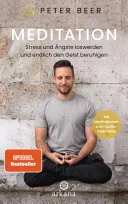
Meditation
 71
71

Meditation
Peter Beer’s "Meditation" tackles the pervasive issue of modern burnout with a compellingly pragmatic approach. Beer, an acclaimed mindfulness teacher, chronicles his own descent into exhaustion following a successful career launch, a narrative that lends immediate credibility. His central thesis—that meditation should become as ubiquitous as jogging—is a bold, refreshing assertion. The book’s strength lies in its directness and its focus on actionable steps rather than abstract philosophy. For instance, the section detailing how to manage the "monkey mind" offers concrete, non-judgmental strategies that feel genuinely applicable. However, the work occasionally leans too heavily on personal anecdote, sometimes at the expense of deeper theoretical exploration. While Beer's personal story is the catalyst, a more robust engagement with the historical and philosophical underpinnings of meditation might have added further gravitas. Despite this, "Meditation" is a valuable guide for anyone seeking practical tools for mental well-being in a demanding world.
📝 Description
71
Peter Beer's 2021 book 'Meditation' grounds mindfulness for the modern, burnt-out individual.
Published in 2021, Peter Beer's "Meditation" offers a practical framework for mindfulness, stemming from his own recovery from burnout. It is not an academic treatise but a guide designed for contemporary readers who find traditional spiritual paths difficult to approach. Beer aims to demystify meditation, making it accessible to those feeling overwhelmed by daily life or seeking concrete methods for mental clarity.
The book is intended for individuals experiencing burnout or looking for effective stress reduction techniques. It particularly suits skeptics and beginners who want a secular, grounded introduction to contemplative practices, finding conventional spiritual approaches inaccessible or overly complex. Beer's approach emphasizes practical application over abstract theory.
While meditation's roots are ancient, found in traditions like Buddhism and Hinduism, Beer's work adapts these practices for a secular, performance-oriented society. The mid-20th century saw a Western resurgence, with figures like Maharishi Mahesh Yogi popularizing techniques like Transcendental Meditation. Beer builds on this lineage, translating time-tested contemplative methods into accessible tools for contemporary mental well-being, focusing on present-moment awareness and consistent practice.
💡 Why Read This Book?
• Gain actionable techniques for managing the "monkey mind" by understanding its patterns, as Beer outlines in his practical approach to recognizing distracting thoughts without judgment. • Discover the concept of the "daily sit" and its significance in building a sustainable meditation habit, inspired by Beer's vision of making meditation as common as jogging. • Learn how to use "mindful breathing" as a primary anchor for present-moment awareness, a core technique detailed in the book to foster calm amidst daily stressors.
⭐ Reader Reviews
Honest opinions from readers who have explored this book.
❓ Frequently Asked Questions
What is Peter Beer's central argument for making meditation mainstream?
Peter Beer advocates for meditation to become as commonplace as jogging, viewing it as an essential tool for mental and emotional well-being in contemporary society.
When was Peter Beer's book 'Meditation' first published?
The book 'Meditation' by Peter Beer was first published on April 19, 2021.
What does Peter Beer mean by the 'monkey mind'?
The 'monkey mind' refers to the restless, constantly chattering, and easily distracted nature of the human mind, which Beer teaches how to observe without judgment.
What is the 'daily sit' concept in Beer's book?
The 'daily sit' is Beer's term for a consistent, regular practice of meditation, emphasizing regularity and commitment over lengthy sessions.
What personal experience led Peter Beer to write about meditation?
Beer's personal experience of severe burnout after achieving professional success motivated him to discover and ultimately advocate for the practice of meditation.
How does Beer's approach to meditation differ from traditional methods?
Beer's approach is notably secular and pragmatic, focusing on practical application for modern stressors and aiming for widespread adoption, similar to physical fitness trends.
🔮 Key Themes & Symbolism
Personal Transformation
The work chronicles Peter Beer's profound personal shift from experiencing severe burnout to achieving a state of calm and clarity through the dedicated practice of meditation. This transformation serves as the foundational narrative, illustrating the practical efficacy of the techniques he subsequently teaches. It emphasizes that even amidst seemingly successful external lives, internal imbalance can be addressed and rectified through consistent contemplative effort.
Secular Mindfulness
Beer champions a distinctly secular interpretation of meditation, stripping away religious dogma to focus on its psychological and physiological benefits. This approach makes the practice accessible to a broader audience, including those skeptical of traditional spiritual paths. The emphasis is on cultivating present-moment awareness and emotional regulation as tools for working through the demands of modern life.
Meditation as Lifestyle
A central theme is the integration of meditation into daily life, moving beyond it being a niche activity to becoming a fundamental habit. Beer's vision of 'meditation becoming the new jogging' highlights this philosophy. The book provides strategies for consistent practice, arguing that regular, even short, sessions are more impactful than infrequent, lengthy ones for long-term well-being.
Managing Mental Noise
The book directly addresses the common experience of a 'monkey mind' – the incessant stream of thoughts that can lead to anxiety and distraction. Beer offers practical, non-judgmental methods for observing these thoughts without getting carried away by them. This focus on mental clarity and attention training is crucial for improving focus and reducing stress.
💬 Memorable Quotes
Direct passages from the work, attributed to the author.
“Meditation should become the new jogging.”
— This provocative statement captures Beer's ambition to normalize meditation as a fundamental aspect of everyday health and well-being, akin to regular physical exercise.
“The 'monkey mind' is not an enemy to be conquered, but a phenomenon to be understood.”
— This highlights Beer's gentle, non-confrontational approach to dealing with distracting thoughts, encouraging observation rather than forceful suppression.
“Consistency in the 'daily sit' is more vital than duration.”
— This emphasizes Beer's practical advice on building a meditation habit, prioritizing regular engagement over striving for lengthy, potentially overwhelming sessions.
“The breath is the anchor to the present moment.”
— This captures the core technique Beer teaches for grounding oneself amidst mental chatter, using the simple, natural rhythm of breathing as a focal point.
💡 Key Ideas
Editorial paraphrase of the work's core concepts — not direct quotes.
Burnout is the signal that your inner life needs attention.
This paraphrase reflects Beer's personal journey, framing exhaustion not as failure, but as a critical indicator that a shift in focus towards internal well-being is necessary.
🌙 Esoteric Significance
Tradition
While Peter Beer's "Meditation" presents a secular framework, its techniques echo principles found in various contemplative traditions, particularly Vipassanā (insight meditation) from Buddhism. It departs from traditional esoteric lineages by intentionally omitting ritual, deity, or complex philosophical systems, focusing solely on the psychological and physiological benefits of attention training and present-moment awareness for a modern audience.
Symbolism
The primary symbol is the 'breath,' serving as the anchor to the present moment, mirroring the concept of Prana in yogic traditions or the vital life force. The 'monkey mind' symbolizes the uncontrolled, discursive nature of consciousness, a concept explored in Buddhist teachings on the untrained mind. Beer’s aspiration for meditation to become the 'new jogging' symbolizes the secularization and normalization of internal practices within a health-conscious, performance-oriented society.
Modern Relevance
Beer's work is highly relevant to contemporary fields like positive psychology, cognitive behavioral therapy (CBT), and corporate mindfulness programs. Thinkers and practitioners focused on stress reduction, emotional intelligence, and peak performance in secular contexts draw heavily on the accessible techniques Beer popularizes. His model aligns with the growing demand for practical, non-denominational mental wellness tools.
👥 Who Should Read This Book
• Individuals experiencing burnout or high stress, seeking practical, secular tools to regain mental clarity and emotional balance, directly applying Beer's personal journey and techniques. • Beginners interested in meditation but intimidated by religious or complex philosophical systems, who will benefit from Beer's straightforward, step-by-step guide to the 'daily sit.' • Professionals and athletes looking to enhance focus, resilience, and performance, by integrating Beer's concept of 'meditation as the new jogging' into their demanding schedules.
📜 Historical Context
The early 21st century has witnessed a significant secularization and popularization of contemplative practices originating in Eastern traditions. Building on the groundwork laid by figures like Maharishi Mahesh Yogi in the 1960s and 70s with Transcendental Meditation, and later by Jon Kabat-Zinn's Mindfulness-Based Stress Reduction (MBSR) program established in the late 1970s, Beer's work emerges in an era where mindfulness is increasingly integrated into psychology, healthcare, and corporate wellness. Unlike earlier movements that sometimes retained a strong spiritual or religious veneer, Beer's approach, published in 2021, distinctly targets a contemporary, often stressed, secular audience. His ambition to make meditation as routine as jogging mirrors the broader societal trend of seeking practical, evidence-based self-improvement tools, a stark contrast to the more esoteric or niche interests that characterized early Western engagement with these practices.
📔 Journal Prompts
The 'monkey mind' and its patterns: how do they manifest in your daily life?
Reflect on the 'daily sit' – what would a consistent practice look like for you?
How can 'mindful breathing' serve as your anchor during stressful moments?
Consider Peter Beer's vision: how might meditation become as common as jogging in your community?
Analyze the signals of burnout you experience and how attention to your inner life could help.
🗂️ Glossary
Monkey Mind
A term used to describe the restless, easily distracted, and constantly chattering nature of the untrained human mind, characterized by incessant thoughts and shifting focus.
Daily Sit
Peter Beer's concept of a consistent, regular practice of meditation, emphasizing regularity and commitment as key to building a sustainable habit for mental well-being.
Mindful Breathing
The practice of consciously focusing attention on the physical sensation of breathing, used as an anchor to cultivate present-moment awareness and calm the mind.
Burnout
A state of emotional, physical, and mental exhaustion caused by prolonged or excessive stress, often resulting from overwhelming work or personal demands.
Secular Meditation
Meditation practices adapted for a non-religious context, focusing on psychological benefits like stress reduction, improved focus, and emotional regulation, rather than spiritual or metaphysical goals.
Anchor
In meditation, a focal point, such as the breath or a sensation, used to stabilize attention and return the mind to the present moment when it wanders.
Present-Moment Awareness
The state of being fully conscious and attentive to what is happening in the immediate moment, without judgment or excessive rumination on the past or future.