The Seven Storey Mountain
 71
71

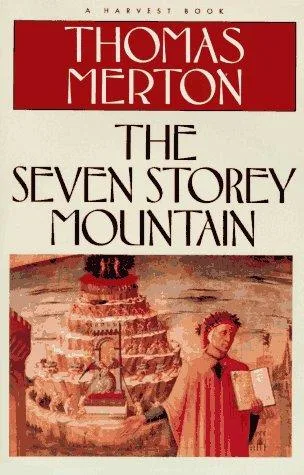
The Seven Storey Mountain
Thomas Merton's 1948 autobiography, The Seven Storey Mountain, presents a spiritual journey that, while deeply personal, speaks to a universal human yearning for transcendence. Merton’s candor in detailing his pre-conversion life—marked by a certain rootlessness and intellectual searching—makes his eventual commitment to Trappist monasticism all the more compelling. The strength of the book lies in its unvarnished depiction of internal struggle; Merton doesn’t shy away from his doubts or his past transgressions. However, for a contemporary reader approaching it through an esoteric lens, the sheer volume of Catholic dogma and devotional practice can sometimes overshadow the more universally applicable themes of self-discovery and the pursuit of ultimate truth. A particularly striking passage details his realization of shared humanity with all people while walking through the streets of New York City, a profound moment of cosmic consciousness. The Seven Storey Mountain remains a significant testament to the power of faith and the arduous path of spiritual seeking.
📝 Description
71
Thomas Merton's 1948 autobiography charts his spiritual journey from a bohemian youth to monastic life.
The Seven Storey Mountain chronicles Thomas Merton's early life, detailing his conversion to Catholicism and subsequent entry into the Abbey of Gethsemani in Kentucky. The book recounts his intellectual and emotional struggles with faith, doubt, and the search for meaning in the post-World War II era. It functions as a personal narrative rather than a theological text, focusing on his pursuit of the divine through introspection and committed devotion.
Merton's account speaks to individuals questioning existence, especially those at a turning point in their spiritual or intellectual paths. It will interest readers curious about the development of 20th-century religious thought, the conversion process, and the realities of monastic existence. Those looking to understand the inner life of a contemplative will find particular value here.
Published in 1948, Merton's memoir emerged during a period of widespread spiritual reevaluation following the war. His narrative of finding structure within Catholicism contrasted with the burgeoning existentialist philosophies of the time. The book's reception highlighted a public desire for spiritual anchors, resonating with those seeking an alternative to secular viewpoints. It connects to a long tradition of spiritual autobiography, where personal experience serves as a vehicle for exploring deeper truths.
💡 Why Read This Book?
• Gain insight into the rigorous discipline of Trappist monasticism, as detailed by Merton’s entry into the Abbey of Gethsemani in 1941, understanding its role in spiritual formation. • Explore the concept of the "true self" versus the "false self" through Merton's personal narrative, observing how shedding ego can lead to spiritual clarity. • Understand the post-war spiritual landscape of 1948, where Merton’s conversion and subsequent writings offered an alternative to burgeoning existentialist thought.
⭐ Reader Reviews
Honest opinions from readers who have explored this book.
❓ Frequently Asked Questions
When did Thomas Merton first publish The Seven Storey Mountain?
The Seven Storey Mountain was first published in 1948, marking a significant moment in post-war spiritual literature and introducing Merton's contemplative path to a wide audience.
What is the significance of the title 'The Seven Storey Mountain'?
The title alludes to the seven levels of ascent described by Saint Bernard of Clairvaux, symbolizing the spiritual journey and the progressive stages of union with God.
Where did Thomas Merton join a monastery?
Thomas Merton joined the Abbey of Gethsemani, a Trappist monastery located in Kentucky, USA.
What was Merton's background before his conversion?
Before his conversion to Catholicism and entry into monastic life, Merton lived a bohemian and intellectually restless existence, including time spent in Paris and New York.
Is The Seven Storey Mountain a religious text or an autobiography?
It is primarily an autobiography detailing Merton's spiritual journey and conversion, deeply informed by Catholic theology and contemplative practice, making it relevant to religious and spiritual readers.
What intellectual movements were contemporary to The Seven Storey Mountain's publication?
Published in 1948, the book emerged alongside the rise of existentialism, notably figures like Jean-Paul Sartre, offering a contrasting spiritual and structured worldview.
🔮 Key Themes & Symbolism
The True Self
Merton extensively explores the dichotomy between the ego-driven 'false self' and the divinely-oriented 'true self.' This concept, central to many contemplative traditions, is depicted through his personal struggle to shed worldly attachments and intellectual pride. His journey to the Abbey of Gethsemani represents a deliberate shedding of the superficial to uncover a deeper, authentic existence rooted in God's presence. The work suggests that true freedom and peace are found not in self-assertion but in surrender to a higher reality, a core tenet in mystical paths.
Solitude and Contemplation
The book emphasizes the crucial role of solitude in spiritual development. Merton portrays monastic life not as an escape from the world, but as a chosen environment conducive to intense inner work and direct experience of the divine. He details how the structured silence and disciplined routine of the Trappist order facilitate a turning inward, away from external distractions. This focus on the contemplative life aligns with esoteric practices that utilize withdrawal and focused meditation to achieve altered states of consciousness and spiritual insight.
The Spiritual Ascent
The 'seven storeys' metaphor, derived from medieval spiritual literature, frames Merton's life as a progressive climb towards God. Each stage represents purification, illumination, and eventual union. This allegorical structure mirrors initiatory paths found in various esoteric traditions, where advancement is marked by overcoming internal obstacles and gaining spiritual knowledge. The narrative charts his intellectual wrestling and emotional transformations as crucial steps in this ascent, highlighting the arduous but rewarding nature of spiritual growth.
Grace and Conversion
Merton's profound conversion experience is a key theme, illustrating the concept of divine grace intervening in human life. His narrative details a sudden, overwhelming realization of God's presence and love, leading to his baptism and subsequent devotion. This theme appeals to Gnostic ideas of divine spark and awakening, and with mystical experiences across traditions where a direct encounter with the sacred transforms an individual's perception of reality and purpose.
💬 Memorable Quotes
Direct passages from the work, attributed to the author.
“A vocation is nothing other than the "call" of God, and the answer of man.”
— This highlights the dual nature of spiritual calling: it originates from a divine source but requires a conscious, volitional response from the individual seeking that path.
“The more you understand the world, the more you understand God.”
— An interpretation suggests that through deep study and contemplation of creation, one can gain a clearer apprehension of the divine architect behind it all.
“My Lord God, I have no idea where I am going. I do not see the road ahead of me. I cannot know where it leads. Nor do I really know myself, and that fact that I think I am following your will does not mean that I am actually doing so. But I believe that the desire to please you does in fact please you.”
— This powerful statement reflects a profound surrender to divine will, acknowledging human limitations in understanding the path while affirming faith in the sincerity of one's intentions.
💡 Key Ideas
Editorial paraphrase of the work's core concepts — not direct quotes.
The end of all our exploring will be to arrive where we started, and know the place for the first time.
This paraphrased concept points to the cyclical nature of spiritual journeys, where the ultimate realization often involves rediscovering the fundamental truth at one's origin.
If you want to be a monk, you have to be a saint.
This quote emphasizes the extreme dedication and spiritual aspiration required for monastic life, framing it as a pursuit of sainthood rather than a mere lifestyle choice.
🌙 Esoteric Significance
Tradition
While deeply rooted in Catholic mysticism and Scholasticism, Merton's work touches upon themes common in esoteric traditions, particularly Christian Hermeticism and the concept of the divine spark within. His emphasis on interior solitude, the dissolution of the ego, and the direct experience of God aligns with contemplative practices found across various mystical lineages, including Sufism and Kabbalah, though he interprets them through a strictly orthodox Catholic lens. His later writings more overtly engaged with Eastern philosophies, but The Seven Storey Mountain lays the groundwork for understanding his spiritual evolution.
Symbolism
The 'seven storeys' themselves function as a primary symbol, representing the ascending levels of spiritual purification and union with the divine, a common motif in alchemical and mystical literature. The monastery, particularly the Abbey of Gethsemani, symbolizes a sacred space, a microcosm of the world dedicated to divine service and inner transformation. Merton's journey from his worldly life in New York City to the cloistered life represents the archetypal movement from the profane to the sacred, from illusion to reality.
Modern Relevance
Merton's exploration of solitude, contemplative practice, and the search for authentic selfhood continues to influence contemporary spiritual seekers, even outside Catholic circles. His ideas on interfaith dialogue and the universality of contemplative experience have resonated with modern practitioners of mindfulness, contemplative Christianity, and even those exploring secular forms of meditation. Thinkers and writers interested in the intersection of psychology, spirituality, and the challenges of modern life often cite Merton's early work as a foundational text for understanding the inner life.
👥 Who Should Read This Book
• Individuals exploring conversion experiences or seeking to understand the process of spiritual transformation within established religious frameworks. • Students of 20th-century religious history and intellectual movements, particularly those interested in the Catholic revival and its contrast with existentialism. • Seekers of contemplative practice who wish to understand the foundations of Western Christian mysticism and the role of solitude in spiritual discipline.
📜 Historical Context
The Seven Storey Mountain arrived in 1948, a moment when the intellectual and spiritual field of the West was deeply scarred by World War II. A palpable hunger for meaning and order emerged, leading many to seek solace in traditional religious frameworks. Merton's autobiography offered a compelling personal narrative of conversion and commitment to Catholicism, providing a stark contrast to the ascendant existentialist philosophy championed by figures like Jean-Paul Sartre, which often emphasized individual freedom and the absence of inherent meaning. The book's immediate and massive success, with over 100,000 copies sold in its first year, indicated a widespread desire for spiritual grounding that other contemporary spiritual or philosophical movements struggled to satisfy. Its reception highlighted a significant segment of the population looking for anchors in a seemingly chaotic world, making Merton's journey from bohemian secularism to Trappist austerity a cultural touchstone.
📔 Journal Prompts
The concept of the 'false self' and its manifestations in daily life.
Merton's journey from intellectual searching to monastic commitment.
The role of solitude in fostering spiritual awareness.
Reflecting on the meaning of 'grace' in personal experience.
The symbolic significance of the 'seven storeys' in personal growth.
🗂️ Glossary
Trappist
A member of the Order of Cistercians of the Strict Observance (OCSO), a Catholic monastic order known for its emphasis on silence, prayer, and manual labor.
Bohemian
A person, typically an artist or writer, who lives in an unconventional way, often disregarding conventional standards of behavior and appearance.
Contemplation
The action of looking thoughtfully for a long time at something; or, in a religious context, deep reflective thought or prayer.
Grace
In Christian theology, the divine assistance given to humans for their salvation, enabling them to overcome sin and live a virtuous life.
The True Self
A spiritual concept referring to one's authentic, divine-oriented essence, distinct from the ego or conditioned personality.
Vocation
A person's true calling or destiny, especially in a religious context, referring to a divine call to a particular way of life or service.
Existentialism
A philosophical theory or approach which emphasizes the existence of the individual person as a free and responsible agent determining their own development through acts of the will.
🔮 Readers Also Liked
Browse all →









More by Thomas Merton
All books →




More Free Spiritual Development Books
View all →