Pippi Långstrump
 75
75

Pippi Långstrump
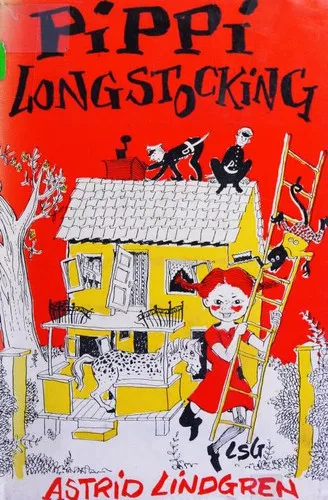
Astrid Lindgren’s Pippi Långstrump offers an almost alchemical blend of anarchic spirit and profound innocence. The titular character, Pippi, is less a child and more a force of nature, inhabiting Villa Villekulla with an untamed vigor that consistently upends the staid expectations of her small Swedish town. Lindgren masterfully crafts scenarios where Pippi’s improbable strength and her wildly imaginative narratives clash with the mundane, creating moments of both hilarious absurdity and unexpected wisdom. The limitation, if one can call it that, lies in the very singularity of Pippi’s character; her unwavering self-possession can sometimes feel less like a relatable childhood fantasy and more like a deliberate philosophical construct. However, this very construct is where the work’s power resides. Consider the scene where Pippi lifts a policeman with one hand – it’s not merely a feat of strength, but a symbolic dismantling of authority. The book is a potent, if unconventional, exploration of freedom. Pippi Långstrump remains a singular achievement in children's literature, a vibrant testament to the power of unbridled imagination.
📝 Description
75
Astrid Lindgren's Pippi Långstrump first appeared in 1945, introducing a girl who lives by her own rules.
Pippi Långstrump, published in 1945, follows an extraordinarily strong and unconventional young girl who lives alone in a villa with her horse and monkey. Her independent spirit and disregard for adult expectations drive the episodic adventures she shares with her neighbors, Tommy and Annika. Pippi challenges the established social order with her boundless energy and unique perspective, often through physically imposing feats and imaginative storytelling.
The narrative celebrates individuality and self-reliance, presenting a protagonist who embodies freedom. It appeals to readers who enjoy characters that defy norms and embrace their own way of life. Younger readers are drawn to the fantastical elements and humor, while adults may find resonance in the themes of childhood independence and the playful subversion of authority. Those who value imagination and a spirit of rebellion will find the story engaging.
Lindgren's creation emerged in the post-World War II era, a time when children's literature began to move beyond purely didactic tales. Pippi's unruliness initially met resistance from some critics who questioned her lack of discipline. Despite this, the book's lasting appeal and widespread translation confirm its significant cultural presence.
While not a traditional esoteric text, Pippi Långstrump can be read through an esoteric lens as a figure embodying radical self-sovereignty and a connection to primal, untamed forces. Her unshakeable self-belief and ability to manifest her own reality, unburdened by societal conditioning, echo certain anarchist or counter-cultural philosophies. Pippi operates outside conventional hierarchies, demonstrating a form of intuitive wisdom that prioritizes personal freedom and imaginative truth over established dogma. Her villa, Villa Villekulla, becomes a sanctuary for this unconventional existence, a space where the ordinary rules do not apply.
💡 Why Read This Book?
• You will learn how radical autonomy can be depicted through a child's perspective, inspired by Pippi's self-sufficient life in Villa Villekulla from 1945. • You will experience the subversion of adult authority and societal norms through Pippi's unique strength and imaginative storytelling, challenging conventional expectations. • You will feel the power of unbridled imagination as Pippi navigates the world, demonstrating how subjective reality can be as potent as objective fact.
⭐ Reader Reviews
Honest opinions from readers who have explored this book.
❓ Frequently Asked Questions
What is the original publication year of Pippi Långstrump?
Pippi Långstrump was first published in 1945 by Astrid Lindgren, marking its debut in Swedish children's literature.
Who are Pippi Långstrump's main companions?
Pippi's primary companions are her monkey, Mr. Nilsson, and her horse, who lives on the porch of Villa Villekulla. She also forms a close friendship with the neighboring children, Tommy and Annika.
What is unique about Pippi's living situation?
Pippi lives alone in Villa Villekulla, as her mother is an angel and her father is a cannibal king, which allows her complete freedom from adult supervision.
What are some common interpretations of Pippi's character?
Pippi is often interpreted as a symbol of freedom, independence, and the subversion of conventional authority. Her immense strength is also seen as a metaphor for inner power.
Was Pippi Långstrump controversial when it was first published?
Yes, the book faced some controversy upon its release in 1945 due to Pippi's unconventional behavior and lack of discipline, which some critics found problematic for young readers.
What is the significance of Villa Villekulla?
Villa Villekulla is Pippi's home, representing her independence and freedom. It is the setting where her unconventional life and adventures unfold, away from the constraints of adult society.
🔮 Key Themes & Symbolism
Radical Autonomy
Pippi Långstrump embodies an extreme form of self-governance, living independently in Villa Villekulla from the age of ten. Her autonomy is not just about freedom from adult supervision but also a complete self-determination in her actions, beliefs, and lifestyle. This concept challenges traditional notions of childhood dependency and societal structure, presenting a protagonist who operates entirely on her own terms, unburdened by conventional rules or expectations. Her wealth, while significant, is secondary to her internal locus of control, highlighting a freedom that transcends material possessions.
Subversion of Authority
Pippi's interactions consistently undermine established authority figures and social norms. Her physical strength, often used playfully, allows her to literally overpower and outmaneuver adults, from policemen to schoolteachers. This subversion extends to her narrative style, where fantastical explanations and exaggerations are presented as fact, blurring the lines between reality and imagination. The work suggests that rigid structures of authority can be challenged and even rendered absurd by a perspective unclouded by conformity, offering a critique of how societal rules are maintained.
The Power of Imagination
Imagination is Pippi's primary tool for reading through the world and shaping her reality. Her stories about her parents, her travels, and her own capabilities are wildly inventive, yet she imbues them with such conviction that they often become the de facto truth within her sphere. This theme explores how subjective experience and imaginative constructs can hold as much, if not more, power than objective reality. The narrative encourages readers to consider the liberating potential of a mind that is not confined by the mundane or the strictly factual.
Unconventional Strength
Pippi's extraordinary physical strength is a defining characteristic, serving as a potent symbol of her inner resilience and capability. This strength is not merely brute force but a manifestation of her unyielding spirit and her capacity to overcome any obstacle, whether it's lifting a horse or outwitting opponents. It represents a form of power that is innate and untamed, contrasting sharply with the often performative or institutionalized power structures of the adult world. Her strength allows her to protect herself and her friends, reinforcing her role as an independent and capable agent.
💬 Memorable Quotes
Direct passages from the work, attributed to the author.
“I'm going to be a pirate captain when I grow up.”
— This statement highlights Pippi's ambition and her rejection of conventional career paths. It underscores her desire for adventure, power, and a life lived outside the ordinary constraints imposed by society.
“It is important to have a father who is a cannibal king.”
— Pippi's assertion about her father being a cannibal king is a prime example of her fantastical storytelling. It serves to explain her unusual circumstances and reinforce her exotic, untamed persona.
“It's a good thing that I am not a normal person.”
— This sentiment directly addresses Pippi's unique nature. She embraces her difference, recognizing that her deviation from the norm is the source of her freedom and extraordinary abilities.
💡 Key Ideas
Editorial paraphrase of the work's core concepts — not direct quotes.
Nobody is too small to make a difference.
Though often attributed, this quote captures Pippi's spirit of empowerment. It suggests that even the seemingly insignificant possess the potential for significant impact, a core tenet of her character.
I'm not going to be bossed around by anybody.
This quote is a clear declaration of Pippi's commitment to her independence. It defines her character as one that fiercely guards its autonomy and refuses to be subjected to external control.
🌙 Esoteric Significance
Tradition
While not explicitly within a formal esoteric tradition, Pippi Långstrump can be viewed through a lens of Jungian archetypes, particularly the 'Wild Child' or 'Innocent' corrupted by the external world but retaining its primal power. Her untamed nature and connection to instinctual forces align with concepts found in animistic or shamanistic perspectives, where the individual possesses inherent spiritual power independent of societal structures. She represents a potent, untamed life force, embodying a radical freedom that speaks to Gnostic ideas of inherent divine spark needing liberation from material or societal constraints.
Symbolism
Villa Villekulla, Pippi's home, symbolizes a sanctuary of unbridled freedom and self-creation, a space where conventional rules do not apply. Pippi's immense physical strength serves as a metaphor for her powerful inner spirit and her ability to manifest her will upon the world, akin to a primal life force or even a divine spark. Her companion animals, Mr. Nilsson the monkey and the horse, represent her connection to the natural world and her instinctual side, untainted by human artifice or societal conditioning. These elements together symbolize a return to a more elemental state of being.
Modern Relevance
Contemporary interpretations of Pippi Långstrump often highlight her as an early icon of female empowerment and non-conformity. Modern thinkers in child psychology and sociology sometimes reference her as a case study in the benefits of imaginative freedom and the potential dangers of overly rigid societal expectations on developing minds. Her spirit of radical independence continues to inspire discussions around autonomy, particularly for marginalized voices and those challenging established power structures, resonating with contemporary movements advocating for individual liberty and creative expression.
👥 Who Should Read This Book
• Students of children's literature and cultural studies seeking to understand the evolution of narrative and character archetypes from the mid-20th century. • Readers interested in exploring themes of autonomy, independence, and the subversion of authority through unconventional protagonists. • Individuals drawn to narratives that celebrate imagination, humor, and the spirit of playful rebellion against societal norms.
📜 Historical Context
Published in 1945, Pippi Långstrump emerged in Sweden during a period of significant social and cultural transition following World War II. Astrid Lindgren's creation arrived at a time when children's literature was slowly beginning to move away from strict moralizing and towards more nuanced portrayals of childhood. Pippi, with her immense strength, disregard for rules, and unconventional living situation (alone in Villa Villekulla with only a horse and monkey), presented a radical departure from idealized children. Initial reception was mixed; some educational authorities and conservative critics viewed Pippi's unruliness as a negative influence, leading to debates about her suitability for young readers. This contrasted with the growing international interest in more progressive child psychology, exemplified by figures like Benjamin Spock whose influential book on child-rearing was also gaining traction around this time. Despite some early censorship attempts and critical reservations, Pippi's enduring appeal cemented her status as a global icon, challenging traditional notions of childhood and authority.
📔 Journal Prompts
Pippi's unshakeable belief in her own reality, contrasted with Tommy and Annika's grounded perspective, offers fertile ground for exploring subjective truth.
Villa Villekulla as a symbol of absolute freedom: consider what elements constitute your own 'Villa Villekulla' of personal sanctuary and self-determination.
The subversion of adult authority by Pippi's sheer physical strength and imaginative narratives invites reflection on how conventional power structures can be challenged.
Mr. Nilsson and Pippi's horse: explore the significance of animal companionship in representing untamed instincts and natural freedom within your own life.
Pippi's self-sufficiency from 1945 onwards prompts contemplation on the nature of independence and the societal expectations placed upon children and adults.
🗂️ Glossary
Villa Villekulla
The name of Pippi Långstrump's house, which she inhabits alone. It serves as a symbol of her independence and a stage for her extraordinary adventures, free from adult supervision.
Mr. Nilsson
Pippi's pet monkey, a constant companion who shares in her whimsical and often chaotic escapades. He represents Pippi's connection to the animal world and her untamed spirit.
Cannibal King
A fanciful title Pippi bestows upon her father, Captain Ephraim Långstrump. This element of her storytelling serves to explain her unusual circumstances and exotic origins.
Pippi's Strength
Pippi's extraordinary physical prowess, enabling her to lift horses and overpower adults. It functions as a metaphor for her inner resilience, untamed spirit, and ability to overcome challenges.
Subjective Reality
The concept that Pippi's imaginative interpretations and fantastical stories are treated as truth within her world, challenging the primacy of objective fact and conventional understanding.
Autonomy
Pippi's state of self-governance and independence. She lives alone, makes her own decisions, and operates entirely outside the usual structures of adult control and societal expectation.
Subversion
The act of undermining or overthrowing established systems of authority or norms. Pippi's character and actions consistently challenge the conventional rules and expectations of her society.
🔮 Readers Also Liked
Browse all →





More by Astrid Lindgren
All books →

More Free Occult Philosophy Books
View all →