Minta Collins
Roscoe Arbuckle was a pioneering silent film comedian whose career was derailed by a highly publicized scandal and subsequent trials.
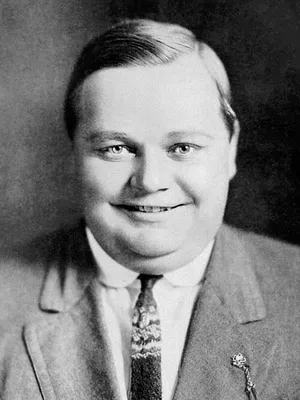
Roscoe Conkling "Fatty" Arbuckle was a prominent American silent film actor, director, and screenwriter during the 1910s. He began his career with Selig Polyscope Company and later joined Keystone Studios, where he worked with notable figures like Mabel Normand and Harold Lloyd. Arbuckle was one of the era's most popular and highest-paid stars, mentoring talents such as Charlie Chaplin and Buster Keaton.
His career was dramatically impacted by three trials between 1921 and 1922 concerning the death of Virginia Rappe at a party he hosted. Though acquitted in the final trial, which included a statement of apology from the jury, the scandal led to his films being banned and his public ostracization. Despite a brief resurgence, Arbuckle's career never fully recovered, and he worked sparingly, eventually directing under a pseudonym and later returning to acting in short comedies before his death in 1933.
Early Life and Vaudeville Beginnings
Born Roscoe Arbuckle in Kansas in 1887, he was named after Senator Roscoe Conkling. His early life included a move to California and a childhood introduction to performing. After his mother's death when he was eleven, and facing harsh treatment from his father, Arbuckle found work and discovered his talent for performance through an amateur show. His unique reaction to audience disapproval, involving a panicked somersault into an orchestra pit, unexpectedly won him the competition and launched his vaudeville career. This early experience showcased a blend of physical comedy and unexpected agility that would define his later film work.
Rise to Stardom in Silent Film
Arbuckle's film career commenced in 1909 with the Selig Polyscope Company. He gained significant recognition at Mack Sennett's Keystone Studios, becoming a star in their popular comedies. Despite his substantial physique, Arbuckle was noted for his remarkable agility and grace, moving with a lightness that surprised many. He became a celebrated comedian, known for fast-paced films, chase scenes, and sight gags, including popularizing the "pie in the face" trope. His popularity led to lucrative contracts, including a substantial deal with Paramount Pictures, solidifying his status as one of Hollywood's highest-paid actors in the 1910s.
The Virginia Rappe Scandal and Its Aftermath
In September 1921, a party hosted by Arbuckle at San Francisco's St. Francis Hotel led to the death of actress Virginia Rappe. Arbuckle was subsequently accused of rape and manslaughter. He faced three highly publicized trials, with the first two ending in hung juries. The third trial resulted in his acquittal, with the jury issuing a formal apology for the ordeal he endured. However, the scandal severely damaged his reputation. Influential industry figures banned his films, and he faced widespread public condemnation, effectively ending his mainstream career despite his legal exoneration.
Later Career and Legacy
Following his acquittal, Arbuckle's career struggled to regain momentum. Although the ban on his films was eventually lifted, he worked sparingly throughout the 1920s. He directed films under the pseudonym William Goodrich and later made a return to acting in short comedies for Warner Bros. in the early 1930s. Arbuckle died of a heart attack in 1933, reportedly on the same day he was set to sign a contract for a feature film. His legacy is largely defined by the overshadowing scandal, despite his significant contributions to the development of silent film comedy and his influence on subsequent generations of comedians.
Books by Minta Collins
2 free public domain books · Read online or download