John Sinclair 20
 82
82

John Sinclair 20
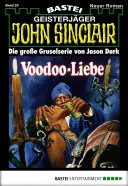
The initial scene, with Dolores approaching the counter and the "Keeper" addressing her with a mixture of familiarity and concern, immediately establishes a mood of unease. This installment of John Sinclair, originating from the 1990s run, delivers on the series' promise of supernatural encounters. The dialogue, though brief in the blurb, hints at the kind of terse, urgent exchanges that define the series' pacing. While the plot mechanics of Voodoo-love and the implied threat or plea from Dolores are classic genre fare, the strength lies in the series' consistent world-building. A potential limitation for new readers could be the reliance on established lore; jumping into "John Sinclair 20" might feel like arriving mid-conversation in a vast, supernatural drama. The narrative's effectiveness hinges on its ability to present familiar occult tropes with a particular pulp energy. It is a solid entry for those already invested in the ongoing saga.
📝 Description
82
John Sinclair 20, a supernatural tale, was published in novel form in May 2015.
This installment of the John Sinclair series, first released as a novel in May 2015, revisits a world where the supernatural intrudes on the ordinary. The original novel series ran from 1991 to 1996, continuing the established pattern of paranormal investigations and encounters with mysterious forces. Readers will find familiar elements of the saga, focusing on characters confronting threats beyond normal understanding.
This volume is suited for dedicated followers of John Sinclair who want to access older stories in a modern format. It also appeals to fans of pulp horror and occult fiction, especially those who enjoy serial narratives with developing lore. Readers who like supernatural detective stories, particularly those with a German pulp feel, will find this familiar. The book offers direct supernatural action and plots centered on characters within a specific, established universe.
The "John Sinclair" series began in Germany in 1973, tapping into a growing public interest in the supernatural and occult during that era. This particular novel comes from a later iteration of the series in the 1990s, showing the enduring appeal of these themes. The books blend horror, action, and gothic elements, drawing from earlier traditions of supernatural storytelling.
💡 Why Read This Book?
• Gain insight into the specific brand of supernatural horror popularized in German pulp fiction during the 1990s, exemplified by the "John Sinclair" series and its recurring "Keeper" figure. • Experience the narrative tension derived from everyday settings suddenly invaded by dark mystical forces, a hallmark of the series, as suggested by the scene with Dolores. • Understand the evolution of serialized occult fiction through this re-released installment, which showcases the enduring appeal of classic supernatural tropes and character archetypes.
⭐ Reader Reviews
Honest opinions from readers who have explored this book.
❓ Frequently Asked Questions
When was John Sinclair 20 originally published as a novel?
John Sinclair 20 was first published as a novel in May 2015, though it is derived from the 4th edition of the original novel series which ran between 1991 and 1996.
What is the genre of the John Sinclair series?
The John Sinclair series is primarily categorized as German pulp horror and occult fiction, featuring supernatural investigations and encounters with paranormal entities.
Who is the author of the John Sinclair series?
The author of the John Sinclair series is Jason Dark, a pseudonym used by German author Helmut Rellergerd.
What kind of themes are explored in John Sinclair 20?
John Sinclair 20 explores themes of Voodoo-love, supernatural pacts, and the influence of otherworldly forces on human lives, as hinted at in the original blurb.
Is John Sinclair 20 suitable for new readers of the series?
While the book can be enjoyed on its own, it is part of a long-running series and may be best appreciated by readers familiar with the established characters and lore of John Sinclair.
What is a 'Keeper' in the context of John Sinclair?
The 'Keeper' is a recurring character or entity within the John Sinclair universe, often acting as a source of information or a guardian against supernatural threats.
🔮 Key Themes & Symbolism
Supernatural Intrusion
The core of "John Sinclair 20" lies in the unsettling concept of supernatural forces breaching the mundane world. The narrative depicts how entities and phenomena beyond human understanding can infiltrate everyday life, disrupting normalcy and posing existential threats. This theme is exemplified by the blurb's mention of "Voodoo-Liebe" and the interaction between Dolores and the "Keeper," suggesting a world where dark magic and paranormal events are not distant concepts but immediate dangers.
The Keeper's Role
The 'Keeper' emerges as an important figure, acting as a nexus of supernatural knowledge and intervention. In the context of the "John Sinclair" universe, the Keeper often serves as an enigmatic guide or protector, privy to the machinations of dark forces. His brief exchange with Dolores highlights his awareness of unfolding supernatural events and his role in the ongoing struggle against them, embodying the series' characteristic blend of mystery and occult lore.
Human Vulnerability to Occult Forces
This installment underscores humanity's inherent vulnerability when confronted with potent occult powers. The narrative implies that characters like Dolores are susceptible to external mystical influences, whether through love spells, curses, or other arcane manipulations. The urgency in Dolores's voice and her interaction with the Keeper suggest a desperate situation, where individuals are often caught in webs of supernatural causality beyond their immediate control.
Pulp Horror Sensibility
As a product of the "John Sinclair" pulp series, this novel embodies a specific brand of fast-paced, action-oriented horror. The focus is on creating an atmosphere of dread and excitement through encounters with the paranormal, often featuring elements of gothic horror and the supernatural detective genre. The concise dialogue and immediate plot developments are characteristic of pulp fiction, designed to maintain reader engagement through constant peril and mystery.
💬 Memorable Quotes
Direct passages from the work, attributed to the author.
“"Zahlen!" sagte die Frau an der Theke mit rauer und gleichzeitig ängstlich klingender Stimme. "Jetzt schon, Dolores?"”
— This exchange immediately signals a departure from normalcy. The woman, identified as Dolores, speaks with a voice that betrays both hardness ('rauer') and fear ('ängstlich'), suggesting she is under duress or facing an urgent, possibly supernatural, situation.
“Der Keeper rief ihr einen Satz nach. "Wo willst du denn hin, D”
— The 'Keeper's' interjection indicates his awareness of Dolores's departure and hints at a larger, unfolding plot. His questioning implies she might be heading into danger or away from a necessary confrontation, central to the narrative's supernatural conflict.
“Voodoo-Liebe.”
— This concise phrase immediately introduces a specific occult element central to the narrative's conflict. It suggests themes of manipulation, dark romance, and the dangerous application of mystical practices for personal or coercive aims.
“Der Keeper schaute sie an. "Jetzt schon, Dolores?"”
— The Keeper's surprised question, "Now already, Dolores?", reveals a pre-existing understanding and expectation regarding Dolores's actions or a specific supernatural event. It implies a continuing narrative and a certain timeline of occult occurrences.
“Sie legte einen Schein hin und rutschte mit etwas unsicher wirkenden Bewegungen vom Hocker.”
— This description of Dolores's actions – placing money down and moving unsteadily – paints a picture of someone disoriented or under a powerful influence, whether emotional, magical, or physical, emphasizing her vulnerability.
🌙 Esoteric Significance
Tradition
The "John Sinclair" series, while primarily pulp horror, draws implicitly from occult traditions, particularly those involving curses, possession, and Voodoo practices. It doesn't adhere strictly to a single lineage like Hermeticism or Gnosticism but rather synthesizes elements common in popular esotericism. The concept of a "Keeper" and the exploration of supernatural "laws" suggest an attempt to create a coherent, albeit fictional, cosmology that mirrors the structures found in more established occult systems, offering a narrative exploration of magical causality.
Symbolism
Key symbols often revolve around the tools and manifestations of dark magic. "Voodoo-Liebe" itself is a symbolic representation of corrupted affection and manipulation through supernatural means, often involving effigies or rituals. The "Keeper" can be seen as a symbolic guardian figure, representing knowledge or a boundary between worlds. The narrative likely employs symbols associated with spirits, curses, and protective wards, common motifs in popular representations of occultism, used to signify danger, power, or the presence of otherworldly forces.
Modern Relevance
Contemporary urban fantasy and paranormal investigation fiction owe a debt to series like "John Sinclair" for popularizing the concept of a lone protagonist battling supernatural threats in a recognizable world. Modern practitioners of occultism interested in narrative magic or fictional cosmologies might find "John Sinclair" a case study in how esoteric concepts are translated for mass appeal. Furthermore, the series' continued availability and fan base indicate an ongoing interest in accessible, action-oriented supernatural narratives that touch upon occult themes.
👥 Who Should Read This Book
• Fans of German pulp horror and occult fiction seeking to revisit classic serialized supernatural tales from the 1990s. • Readers interested in the specific narrative universe of John Sinclair, particularly those who appreciate recurring characters like the "Keeper" and established lore. • Enthusiasts of supernatural detective stories that blend action, mystery, and paranormal elements with a distinct pulp sensibility.
📜 Historical Context
The "John Sinclair" series, originating in 1973, became a phenomenon in German pulp fiction, tapping into a public fascination with the occult and supernatural that persisted through the late 20th century. This particular novel, "John Sinclair 20," is a product of the 1990s revival of the series, a period where serialized horror and fantasy continued to thrive in paperback formats. While the earlier years of "John Sinclair" might have been influenced by American horror comics and Gothic literature, the 1990s iteration reflects a more established, self-referential universe. This era saw a diverse field of supernatural narratives, from the more literary explorations of Stephen King to the action-oriented urban fantasy. "John Sinclair" distinguished itself with its consistent output and its particular brand of German pulp sensibility, characterized by its directness and focus on paranormal investigation. The series' longevity and its eventual re-release in digital formats speak to its enduring appeal within its specific niche, contrasting with more mainstream horror trends.
📔 Journal Prompts
Reflect on the "Keeper's" role in the narrative and its implications for supernatural order.
Consider the concept of "Voodoo-Liebe" as presented in the text; how does it function as a plot device?
Analyze the immediate tension conveyed in Dolores's interaction with the counter person.
Explore the balance between human agency and supernatural influence depicted in the initial scene.
What does the phrase "Jetzt schon, Dolores?" suggest about the timeline of events and expectations within the story?
🗂️ Glossary
John Sinclair
The titular protagonist of a long-running German pulp horror and occult fiction series, known for investigating supernatural phenomena and battling dark forces.
Keeper
A recurring character or entity within the John Sinclair universe, often depicted as a knowledgeable, enigmatic figure who guides or protects the protagonist and others from supernatural threats.
Voodoo-Liebe
Literally 'Voodoo Love,' referring to a form of love spell or magical manipulation associated with Voodoo practices, used within the narrative to evoke themes of dark romance and coercion.
Romanheft
A type of German pulp magazine, typically featuring serialized stories in genres like science fiction, horror, western, and romance, often with ongoing series characters.
E-Book
An electronic book, a digital version of a printed book that can be read on electronic devices such as computers, tablets, and e-readers.
The Keeper's words
Refers to the dialogue spoken by the 'Keeper' character, which often contains cryptic clues or warnings relevant to the ongoing supernatural plot.
Dolores
A character mentioned in the blurb, interacting with the 'Keeper' and seemingly involved in a situation related to 'Voodoo-Liebe,' suggesting she is a focal point of the immediate supernatural conflict.




![Tales of Mystery, Imagination, & Humour, and Poems [8 stories, 11 poems]](/img/thumb/tales-of-mystery-imagination-humour-and-poems-8-stories-11-poems-edgar-allan-poe-060479.webp)