John Gill: Master of Rock
 75
75

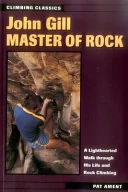
John Gill: Master of Rock
Pat Ament's "John Gill: Master of Rock" offers a necessary, if somewhat specialized, portrait of a climber whose impact belies his relative obscurity in mainstream sports narratives. Ament succeeds in portraying Gill not merely as an athlete, but as a philosophical innovator whose ideas about bouldering fundamentally reshaped perceptions of climbing. The book shines when detailing Gill’s conceptual framework for bouldering, presenting it as an art form demanding intense focus and self-awareness. A notable strength is the inclusion of Bobbi Bensman’s endorsement, which validates Gill’s standing among his peers. However, the narrative occasionally feels constrained by its singular focus, leaving the reader wishing for broader context on how Gill’s radical ideas were received or contested by the wider climbing community at the time. The work explores Gill’s unique perspective on the purity of bouldering, a perspective that challenged prevailing norms. Ultimately, "Master of Rock" serves as a focused tribute to a singular vision in athletic and conceptual development.
📝 Description
75
Pat Ament's 1998 book examines John "jj" Gill's role in modern rock climbing.
Published in 1998, Pat Ament's "John Gill: Master of Rock" details the life and impact of John "jj" Gill, a significant figure in rock climbing's evolution. The book looks closely at Gill's rise as a leader, especially in bouldering. It covers his new methods and the ideas behind his climbing style. Ament shows how Gill went from a dedicated climber to someone who shaped sport climbing, a fact recognized by his peers.
The book is for people interested in climbing history, particularly the beginnings of sport climbing and bouldering. It will interest readers who want to understand the thinking of important people in extreme sports. Those who like individuals that change their fields with a clear vision and commitment will also find it appealing, as it looks at the link between physical skill and new ideas.
Gill, active since the mid-20th century, represents a key link between older climbing styles and the more performance-focused approaches that came later. His ideas were adopted widely, placing him as an important, though sometimes forgotten, person in the sport's growth. The book comes from a time when rock climbing was becoming more professional and varied.
This book touches on an esoteric aspect of climbing by focusing on the psychological and philosophical dimensions of the sport, as embodied by John Gill. Gill's approach to bouldering as a pure, self-contained practice, emphasizing minimalist ethics and psychological challenge, can be seen as a form of embodied philosophy. This aligns with esoteric traditions that view physical discipline and focused practice as paths to self discovery and introspection. The book suggests that pushing personal limits within a defined environment can become a meditative or introspective activity, reflecting a deeper engagement with the self through physical action.
💡 Why Read This Book?
• Understand the conceptual genesis of sport climbing through John Gill's early bouldering theories, moving beyond mere physical technique to explore climbing as a philosophical pursuit. • Gain insight into the raw, all-encompassing nature of bouldering as described by Bobbi Bensman, appreciating its evolution from the mid-20th century onwards. • Explore the psychological and minimalist ethics championed by Gill, evidenced in his pioneering work on challenging boulder problems, which redefined pushing personal limits.
⭐ Reader Reviews
Honest opinions from readers who have explored this book.
❓ Frequently Asked Questions
Who is John Gill and why is he called the 'conceptual father of sport climbing'?
John Gill is a pioneering American rock climber, active since the 1950s. He is considered a conceptual father of sport climbing due to his early, radical ideas about bouldering as a distinct, pure discipline, emphasizing difficulty and minimalist ethics.
What is the significance of bouldering as presented in 'Master of Rock'?
The book highlights Gill's view of bouldering as an intense, self-contained discipline, focusing on the raw, pure challenge. It's presented not just as a climbing style, but as an all-encompassing pursuit of physical and mental limits.
What kind of insights does Pat Ament provide into John Gill's evolution?
Pat Ament offers rare insight into Gill's personal journey and the development of his climbing philosophy. The book details how Gill's vision evolved, shaping his pioneering role in the sport.
When was 'John Gill: Master of Rock' first published?
The book 'John Gill: Master of Rock' by Pat Ament was first published on June 1, 1998.
Does the book discuss specific climbing locations or techniques?
While focusing on Gill's conceptual contributions, the work explores his innovative approaches to climbing and the philosophical underpinnings of his style, implicitly referencing the challenges he tackled.
What is the core message regarding John Gill's legacy?
The core message is that John Gill's conceptual innovations, particularly in bouldering, laid crucial groundwork for modern sport climbing, establishing a paradigm of purity and focused challenge.
🔮 Key Themes & Symbolism
Bouldering as Pure Discipline
The work explores John Gill's foundational concept of bouldering as a self-contained, pure form of climbing, distinct from roped ascents. This isn't just about short routes; it's about an intense, all-encompassing engagement with physical and mental limits. Gill's vision elevates bouldering beyond a training exercise to a complete discipline demanding minimalist ethics and profound focus, a perspective that influenced the trajectory of sport climbing.
Conceptual Evolution of Climbing
Pat Ament traces the evolution of John Gill from a climber to a philosophical architect of the sport. The book examines how Gill's unique ideas, formulated long before their widespread adoption, fundamentally altered the perception of what climbing could be. This conceptual shift, emphasizing individual challenge and refined technique, positioned Gill as a key, albeit often uncredited, innovator in the development of modern climbing paradigms.
Minimalist Ethics and Psychological Challenge
Central to Gill's philosophy, as detailed in the book, is a commitment to minimalist ethics – stripping away extraneous elements to focus on the raw act of climbing. This ties directly into the psychological challenge inherent in tackling difficult, short problems. The book interprets this as a practice of pushing personal boundaries, where the environment becomes a crucible for self-discovery and mental fortitude.
The Man Behind the Movement
Beyond the technical and philosophical aspects, "Master of Rock" seeks to illuminate John Gill himself. It provides rare insight into the individual whose radical thinking propelled the sport forward. By focusing on his evolution, the book offers a more personal understanding of how pioneering vision emerges and takes root, challenging conventional notions of athletic development and influence.
💬 Memorable Quotes
Direct passages from the work, attributed to the author.
“"John Gill is the man!"”
— A concise endorsement from Bobbi Bensman, this exclamation highlights John Gill's revered status among his peers. It signifies his significant impact and recognition as a central, influential figure in the climbing world.
“Interpretation: The book offers rare insight into Gill's evolution as a climbing pioneer.”
— This statement highlights the biographical and developmental aspect of the book. It suggests Ament provides access to Gill's personal journey and the formation of his groundbreaking ideas, moving beyond a simple recounting of achievements.
“Interpretation: John Gill is recognized as the conceptual father of sport climbing.”
— This interpretation points to Gill's foundational role in shaping the theoretical framework of modern sport climbing. It suggests his early ideas laid the groundwork for the sport's subsequent development and philosophical underpinnings.
💡 Key Ideas
Editorial paraphrase of the work's core concepts — not direct quotes.
"This book is a masterpiece. It really shows bouldering like it is: raw, pure, all-encompassing."
This quote, attributed to Bobbi Bensman, captures the book's successful portrayal of bouldering's essential nature. It suggests Gill's approach, as documented by Ament, captures the discipline's core intensity and holistic appeal.
Interpretation: Gill's conceptualization of bouldering as a pure, self-sufficient discipline.
This paraphrased concept underscores Gill's departure from viewing bouldering as mere practice for roped climbing. It emphasizes his vision of it as a complete, demanding athletic and mental pursuit in its own right.
🌙 Esoteric Significance
Tradition
While not directly aligned with a specific historical esoteric lineage like Hermeticism or Kabbalah, John Gill's philosophy of bouldering, as presented in this work, shares common ground with certain ascetic and minimalist traditions. It emphasizes rigorous self-discipline, the purification of action, and the pursuit of mastery through intense focus. This speaks to practices found in Zen Buddhism or certain yogic disciplines that prioritize embodied knowledge and the overcoming of internal limitations through external challenges.
Symbolism
The primary symbol explored is the 'problem' itself – the bouldering route. It functions as a microcosm of life's challenges, demanding precise execution and unwavering focus. The act of 'sending' (completing the problem) symbolizes overcoming obstacles and achieving a state of flow or mastery. The minimalist ethic Gill championed can be seen as a symbol of stripping away the inessential, akin to alchemical purification, to reveal the core essence of the activity and the individual.
Modern Relevance
Gill's conceptual framework continues to influence contemporary climbing culture. Modern bouldering gyms, the proliferation of high-difficulty problems, and the emphasis on psychological fortitude echo his pioneering ideas. Thinkers in fields like sports psychology and performance coaching might find parallels in Gill's focus on mental resilience and achieving peak states. His legacy is evident in the ongoing exploration of physical and mental limits within minimalist, highly focused disciplines.
👥 Who Should Read This Book
• Aspiring climbers and bouldering enthusiasts seeking to understand the roots of their discipline and the philosophy behind extreme physical challenges. • Historians of sport and adventure culture interested in the evolution of rock climbing and the figures who redefined its boundaries. • Individuals drawn to biographies of pioneers who challenge norms and develop unique conceptual frameworks within their fields of expertise.
📜 Historical Context
Published in 1998, "John Gill: Master of Rock" emerged during a transformative period for climbing. The late 20th century saw the sport rapidly professionalize, with increased emphasis on performance and difficulty. John Gill, however, had been a radical thinker since the 1950s, championing bouldering as a pure discipline. His ideas often ran counter to prevailing trends, which focused more on longer, roped ascents. While figures like Royal Robbins were defining a different ethic, Gill was carving out a conceptual space for high-intensity, minimalist climbing. The book’s publication coincided with a growing appreciation for bouldering's potential, positioning Gill as a visionary whose influence was finally being more broadly acknowledged, years after his initial conceptual work.
📔 Journal Prompts
John Gill's concept of bouldering as raw, pure, all-encompassing.
The climber's evolution into a pioneer.
The psychological challenge of minimalist climbing ethics.
The definition of bouldering as a distinct discipline.
Pat Ament's portrayal of a climbing visionary.
🗂️ Glossary
Bouldering
A style of rock climbing performed on small rock formations or artificial rock walls, without the use of ropes and harnesses except for safety. It focuses on short, powerful sequences of moves.
Sport Climbing
A modern form of rock climbing that relies on predefined routes with permanent bolts or anchors for protection. It often emphasizes athletic difficulty and technical skill.
Minimalist Ethics
A philosophy emphasizing simplicity and the removal of non-essential elements. In climbing, it relates to climbing with minimal gear and focusing on the purity of the movement and challenge.
Conceptual Father
An individual credited with originating the fundamental ideas or theoretical framework that leads to the development of a particular field or movement.
Pioneer
A person who is among the first to explore or settle a new country or area; or, someone who is among the first to research and develop a new field or activity.
Sending
In climbing, the successful completion of a route or problem without falling or resting on the rope/gear.
Problem
In bouldering, a specific sequence of moves required to ascend a short section of rock or a climbing wall.
This book appears in 1 collection
🔮 Readers Also Liked
Browse all →









From the “Telekinesis” Collection
View all →







More Free Occult Philosophy Books
View all →