Magickal, mystical creatures

 74
74

Magickal, mystical creatures
D. J. Conway’s *Magickal, Mystical Creatures* attempts to catalog an extensive array of supernatural beings, offering a broad survey that touches upon numerous mythologies and esoteric traditions. The strength of the book lies in its sheer breadth; it presents a dizzying array of creatures, from the more familiar faeries and gnomes to lesser-known entities from diverse global folklore. Conway’s approach is systematic, categorizing these beings in a way that suggests an underlying order to the supernatural world. However, the work’s ambition to cover so much ground occasionally leads to a lack of depth. Descriptions can sometimes feel superficial, and the connections drawn between different traditions, while present, might not satisfy specialists in any single area. For instance, the discussion on elementals, while present, doesn't fully explore the nuances found in older Hermetic texts. Ultimately, *Magickal, Mystical Creatures* functions best as an introductory guide, a wide-ranging inventory for those new to the subject matter.
📝 Description
74
D. J. Conway's 2003 book catalogues entities from elemental spirits to beings in occult traditions.
Magickal, Mystical Creatures, published in 2003, acts as a guide to the many non-human beings found in folklore and occult studies. The book organizes these creatures, starting with nature spirits and moving to those tied to specific magical practices and mythologies. Conway goes beyond simple collection, aiming to explain the roles and characteristics attributed to these beings within various esoteric systems.
This text is for anyone interested in a wide range of magical and mythological beings, not just those common in fantasy. It should appeal to students of mythology, folklorists, and practitioners of esoteric paths who want to understand the nature and perceived effects of beings outside the human sphere. Readers curious about the spiritual or energetic qualities assigned to creatures in different belief systems will find it a useful resource.
Published in 2003, this work appeared during a period of renewed interest in esoteric and pagan studies. Conway's book synthesizes occult lore for a contemporary audience, reflecting an expansion in both scholarly and popular engagement with mythology and magick. It contributes to discussions on classifying and understanding supernatural beings within spiritual or magical frameworks, providing a specific viewpoint on these figures.
💡 Why Read This Book?
• Gain a structured overview of diverse supernatural beings, moving beyond common folklore to understand their roles in various esoteric systems, as detailed in the creature classifications. • Explore the concept of elementals and nature spirits, understanding how Conway links them to specific magickal practices and energetic influences. • Discover lesser-known entities from global mythologies, expanding your knowledge base beyond European fae traditions, as presented in the book's encyclopedic entries.
⭐ Reader Reviews
Honest opinions from readers who have explored this book.
❓ Frequently Asked Questions
What is the primary focus of D. J. Conway's 'Magickal, Mystical Creatures'?
The book primarily focuses on cataloging and describing a wide range of supernatural beings from various mythologies and esoteric traditions, exploring their perceived characteristics and roles.
When was 'Magickal, Mystical Creatures' first published?
D. J. Conway's 'Magickal, Mystical Creatures' was first published in 2003.
Does the book discuss elementals?
Yes, the book discusses elementals, classifying them as fundamental nature spirits associated with earth, air, fire, and water, and exploring their perceived influence.
Is this book suitable for beginners in esoteric studies?
Yes, its broad scope and systematic approach make it suitable for beginners interested in understanding the diversity of magickal beings across different cultures.
What kind of creatures are covered in the book?
The book covers a vast array, including faeries, gnomes, elementals, nature spirits, and various entities from global folklore and occult lore.
Does the author provide practical methods for interacting with these creatures?
While the book describes the nature and perceived roles of these creatures, it leans more towards descriptive and classificatory information rather than providing explicit practical guides for interaction.
🔮 Key Themes & Symbolism
Classification of Esoteric Beings
The work meticulously categorizes supernatural entities, moving beyond simple folklore to assign them specific roles and characteristics within esoteric frameworks. Conway distinguishes between nature spirits, elementals, fae, and other spiritual entities, suggesting an inherent order and hierarchy. This classification aims to provide practitioners and students with a structured understanding of the non-human intelligences believed to inhabit various planes of existence, facilitating a more directed engagement with the subtle realms.
Nature Spirits and Elementals
A significant focus is placed on elementals and nature spirits, often seen as the animating forces behind the physical world. The book details their perceived associations with the four classical elements—earth, air, fire, and water—and their connection to specific environments like forests, mountains, and rivers. Understanding these entities is presented as crucial for anyone seeking to work with the energies of the natural world or to foster a deeper connection with the Earth's inherent magick.
Global Mythological Diversity
Conway draws from a wide array of global mythologies, moving beyond a solely Western or European focus. The book incorporates creatures and beings from various cultural traditions, highlighting common archetypes while also respecting unique cultural expressions of the supernatural. This broad approach underscores the universality of belief in non-human entities and offers a comparative perspective for understanding spiritual landscapes across the planet.
The Esoteric Framework
The core of the book is its esoteric lens. It posits that these creatures are not mere fantasy but are real, albeit often unseen, intelligences with which humans can interact. The work frames the study of these beings as an integral part of magickal practice and spiritual development, suggesting that knowledge of them can unlock deeper understanding of the cosmos and one's place within it.
💬 Memorable Quotes
Direct passages from the work, attributed to the author.
“The elemental world is the world of spirits who are responsible for the elements and the life within nature.”
— This highlights Conway's view of elementals not just as mythical figures, but as active, responsible forces governing the natural world and its vital energies, central to understanding Earth-based magick.
“Fairies are nature spirits, though not all nature spirits are fairies.”
— This points to a hierarchical understanding of nature spirits, distinguishing the commonly known 'fairies' from a broader category of elemental and nature beings that serve specific functions in the ecosystem.
“Dragons are often seen as guardians of hidden knowledge or great treasures.”
— This interpretation emphasizes the symbolic role of dragons in mythology, positioning them not just as beasts but as powerful guardians of wisdom and potent symbols of primal power within esoteric lore.
“Gnomes are earth elementals often associated with the treasures of the earth.”
— This defines gnomes within the elemental framework, linking them specifically to the earth element and subterranean realms, suggesting their connection to mineral wealth and the deep magic of the ground.
💡 Key Ideas
Editorial paraphrase of the work's core concepts — not direct quotes.
The study of magickal creatures offers insight into the unseen forces of the universe.
This paraphrased concept underscores the book's central thesis: that engaging with the lore of mystical beings is a pathway to understanding the fundamental, hidden energies and intelligences that shape reality.
🌙 Esoteric Significance
Tradition
The work fits broadly within the Western Esoteric Tradition, particularly drawing from Neopagan and nature-based spiritualities that emphasize animism and the existence of non-human intelligences. It synthesizes concepts related to elemental spirits, fae, and various mythological beings, often referencing Hermetic ideas about the four elements and the subtle planes. Conway’s approach is less tied to specific codified lineages like Kabbalah or Gnosticism, focusing instead on a more generalized, accessible framework of nature magick and spirit interaction.
Symbolism
Key symbols include the Four Elements (Earth, Air, Fire, Water), representing the fundamental forces governed by elementals, and the concept of the Fae, often symbolizing the liminal spaces between worlds and the potent, sometimes capricious, magic of nature. Dragons, another recurring motif, symbolize ancient power, guardianship, and primal wisdom, often representing forces that must be understood or appeased rather than directly controlled.
Modern Relevance
Contemporary practitioners of folk magick, nature-based witchcraft, and animistic spiritual paths continue to find value in Conway's classifications. Thinkers and groups focused on ecological spirituality and re-enchantment of the world often reference such works to understand and connect with perceived land spirits and elemental forces. The book remains a reference point for those seeking to expand their understanding of the diverse entities populating the spiritual landscape beyond anthropocentric views.
👥 Who Should Read This Book
• Aspiring practitioners of nature-based magick seeking to understand and potentially interact with elemental and nature spirits. • Students of comparative mythology and folklore interested in a structured overview of supernatural beings across diverse cultures. • Individuals exploring esoteric traditions who wish to build a foundational knowledge of the various non-human intelligences described in occult literature.
📜 Historical Context
D. J. Conway's *Magickal, Mystical Creatures* emerged in 2003, a period marked by widespread interest in Neopaganism, Wicca, and general esoteric studies. This era saw a significant demand for accessible yet comprehensive texts that synthesized complex occult traditions. Conway's work built upon the foundations laid by earlier 20th-century authors like Dion Fortune and Gerald Gardner, who explored elemental beings and fae lore within Western magick. The book’s publication coincided with a growing popular engagement with mythology and folklore, often framed through a spiritual or magickal lens, diverging from purely academic anthropological approaches. While not facing overt censorship, the popular reception of such works often navigated a space between academic skepticism and enthusiastic embrace within practicing communities. Conway's contribution was to offer a broad, categorized overview, serving as a foundational reference for a generation exploring these subjects.
📔 Journal Prompts
Reflect on the concept of elementals and their connection to the four classical elements as presented by Conway.
Consider the role of nature spirits in maintaining ecological balance, as implied by the book's descriptions.
How might the classification of fae beings in the book inform your understanding of folklore?
Analyze the symbolic meaning of dragons as guardians of knowledge within the context of esoteric lore.
Explore the potential significance of gnomes beyond their association with earthly treasures.
🗂️ Glossary
Elementals
Spirits believed to be intrinsically connected to and governing one of the four classical elements: Earth, Air, Fire, and Water. They are seen as fundamental forces of nature.
Fae
A broad category of supernatural beings originating in folklore, often associated with nature, enchantment, and sometimes seen as inhabitants of a parallel realm or the Otherworld.
Nature Spirits
Intelligent beings perceived to inhabit and animate natural places such as forests, rivers, mountains, and specific plants or animals.
Gnomes
A type of elemental spirit traditionally associated with the element of Earth, often depicted as small beings dwelling underground and guarding treasures.
Dragons
Mythological serpentine or reptilian creatures, often depicted as powerful, sometimes winged, beings symbolizing primal forces, wisdom, or guardianship in various cultures.
Esoteric
Relating to or accessible by only a small number of people with specialized knowledge or interest; pertaining to occult or mystical subjects.
Animism
The belief that natural objects, phenomena, and the universe itself possess souls or consciousness; a worldview where spirits inhabit the natural world.
🔮 Readers Also Liked
Browse all →






More by D. J. Conway
All books →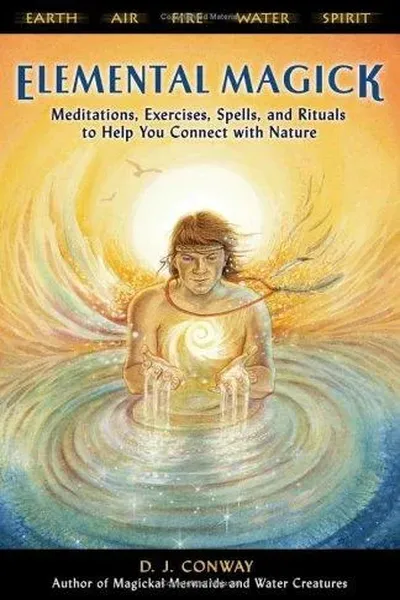





More Free Magic & Ritual Books
View all →