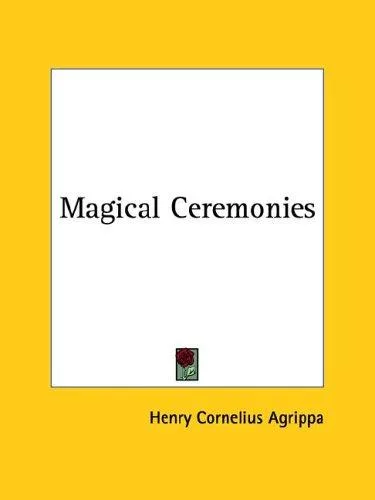
Magical Ceremonies
 61
61

Magical Ceremonies


Ophelia Vance, Mystical Literature Reviewer: Henry Cornelius Agrippa's 'Magical Ceremonies' stands as a cornerstone of Western esotericism, offering unparalleled insights into the practical application of occult philosophy. Agrippa masterfully blends theological depth with practical ritual, illuminating the intricate dance between celestial influences and terrestrial action. His meticulous approach to conjuring and consecration reveals a profound understanding of symbolic language and energetic manipulation. This work is not for the casual dabbler; it demands serious study from practitioners, scholars of ancient wisdom, and seekers yearning for a tangible connection to the hidden currents of reality. Its enduring power lies in its comprehensive guidance and the sheer breadth of its arcane knowledge.
📝 Description
61
Henry Cornelius Agrippa's 'Magical Ceremonies' details ritual construction and celestial correspondences.
This text by Henry Cornelius Agrippa presents detailed instructions for performing magical ceremonies. Agrippa, a figure in Renaissance occultism, outlines specific rites and their symbolic meanings. He connects these practices to celestial influences and the broader structure of the cosmos. The book emphasizes the disciplined intention required for such work, aiming to align the practitioner with what he understood as universal forces.
Agrippa structures each ceremony as more than just a series of actions; it is presented as a symbolic invocation. The goal is to create a connection between the earthly and the divine. Readers are guided through the mechanics of what Agrippa believed to be manifestation, the interpretation of astrological signs, and the inherent power within the individual. The work serves as a philosophical guide for those seeking spiritual growth and personal change.
Published in the Renaissance, 'Magical Ceremonies' is a product of an era where the study of magic, astrology, and natural philosophy were intertwined. Agrippa's work fits within the tradition of ceremonial magic, seeking to understand and interact with the hidden forces of the universe through structured ritual. This tradition draws upon Neoplatonic ideas, Hermeticism, and Kabbalah, viewing the cosmos as a living entity with correspondences that can be understood and manipulated. The book reflects the intellectual currents that sought to synthesize ancient wisdom with contemporary understanding of the natural world.
💡 Why Read This Book?
Embark on a transformative journey into the heart of ceremonial magic. 'Magical Ceremonies' offers a rare glimpse into the structured practice of ancient occult arts, providing actionable techniques for spiritual development and the harmonizing of will with cosmic energies. Ideal for serious students of esotericism, practitioners seeking to deepen their ritualistic understanding, and scholars fascinated by the historical foundations of Western magic. Unlock potent symbols and learn to harness unseen forces for personal growth and spiritual enlightenment.
⭐ Reader Reviews
Honest opinions from readers who have explored this book.
❓ Frequently Asked Questions
What is the primary focus of 'Magical Ceremonies'?
The book's primary focus is on the systematic practice of ceremonial magic, detailing specific rituals, their symbolic meanings, and the underlying principles of occult philosophy that govern them. It aims to provide a framework for practitioners to engage with spiritual and cosmic forces.
Who was Henry Cornelius Agrippa?
Henry Cornelius Agrippa (1486-1535) was a German magician, occult writer, astrologer, and alchemist. He was a highly influential figure in Renaissance occultism, known for his comprehensive treatise 'De Occulta Philosophia libri tres' (Three Books of Occult Philosophy).
Is this book suitable for beginners in magic?
While foundational, 'Magical Ceremonies' is best approached by those with some prior understanding of occult principles or a dedicated willingness to study. It is dense with complex symbolism and requires diligent effort to grasp its full potential.
What kind of rituals are described?
The book describes a range of ceremonies including those for invoking planetary intelligences, consecrating tools, purification, and influencing various aspects of life through focused intent and symbolic action, all grounded in hermetic and astrological principles.
How does 'Magical Ceremonies' differ from other magic texts?
Agrippa's work is distinguished by its systematic and philosophical approach, integrating magic with a comprehensive understanding of natural philosophy, astrology, and Kabbalah. It emphasizes the intellectual and spiritual preparation necessary for effective ritual practice.
🔮 Key Themes & Symbolism
The Art of Ceremonial Invocation
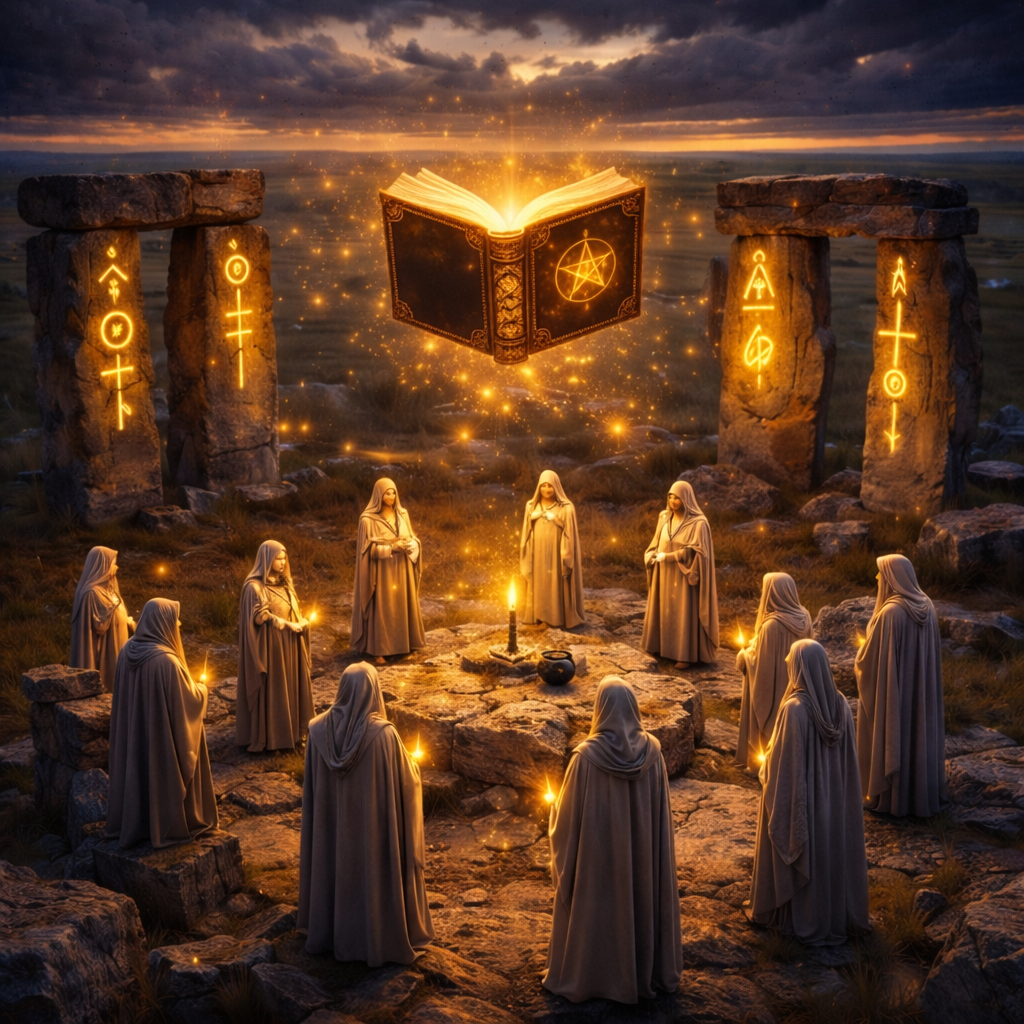
This theme explores the intricate art of ceremonial invocation as presented by Agrippa, focusing on the deliberate and structured application of ritualistic practices. It studies how specific actions, words, and symbolic elements are employed to create a bridge between the practitioner and higher realms or specific intelligences. The text emphasizes the importance of intention, purity of spirit, and precise execution in aligning the microcosm (the practitioner) with the macrocosm (the universe), thereby facilitating the manifestation of desired outcomes through divine or elemental forces. The focus is on the disciplined engagement with the unseen architecture of reality.
Celestial Harmonics and Correspondences
Agrippa's 'Magical Ceremonies' deeply explores the principle of celestial harmonics and correspondences, illustrating how earthly events and human actions are intrinsically linked to the movements and influences of the stars and planets. This theme examines the system of correspondences between celestial bodies, divine names, angels, elements, herbs, stones, and specific ritual actions. Understanding these connections allows the practitioner to tap into universal energies, amplifying the efficacy of their ceremonies by invoking the appropriate planetary or zodiacal influences. It highlights the Hermetic axiom, 'As above, so below,' as the fundamental operating principle.
The Power of Symbolism and Divine Names
This theme studies the profound power of symbolism and the sacred resonance of Divine Names within Agrippa's magical framework. Agrippa illustrates how symbols are not mere representations but active forces capable of influencing consciousness and reality. Similarly, the text emphasizes the potent vibrations inherent in the Names of God and angelic beings, positing that their correct pronunciation and invocation, within a properly prepared ritual setting, can unlock immense spiritual and material power. The meticulous use of sigils, talismans, and specific incantations forms a crucial part of this theme, underscoring the belief that the universe communicates through a language of sacred signs and sounds.
💬 Memorable Quotes
Direct passages from the work, attributed to the author.
“For every action, there is a reaction, and for every intention, a manifestation.”
— This expresses the principle of cause and effect within magical practice, suggesting that focused will and diligent ritual will inevitably yield results, echoing the laws of the cosmos.
“Wisdom is the key that unlocks the door to the hidden realms.”
— This emphasizes the intellectual and spiritual pursuit of knowledge as the essential prerequisite for accessing deeper levels of reality and understanding magical principles.
“Let your will be as steadfast as the stars.”
— This speaks to the importance of unwavering focus and determination in magical work, likening the practitioner's resolve to the eternal constancy of celestial bodies.
💡 Key Ideas
Editorial paraphrase of the work's core concepts — not direct quotes.
The true magician is he who understands the secret ways of nature.
This quote highlights Agrippa's emphasis on knowledge and understanding as the foundation of magic, distinguishing true practitioners from mere charlatans. It points to a deep connection with the natural world.
The heavens declare the glory of God, and the earth reveals His works.
This quote underscores the Hermetic principle of correspondence, linking the celestial realm to the terrestrial and suggesting that divine order is present in all aspects of creation.
🌙 Esoteric Significance
Tradition
Agrippa's work is deeply rooted in the Western Esoteric Tradition, drawing heavily from Hermeticism, Neoplatonism, Kabbalah, and Renaissance magic. It represents a central moment where ancient magical philosophies were systematized and presented within a Christianized framework. The text bridges classical occultism with early modern thought, offering a comprehensive view of magic as a science and a divinely sanctioned art aimed at understanding and interacting with the hidden forces of the universe.
Symbolism
The book is replete with strong symbolism, drawing from astrological correspondences, alchemical metaphors, and Kabbalistic numerology. Celestial bodies, angelic hierarchies, divine names, geometric forms, and natural elements all function as symbolic keys. These symbols are not merely decorative but are seen as conduits of power and meaning, used to structure rituals, invoke specific energies, and create a resonant link between the practitioner and the divine or elemental forces they seek to influence.
Modern Relevance
In contemporary times, Agrippa's 'Magical Ceremonies' continues to be a vital resource for practitioners and scholars of esotericism. Its emphasis on disciplined practice, symbolic understanding, and the interconnectedness of all things appeals to modern seekers exploring consciousness, manifestation, and spiritual growth. The book provides a foundational text for understanding the historical development of Western magic and offers timeless principles for engaging with subtle energies and the deeper mysteries of existence.
👥 Who Should Read This Book
This profound text is essential for serious students of Western esotericism, offering a deep dive into the principles and practices of ceremonial magic. For the aspiring practitioner, it serves as a rigorous guide to understanding the sacred arts, demanding dedicated study and sincere application. Scholars of occult history will find it an invaluable primary source, useful the intellectual field of the Renaissance and the evolution of magical thought. Seekers yearning for a tangible connection to the spiritual dimensions of reality will discover a roadmap for disciplined spiritual exploration. Those already engaged in magical work will benefit immensely from Agrippa's systematic approach, enhancing their understanding of ritual efficacy and cosmic law.
📜 Historical Context
Penned during the twilight of the Middle Ages and the dawn of the Renaissance, 'Magical Ceremonies' emerges from an era of profound intellectual and spiritual ferment. This period witnessed a fervent re-engagement with classical philosophies and esoteric traditions, particularly Neoplatonism, Hermeticism, and Kabbalah, which were being rediscovered and integrated into Christian theology and scholastic thought. Agrippa, a product of this intellectual melting pot, synthesized these diverse streams into a comprehensive system of occult philosophy. The printing press was beginning to democratize knowledge, yet arcane texts remained largely the domain of scholars, mystics, and a select few practitioners. The prevailing worldview was one where the spiritual and material realms were intimately connected, and where magic, understood as the art of influencing nature through divine or hidden means, was seen as a legitimate, albeit complex, pursuit. This context shaped Agrippa's meticulous approach, grounding his magical practices in a sophisticated philosophical and cosmological framework.
📔 Journal Prompts
Reflect on the concept of 'celestial harmonics' and how it might apply to your daily life. What planetary influences do you feel most strongly?
Consider a specific ritual described in the book. How does its structure and symbolism resonate with your personal spiritual journey?
Meditate on a Divine Name or angelic invocation mentioned. What feelings or insights arise from contemplating its power and meaning?
Write about a time you felt a strong connection between your intention and a perceived outcome. How does this relate to the principles of magical manifestation?
Explore the relationship between knowledge and power as presented by Agrippa. How does intellectual understanding enhance magical efficacy?
🗂️ Glossary
Hermeticism
A religious, philosophical, and esoteric tradition based on writings attributed to Hermes Trismegistus, a legendary Hellenistic figure who synthesized Greek and Egyptian beliefs. It emphasizes the interconnectedness of the cosmos and the potential for human spiritual ascent.
Kabbalah
A system of Jewish mysticism that explores the divine nature and the creation of the universe through esoteric interpretation of the Hebrew scriptures. It involves concepts like the Tree of Life and divine emanations.
Neoplatonism
A philosophical system that developed from the ideas of Plato, emphasizing the existence of a supreme, transcendent 'One' from which all reality emanates, and the goal of the soul's return to this divine source through contemplation and asceticism.
Microcosm
In esoteric philosophy, the term refers to the human being or the Earth, seen as a smaller reflection or parallel of the macrocosm (the universe).
Macrocosm
The universe considered as a complex, harmonious whole, especially as distinct from the microcosm. It represents the greater divine order and structure.
This book appears in 3 collections
🔮 Readers Also Liked
Browse all →








More by Henry Cornelius Agrippa
All books →

From the “Ritual Magic” Collection
View all →






More Free Magic & Ritual Books
View all →