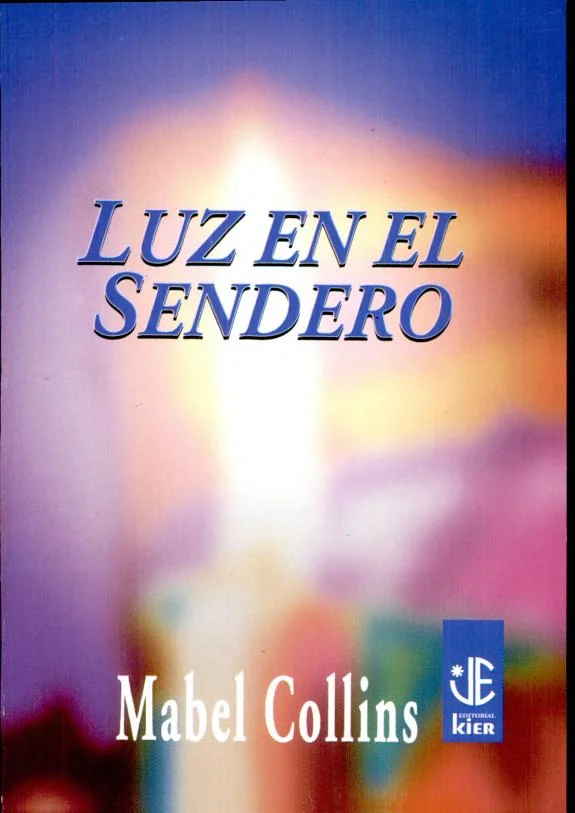
Luz en el sendero
 75
75

Luz en el sendero
Mabel Collins' 'Luz en el sendero' presents an unvarnished, almost stark, depiction of the spiritual journey. Its aphoristic style, while demanding, cuts through sentimentality. The strength lies in its uncompromising focus on self-purification and the stripping away of illusion; the "Four Rules" alone offer a potent framework for ethical and psychological examination. However, its terseness can sometimes feel abstract, lacking the narrative warmth some readers might expect from spiritual literature. A passage detailing the "seven portals" that guard the "path" illustrates this; while symbolically rich, its direct application requires considerable meditative effort from the reader to unpack its practical implications. The book is a demanding but rewarding discipline for the dedicated seeker.
📝 Description
75
Mabel Collins' 'Luz en el sendero' was first published in 1885.
'Luz en el sendero', known in English as 'Light on the Path', presents a demanding set of aphorisms and allegorical narratives. The book outlines a difficult path for spiritual aspirants, stressing the need for self-control, detachment, and the purification of the lower nature. Its structure consists of rules and statements designed to guide the seeker toward inner change.
This work is intended for dedicated students of spiritual philosophy and esoteric disciplines. It suits those who focus on the ethical and psychological aspects of spiritual development over theoretical or ritualistic practices. Readers seeking practical advice for managing egoic limitations and developing internal discipline will find its teachings directly useful. The book's core message is the necessity of inner work and self-awareness for spiritual growth.
'Luz en el sendero' appeared in 1885 during a surge of Western interest in Eastern philosophies and occultism, much of it connected to the Theosophical Society. Mabel Collins, associated with this movement, drew heavily on Indian spiritual traditions like Vedanta. The book soon became a core text for esoteric groups, mentioned alongside H.P. Blavatsky's 'The Secret Doctrine'.
💡 Why Read This Book?
• Gain direct instruction on the rigorous ethical and psychological purification required for spiritual progress, as outlined in the "Four Rules," offering a practical framework absent in purely theoretical texts. • Understand the concept of "the Path" as a concrete, step-by-step process of inner transformation, moving beyond abstract notions of enlightenment towards actionable self-discipline. • Explore the symbolism of the "Seven Portals," which represent distinct stages of inner development and the overcoming of specific psychic obstacles on the journey toward higher consciousness.
⭐ Reader Reviews
Honest opinions from readers who have explored this book.
❓ Frequently Asked Questions
What is the "Path" in Mabel Collins' 'Luz en el sendero'?
The "Path" in 'Luz en el sendero' refers to the arduous but systematic process of spiritual evolution and self-transformation. It involves rigorous ethical training, psychological purification, and the gradual shedding of egoic attachments to align with one's higher nature.
Who was Mabel Collins and what was her connection to Theosophy?
Mabel Collins was a British writer and mystic who published 'Luz en el sendero' in 1885. She was closely associated with the early Theosophical Society, particularly with Helena Blavatsky, and her work reflects the Indian philosophical concepts that Theosophy helped popularize in the West.
What are the 'Four Rules' mentioned in the book?
The "Four Rules" are fundamental precepts presented in 'Luz en el sendero' that guide the aspirant's conduct and inner work. They emphasize principles such as the control of desires, the purification of thought, the detachment from personal gain, and the cultivation of compassion.
How does 'Luz en el sendero' differ from other spiritual guides?
Unlike many spiritual guides, 'Luz en el sendero' is notably austere and direct, focusing on the demanding psychological and ethical work required for transformation. It avoids flowery language, presenting its teachings as practical directives for the serious student of esoteric philosophy.
Is 'Luz en el sendero' suitable for beginners in spiritual study?
While accessible, the book's direct and uncompromising approach makes it more suitable for those with some prior exposure to esoteric concepts or a strong commitment to disciplined inner work, rather than absolute beginners seeking introductory material.
What is the significance of the 'Seven Portals'?
The 'Seven Portals' represent distinct stages or challenges on the spiritual path. Each portal signifies a barrier or a test that the aspirant must overcome, often involving the dissolution of specific illusions or egoic limitations, to progress further.
🔮 Key Themes & Symbolism
The Rigors of the Path
The text frames the spiritual journey not as a gentle unfolding but as a disciplined undertaking requiring immense effort. It details specific obstacles and internal battles the aspirant must face, emphasizing the necessity of unwavering will and detachment from personal desires and outcomes. Concepts like the "Four Rules" serve as a strict ethical and psychological code, designed to purify the lower self and prepare the individual for higher consciousness.
Self-Purification and Detachment
Central to 'Luz en el sendero' is the imperative of purifying one's thoughts, emotions, and actions. The book stresses that true spiritual progress is impossible without shedding the ego's grip, its attachments to worldly possessions, recognition, and personal identity. This process of detachment is presented as a radical stripping away of illusion, leading to a state of inner stillness and receptivity to spiritual guidance.
Inner Guidance and the Higher Self
The work guides the reader towards recognizing and heeding an inner source of wisdom, often referred to as the "higher self" or "inner voice." This guidance is not external but arises from the purified consciousness. The "Seven Portals" symbolize the progressive opening of this inner faculty, where each stage overcome allows for a clearer perception of spiritual truths and a deeper connection to the divine will.
Allegory and Symbolic Language
Collins employs rich allegory and symbolic language throughout 'Luz en el sendero' to convey complex spiritual truths. The "Path," the "Portals," and the various trials described are not merely literal events but represent inner states and psychological transformations. Understanding these symbols is crucial for grasping the text's profound teachings on spiritual evolution and the nature of consciousness.
💬 Memorable Quotes
Direct passages from the work, attributed to the author.
“Place yourself in the stream of progress.”
— This aphorism suggests actively aligning oneself with the natural flow of spiritual evolution. It implies a conscious choice to participate in the unfolding of consciousness, rather than resisting or remaining stagnant.
“When the disciple is ready, the master appears.”
— This widely recognized adage underscores the principle of preparedness in spiritual development. It signifies that true spiritual teachers or higher guidance manifest only when the student has cultivated the necessary inner receptivity and readiness.
“Seek not to be known, but to know.”
— This emphasizes the internal focus required for genuine spiritual growth. It contrasts the external pursuit of recognition or fame with the internal cultivation of wisdom and self-awareness as the true goal.
“Let the lower self be the servant of the higher.”
— This distilled instruction points to the core of self-mastery. It advocates for the subjugation of base desires, egoic impulses, and lower instincts to the direction and wisdom of one's divine or higher consciousness.
💡 Key Ideas
Editorial paraphrase of the work's core concepts — not direct quotes.
The path is steep and narrow, and the gate is straight.
This quote highlights the difficulty and exacting nature of the spiritual journey. It suggests that achieving spiritual liberation requires stringent self-discipline, a focused effort, and adherence to specific, perhaps challenging, principles.
🌙 Esoteric Significance
Tradition
This work is firmly rooted in the Theosophical tradition, which itself synthesized elements from various esoteric lineages, including Hinduism (Vedanta), Buddhism, and Western Hermeticism. 'Luz en el sendero' specifically draws from the Advaita Vedanta philosophy, emphasizing the non-dual nature of reality and the illusory character of the material world. It presents a practical path toward realizing this truth, aligning with the Theosophical goal of fostering universal brotherhood and the study of comparative religion and esoteric science.
Symbolism
The "Path" itself is a primary symbol, representing the arduous journey of spiritual evolution. The "Seven Portals" symbolize distinct stages of inner development, each requiring the aspirant to overcome specific psychic or egoic barriers before proceeding. The "lower self" versus the "higher self" dichotomy is another crucial symbolic representation of the internal struggle between the egoic personality and the divine spark within, a common motif in many esoteric traditions.
Modern Relevance
Contemporary spiritual seekers, particularly those engaged with mindfulness, meditation, and self-development, find value in 'Luz en el sendero.' Its emphasis on ethical conduct, psychological discipline, and detachment from egoic desires continues to inform modern interpretations of spiritual practice. Thinkers and practitioners in fields ranging from transpersonal psychology to neo-Advaita often engage with its core principles, recognizing its enduring influence on the Western esoteric landscape.
👥 Who Should Read This Book
• Students of Theosophy and Eastern philosophies seeking a practical, disciplined guide to inner transformation, directly engaging with concepts popularized in the late 19th century. • Aspiring spiritual practitioners who are ready for rigorous self-examination and seek concrete ethical and psychological directives for their journey, rather than abstract spiritual theories. • Comparative religion scholars and historians of occultism interested in foundational texts that shaped modern esoteric movements and the Western reception of Indian spiritual thought.
📜 Historical Context
Published in 1885, 'Luz en el sendero' emerged during the late Victorian era, a period marked by a burgeoning interest in Eastern religions and occultism in the West. The Theosophical Society, founded by Helena Blavatsky in 1875, was instrumental in popularizing these ideas, and Mabel Collins was an early adherent and contributor. The book resonated with a spiritual seeking that felt unsatisfied by conventional religious or materialistic philosophies. It offered a rigorous, disciplined approach to spirituality, drawing heavily on Indian concepts like karma and reincarnation, which were becoming increasingly accessible through translations and Theosophical writings. This period also saw the rise of other spiritual movements and authors, such as Madame Blavatsky herself and the writings of William Quan Judge, all contributing to a complex spiritual landscape that challenged established norms.
📔 Journal Prompts
The disciple's readiness for the master's appearance.
The nature of the "lower self" as servant.
Obstacles represented by the "Seven Portals."
The personal meaning of "seeking to know" over "being known."
Aligning one's life with the "stream of progress."
🗂️ Glossary
The Path
The spiritual journey of evolution and self-transformation. It is depicted as a difficult but systematic process requiring discipline, ethical conduct, and the overcoming of internal obstacles.
The lower self
Refers to the egoic personality, characterized by personal desires, instincts, and worldly attachments. The text advocates for its purification and subjugation to the higher self.
The higher self
The divine spark or spiritual consciousness within an individual. It represents intuition, wisdom, and the true, eternal nature that the aspirant seeks to realize and align with.
The Seven Portals
Symbolic stages or gateways on the spiritual path. Each portal represents a specific test or barrier that must be overcome, often involving the dissolution of illusions or egoic limitations.
Detachment
The practice of relinquishing attachment to worldly possessions, outcomes, recognition, and personal identity. It is presented as essential for achieving inner freedom and spiritual clarity.
Aphorism
A concise, pithy statement expressing a general truth or principle. 'Luz en el sendero' is largely composed of aphorisms designed to offer direct spiritual instruction.
The stream of progress
A metaphor for the natural, evolutionary flow of spiritual development. The text encourages individuals to actively align themselves with this force rather than resisting it.
This book appears in 1 collection
🔮 Readers Also Liked
Browse all →









From the “Karma” Collection
View all →







More Free Occult Philosophy Books
View all →