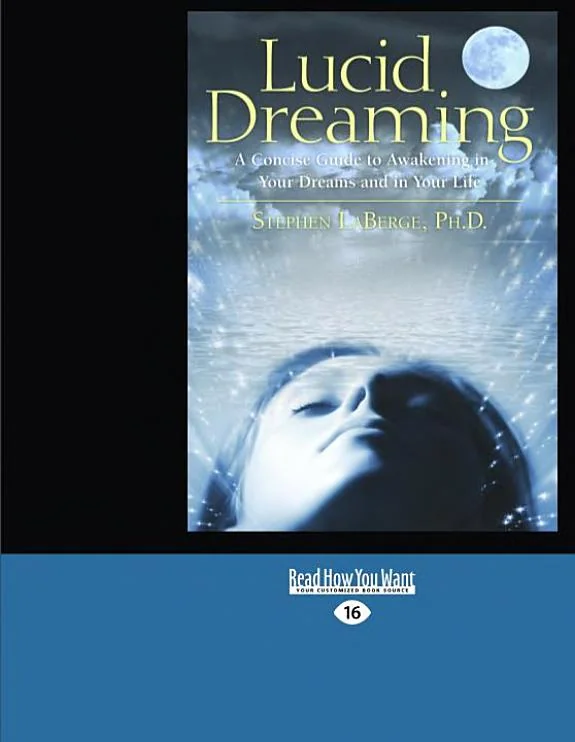
Lucid Dreaming
 71
71

Lucid Dreaming
Stephen LaBerge’s "Lucid Dreaming" arrived as a crucial text in the early 2000s, formalizing a practice that had long resided in more nebulous spiritual and psychological realms. LaBerge’s strength lies in his meticulous, almost scientific, approach to a subjective experience. He demystifies lucid dreaming, presenting it not as a mystical gift but as a trainable skill. The book's detailed breakdown of techniques, particularly the MILD protocol, is invaluable for anyone genuinely seeking to achieve lucidity. However, the text can occasionally feel dry, leaning heavily on experimental descriptions that might alienate readers seeking a more narrative or purely experiential account. A specific passage detailing the eye-movement signaling experiments conducted in the 1980s, while scientifically important, could be challenging for the uninitiated. Despite this, LaBerge’s work remains an indispensable manual for the aspiring oneironaut.
This book is a definitive, albeit technical, guide to mastering one's dream state.
📝 Description
71
Stephen LaBerge's 1985 book, Lucid Dreaming, details how to become aware you are dreaming while it happens.
Published in 1985, Stephen LaBerge's "Lucid Dreaming" details how to achieve awareness within a dream state. This awareness allows individuals to consciously interact with their dream environments. LaBerge outlines specific methods for inducing these conscious dream states, sometimes called oneironautics. The book examines the psychological and physiological characteristics of this consciousness state, using scientific research and personal anecdotes.
This work is for anyone interested in the mind's potential, whether seeking self-discovery, increased creativity, or a better grasp of consciousness. LaBerge offers accessible techniques for both experienced dream practitioners and newcomers. It also holds value for researchers and therapists looking into dreamwork applications. LaBerge's research, which began at Stanford University in the 1970s, applied empirical observation and experimental verification to the study of lucid dreaming.
LaBerge's work emerged in the late 20th century, a time of renewed interest in consciousness studies. While psychoanalysis had previously examined dreams, LaBerge's approach distinguished itself through its scientific methodology and empirical validation. This contrasted with earlier esoteric traditions that discussed dream manipulation or figures like Carl Jung who focused on dream symbolism. LaBerge aimed to bring the study of lucid dreaming into scientific discourse, moving beyond anecdotal accounts to verifiable techniques.
💡 Why Read This Book?
• You will learn verifiable techniques, such as the MILD (Mnemonic Induction of Lucid Dreams) protocol, a method developed and tested by LaBerge, to increase your chances of becoming aware within a dream. • You will gain insight into the scientific methodology, pioneered by LaBerge at Stanford University in the 1970s, used to study and validate the phenomenon of lucid dreaming. • You will discover practical applications for lucid dreaming, including overcoming recurring nightmares and exploring the subconscious, as detailed in chapters on dream control and problem-solving.
⭐ Reader Reviews
Honest opinions from readers who have explored this book.
❓ Frequently Asked Questions
What is the primary technique for inducing lucid dreams taught in Stephen LaBerge's book?
The primary technique is the MILD (Mnemonic Induction of Lucid Dreams) method. LaBerge details how to set the intention to remember you are dreaming before sleep and visualize yourself becoming lucid within a dream.
When was Stephen LaBerge's "Lucid Dreaming" first published?
Stephen LaBerge's "Lucid Dreaming" was first published in 2009, though his foundational research and earlier works on the subject date back to the 1970s and 1980s.
Can lucid dreaming be used to overcome nightmares?
Yes, the book explains how lucid dreaming can be a powerful tool for confronting and transforming nightmares. By becoming aware within the dream, individuals can change the narrative or confront the source of their fear.
What is a 'state test' according to LaBerge's book?
A state test, as described by LaBerge, is a critical self-awareness check performed during waking hours to cultivate the habit of questioning reality, which can then carry over into dreams, triggering lucidity.
Is this book suitable for beginners interested in dream exploration?
Absolutely. While grounded in scientific research, LaBerge presents techniques like MILD and WILD in an accessible manner, making it suitable for beginners eager to explore their dream consciousness.
What does LaBerge mean by 'oneironautics'?
Oneironautics refers to the practice of navigating and exploring the dream world consciously. The term is derived from Greek words for 'dream' and 'sailor' or 'traveler', highlighting the active exploration of the dream state.
🔮 Key Themes & Symbolism
Consciousness and Awareness
The book centers on the expansion of consciousness into the dream state. LaBerge explores the nature of awareness itself, differentiating between ordinary dreaming and the heightened lucidity achieved through specific techniques. He posits that the dream state is a valid reality deserving of conscious exploration, not merely a passive neurological event. This focus on subjective experience aligns with traditions that explore altered states as pathways to deeper self-understanding.
Dream Induction Techniques
Central to the work are practical, actionable methods for achieving lucidity. LaBerge meticulously details protocols like MILD and WILD, explaining the psychological and behavioral underpinnings of each. This systematic approach to inducing a specific altered state of consciousness distinguishes his work from more intuitive or purely meditative practices, offering a structured path for practitioners.
The Dream as a Laboratory
LaBerge frames the dream world as a personal laboratory for self-discovery, creativity, and problem-solving. The book encourages readers to view their dreams not as random occurrences but as fertile ground for personal growth. This perspective invites a more active engagement with the subconscious, viewing dream imagery and narratives as potent sources of insight, akin to symbolic interpretation in various esoteric traditions.
Scientific Validation of Subjectivity
A significant theme is the bridging of subjective experience with objective scientific inquiry. LaBerge's pioneering research at Stanford University, using eye-movement tracking to verify lucidity, is a cornerstone. This effort to empirically validate an inner phenomenon challenges conventional dualisms and aligns with esoteric philosophies that seek to understand the mind-body connection through direct experience and observation.
💬 Memorable Quotes
Direct passages from the work, attributed to the author.
“The moment of realizing you are dreaming is the critical juncture.”
— This highlights the important nature of achieving lucidity. It's not just about dreaming, but about the conscious recognition of the dream state, transforming a passive experience into an active one.
“Dream signs are recurring elements that can serve as cues for lucidity.”
— This concept is practical for aspiring oneironauts. Identifying personal dream signs, whether unusual objects or recurring scenarios, provides a tangible trigger to question one's reality within the dream.
“Wake-Initiated Lucid Dreams (WILD) involve maintaining consciousness as the body falls asleep.”
— This describes a direct pathway to lucidity, contrasting with MILD. It emphasizes the importance of transitional states between wakefulness and sleep as potential entry points for conscious dreaming.
“The dream world offers a boundless canvas for exploration and self-understanding.”
— This speaks to the potential of lucid dreaming beyond mere novelty. It positions the dreamscape as a rich internal environment for personal development and insight.
“Setting a clear intention is a powerful tool for influencing dream content and lucidity.”
— This emphasizes the role of the waking mind's resolve in shaping the dream experience. It suggests that focused mental effort before sleep can significantly impact dream recall and awareness.
🌙 Esoteric Significance
Tradition
LaBerge's work bridges scientific inquiry with practices often found in esoteric traditions focused on consciousness exploration, such as certain forms of Yoga, Tibetan Buddhism (dream yoga), and Hermeticism. While he grounds his methods in empirical research, the goal of achieving conscious awareness within altered states and exploring the psyche carries the aims of these lineages. He departs from purely mystical interpretations by demanding scientific verification, yet his focus on inner exploration aligns with their perennial quest for understanding the nature of reality and consciousness.
Symbolism
Within the context of lucid dreaming, the dreamscape itself becomes a symbolic realm. LaBerge's approach encourages the recognition of 'dream signs' – recurring symbols or anomalies within the dream that act as triggers for lucidity. These can range from flying to encountering deceased relatives. In an esoteric sense, these dream signs can be interpreted as manifestations of the subconscious or archetypal energies, offering personal insights that resonate with traditions valuing symbolic language and inner landscapes.
Modern Relevance
LaBerge's research and writings are foundational for contemporary fields like neurofeedback, virtual reality therapy, and consciousness studies. Thinkers and practitioners in transpersonal psychology and those exploring the intersection of spirituality and science often cite his work. His techniques are integrated into modern mindfulness practices and therapeutic approaches aimed at enhancing self-awareness and emotional regulation, demonstrating a lasting impact on how we understand and interact with our inner worlds.
👥 Who Should Read This Book
• Aspiring oneironauts seeking structured, scientifically-backed methods to achieve conscious awareness within their dreams, building upon LaBerge's foundational research from Stanford University. • Individuals interested in overcoming recurring nightmares or exploring personal psychology through direct interaction with their subconscious, utilizing techniques like MILD and WILD. • Researchers and students of consciousness studies looking for empirical evidence and practical techniques that bridge subjective experience with objective observation in the field of dream research.
📜 Historical Context
Stephen LaBerge's "Lucid Dreaming" emerged in a period where the scientific study of consciousness was gaining momentum, particularly after the decline of behaviorism. While figures like Sigmund Freud and Carl Jung had extensively explored dream analysis in the early to mid-20th century, their methods were largely interpretive and subjective. LaBerge, however, brought a rigorous empirical methodology, notably through his work at Stanford University starting in the 1970s. He sought to validate subjective dream experiences through observable phenomena, such as using eye-movement patterns to confirm lucidity. This contrasted with the more philosophical or spiritual approaches to dreams prevalent in various esoteric traditions. His research gained traction in the late 1980s and continued into the 21st century, contributing to a more scientifically accepted understanding of altered states of consciousness, though not without initial skepticism from the broader scientific community.
📔 Journal Prompts
Analyze the recurring dream signs identified in your personal dream journal.
Reflect on the difference between passive dreaming and active oneironautics.
Consider the intention-setting process of the MILD technique.
Evaluate the potential of the dream world as a personal laboratory.
Explore the role of state testing in cultivating waking awareness.
🗂️ Glossary
Lucid Dream
A dream during which the dreamer becomes aware that they are dreaming. This awareness can range from a fleeting recognition to a sustained state of consciousness within the dream.
Oneironautics
The practice and study of navigating and consciously exploring the dream state. Derived from Greek, it signifies 'dream sailor' or 'dream traveler'.
MILD (Mnemonic Induction of Lucid Dreams)
A technique developed by Stephen LaBerge that involves setting a strong intention to remember you are dreaming and visualizing yourself becoming lucid in a future dream.
WILD (Wake-Initiated Lucid Dream)
A method of entering a lucid dream directly from the waking state, often involving maintaining awareness as the body falls asleep and transitions into a dream state.
State Test
A critical self-awareness check performed regularly during waking life to cultivate the habit of questioning reality, increasing the likelihood of performing such a test within a dream.
Dream Sign
A recurring element, event, or anomaly within a dream that can serve as a cue or trigger for the dreamer to realize they are dreaming.
Pre-sleep Intention
The conscious resolve or goal set before falling asleep, specifically to become lucid or to recall dreams, a key component of techniques like MILD.