Revolutionary Demonology
 75
75

Revolutionary Demonology
Gruppo di Nun's "Revolutionary Demonology" arrives as a potent, if sometimes bewildering, dispatch from the occult fringe. The collection’s strength lies in its audacious attempt to fuse esoteric thought with urgent contemporary critique, particularly its engagement with political and ecological anxieties. The anthology's willingness to embrace the hallucinatory and the unpredictable, as seen in its exploration of the "Digital Middle Ages," offers a refreshing departure from more staid occult literature. However, this very unpredictability can also be a hurdle; the disparate voices and theoretical jumps occasionally create a sense of fragmentation rather than cohesion. A particularly striking element is the work's invocation of demonic symbolism not as literal entities but as potent metaphors for subversive forces. While the collection offers a unique lens on resistance, its density and abstract nature may alienate readers not already steeped in post-structuralist theory and occult lineages. It is a challenging but ultimately rewarding text for those willing to meet its radical propositions head-on.
📝 Description
75
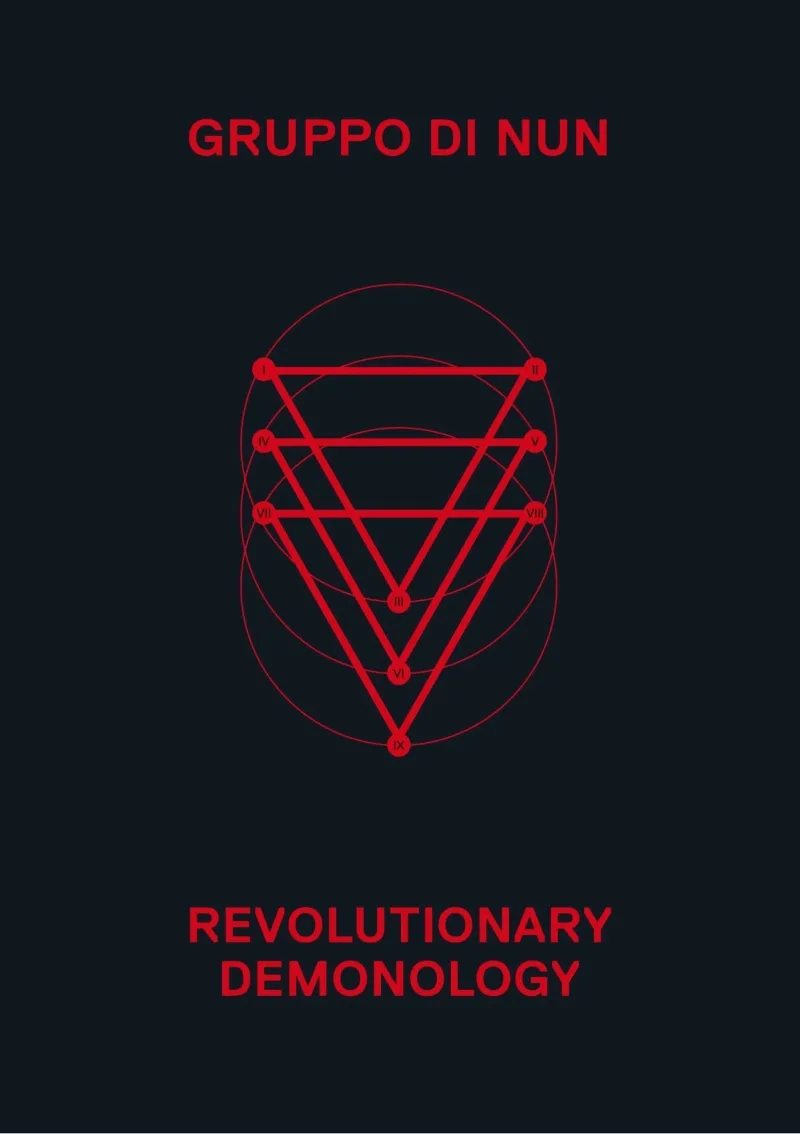
Published in 2023, Revolutionary Demonology collects occult writings confronting contemporary crises.
Revolutionary Demonology, released in 2023, is an anthology that gathers diverse occult writings. These texts challenge established political, philosophical, and religious ideas. The collection's style is described as unpredictable and often hallucinatory.
The book addresses current crises like environmental collapse, rising fanaticism, and societal fragmentation. It frames these issues as signs of an approaching "Digital Middle Ages." This concept envisions a future where technological progress is combined with regressive social or spiritual conditions.
This work is for readers who see occultism as a tool for critical thought and political opposition, not just spiritual practice. It appeals to those interested in the connections between esoteric thought and modern theories, especially cybertheory and post-structuralism. The anthology suits individuals looking for radical views on apocalypse and resistance in times of perceived societal breakdown.
This 2023 anthology emerges from a contemporary milieu concerned with ecological breakdown, political division, and digital technology's reach. Its focus on "occult resistance" reflects a renewed interest in esoteric traditions as ways to interpret and counter perceived failures of modernity. It offers a perspective on "End Times" anxieties, suggesting a unique historical moment shaped by digital shifts and ecological uncertainty.
💡 Why Read This Book?
• Gain a framework for understanding contemporary crises through an occult lens, specifically by examining the concept of the "Digital Middle Ages" as presented in the anthology. • Explore radical interpretations of resistance, learning how the book reconfigures "occult resistance" as a viable strategy against perceived societal decay. • Engage with a unique synthesis of esotericism and critical theory, encountering the specific use of demonic symbolism as explored in the text's various contributions.
⭐ Reader Reviews
Honest opinions from readers who have explored this book.
❓ Frequently Asked Questions
What is the "Digital Middle Ages" concept discussed in Revolutionary Demonology?
The "Digital Middle Ages" is a speculative concept presented in the book, suggesting a future where advanced digital technology coexists with societal regression, potentially mirroring the social and spiritual conditions of historical medieval periods.
Who is the Gruppo di Nun?
Gruppo di Nun is the collective author of "Revolutionary Demonology," an anthology focused on occult resistance and critical engagement with contemporary socio-political issues.
What are the main themes explored in Revolutionary Demonology?
The book covers occult resistance, political and ecological apocalypse, the "Digital Middle Ages," and the intersection of esotericism with cybertheory and philosophy.
Is Revolutionary Demonology a practical guide to magic?
No, it is primarily an anthology of essays and theoretical pieces exploring occultism as a framework for resistance and critique, rather than a manual for magical practice.
When was Revolutionary Demonology first published?
The book was first published on April 11, 2023.
What kind of writing style can I expect from this anthology?
The writing is described as unpredictable and fascinating, often incorporating hallucinatory elements and interdisciplinary approaches that blend occultism with politics, philosophy, and cybertheory.
🔮 Key Themes & Symbolism
Occult Resistance
This theme frames occultism not as a passive spiritual path but as an active force of dissent against dominant political and social structures. The anthology posits that esoteric knowledge and practices can provide alternative frameworks for understanding and challenging contemporary crises. It moves beyond traditional interpretations of occultism to engage with contemporary issues like technological alienation and ecological collapse, suggesting that a "revolutionary" aspect of demonology lies in its potential to subvert established norms and empower marginalized perspectives.
The Digital Middle Ages
This provocative concept envisions a future where advanced digital technologies do not necessarily lead to progress but instead create conditions resembling a 'Digital Middle Ages.' It suggests a potential regression in spiritual or social terms, despite technological sophistication. The anthology explores this idea as a response to current anxieties about societal fragmentation, the pervasive influence of digital life, and the potential for new forms of control or alienation, questioning the linear narrative of technological advancement.
Apocalypse and Crisis
Revolutionary Demonology engages directly with contemporary fears of societal collapse, including climate apocalypse and resurgent fanaticism. However, it reframes apocalyptic thinking, presenting it not as an inevitable end but as a critical juncture that demands radical re-evaluation and potent forms of resistance. The anthology uses these perceived "End Times" as a catalyst for exploring alternative modes of thought and action, particularly through the lens of occult traditions and their subversive potential.
Esotericism and Cybertheory
A central tenet of the anthology is the fusion of esoteric thought with modern cybertheory and philosophical discourse. It explores how ancient occult concepts can be reinterpreted to address the complexities of the digital age, information warfare, and virtual realities. This intersection suggests that traditional esoteric frameworks, particularly those that embrace chaos and transformation, can offer unique insights into the nature of consciousness, power, and reality in the 21st century.
💬 Memorable Quotes
Direct passages from the work, attributed to the author.
“The End Times are here. The Digital Middle Ages approaches.”
— This statement sets a dire and urgent tone, framing the present moment as a critical turning point characterized by both societal collapse and technological transformation, hinting at a return to more archaic societal structures despite advanced technology.
“An anthology of occult resistance: unpredictable and fascinating, at times hallucinatory.”
— This description highlights the collection's unconventional approach, emphasizing its role as a platform for esoteric dissent and its experimental, often disorienting, style of exploration.
“sullying politics, philosophy, cybertheory, religion, and music.”
— This phrase suggests the anthology intentionally blurs disciplinary boundaries, aiming to contaminate and disrupt conventional academic and cultural fields with occult perspectives and radical ideas.
“The idea that we might gain the upper hand over the dark abyss into which the planet is tumbling is a form of magical thinking, laboring under the delusion t”
— This excerpt critiques optimistic notions of control over global crises, framing them as potentially naive or illusory, and implying that a more profound engagement with 'magical thinking' or alternative frameworks might be necessary.
💡 Key Ideas
Editorial paraphrase of the work's core concepts — not direct quotes.
the plague reaps its deadly harvest, climate apocalypse is around the corner, and fanaticism, fascism, and madness are rampant.
This passage vividly outlines the contemporary anxieties and perceived societal failures that the anthology seeks to address, establishing the urgent context for its exploration of occult resistance.
🌙 Esoteric Significance
Tradition
The work positions itself within a broad spectrum of Western esotericism, particularly drawing on traditions that engage with chthonic forces and subversive mythologies. It departs from more mainstream Hermetic or Theosophical currents by focusing on "demonology" not as a study of infernal hierarchies to be avoided, but as a symbolic language for resistance and transgression. It aligns with radical occult tendencies that view "demonic" figures and concepts as potent archetypes for challenging oppressive systems and reclaiming marginalized forms of power.
Symbolism
The anthology likely employs "demonic" symbolism as a primary motif, reinterpreting figures traditionally associated with evil or rebellion as agents of liberation and critique. Other potential symbols could include apocalyptic imagery, re-contextualized to signify transformation rather than mere destruction, and cybernetic elements, representing the new frontiers of consciousness and control in the "Digital Middle Ages." These symbols serve to disrupt conventional understandings and offer a framework for radical re-evaluation.
Modern Relevance
Contemporary thinkers and practitioners interested in post-structuralist approaches to esotericism, critical theory infused with occult ideas, and radical approaches to spirituality find resonance in this work. It speaks to those exploring the "accelerationist" potential within esoteric thought or seeking ways to apply occult frameworks to contemporary issues like digital surveillance, ecological crisis, and political upheaval. Its influence can be seen in online communities and independent publishing circles focused on avant-garde occultism.
👥 Who Should Read This Book
• Individuals interested in the intersection of occultism and political theory, particularly those seeking to understand esoteric traditions as tools for social critique and resistance. • Readers fascinated by speculative futures and contemporary anxieties, such as climate change and the impact of digital technology, who are open to unconventional, mythopoetic interpretations. • Scholars and practitioners of Western Esotericism looking for contemporary, radical departures from traditional interpretations, engaging with "demonology" as a metaphor for subversion.
📜 Historical Context
Published in 2023, Revolutionary Demonology emerges from a contemporary landscape marked by escalating climate anxiety, political polarization, and the pervasive influence of digital technologies. The anthology taps into a resurgence of interest in esoteric traditions as frameworks for understanding and resisting modernity's perceived failures. Its embrace of "occult resistance" positions it within a lineage of counter-cultural and subversive thought, drawing parallels to earlier movements that sought alternative modes of being outside mainstream society. While not directly engaging with a specific competing school of thought in its blurb, its radical stance implicitly challenges both materialist ideologies and conventional spiritual practices. The anthology's focus on the "Digital Middle Ages" reflects contemporary debates about technology's role in shaping societal futures, a discourse notably explored by thinkers like Paul Virilio or, in different contexts, by theorists examining the acceleration of digital culture.
📔 Journal Prompts
The concept of the 'Digital Middle Ages' as presented in the anthology: what are its core characteristics and implications for contemporary society?
Reflect on the notion of 'occult resistance' – how might esoteric practices or philosophies serve as tools for challenging dominant power structures today?
Analyze the anthology's use of apocalyptic themes: how does it reframe 'End Times' scenarios beyond mere destruction?
Consider the intersection of cybertheory and esotericism explored in the work: what new insights emerge from this synthesis?
The role of 'hallucinatory' elements in the writing: how do these contribute to the anthology's message of unpredictable resistance?
🗂️ Glossary
Occult Resistance
A framework presented in the book where esoteric knowledge, symbols, and practices are utilized as methods of dissent and subversion against prevailing political, social, or philosophical orthodoxies.
Digital Middle Ages
A speculative concept suggesting a future where advanced digital technology coexists with social or spiritual regression, potentially creating conditions analogous to historical medieval periods.
Cybertheory
A field of study that examines the impact and implications of computing, digital technology, and virtual reality on human culture, society, and consciousness.
Apocalypse
In the context of this book, not necessarily a literal end of the world, but a critical turning point or revelation demanding radical change and re-evaluation, often serving as a catalyst for resistance.
Fanaticism
Uncritical zeal or obsession, particularly in religious or political matters, often leading to intolerance and extremism, identified in the book as a rampant contemporary issue.
Demonology
In this context, the study or symbolic use of demonic figures and concepts, reinterpreted not necessarily as literal entities but as potent metaphors for subversion, transgression, and radical power.
Esotericism
Belief systems and practices that focus on hidden or secret knowledge, often involving spiritual or mystical traditions, typically reserved for initiates or those with specialized understanding.