Tantra
 81
81

Tantra
Kalashatra Govinda's "Tantra" attempts to demystify the practice, moving beyond sensationalized interpretations to present it as a path to "Spiritualität, erfüllte Sexualität und transzendentale Liebe." The book's strength lies in its accessible presentation of complex ideas, linking spiritual growth with embodied experience. The copious, sensual color photographs are a notable feature, vividly illustrating the text's themes of union and sensuality, a departure from drier academic tomes. However, the work occasionally leans into a generalized romanticism that might obscure the more rigorous philosophical underpinnings for advanced practitioners. The section on Tantric union postures, while informative, could benefit from more explicit warnings regarding consent and energetic boundaries, crucial for safe practice. Overall, it serves as a visually rich and inviting introduction to Tantra's holistic philosophy.
📝 Description
81
Kalashatra Govinda's "Tantra" first appeared in 2014, framing Tantra as a path to spirituality, fulfilled sexuality, and transcendental love.
First published in 2014, Kalashatra Govinda's "Tantra" examines the ancient Indian philosophy. The book presents Tantra not only as a spiritual discipline but as a way to achieve spirituality, fulfilled sexuality, and transcendental love. It explains Tantra's goal of expanding consciousness and encouraging deeper bonds with partners, describing it as an Eastern art of love. This work is for those seeking a holistic spiritual approach that merges the physical with the transcendent. It appeals to individuals interested in the connection between sensual experience and spiritual growth, especially in intimate relationships. Readers wanting practical advice alongside philosophical insights will find this book valuable.
Govinda situates Tantra within its historical setting in ancient India. The book acknowledges Tantra as a philosophical system that has developed over centuries, impacting various spiritual and cultural practices. The focus is on its beginnings as a method for expanded awareness and profound connection, rooted in Indian traditions. Central to Govinda's study are the ideas of consciousness expansion, the sacredness of the physical, and the possibility of divine union through intimate practices. It details how Tantric techniques, including yoga, massage, and specific sexual postures, aim to transform everyday experiences into spiritual events, fostering joy and transcendental love.
This work engages with Tantra, a complex spiritual tradition originating in India. Unlike common misinterpretations, Govinda's text focuses on Tantra's philosophical underpinnings and its aim to integrate the material and spiritual. It connects to a lineage that views the body and sensory experience not as hindrances but as vehicles for spiritual realization. The book reflects an esoteric understanding that sees divine potential within all aspects of life, including sexuality, as a means to achieve expanded awareness and union.
💡 Why Read This Book?
• Gain a practical framework for integrating spirituality with sexuality, learning specific Tantra-yoga exercises and massage techniques as detailed in the book. • Understand Tantra's historical roots in ancient India, exploring its philosophical underpinnings beyond modern misconceptions, as presented in the "Historical Context" section. • Discover how the Tantric philosophy aims to expand consciousness and foster transcendental love, illustrated through descriptions of union postures and practices.
⭐ Reader Reviews
Honest opinions from readers who have explored this book.
❓ Frequently Asked Questions
What is the primary goal of the Tantric philosophy as presented by Kalashatra Govinda?
The primary goal is the pursuit of spirituality, fulfilled sexuality, and transcendental love, aiming to expand consciousness and deepen relationships through ancient Indian philosophy.
Does Kalashatra Govinda's "Tantra" focus solely on sexual practices?
No, while it addresses fulfilled sexuality, the book presents Tantra as a holistic spiritual path that integrates physical experiences with consciousness expansion and transcendental love.
What kind of visual content does the book "Tantra" by Kalashatra Govinda feature?
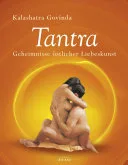
The book is opulently illustrated with many sensual color photographs, designed to visually complement the discussions on Tantric practices and union.
When was Kalashatra Govinda's "Tantra" first published?
Kalashatra Govinda's "Tantra" was first published on March 17, 2014.
Is this book suitable for beginners interested in Tantra?
Yes, the book is described as providing clear, visual guidance on steps from introductory exercises to union postures, making it suitable for those new to Tantra.
What are the key components of the Tantric path described in the book?
The book outlines components such as Tantra-yoga exercises, massage techniques, and specific postures for tantric union, all aimed at spiritual growth and heightened connection.
🔮 Key Themes & Symbolism
Holistic Spirituality
This work posits Tantra as a complete spiritual discipline, rejecting dualistic thinking that separates the sacred from the sensual. It champions the integration of all aspects of human experience—physical, emotional, and spiritual—as pathways to enlightenment. The book emphasizes that true spiritual fulfillment is found not by transcending the body, but by sanctifying it and embracing its inherent divine potential, leading to a state of "Spiritualität, erfüllte Sexualität und transzendentale Liebe."
Consciousness Expansion
A central tenet explored is the expansion of consciousness through Tantric practices. Govinda outlines how techniques ranging from mindful breathing and yoga to intimate connection are designed to break down ordinary perceptual barriers. This heightened awareness allows individuals to perceive the divine in everyday life and in their partners, fostering a sense of unity and transcendental love.
Sacred Union
The book presents intimate relationships as a potent vehicle for spiritual growth. It details specific methods, including massage and various union postures, intended to elevate sexual energy into a force for spiritual transformation. This focus on "transzendentale Liebe" highlights the Tantric view of the partner as a divine counterpart, facilitating a journey toward mutual spiritual realization.
Sensual Embodiment
"Tantra" champions the sacredness of the physical body and sensual experience. It moves away from ascetic traditions by affirming pleasure and physical connection as legitimate avenues for spiritual exploration. The abundant, sensual photography underscores this theme, illustrating how embodied experiences can be profoundly spiritual and contribute to a joyful, fulfilled existence.
💬 Memorable Quotes
Direct passages from the work, attributed to the author.
“Spiritualität, erfüllte Sexualität und transzendentale Liebe sind wesentliche Ziele der altindischen Tantraphilosophie.”
— This opening statement frames the book's core thesis: that ancient Indian Tantra seeks not just spiritual liberation but also profound fulfillment in sexuality and a deep, transcendent form of love, integrating these aspects into a unified path.
“Diese östliche Liebeskunst erweitert das Bewusstsein und führt zu einer vertieften Beziehung mit dem Partner.”
— This highlights Tantra as an Eastern art of love, emphasizing its dual function: to expand individual consciousness and simultaneously cultivate a more profound and intimate connection with one's partner.
“Das großformatige Buch ist mit vielen sinnlichen Farbfotos opulent bebildert.”
— This points to the book's visual nature, indicating that its substantial format is enriched by numerous sensual color photographs, suggesting a visually immersive approach to explaining Tantric concepts and practices.
“Alle Schritte von einstimmenden Tantra-Yogaübungen über Massagetechniken bis hin zu den Stellungen der tantrischen Vereinigung werden anschaulich dargestellt.”
— This emphasizes the practical, instructional aspect of the book, detailing its coverage of the full spectrum of Tantric practices, from preparatory yoga and massage to the postures of union, all presented with visual clarity.
“The spiritual path of life joy”
— This phrase, translated from the German blurb, expresses the essence of Tantra as presented here: a spiritual journey that fundamentally enhances and celebrates the joy of living, rather than renouncing it.
🌙 Esoteric Significance
Tradition
This work engages with the broad spectrum of Tantra, an esoteric tradition originating in India with roots potentially stretching back to the Gupta Empire period (c. 320–550 CE). While often associated with Hinduism and Buddhism, Tantra developed distinct lineages and philosophies. Govinda's approach appears to draw from the general principles of Tantra as a path emphasizing the divine potential within all aspects of existence, including the physical and sensual, diverging from more ascetic or renunciatory spiritual paths.
Symbolism
Key symbolic motifs explored implicitly include the union of opposites (Shiva-Shakti), representing the cosmic masculine and feminine principles, and the concept of Kundalini energy, the latent divine power within the human body. The book's visual emphasis likely uses imagery of divine couples and ritualistic elements to represent the transcendence achieved through the integration of worldly and spiritual experiences.
Modern Relevance
Contemporary practices in neo-Tantra, somatic therapy, and integrated wellness movements often draw upon principles popularized by works like Govinda's. Thinkers and practitioners exploring the sacredness of sexuality, mindfulness in relationships, and the holistic connection between mind, body, and spirit find resonance with Tantra's philosophy of embracing the world as a path to divine realization.
👥 Who Should Read This Book
• Individuals exploring holistic spirituality who seek to integrate their physical and sensual lives with their spiritual path, particularly those interested in the ancient Indian philosophical context. • Couples seeking to deepen their intimacy and connection through mindful practices and a shared spiritual journey, learning about Tantra as an "art of love." • Students of comparative religion and esoteric traditions wanting a visually-rich, accessible introduction to Tantric philosophy and its practices beyond sensationalized accounts.
📜 Historical Context
Kalashatra Govinda's "Tantra," published in 2014, emerges in an era where interest in Eastern spiritual traditions had been significantly amplified by figures like Helena Blavatsky and later the counterculture movements of the 1960s and 70s. While Tantra has ancient roots, its popularization in the West often occurred through interpretations that sometimes overshadowed its philosophical depth, such as those presented by Western occultists engaging with Indian traditions. Govinda's work aims to provide a more grounded perspective, connecting the practice to its Indian origins and philosophical underpinnings. Its reception can be seen in the context of a broader global search for embodied spirituality, contrasting with more ascetic or purely intellectual approaches to mysticism prevalent in other esoteric schools. The book's emphasis on integrating sexuality with spirituality reflects a departure from Victorian-era prudery that had influenced earlier Western understandings of Eastern thought.
📔 Journal Prompts
Reflect on the concept of "transzendentale Liebe" and how it might manifest in your current relationships.
Consider the integration of "fulfilled sexuality" within a broader spiritual framework as presented in the book.
Explore the potential for "Spiritualität" to be found in everyday physical experiences, as suggested by Tantric philosophy.
How might "Tantra-Yogaübungen" be adapted to enhance both physical well-being and spiritual awareness?
Visualize the expansion of consciousness described, using the book's illustrations as a starting point.
🗂️ Glossary
Tantra
An ancient Indian esoteric tradition and practice that emphasizes the divine potential within all aspects of existence, including the physical and sensual, as a path to spiritual realization and liberation.
Spiritualität
Spirituality; the state of being concerned with the human spirit or soul as opposed to material or physical things, often seeking connection with a higher power or universal consciousness.
Erfüllte Sexualität
Fulfilled sexuality; a state of sexual experience characterized by satisfaction, joy, and integration with deeper emotional and spiritual dimensions.
Transzendentale Liebe
Transcendental love; a form of love that extends beyond the ordinary, personal, or physical, reaching towards a divine, universal, or spiritual connection.
Tantra-Yogaübungen
Tantra-yoga exercises; specific physical and breathing practices derived from Tantric traditions, aimed at preparing the body and mind for deeper spiritual experiences and union.
Massagetechniken
Massage techniques; methods of physical manipulation used in Tantra not just for relaxation but as a means to channel energy, enhance bodily awareness, and foster connection.
Stellungen der tantrischen Vereinigung
Positions of tantric union; specific physical postures adopted during sexual intimacy, designed to facilitate spiritual connection, energy exchange, and heightened consciousness.