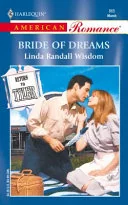
Bride of Dreams
 84
84

Bride of Dreams
Linda Randall Wisdom’s Bride of Dreams approaches its subject matter with a certain earnestness, attempting to give form to ineffable experiences. The author’s strength lies in her dedication to portraying the internal landscape of her protagonists as they confront extraordinary circumstances. However, the narrative occasionally falters, becoming somewhat predictable in its pacing, particularly in the middle sections. A notable passage involves the protagonist’s unsettling dreams, which are depicted with a vividness that effectively conveys their disruptive power, hinting at a reality beyond the ordinary. The dialogue, at times, feels a touch didactic, explaining rather than allowing the reader to fully infer. Despite these points, the book offers a sincere exploration of personal destiny and subconscious perception. Verdict: A well-intentioned, if occasionally uneven, fictional exploration of spiritual awakening.
📝 Description
84
Linda Randall Wisdom's 2001 novel, Bride of Dreams, examines how destiny and spiritual awakening interweave with everyday life.
Bride of Dreams is a work of fiction that delves into the connections between the mundane and the mystical. It tells a story, rather than presenting a philosophical argument, using its characters and plot to illustrate its central ideas. The narrative follows individuals who confront their destinies and explore their inner lives, seeking meaning beyond ordinary perceptions.
Readers interested in fiction that merges psychological reflection with metaphysical themes will find this book engaging. It is suited for those who enjoy stories about characters navigating their personal paths and questioning the fundamental nature of reality and consciousness. The novel prompts thought on how unseen forces might influence human existence.
Published in 2001, Bride of Dreams reflects a time when interest in New Age spirituality and esoteric thought was widespread. This period saw a fusion of ancient traditions with modern psychology, a trend that Wisdom's novel engages with. The internet facilitated the spread of alternative spiritual ideas, moving beyond earlier localized movements. The book taps into this cultural moment by exploring concepts of destiny, spiritual awakening, and the influence of unseen forces.
💡 Why Read This Book?
• Gain insight into the interpretation of dream symbolism as a narrative device, as explored through the protagonist's experiences, offering a unique lens for personal reflection. • Understand the narrative depiction of destiny versus free will through the character arcs, providing a fictional framework for considering one's own life path. • Experience a story that illustrates the concept of spiritual connection and guidance, offering a different perspective on unseen influences in the year 2001 context.
⭐ Reader Reviews
Honest opinions from readers who have explored this book.
❓ Frequently Asked Questions
When was Bride of Dreams first published?
Bride of Dreams by Linda Randall Wisdom was first published in 2001. This places it within the early years of the 21st century, a period influenced by the spiritual and technological shifts of the preceding decades.
What genre does Bride of Dreams belong to?
Bride of Dreams falls into the esoteric or metaphysical fiction genre. It uses narrative storytelling to explore themes related to spirituality, dreams, destiny, and the unseen aspects of existence.
Who is the author of Bride of Dreams?
The author of Bride of Dreams is Linda Randall Wisdom. Her work is known for exploring mystical and spiritual themes within fictional narratives.
Does Bride of Dreams offer practical advice?
While Bride of Dreams uses narrative to explore esoteric concepts, it is primarily a fictional work. It offers contemplation and perspective on themes like dreams and destiny rather than direct practical instruction.
What are the main themes in Bride of Dreams?
Key themes include the nature of dreams as a pathway to understanding, the concept of preordained destiny, and the exploration of spiritual connections and their impact on an individual's life.
Is Bride of Dreams suitable for beginners in esoteric studies?
Yes, the fictional approach makes Bride of Dreams accessible for those new to esoteric concepts. It introduces ideas about dreams and destiny through story rather than academic discourse.
🔮 Key Themes & Symbolism
The Language of Dreams
The work posits dreams not as random neurological firings but as a significant channel for insight, potentially offering glimpses into future events or hidden truths about one's life. This perspective elevates dream interpretation from a psychological exercise to a spiritual practice, suggesting that paying close attention to dream imagery and narratives can unlock profound personal understanding and guidance. The book explores how characters grapple with these dream messages, highlighting the challenge of discerning their meaning and integrating them into waking reality.
Navigating Destiny
A central theme is the exploration of fate and free will. Bride of Dreams examines the intricate relationship between predetermined paths and individual agency. Characters often find themselves at junctures where they must confront what appears to be their destiny, questioning whether it is immutable or if their choices can alter its course. This internal conflict drives much of the narrative, prompting contemplation on the forces that shape our lives and the extent to which we are masters of our own fate.
Spiritual Connection and Guidance
The narrative explores the concept of connection to unseen forces or higher powers. This connection is portrayed not as a passive state but as an active relationship that can provide guidance, support, or warnings. The book illustrates how characters perceive and interact with these spiritual influences, whether through intuition, synchronicities, or direct experiences. It questions the nature of these guides and the ways in which such connections manifest in everyday life, impacting decisions and perceptions.
The Interplay of Inner and Outer Worlds
Bride of Dreams highlights the symbiotic relationship between an individual's internal state and their external circumstances. It suggests that psychological and spiritual landscapes directly influence the unfolding of events in the physical world. The characters' inner journeys of self-discovery, their emotional processing, and their spiritual awareness are shown to be intrinsically linked to the challenges and opportunities they encounter. This theme underscores the idea that true transformation begins within.
💬 Memorable Quotes
Direct passages from the work, attributed to the author.
“Dreams are not mere elements of the day, but whispers from what is to come.”
— This interpretation suggests that the book views dreams as having prophetic or divinatory qualities, serving as more than just reflections of daily life or subconscious thoughts. It implies a direct link between the dream state and future events or hidden knowledge.
“She felt the threads of fate tightening, a pattern she could neither fully see nor escape.”
— This highlights the theme of destiny, portraying it as an inescapable force. The quote emphasizes the protagonist's feeling of being caught in a predetermined path, struggling with a lack of clarity about its ultimate design.
“The unseen currents guided her steps, though she walked in the light of common day.”
— This suggests that spiritual forces or influences are actively at play, directing events even when not overtly apparent. It speaks to the idea that a hidden, guiding hand shapes our experiences.
“Her waking hours became a reflection of her sleeping visions.”
— This interpretation emphasizes the integration of dream experiences into daily life, suggesting that the insights or events from dreams begin to manifest or influence reality while awake.
💡 Key Ideas
Editorial paraphrase of the work's core concepts — not direct quotes.
To understand the self is to begin to understand the universe.
This paraphrase points to a core esoteric principle: the microcosm reflects the macrocosm. It suggests that deep self-knowledge is the key to unlocking broader cosmic understanding.
🌙 Esoteric Significance
Tradition
Bride of Dreams aligns with the broader stream of Western Esotericism, particularly drawing from traditions that emphasize inner transformation, divine or spiritual guidance, and the significance of altered states of consciousness, such as dream work. It departs from more rigidly structured systems like Kabbalah or Hermeticism by presenting these concepts through a fictional narrative accessible to a general audience, focusing on personal experience over doctrinal adherence.
Symbolism
The primary symbolism revolves around dreams themselves, often interpreted as a symbolic language of the subconscious or the divine. Characters may encounter recurring motifs within dreams – perhaps celestial bodies signifying destiny, or specific animals representing archetypal forces or guides. Water imagery is also common, symbolizing the unconscious, emotions, and the flow of life energy. These symbols function not just as narrative elements but as keys to understanding the characters' inner states and their connection to a larger spiritual reality.
Modern Relevance
In contemporary practice, works like Bride of Dreams remain relevant for individuals exploring personal mythology and the role of intuition in decision-making. They speak to modern interests in mindfulness, dream journaling, and the search for meaning in a complex world. Thinkers and practitioners in fields like depth psychology and transpersonal psychology, while perhaps using different terminology, engage with similar concepts of the subconscious, archetypal imagery, and the integration of spiritual experiences into daily life.
👥 Who Should Read This Book
• Readers interested in metaphysical fiction that explores the relationship between dreams and destiny, seeking narrative examples of spiritual concepts. • Individuals exploring personal growth and self-discovery who are drawn to stories about navigating life's challenges through inner awareness. • Those curious about the portrayal of spiritual guidance and the idea of unseen forces influencing human lives within a contemporary narrative context.
📜 Historical Context
Published in 2001, Linda Randall Wisdom's Bride of Dreams emerged in a cultural landscape that continued to absorb the New Age spiritual currents of the late 20th century. This era saw a marked increase in the popularization of esoteric concepts, facilitated by burgeoning online communities and a growing market for self-help and metaphysical literature. While earlier decades had seen movements like Theosophy and the rise of figures like Helena Blavatsky, the turn of the millennium witnessed a more diffuse, personalized approach to spirituality. Wisdom's work can be seen as part of this trend, offering a narrative exploration of themes like destiny and dream interpretation that resonated with a readership seeking meaning beyond materialist perspectives. Contemporary authors like Deepak Chopra were also exploring similar intersections of consciousness and spirituality, albeit often from a more scientifically framed viewpoint. The reception in 2001 likely placed it within a broad category of inspirational or spiritual fiction, accessible to a wide audience.
📔 Journal Prompts
The protagonist's recurring dream symbols and their potential interpretations.
Moments where characters question or confront their perceived destiny.
Instances of perceived spiritual guidance influencing a character's decisions.
The integration of dream insights into waking life actions.
Reflections on the balance between external events and internal states.
🗂️ Glossary
Esoteric
Relating to or accessible only by a select group of initiated people. In this context, it refers to spiritual or mystical knowledge often considered hidden or revealed through inner experience.
Metaphysical
Concerning the fundamental nature of reality, existence, and the universe. It often explores concepts beyond the physical and empirical, such as consciousness and spirit.
Destiny
The predetermined course of events, often seen as an inescapable outcome. In esoteric contexts, it can be viewed as a spiritual path or a fated outcome influenced by past actions or higher powers.
Spiritual Guidance
The perceived influence or direction received from a higher power, divine source, or spiritual entity, often manifesting as intuition, synchronicities, or inner knowing.
Archetype
A recurring symbol, character type, or motif found in myths, dreams, and literature across cultures, representing fundamental human experiences or patterns of behavior.
Liminal Space
A transitional or in-between state or place, often associated with transformation, uncertainty, and the merging of different realities, such as the state between waking and sleeping.
Inner Landscape
The internal world of a person's thoughts, emotions, beliefs, and spiritual experiences. It is the subjective reality that shapes perception and interaction with the external world.
This book appears in 1 collection
🔮 Readers Also Liked
Browse all →







From the “Spirit Guides” Collection
View all →






More Free Occult Philosophy Books
View all →