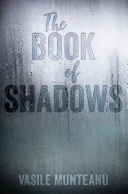
The Book Of Shadows
 82
82

The Book Of Shadows
Vasile Munteanu's The Book of Shadows presents a thematic throughline of concealment that, while consistently applied, sometimes feels more like a conceptual frame than a deeply integrated mystical exploration. The collection's strength lies in its ability to articulate the abstract notion of hiding as a form of revelation, a challenging idea poetically rendered. For instance, the recurring motif of shadows is not just atmospheric but is presented as an active agent in shaping perception. However, the overarching thematic unity, while admirable, occasionally leads to a certain stylistic homogeneity across the poems, making some sections feel repetitive in their exploration of the core concept. The work grapples with the 'why' of concealment, suggesting that what is hidden reveals as much as what is seen. Ultimately, Munteanu's collection offers a contemplative, if somewhat narrow, meditation on the power and meaning of the veiled.
📝 Description
82
Vasile Munteanu's 2018 collection, The Book of Shadows, examines concealment as a fundamental aspect of existence.
This collection of poems by Vasile Munteanu explores concealment as a core principle of how we exist and perceive. Munteanu suggests that what remains hidden can be as revealing as what is openly displayed. The poems question why aspects of reality, emotion, and the human mind are obscured, viewing the act of hiding as a deliberate form of communication that shapes understanding. This work is intended for readers who seek philosophical and emotional depth in literature, particularly those interested in the psychology of secrecy. It appeals to those who contemplate the spaces between knowing and not knowing, and who appreciate the interplay of light and shadow in both the external world and inner consciousness. The book speaks to the discerning reader interested in the unspoken.
Published in 2018, The Book of Shadows reflects a contemporary engagement with esoteric thought. While not explicitly tied to a specific historical movement, its focus on hidden meanings and symbolic communication aligns with traditions like Gnosticism and Hermeticism, which emphasize secret knowledge and inner understanding. The work can be seen as a modern expression of the human desire to interpret veiled truths, indicating a continued interest in psychological and spiritual dimensions beyond empirical observation.
💡 Why Read This Book?
• Understand concealment not as absence, but as an active communicative force, as explored in Munteanu's 2018 collection, offering a unique lens on hidden aspects of nature and human experience. • Gain insight into how the very act of veiling can serve as a form of revelation, a concept central to the poems and their interrogation of what is obscured and why. • Experience a poetic exploration of psychological and emotional states where the theme of shadows and their inherent duality provides a framework for introspection.
⭐ Reader Reviews
Honest opinions from readers who have explored this book.
❓ Frequently Asked Questions
What is the primary theme of Vasile Munteanu's The Book of Shadows?
The primary theme is concealment, explored as a fundamental aspect of reality and human experience. Munteanu posits that what is hidden is as significant as what is revealed, prompting questions about the reasons behind veiling and the messages conveyed through obscurity.
When was The Book of Shadows first published?
The Book of Shadows by Vasile Munteanu was first published on June 5, 2018.
What kind of literary style can I expect from The Book of Shadows?
You can expect a collection of poems characterized by a contemplative and philosophical tone. The style focuses on abstract themes and emotional states, using the concept of shadows and concealment as a recurring motif.
Who is Vasile Munteanu?
Vasile Munteanu is the author of The Book of Shadows, a collection of poems first published in 2018. Information regarding other works or biographical details beyond this publication is not widely available in common literary databases.
Does The Book of Shadows offer practical esoteric advice?
The Book of Shadows is primarily a collection of poems exploring the philosophical concept of concealment. While it offers profound reflections on hidden truths and perception, it does not provide direct practical esoteric instructions or rituals.
What does the 'shadow' symbolize in this book?
In The Book of Shadows, 'shadow' symbolizes more than just darkness. It represents anything concealed—both positive and negative aspects of nature and human nature. The work explores how these hidden elements actively shape understanding and reveal truths through their very obscurity.
🔮 Key Themes & Symbolism
Concealment as Revelation
The central theme posits that what is deliberately hidden carries as much, if not more, revelatory power than what is openly displayed. Munteanu's poems examine the intentional act of veiling aspects of nature, emotion, and the self, suggesting that the reasons for concealment and the nature of the obscured object itself communicate profound truths. This perspective challenges conventional notions of knowledge, implying that understanding is often shaped by what remains unarticulated or unseen, prompting a deeper inquiry into the motivations behind secrecy.
The Duality of Shadows
Shadows in this collection are not merely absences of light but potent symbols representing both negative and positive forces. They can obscure destructive tendencies or protect vulnerable beauty. The poems explore this inherent duality, recognizing that concealment serves complex purposes, simultaneously shielding and defining. This theme invites contemplation on how perceived darkness or hiddenness can paradoxically foster growth, understanding, or even safety, depending on the context and intent.
Interrogation of Truth and Perception
Munteanu's work consistently questions the nature of truth and how it is perceived, particularly when mediated by concealment. The collection probes the relationship between what is known and what is unknowable, highlighting how our understanding of reality is a construction influenced by selective revelation. By focusing on what is kept from view, the poems encourage readers to consider the active role of the observer and the creator in shaping perceived realities, fostering a critical examination of how we construct knowledge.
Emotional and Mental States
The poems navigate a spectrum of human emotions and mental states, using the overarching theme of concealment as a lens. Feelings of isolation, hidden desires, unspoken fears, and internal conflicts are explored through the metaphor of shadows. The collection suggests that many profound aspects of the human psyche are inherently veiled, and understanding these internal landscapes requires an appreciation for their concealed dimensions. This focus provides a unique perspective on introspection and self-awareness.
💬 Memorable Quotes
Direct passages from the work, attributed to the author.
“Shadows hide both the foul and the fair.”
— This concise statement captures the collection's core duality. It suggests that concealment is not inherently negative or positive but serves as a neutral space where both destructive and beautiful elements of existence can reside, unseen and unjudged until revealed.
“The reason for the veil is often more telling than the face behind it.”
— This interpretation highlights the book's emphasis on intent and motive. It suggests that the act of concealing something speaks volumes about the concealer's purpose, fears, or desires, often providing greater insight than direct observation of the concealed object itself.
“What is kept in darkness reveals the light it seeks to protect or obscure.”
— This concept underscores the idea that concealment actively defines what is hidden. The presence of a shadow, or a veiled truth, implicitly acknowledges the existence and nature of the thing being hidden, thereby revealing something about it through its absence in plain sight.
“The unsaid lingers, shaping the air.”
— This poetic rendering emphasizes the powerful, often unseen, influence of what is withheld. It suggests that unspoken thoughts, emotions, or truths create an atmosphere and impact the surrounding environment and interactions, even without explicit articulation.
“We learn by what is not shown.”
— This interpretation directly addresses the book's central thesis: that knowledge acquisition is not solely dependent on direct observation. It proposes that understanding can be significantly advanced by analyzing what is deliberately omitted or kept from view, thereby inferring its nature and significance.
🌙 Esoteric Significance
Tradition
While not explicitly belonging to a single lineage, The Book of Shadows appeals to Gnostic and Hermetic traditions that emphasize the hidden nature of ultimate truth and the importance of inner illumination. The collection's focus on 'concealment' as a primary mode of understanding mirrors the Gnostic concept of Sophia's fall and the subsequent veiling of divine knowledge. It departs from more structured traditions by employing poetry as its primary medium, prioritizing subjective experience and symbolic interpretation over dogma or codified practices.
Symbolism
The dominant symbol is the 'shadow,' representing not just darkness but anything intentionally obscured – emotions, truths, aspects of the self. These shadows are presented as active forces, capable of hiding both negative (e.g., malice) and positive (e.g., beauty, vulnerability) elements. Another key motif is the 'veil,' symbolizing the deliberate act of concealment itself, suggesting that the purpose and nature of the veil are often more revealing than the object it hides, prompting a search for deeper meaning beyond superficial appearances.
Modern Relevance
In contemporary esoteric discourse, particularly within introspective and psychological approaches to spirituality, Munteanu's work finds relevance. Thinkers and practitioners exploring shadow work in Jungian psychology or the nuanced understanding of hidden aspects of consciousness in modern occultism might draw parallels. The book's poetic exploration of veiling speaks to current discussions about authenticity, curated online personas, and the psychological impact of what remains unsaid or unseen in a hyper-connected world.
👥 Who Should Read This Book
• Aspiring poets and literary enthusiasts interested in thematic unity and philosophical undertones in poetry, particularly those drawn to abstract concepts. • Individuals exploring the psychological dimensions of secrecy and hiddenness, seeking literature that probes the 'why' behind what is concealed. • Readers of contemplative and introspective poetry who appreciate works that use metaphor and symbolism to explore emotional and mental states.
📜 Historical Context
The Book of Shadows, published in 2018, emerged in an era where interest in esoteric philosophy and poetic exploration of hidden meanings remained robust, continuing trends seen in the late 20th and early 21st centuries. While not directly aligned with a specific historical movement like Surrealism or Symbolism, its thematic focus on concealment and veiled truths can be seen as a contemporary echo of Gnostic and Hermetic traditions that prioritize secret knowledge and inner revelation. In a period marked by widespread digital transparency, Munteanu's work offers a counterpoint, interrogating the value and communicative power of obscurity. Unlike the more overtly didactic or ritualistic texts of earlier esoteric movements, this collection uses poetry to explore these concepts, reflecting a broader shift towards personal, introspective engagement with metaphysical ideas. Its reception would likely have occurred within circles interested in contemporary poetry and philosophical explorations of consciousness, rather than mainstream literary or academic spheres.
📔 Journal Prompts
The veil's purpose: Consider a personal belief or emotion you've kept concealed; what purpose does its concealment serve?
Shadow's duality: Reflect on an instance where something perceived as negative (a shadow) ultimately led to a positive outcome.
The language of the unsaid: Identify an unspoken truth in a past interaction and explore how its absence shaped the event.
Revealing by obscuring: How might concealing information about yourself actually reveal your character or intentions?
The hidden fair: Describe something beautiful or positive that exists primarily in a hidden or obscured state.
🗂️ Glossary
Concealment
The act of hiding or keeping something secret. In the context of the book, it is presented not as mere absence but as an active force that shapes perception and can itself be revelatory.
Shadow
A symbol representing anything hidden, whether positive or negative aspects of nature or human nature. Shadows are explored as active agents that define and communicate through their obscurity.
Veil
A metaphor for the act of concealment. The book suggests that the purpose and nature of the veil are often more significant and telling than the object being veiled.
Revelation
The act of making something known or understood. In this work, revelation is often achieved not through direct display but through the examination of what is concealed.
Obscurity
The state of being hidden or unknown. The book explores obscurity as a condition that holds meaning and can communicate truths indirectly.
Intent
The purpose or aim behind an action. The collection frequently considers the intent behind concealment, suggesting it is key to understanding the hidden subject.
Perception
The way in which something is regarded, understood, or interpreted. The book examines how perception is shaped by both what is revealed and what is concealed.