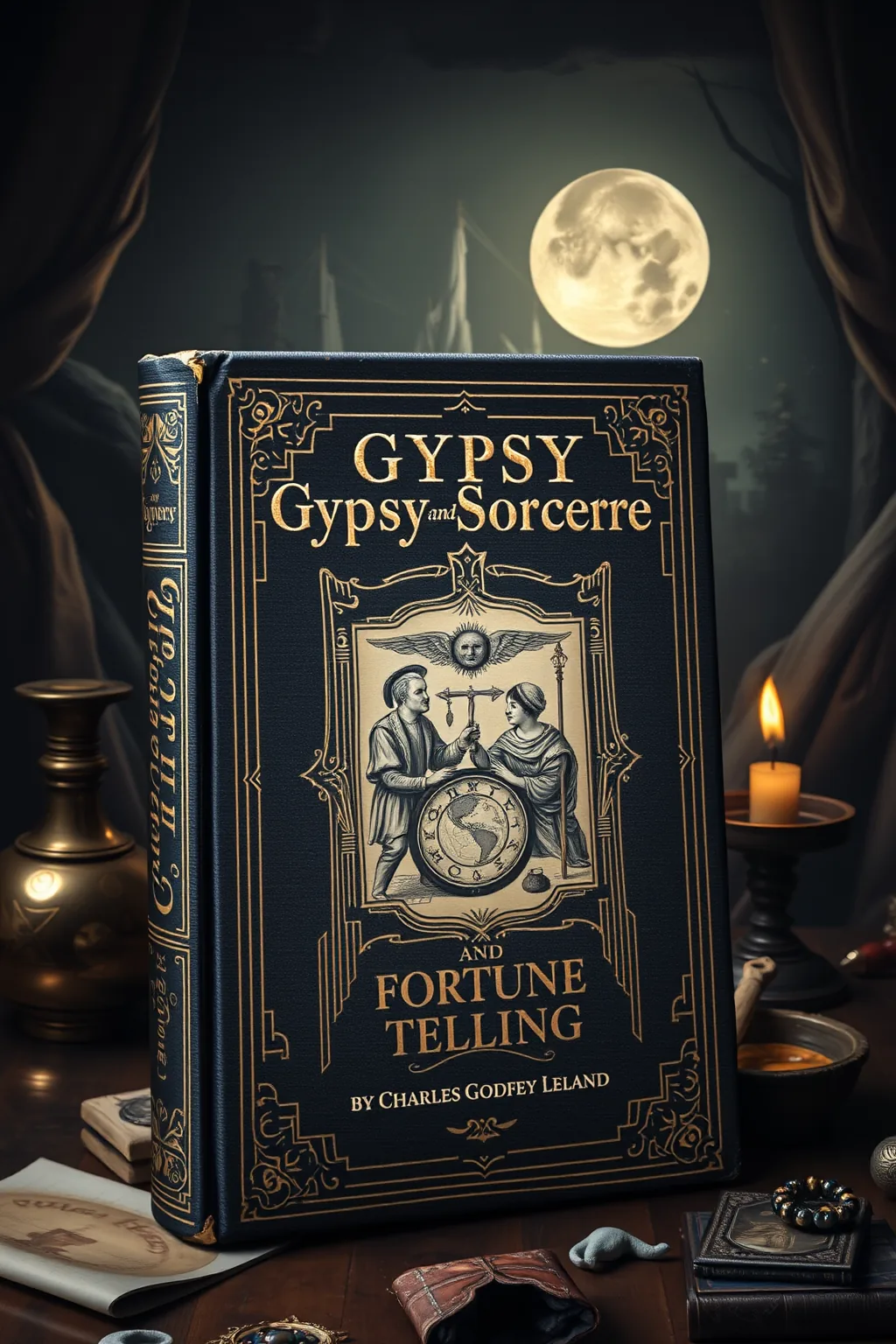
Gypsy Sorcery and Fortune Telling
 72
72

Gypsy Sorcery and Fortune Telling
Charles Godfrey Leland's "Gypsy Sorcery and Fortune Telling" remains a foundational text, albeit one viewed through a specific historical lens. Its strength lies in its sheer breadth; Leland’s dedication to collecting diverse practices, from the "Amulet of Saint Nicholas" for protection to intricate methods of scrying, is remarkable. He presents these not merely as curiosities but as functional elements of a complex belief system. However, the work suffers from the inherent biases of its era. Leland's framing often leans towards the exotic, and the text implicitly assumes a certain hierarchy of magical knowledge, with the Romani system positioned as ancient and peculiar. A passage detailing the use of specific herbs in healing charms, while informative, also highlights this tendency to present the practices as peculiar rather than universally human. Despite these limitations, the book's value as a historical document for understanding late 19th-century occult scholarship and folk magic is undeniable. It offers a valuable, if imperfect, window into a world of sorcery.
📝 Description
72
Charles Godfrey Leland published Gypsy Sorcery and Fortune Telling in 1891, documenting Romani folk magic.
Charles Godfrey Leland's 1891 work, Gypsy Sorcery and Fortune Telling, is a detailed account of the magical practices and divination methods associated with the Romani people. The book meticulously records various techniques, including charms for healing, incantations, and methods of fortune-telling. Leland presents this material as an ethnographic and occult study, aiming to document beliefs and rituals that were often poorly understood or sensationalized during his time.
This volume is suited for readers interested in the history of occultism, comparative mythology, and folk traditions. It will appeal to those who study historical magical systems, researchers of Romani culture, or practitioners looking into the origins of divinatory practices. It is not a contemporary guide to magic but a scholarly examination of historical traditions.
The book emerged during a period of increased interest in spiritualism and ethnography in the late 19th century. Leland's research aligns with a broader effort by scholars and enthusiasts to collect and analyze folklore and marginalized spiritual practices. His work reflects a perspective common at the time, which often viewed such traditions through a Western academic lens, sometimes resulting in romanticized interpretations.
Published in 1891, Leland's work sits within the late 19th-century European occult revival. This era saw a surge in interest in spiritualism, theosophy, and folklore studies, as figures like Helena Blavatsky and others sought to catalogue and understand diverse belief systems, often from a Western perspective. Gypsy Sorcery and Fortune Telling contributes to this by documenting what was perceived as an ancient and distinct system of magic, reflecting the period's academic and occult fascination with non-Western or marginalized traditions.
💡 Why Read This Book?
• Understand specific Romani divination methods like cartomancy and hydromancy, as detailed in the book's sections on fortune-telling, offering a direct glimpse into historical practices often shrouded in mystery. • Explore the concept of 'medical magic' and the use of charms and incantations for healing, providing insight into pre-modern therapeutic beliefs documented by Leland. • Gain an appreciation for the historical context of occult studies in the late 19th century, seeing how figures like Leland collected and interpreted esoteric traditions when interest in spiritualism surged.
⭐ Reader Reviews
Honest opinions from readers who have explored this book.
❓ Frequently Asked Questions
When was Charles Godfrey Leland's 'Gypsy Sorcery and Fortune Telling' originally published?
Charles Godfrey Leland's 'Gypsy Sorcery and Fortune Telling' was first published in 1891. This edition serves as a significant historical document from the late Victorian era's fascination with occultism and folklore.
What types of fortune-telling are described in the book?
The book details various methods including cartomancy (fortune telling with cards), chiromancy (palmistry), and hydromancy (divination using water), alongside other less common techniques.
Does the book include actual spells or incantations?
Yes, 'Gypsy Sorcery and Fortune Telling' is noted for its extensive collection of incantations, medical magic spells, and anecdotal tales illustrating their use by the Romani people.
Is this book a practical guide to modern witchcraft?
No, it is primarily a historical and ethnographic study of Romani folk magic and sorcery as understood in the late 19th century. It offers insight into historical practices rather than modern magical instruction.
What is 'medical magic' as presented by Leland?
Medical magic, in Leland's work, refers to the use of charms, amulets, and specific rituals or incantations believed to possess healing properties, often intertwined with folk remedies.
What is the significance of the title 'Gypsy Sorcery'?
The title reflects Leland's focus on the magical practices attributed to the Romani people, whom he studied extensively, aiming to document their sorcery and fortune-telling traditions.
🔮 Key Themes & Symbolism
Romani Divination Techniques
Leland meticulously documents a wide spectrum of fortune-telling methods attributed to the Romani people. This includes detailed explanations of cartomancy, chiromancy, and hydromancy, presenting specific card spreads, palmistry interpretations, and scrying techniques. The work emphasizes these practices not as mere superstition but as integral systems of knowledge and foresight within the Romani culture, collected during a period of intense ethnographic interest in marginalized communities.
Medical Magic and Charms
A significant portion of the book is dedicated to 'medical magic,' showcasing the Romani use of incantations, amulets, and herbal remedies for healing. Leland records specific charms for ailments ranging from common sicknesses to protection against injury, illustrating a holistic approach to well-being that intertwined spiritual beliefs with physical health. This theme highlights the practical, often life-sustaining, application of sorcery.
Folklore and Incantations
Beyond direct divination and healing, Leland compiles a substantial collection of Romani folklore, including tales, anecdotes, and numerous incantations. These range from spells for good luck and love to curses and protective verses. The inclusion of these oral traditions underscores the richness of Romani culture and provides a valuable archive of their linguistic and magical heritage as perceived by an outsider scholar.
Ethnographic Study of Sorcery
The book functions as an early ethnographic study, albeit one filtered through late 19th-century perspectives. Leland's aim was to record and preserve what he understood as the 'sorcery' of the Romani people. This approach positions the work within the context of Victorian occultism and the burgeoning field of anthropology, attempting to categorize and understand the magical practices of a group often viewed with suspicion and fascination.
💬 Memorable Quotes
Direct passages from the work, attributed to the author.
“There is nothing whatever in the past relating to the influences which have swayed man, however strange, eccentric, superstitious, or even repulsive they may seem, which is not of great and constantly increasing value.”
— This foundational statement by Leland underscores his belief in the importance of studying even the most obscure or 'repulsive' human beliefs and practices, framing them as vital historical and anthropological data.
“The Romani are the oldest of all peoples, and their traditions are the oldest.”
— This assertion reflects Leland's perspective on the antiquity and unique origin of Romani culture and its associated magical practices, positioning them as a source of primeval wisdom.
“The greater the number of the Romani, the greater the sorcery.”
— This observation suggests a correlation, in the eyes of those who observed them, between the size of a Romani gathering and the intensity or prevalence of magical activity, linking community and sorcery.
“The chief use of amulets is to ward off evil.”
— This straightforward statement captures a core function of magical objects detailed in the book: protection against negative influences, a universal theme in folk magic.
💡 Key Ideas
Editorial paraphrase of the work's core concepts — not direct quotes.
In Germany, the common belief is that the Romani know all secrets.
This quote highlights a prevalent perception in European folklore regarding the Romani people's supposed innate knowledge of hidden truths and mystical secrets, a belief Leland sought to explore.
🌙 Esoteric Significance
Tradition
Leland's work engages with folk magic traditions, particularly those attributed to the Romani people, which, while not fitting neatly into established Western esoteric lineages like Hermeticism or Kabbalah, shares common threads with broader animistic and shamanic practices. It represents an attempt to codify and analyze a perceived 'natural magic' that predates or exists outside formal occult orders, reflecting the late 19th-century fascination with ancient, 'primitive' forms of spirituality.
Symbolism
Key symbols often relate to protection and divination. The 'Amulet of Saint Nicholas,' mentioned for warding off evil, represents a syncretic use of Christian figures within folk magic. Divinatory tools themselves, like cards in cartomancy or the patterns in water for hydromancy, function as symbolic interfaces between the mundane and the unseen, providing a framework for interpreting omens and future events.
Modern Relevance
Contemporary practitioners of folk magic, witchcraft, and those interested in the history of divination often reference Leland's work. His detailed documentation of Romani practices informs modern understandings of diverse magical systems and provides source material for those seeking to reconstruct or adapt historical techniques. The book remains a valuable resource for comparative studies in occultism and the anthropology of religion.
👥 Who Should Read This Book
• Students of Western Esotericism and Comparative Religion: Those seeking to understand the breadth of magical practices beyond formal traditions will find Leland's documentation of Romani sorcery useful. • Folklorists and Anthropologists: Researchers interested in the collection and analysis of folk beliefs, charms, and divination methods from the late 19th century will benefit from this detailed ethnographic account. • Practitioners of Divination Arts: Individuals studying the historical roots of fortune-telling techniques, such as cartomancy and palmistry, can gain valuable context and historical perspectives.
📜 Historical Context
Charles Godfrey Leland published "Gypsy Sorcery and Fortune Telling" in 1891, a period marked by intense European and American interest in spiritualism, occultism, and the collection of folklore. The late Victorian era saw a surge in societies dedicated to psychical research and the study of esoteric traditions, with figures like Helena Blavatsky and the Theosophical Society gaining prominence. Simultaneously, ethnographers were beginning to systematically document the customs and beliefs of various cultures, including marginalized groups like the Romani people. Leland’s work emerged within this milieu, attempting to catalogue and understand the magical practices of the Romani, who were often viewed with a mixture of fear, fascination, and romanticism. While figures like Sir Richard Burton were exploring diverse cultures, Leland’s specific focus on 'sorcery' placed his work at the intersection of occult scholarship and early anthropological inquiry, contributing to a broader discourse on hidden knowledge and folk traditions.
📔 Journal Prompts
The Romani concept of 'medical magic' as presented by Leland.
Leland's documentation of cartomancy techniques.
Reflections on the 'Amulet of Saint Nicholas' for protection.
The role of hydromancy in Romani fortune-telling.
Leland's interpretation of Romani folklore and its relation to sorcery.
🗂️ Glossary
Cartomancy
A form of divination using a deck of cards, typically tarot or standard playing cards, to gain insight into the past, present, or future. Leland details specific methods used by the Romani.
Chiromancy
The practice of fortune-telling by examining the lines and features of the palm of the hand. Also known as palmistry, it was a common divination art documented by Leland.
Hydromancy
A method of divination performed by means of water, often involving scrying (gazing into water) to perceive visions or omens. This technique is explored within the book's context.
Incantation
A series of words said in a ritual or magical spell, believed to have supernatural power. Leland collected numerous examples from Romani traditions.
Amulet
An object believed to possess magical properties to protect the wearer from harm or evil. The book discusses various types and their uses.
Romani
An adjective referring to the Romani people, an ethnic group originating from the northern Indian subcontinent who are traditionally nomadic. Leland's work focuses on their cultural and magical practices.
Sorcery
The practice of magic, especially black magic; witchcraft. Leland uses the term to encompass the various magical arts studied in the book.