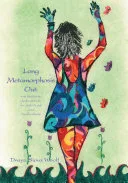
Long Metamorphosis Out
 76
76

Long Metamorphosis Out
Draya Sioux Woolf’s "Long Metamorphosis Out" offers a raw, unflinching look at personal transformation. The book’s strength lies in its unvarnished portrayal of emotional flux; Woolf doesn't polish the rough edges of her journey. The passage describing the "shattered mirror" of self-perception is particularly potent, capturing the disorienting feeling of losing one's familiar identity. However, the very intensity that makes the work compelling can also be its limitation. The fragmented style, while effective in conveying chaos, occasionally makes the path toward resolution feel somewhat obscure, leaving the reader to piece together the narrative arc more than might be desired. The work’s value is undeniable for those traversing similar internal landscapes. Woolf’s courage in articulating the difficult stages of becoming is the book’s signal achievement.
📝 Description
76
Draya Sioux Woolf's "Long Metamorphosis Out", published in 2003, chronicles intense personal upheaval and spiritual emergence.
"Long Metamorphosis Out" is a collection of prose poems and reflections by Draya Sioux Woolf, first published in 2003. The work chronicles a period of intense personal upheaval and subsequent spiritual emergence. It operates not as a linear narrative but as a series of impressions, images, and emotional states. Woolf uses a lyrical, often fragmented style to convey the raw experience of transformation, moving from a state of perceived chaos to one of emergent clarity. The book invites readers into a deeply personal space, examining the internal shifts that accompany significant life changes.
The text suits individuals engaged in introspective practices, particularly those interested in the poetic articulation of psychological and spiritual transitions. Readers who appreciate experimental literary forms and seek to understand the subjective experience of metamorphosis will find resonance. It is for those who do not shy away from ambiguity and are drawn to texts that examine the liminal spaces between states of being. Those familiar with or curious about the emotional arc of profound personal change, as rendered through artistic expression, will connect with its core.
Published in 2003, "Long Metamorphosis Out" appeared as the early internet influenced self-publishing and personal narrative. While not tied to a specific esoteric movement, its introspective and transformative themes align with broader trends in consciousness studies. Woolf's work echoes confessional poets and spiritual autobiographies, adapted to a modern, fragmented sensibility. The book's focus on individual experience over dogma places it within a tradition of personal spiritual exploration.
💡 Why Read This Book?
• Gain insight into the poetic articulation of profound personal change, understanding the "whirlwind" as a catalyst for growth, as explored in Woolf's 2003 publication. • Experience a non-linear exploration of spiritual emergence, mirroring the subjective, often chaotic, path toward clarity found within the text's lyrical passages. • Connect with the raw emotional landscape of transformation, appreciating the "shattered mirror" imagery that captures the disorienting yet essential process of self-redefinition.
⭐ Reader Reviews
Honest opinions from readers who have explored this book.
❓ Frequently Asked Questions
What is the primary style of writing in 'Long Metamorphosis Out'?
The book utilizes a style of prose poetry and fragmented reflections. It eschews traditional narrative structure for a more impressionistic and emotionally driven presentation of the author's transformative journey.
When was 'Long Metamorphosis Out' first published?
Draya Sioux Woolf's 'Long Metamorphosis Out' was first published in 2003, placing it within the early 21st-century landscape of introspective and spiritual literature.
Who is the author, Draya Sioux Woolf?
Draya Sioux Woolf is the author of 'Long Metamorphosis Out.' While not widely prolific, her work is noted for its candid exploration of personal metamorphosis and psychological transition.
What does the title 'Long Metamorphosis Out' suggest?
The title suggests a prolonged and arduous process of change ('Long Metamorphosis') culminating in emergence or arrival ('Out'). It implies a journey through a difficult phase leading to a new state of being.
Is 'Long Metamorphosis Out' a self-help book?
While it deals with themes of transformation, 'Long Metamorphosis Out' is primarily a literary and poetic exploration rather than a prescriptive self-help guide. It offers shared experience and reflection.
What kind of reader would appreciate this book?
Readers interested in introspective journeys, poetic expressions of emotional and spiritual change, and unconventional literary forms would find this book engaging. It appeals to those familiar with concepts of personal metamorphosis.
🔮 Key Themes & Symbolism
The Whirlwind of Change
The text frequently invokes the metaphor of a 'whirlwind' to describe the chaotic and destabilizing forces encountered during profound personal transformation. This isn't presented as mere disruption but as an essential, albeit tumultuous, phase necessary for shedding old forms. Woolf captures the disorienting nature of this period, where familiar structures dissolve, forcing an encounter with the raw elements of the self. The journey through this 'whirlwind' is central to the book's exploration of metamorphosis, highlighting the active, often violent, process of becoming.
Shattered Self and Emergence
A recurring motif is the 'shattered mirror' or the fragmentation of the self. This symbolizes the deconstruction of identity that often accompanies deep change. The book details the experience of seeing oneself reflected in broken pieces, unable to recognize the former image. The 'Out' in the title signifies the subsequent emergence from this state of fragmentation. It speaks to a gradual reassembly, not into the old form, but into a new, integrated self that has passed through the crucible of transformation.
Lyrical Navigation of Liminality
Woolf's prose poetry navigates the liminal spaces between psychological states and spiritual awareness. The book doesn't offer easy answers or a step-by-step guide but rather maps the emotional and perceptual shifts experienced in these in-between zones. The fragmented style mirrors the non-linear, often non-rational, experience of profound inner work. It invites the reader to inhabit these transitional states, finding a unique form of beauty and insight within the ambiguity of becoming.
The Poetics of Spiritual Unfolding
This work functions as a poetic autobiography of spiritual unfolding. It articulates the often ineffable experiences associated with deep inner transformation. By focusing on sensory details, emotional currents, and evocative imagery, Woolf translates the internal range of spiritual growth into language. The book bypasses theological or philosophical discourse in favor of lived, felt experience, making the abstract process of spiritual awakening tangible and relatable through its artistic rendering.
💬 Memorable Quotes
Direct passages from the work, attributed to the author.
“The whirlwind landed me here.”
— This concise statement captures the book's core theme: the journey through chaotic forces ('whirlwind') leads to a new, albeit perhaps unexpected, state of being ('here'). It suggests acceptance of the transformative process.
“My reflection, a shattered mirror.”
— This phrase captures the disorienting experience of losing one's sense of self during a period of intense change. It speaks to the breakdown of identity and the difficulty of self-recognition amidst metamorphosis.
“Walking this path, unwinding.”
— This suggests a gradual and perhaps intricate process of self-discovery or resolution. 'Unwinding' implies releasing tension, complexity, or deeply ingrained patterns, moving towards a simpler or clearer state.
“From the storm, a quiet knowing.”
— This highlights the classic arc of transformation: emerging from turmoil ('storm') into a state of inner peace and clarity ('quiet knowing'). It emphasizes the potential for growth following difficult experiences.
“The metamorphosis is out.”
— This final, declarative statement signifies the completion or arrival stage of the transformation. It suggests that the long process has reached its conclusion, resulting in a new form or state of being.
🌙 Esoteric Significance
Tradition
While not explicitly aligned with a single esoteric tradition, "Long Metamorphosis Out" draws heavily on the universal archetype of transformation found across many mystical paths. Its focus on the 'dark night' and subsequent emergence echoes Gnostic themes of liberation from illusion and the journey of the soul towards reunification. The emphasis on internal states and subjective experience aligns with modern interpretations of Hermeticism's 'as above, so below,' where the inner world mirrors external processes.
Symbolism
The 'whirlwind' serves as a potent symbol for the chaotic forces of dissolution that precede spiritual rebirth, a common motif in shamanic and alchemical traditions. The 'shattered mirror' represents the deconstruction of the ego-bound self, a necessary step in many contemplative practices for achieving a more authentic awareness. The concept of 'out' signifies emergence, symbolizing the attainment of a higher state of consciousness or a reintegrated self, akin to the alchemical concept of 'prima materia' transformed into 'gold.'
Modern Relevance
Contemporary practitioners of mindfulness and somatic experiencing might find resonance in Woolf's lyrical descriptions of navigating intense emotional states. The book's exploration of personal metamorphosis speaks to modern therapeutic modalities that emphasize inner work and self-discovery. Thinkers and writers focused on auto-ethnography and the poetics of lived experience, particularly within spiritual or psychological contexts, may draw inspiration from Woolf's unflinching honesty and innovative use of language to articulate the ineffable aspects of transformation.
👥 Who Should Read This Book
• Individuals undergoing significant life transitions seeking a literary companion that validates the emotional and spiritual upheaval involved. • Students of comparative spirituality interested in poetic expressions of archetypal journeys, such as the descent into chaos and subsequent emergence. • Readers who appreciate experimental literature and are drawn to works that explore the subjective range of consciousness and personal metamorphosis.
📜 Historical Context
Published in 2003, "Long Metamorphosis Out" appeared during a time when personal narrative and introspective writing were finding new platforms, particularly online. While not directly tied to a specific esoteric movement, Woolf's work appeals to the broader currents of consciousness exploration and self-discovery prominent in the late 20th and early 21st centuries. Its fragmented, lyrical style can be seen as a contemporary response to earlier forms of spiritual autobiography. The book emerged in an era where thinkers like Eckhart Tolle were popularizing concepts of presence and inner peace, though Woolf's approach is more rooted in the poetic rendering of difficult emotional transitions than in direct spiritual instruction. Unlike the more structured philosophical explorations of figures like Ken Wilber, Woolf’s text prioritizes subjective experience and emotional honesty, offering a counterpoint to more systematized approaches to personal growth.
📔 Journal Prompts
The whirlwind's landing: reflect on a period of intense change that brought you to a new understanding.
Shattered mirror: consider how your perception of self has shifted through transformative experiences.
The unwinding path: describe a process of release or simplification you have navigated.
Quiet knowing: explore moments where clarity emerged from confusion or difficulty.
Emergence from the metamorphosis: what new form or understanding has 'come out' of a significant personal transformation?
🗂️ Glossary
Whirlwind
A metaphor used in the text to represent a period of intense chaos, disruption, and destabilization during personal or spiritual transformation.
Metamorphosis
A profound and fundamental change in form, nature, or essence. In the context of the book, it refers to deep psychological and spiritual transformation.
Shattered Mirror
An image representing the fragmentation of identity and the loss of a stable sense of self during a transformative process.
Emergence
The act or process of coming into being, appearing, or becoming known, signifying the arrival into a new state after a period of transformation.
Quiet Knowing
A state of inner peace, clarity, and intuitive understanding that arises after navigating difficult experiences or periods of turmoil.
Unwinding
The process of gradually releasing tension, complexity, or deeply held patterns, leading towards a state of greater simplicity or resolution.
The Path
Refers to the ongoing journey of personal development, spiritual growth, or life experience, often characterized by its unique challenges and discoveries.