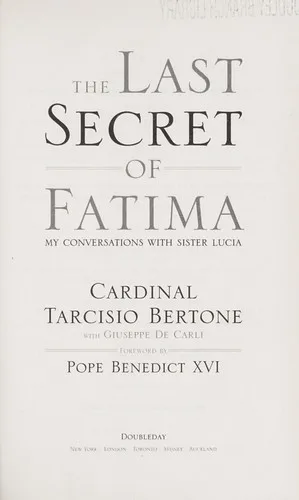
The last secret of Fatima
 74
74

The last secret of Fatima
Bertone's "The Last Secret of Fatima" presents a meticulously researched, albeit officially sanctioned, perspective on one of Catholicism's most enduring mysteries. The strength of the book lies in its authoritative voice and its detailed unpacking of the Vatican's 2000 declaration concerning the Third Secret. Bertone, drawing on his position, offers a compelling argument for the Church's interpretation, grounding it in historical events and theological reasoning. However, a significant limitation is its inherent bias; the work functions as an apologia for the Holy See's position, leaving little room for the persistent alternative theories or the critical questions that continue to circulate among the faithful and scholars alike. The passage detailing the connection between the secret and the assassination attempt on John Paul II in 1981 is particularly illustrative of this approach, presenting the event as a direct fulfillment of prophecy. Ultimately, the book serves as a vital document for understanding the Church's official narrative, but less so for those seeking an unvarnished exploration of all facets of the Fatima phenomenon.
📝 Description
74
Tarcisio Bertone's 2008 book examines the Vatican's official interpretation of the Third Secret of Fatima.
Published in 2008, Tarcisio Bertone's The Last Secret of Fatima offers a close reading of the Catholic Church's understanding of the purported Third Secret. The book addresses the historical context of the 1917 Marian apparitions in Fatima, Portugal, and the subsequent official pronouncements. Bertone, who held significant positions within the Vatican, analyzes the content and implications of the secret as interpreted by ecclesiastical authorities. The work engages with the decades of speculation that followed the Vatican's 2000 revelation of the secret, attributed to Sister Lucia dos Santos. Bertone's account aims to present the authorized perspective on this complex theological and historical subject.
This book is suited for those with a strong interest in Marian apparitions, Catholic eschatology, and the historical debates surrounding Fatima. It will particularly appeal to theologians, religious historians, and devout Catholics seeking clarity on the Church's official position. A working knowledge of Catholic doctrine and the history of the Fatima events is recommended for a full appreciation of Bertone's detailed analysis. The text delves into the official interpretation of the secret, particularly its connection to 20th-century persecutions.
The book sits within the broader tradition of Christian mysticism and eschatology, specifically concerning private revelations and their interpretation by established religious authorities. It engages with the phenomenon of prophecy within Catholicism, exploring how such claims are received, analyzed, and officially sanctioned or dismissed. The work is concerned with the Church's role in mediating divine messages and the theological frameworks used to understand apocalyptic visions and their significance for the faithful. Bertone's text functions as an authoritative voice within this tradition, aiming to settle interpretive disputes surrounding a specific, highly publicized revelation.
💡 Why Read This Book?
• Understand the Catholic Church's official interpretation of the Third Secret of Fatima, as presented by a high-ranking Vatican official, gaining insight into the theological reasoning behind the 2000 declaration. • Explore the specific historical context of the 1917 apparitions in Fatima, Portugal, and how events like the 1981 assassination attempt on Pope John Paul II are linked to the prophecy's fulfillment. • Grasp the symbolic language and allegorical meanings attributed to the Third Secret by ecclesiastical authorities, offering a unique lens through which to view 20th-century Church history.
⭐ Reader Reviews
Honest opinions from readers who have explored this book.
❓ Frequently Asked Questions
What is the Third Secret of Fatima according to Tarcisio Bertone's book?
Bertone's "The Last Secret of Fatima" presents the Church's official interpretation of the Third Secret, revealed in 2000. It is understood to describe the persecution of the Church and the papacy, particularly referencing the struggles of the 20th century and the assassination attempt on Pope John Paul II in 1981.
Who is Tarcisio Bertone and what is his authority on the Fatima secret?
Tarcisio Bertone served as Archbishop of Genoa and later as Cardinal Secretary of State of the Vatican. His position lent significant authority to his 2008 book, which offers an official perspective on the Third Secret of Fatima from within the Church hierarchy.
When were the apparitions of Fatima said to have occurred?
The Marian apparitions in Fatima, Portugal, were reported to have occurred in 1917, primarily between May and October. These events are the foundation for the secrets purportedly revealed to three shepherd children: Lúcia dos Santos, Francisco Marto, and Jacinta Marto.
Does the book discuss Sister Lucia dos Santos?
Yes, the book extensively discusses Sister Lucia dos Santos, the visionary who received and recorded the secrets of Fatima. Bertone analyzes her writings and the Church's understanding of her role in conveying the prophetic messages.
What is the historical significance of the 1981 event mentioned in relation to the Third Secret?
The book links the 1981 assassination attempt on Pope John Paul II to the Third Secret. This event is interpreted by the Vatican, as presented by Bertone, as a symbolic fulfillment of the secret's vision of suffering and martyrdom within the Church.
Is this book the only source for the Vatican's interpretation of the Third Secret?
Bertone's book is a significant, authorized exposition of the Vatican's interpretation, particularly following the 2000 revelation. However, the initial revelation and related documents were also released by the Holy See, with Bertone's work providing a deeper theological and historical commentary.
🔮 Key Themes & Symbolism
The Vatican's Official Interpretation
Bertone's work is a starting point for understanding the Catholic Church's definitive stance on the Third Secret of Fatima. It meticulously details the interpretation presented by the Holy See in 2000, which links the secret to the martyrdom and suffering of the Church throughout the 20th century. The book scrutinizes the released text, emphasizing its symbolic connection to historical events, particularly the persecution of Christians and the papacy. It aims to validate the Church's understanding against widespread speculation, presenting a unified theological and historical narrative from an authoritative Vatican perspective.
Marian Apparitions and Prophecy
Central to the book is the phenomenon of Marian apparitions, specifically those reported in Fatima, Portugal, in 1917. Bertone situates the Third Secret within this broader context, exploring the theological implications of divine messages delivered through celestial intermediaries. The work examines how prophetic pronouncements, particularly those concerning future trials for the Church, are received, interpreted, and integrated into Catholic doctrine and belief systems. It addresses the challenges and responsibilities associated with discerning and disseminating such potent spiritual messages.
The Role of the Papacy and Persecution
A significant focus of "The Last Secret of Fatima" is the portrayal of the papacy undergoing severe trials and persecutions, as interpreted from the secret's content. Bertone elaborates on how the vision describes suffering, pain, and even martyrdom experienced by pontiffs and the broader Church hierarchy. The book uses the 1981 assassination attempt on Pope John Paul II as a prime example of this prophetic fulfillment, illustrating the perceived spiritual warfare and resilience of the Church amidst adversity in the modern era.
Historical Events and Symbolism
Bertone's analysis connects the abstract pronouncements of the Third Secret to concrete historical events of the 20th century. The book deciphers the symbolic language used in the secret, such as the 'angel with a flaming sword' or the procession of bishops in white robes, and correlates them with specific historical periods and occurrences. This approach aims to demonstrate the divine prescience embedded within the Fatima message and its relevance to understanding the tumultuous historical trajectory of the Church and the world.
💬 Memorable Quotes
Direct passages from the work, attributed to the author.
“The Third Secret is a vision of the struggles of the Church and of the papal suffering caused by the persecution of the Church.”
— This statement captures the core of Bertone's argument, framing the secret not as a prediction of global catastrophe, but as a spiritual insight into the trials faced by the Catholic Church and its leaders, particularly during the 20th century.
“The vision shows the Pope, kneeling at the foot of the cross, being killed by soldiers who fire shots at him.”
— This description directly relates to the interpretation of the Third Secret as foretelling the suffering and martyrdom of a Pope. It specifically references the assassination attempt on Pope John Paul II in 1981 as a key event aligning with this part of the vision.
“It is a call to conversion and penance, urging believers to turn back to God.”
— This interpretation emphasizes the redemptive and instructional purpose of the Third Secret. It suggests that the dire prophecies are not merely forewarnings but also exhortations for spiritual renewal and a return to fundamental religious practices.
“The text of the secret, as revealed in 2000, is the complete and authentic message.”
— This assertion by Bertone underlines the book's function as an endorsement of the Vatican's official release of the Third Secret. It aims to close the door on further speculation by declaring the 2000 revelation as the final and full disclosure.
💡 Key Ideas
Editorial paraphrase of the work's core concepts — not direct quotes.
The Third Secret speaks of the dangers threatening the faith and the life of Christians, and of the peril of the 'dEath' of Christ's light.
This paraphrase highlights the existential threat to faith that the secret purportedly warns about. It suggests a spiritual darkness or a loss of divine guidance as a central theme, emphasizing the fragility of Christian belief in the face of overwhelming challenges.
🌙 Esoteric Significance
Tradition
While rooted in Catholic Mariology, "The Last Secret of Fatima" engages with themes that resonate within broader esoteric traditions concerning prophecy and divine revelation. It touches upon the concept of sacred history and the unfolding of divine will through human events, a common thread in Gnostic and Hermetic thought. However, Bertone's approach is strictly within orthodox Catholic theology, interpreting these universal concepts through the lens of Church dogma and the specific veneration of Mary as a divine messenger.
Symbolism
The book dissects key symbols from the Third Secret, such as the "angel with a flaming sword" representing divine justice or impending punishment, and the "white-robed bishop" often identified with the Pope, who suffers martyrdom. The vision of the "ruined city" and the "crucified and dead bodies" symbolize the widespread suffering and potential collapse of faith described. These symbols are interpreted within a Christian eschatological framework, signifying trials and purification for the Church.
Modern Relevance
Contemporary discussions on Catholic prophecy, Marian devotion, and Vaticanology continue to reference Bertone's work as the primary source for the Church's official stance on the Third Secret. Scholars and believers examining the intersection of faith, history, and divine intervention often engage with his arguments. While not directly adopted by secular esoteric schools, the book's exploration of hidden meanings within religious texts and its engagement with prophetic narratives echo broader esoteric interests in decoding divine messages.
👥 Who Should Read This Book
• Devout Catholics and Marian devotees seeking a comprehensive understanding of the Church's official position on the Third Secret of Fatima. • Religious historians and theologians specializing in 20th-century Church history and the study of private revelations. • Researchers and Vaticanologists interested in the intersection of faith, politics, and prophecy within the Catholic hierarchy.
📜 Historical Context
Published in 2008, Tarcisio Bertone's "The Last Secret of Fatima" arrived decades after the initial Marian apparitions in 1917 and the prolonged Vatican debate over the Third Secret. The late 20th and early 21st centuries saw a surge in interest, fueled by the 1981 assassination attempt on Pope John Paul II and the Vatican's eventual 2000 revelation. Bertone, then a Cardinal and later Vatican Secretary of State, positioned his work as an authoritative clarification, directly addressing the lingering questions and alternative interpretations that persisted despite the official pronouncement. This period was marked by ongoing theological discourse on private revelation and eschatology within Catholicism, and the book sought to provide a definitive, Church-sanctioned understanding, contrasting with more speculative or critical analyses from authors like Malachi Martin, who offered different interpretations of the secrets.
📔 Journal Prompts
The papal suffering described in the Third Secret: how does this concept inform your understanding of faith's resilience?
Sister Lucia's role as visionary: reflect on the responsibility of conveying prophetic messages.
The symbolism of the flaming sword: what does this image suggest about divine intervention and justice?
The 1981 assassination attempt on Pope John Paul II: consider its perceived connection to the Fatima prophecies.
The Church's discernment of private revelations: how does this process shape belief and doctrine?
🗂️ Glossary
Third Secret of Fatima
The final part of the prophetic message allegedly revealed by the Virgin Mary to three shepherd children in Fatima, Portugal, in 1917. Its content and interpretation have been subjects of significant discussion and official Vatican pronouncements.
Marian Apparitions
Supernatural occurrences where the Virgin Mary is believed to have appeared to individuals. The 1917 Fatima events are among the most famous and widely discussed Marian apparitions in modern history.
Visionary
An individual who claims to have received divine revelations or seen supernatural visions. In the context of Fatima, Sister Lucia dos Santos is the primary visionary who recorded the secrets.
Catholic Eschatology
The branch of Christian theology that deals with the final events of history, or the ultimate destiny of humanity and the world. It includes beliefs about the Second Coming of Christ, judgment, heaven, and hell.
Vatican
The independent city-state and ecclesiastical sovereign entity of the Catholic Church, headed by the Pope. It serves as the administrative and spiritual center of the Roman Catholic Church.
Private Revelation
Divine communication that is not part of the public revelation contained in Scripture and Tradition. The Church has specific criteria for discerning the authenticity of private revelations.
Papal Suffering
The hardships, persecution, or martyrdom experienced by the Pope. The Third Secret of Fatima is interpreted by the Vatican as foretelling such suffering for pontiffs.
🔮 Readers Also Liked
Browse all →








More by Tarcisio Bertone
All books →
More Free Occult Philosophy Books
View all →