Llewellyns Sabbats Almanac Llewellyns Sabbats Almanac

 83
83

Llewellyns Sabbats Almanac Llewellyns Sabbats Almanac
Ed Day’s Llewellyn's Sabbats Almanac offers a solid, if conventional, framework for the eight major Neopagan festivals. Its strength lies in its consistent structure, providing ritual elements, correspondences, and lore for each Sabbat in a digestible format. However, the 2010 publication date means some of the more recent theological or magical developments within Paganism are not reflected. A particularly useful section for many will be the "Correspondences" list for each Sabbat, offering specific herbs, colors, and deities. While it provides a competent entry point, readers seeking radical reinterpretations or deeply esoteric explorations might find it somewhat predictable. It fulfills its purpose as a practical, functional guide for the established Sabbats.
📝 Description
83
Published in 2010, Llewellyn's Sabbats Almanac offers practical guidance for celebrating the eight Wiccan and Neopagan festivals.
This almanac serves as a yearly manual for observing the Wiccan and Neopagan Sabbats. It details rituals, lore, and advice for connecting with natural cycles and the Wheel of the Year. The book is structured as a resource for individuals and groups aiming to deepen their engagement with seasonal energies and pagan traditions.
It is designed for practicing Wiccans, Neopagans, and those interested in nature-based spirituality. The almanac supports both solitary practitioners and covens seeking organized methods for Sabbat celebrations. Readers interested in the historical and mythological roots of these festivals will also find it valuable.
The almanac addresses the revival of interest in Neopaganism and Wicca, movements that grew significantly in the late 20th century. It follows in the tradition of practical guides that aim to codify magical and spiritual practices aligned with natural cycles. This lineage connects to older European folk customs and modern Pagan revivalism, providing a structured approach to celebrating seasonal and solar events.
💡 Why Read This Book?
• Gain practical ritual structures for each of the eight Sabbats, including specific correspondences like herbs and colors associated with Yule, allowing for personalized seasonal celebrations. • Understand the mythological and folkloric roots of each festival, such as the lore surrounding Beltane, providing a deeper context beyond simple seasonal observation. • Access a year-long plan for spiritual engagement with natural cycles, offering concrete ideas for connecting with the energies of Imbolc and other turning points.
⭐ Reader Reviews
Honest opinions from readers who have explored this book.
❓ Frequently Asked Questions
What are the eight Sabbats detailed in Llewellyn's Sabbats Almanac?
The almanac covers the eight major festivals of the Wiccan and Neopagan Wheel of the Year: Samhain, Yule, Imbolc, Ostara, Beltane, Litha, Lughnasadh, and Mabon, providing rituals and lore for each.
Who is Ed Day, the editor of Llewellyn's Sabbats Almanac?
Ed Day is the editor credited with compiling and organizing the content for the 2010 edition of Llewellyn's Sabbats Almanac, bringing together various contributors to detail the seasonal festivals.
Is this almanac suitable for beginners in Paganism?
Yes, the almanac is designed for both solitary practitioners and groups, offering accessible rituals and explanations of lore, making it a suitable resource for those new to Pagan traditions and Sabbat celebrations.
What kind of content can I expect for each Sabbat?
For each Sabbat, the almanac typically includes historical and mythological background, ritual outlines, correspondences (like herbs, colors, and deities), and practical suggestions for celebrating the specific season.
Does the almanac focus on any specific Pagan tradition?
While it centers on the universally recognized eight Sabbats of the Wheel of the Year, it draws from Wiccan and Neopagan practices, offering a broad approach applicable to many nature-based spiritual paths.
When was the first edition of Llewellyn's Sabbats Almanac published?
The edition edited by Ed Day, which serves as a primary reference, was first published in 2010, reflecting contemporary Neopagan practices at that time.
🔮 Key Themes & Symbolism
The Wheel of the Year
The almanac's core structure revolves around the Wheel of the Year, representing the eight major seasonal festivals. This cyclical model is fundamental to Wiccan and Neopagan practice, marking transitions in nature and correlating them with spiritual themes. Each Sabbat—from the deep winter of Yule to the harvest of Mabon—is presented as a distinct energetic point, offering opportunities for specific magical work, ritual, and contemplation aligned with the earth's turning and the sun's journey.
Seasonal Ritual and Magic
A primary focus is the practical application of ritual and magic for each Sabbat. The book provides detailed guidelines, including suggested spells, incantations, and ceremonial structures. These are designed to help practitioners attune themselves to the specific energies of each festival, whether it's celebrating fertility at Beltane or honoring ancestors at Samhain. The emphasis is on creating meaningful, earth-centered practices that connect the individual to the natural world's rhythms.
Pagan Lore and Correspondences
Beyond ritual, the almanac studies the rich lore and symbolism associated with each festival. It explores mythological narratives, folk traditions, and the deities often invoked during these times. Extensive lists of correspondences—including herbs, colors, crystals, and foods—are provided for each Sabbat. This information serves as a toolkit for enriching personal practice and understanding the deeper esoteric meanings embedded within the seasonal cycle.
Nature-Based Spirituality
The underlying philosophy is one of nature-based spirituality, where the cycles of the earth are seen as a primary source of divine wisdom and power. The almanac encourages readers to observe and participate in these cycles, fostering a sense of interconnectedness with the environment. It promotes a worldview where human life is intrinsically linked to the health and rhythms of the planet, advocating for practices that honor and sustain this relationship.
💬 Memorable Quotes
Direct passages from the work, attributed to the author.
“The Wheel of the Year turns, bringing us through the cycles of death and rebirth, growth and decay.”
— This interpretation highlights the cyclical nature of existence as conceptualized in many Pagan traditions. It emphasizes the natural progression of seasons and life, suggesting that each phase, including endings, holds the potential for new beginnings.
“Each Sabbat offers a unique energetic signature for magical working.”
— This statement underscores the practical application of the Sabbats in magical practice. It suggests that specific times of the year are particularly potent for certain types of spellcraft or spiritual focus, aligning magical intent with seasonal energies.
“Correspondences provide a symbolic language for ritual enhancement.”
— This concept explains the function of correspondences (herbs, colors, etc.) within Pagan rituals. It frames them not as arbitrary choices but as a symbolic system that amplifies the meaning and effectiveness of ceremonial work.
“Solitary practitioners can effectively celebrate the Sabbats with structured guidance.”
— This reflects the almanac's utility for individual practitioners. It assures readers that even without a group, they can engage in meaningful Sabbat celebrations by following the provided structures and advice.
💡 Key Ideas
Editorial paraphrase of the work's core concepts — not direct quotes.
Honoring the earth's cycles is central to a meaningful spiritual path.
This paraphrase emphasizes the core tenet of nature-based spirituality found within the almanac. It posits that aligning one's spiritual life with the observable rhythms of the natural world is essential for depth and authenticity.
🌙 Esoteric Significance
Tradition
This almanac aligns primarily with modern Wiccan and Neopagan traditions, which synthesize various esoteric streams, including Hermeticism, Celtic mythology, and folk magic. It operates within the framework of the 'Wheel of the Year,' a cyclical calendrical system popularized in the 20th century that maps spiritual significance onto solar and agricultural turning points. While not strictly Hermetic, it shares a focus on symbolic understanding and ritual practice aimed at aligning the individual with cosmic and terrestrial cycles.
Symbolism
Key symbols include the Wheel of the Year itself, representing cyclical time and the interconnectedness of life, death, and rebirth. Each Sabbat carries specific symbolic weight: Yule embodies the rebirth of the sun, Beltane signifies fertility and union, and Samhain marks the descent into the underworld and the honoring of ancestors. The almanac utilizes natural elements—fire, water, earth, air—and seasonal flora and fauna as potent symbols for ritual and magical work.
Modern Relevance
Contemporary Pagan practitioners, witchcraft students, and those interested in earth-centered spirituality continue to draw on the foundational structure provided by works like Llewellyn's Sabbats Almanac. Its accessible approach to ritual and correspondences makes it a recurring reference for individuals and groups seeking to establish or maintain a connection with seasonal cycles, influencing modern online communities and the continued practice of Sabbat celebrations.
👥 Who Should Read This Book
• Newcomers to Wicca and Neopaganism seeking a structured introduction to the eight major seasonal festivals and their associated rituals. • Solitary practitioners looking for practical guidance and correspondences to enhance their personal Sabbat celebrations throughout the year. • Established Pagans interested in a comprehensive reference guide for established Sabbat lore, ritual components, and symbolic meanings.
📜 Historical Context
Published in 2010, Llewellyn's Sabbats Almanac arrived during a period of established growth for Neopaganism and Wicca in the West. Following foundational figures like Gerald Gardner in the mid-20th century and the subsequent proliferation of Pagan paths, works like this aimed to provide accessible, structured practice. The early 2000s saw numerous publications seeking to codify and present Pagan traditions, often drawing from established sources but seeking to update them for contemporary practitioners. This almanac emerged in a landscape populated by other yearly guides, such as those from Scott Cunningham, and within a broader intellectual current influenced by comparative mythology and folklore studies. While not explicitly engaging in academic debate, it contributed to the popular dissemination of ideas about the Wheel of the Year and seasonal magic, a practice distinct from more esoteric or scholarly explorations of ancient European religions.
📔 Journal Prompts
Reflect on the symbolism of the Yule log and its connection to rebirth.
Consider the correspondences for Beltane and how they might be incorporated into a personal ritual.
Analyze the lore surrounding Samhain and its significance for honoring ancestors.
Identify one aspect of Ostara's themes that speaks to your current life circumstances.
Explore the concept of the harvest as represented by Lughnasadh and Mabon in your own life.
🗂️ Glossary
Sabbat
A festival or celebration in Wiccan and Neopagan traditions, typically marking one of the eight points on the Wheel of the Year. These celebrate the changing seasons and their associated energies.
Wheel of the Year
A cyclical model representing the eight seasonal festivals observed in many Wiccan and Neopagan traditions. It symbolizes the annual progression of seasons and their spiritual significance.
Correspondences
Items, colors, herbs, deities, or symbols associated with specific Sabbats, magical workings, or deities. They are used to enhance ritual and deepen symbolic understanding.
Yule
The Winter Solstice Sabbat, typically celebrated around December 21st. It symbolizes the rebirth of the sun and the return of light after the longest night.
Beltane
A Sabbat celebrated around May 1st, often associated with fertility, union, and the vibrant energies of late spring. It traditionally involves bonfires and maypole dances.
Samhain
The Sabbat marking the end of the harvest season and the beginning of winter, celebrated around October 31st. It is traditionally a time for honoring ancestors and the thinning veil between worlds.
Neopaganism
A broad term for modern spiritual paths that draw inspiration from historical pagan religions, often emphasizing nature worship, polytheism, and ritual practice.
🔮 Readers Also Liked
Browse all →







More by Ed Day
All books →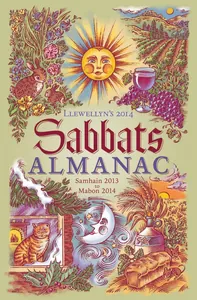
More Free Witchcraft & Paganism Books
View all →