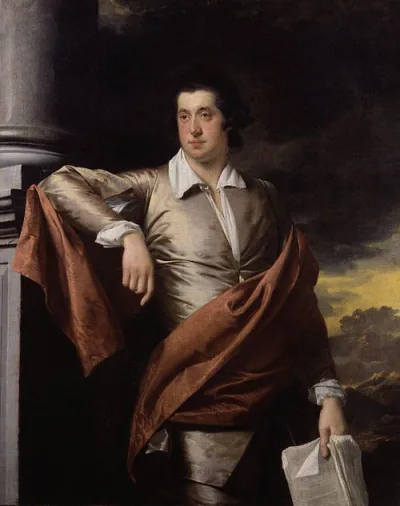
Thomas Day was an English writer, lawyer, and abolitionist known for his educational ideals and writings against slavery.
Thomas Day (1748–1789) was an English writer, lawyer, and abolitionist who developed a deep interest in the educational philosophies of Jean-Jacques Rousseau. This influence shaped his most famous work, "The History of Sandford and Merton," which promoted ideals of virtue and labor. Day was also a vocal critic of slavery, famously highlighting the hypocrisy of American patriots who owned slaves while advocating for independence.
Beyond his published works, Day engaged in unconventional personal projects. He attempted to educate young girls according to his strict Rousseauvian principles, aiming to raise a suitable wife. These experiments, particularly with a girl named Sabrina Sidney, involved rigorous and controversial methods. He also pursued a career in law and advocated for American independence and parliamentary reform. Day's life ended tragically when he died from injuries sustained after being thrown from a horse he was attempting to break in using his humane methods.
Educational Philosophy and Experiments
Thomas Day was profoundly influenced by Jean-Jacques Rousseau's educational theories, particularly as outlined in "Emile." This philosophy led him to collaborate with Richard Lovell Edgeworth on educating Edgeworth's son. Day's commitment to Rousseauvian ideals extended to a personal project: raising two girls from the Foundling Hospital, whom he renamed Sabrina Sidney and Lucretia, with the intention of molding one into an ideal wife. His methods were reportedly severe, including exposing Sabrina to pain and hardship to instill fearlessness and virtue, reflecting a literal interpretation of Rousseau's ideas on toughening children. He eventually abandoned this experiment, placing Lucretia with a milliner and sending Sabrina to boarding school.
Abolitionism and Political Stance
Day was a prominent voice against the institution of slavery. His poem "The Dying Negro" (1773) depicted the plight of a runaway slave and gained significant attention. He sharply criticized the hypocrisy of American revolutionaries who proclaimed liberty while maintaining slavery, famously stating that an "American patriot, signing resolutions of independency with the one hand, and with the other brandishing a whip over his affrighted slaves" was a ridiculous figure. Day also engaged in political advocacy, arguing for the rights of American colonists and later advocating for an early peace with the revolutionaries and parliamentary reform.
Literary Contributions and Personal Life
While Day wrote on various subjects, including abolitionism and politics, his most enduring legacy lies in his children's literature. "The History of Sandford and Merton" (1783–1789) became a bestseller, popularizing his educational philosophy through the contrasting characters of the wealthy, idle Tommy Merton and the virtuous, hardworking Harry Sandford. He also penned "The History of Little Jack" (1787). Day married Esther Milnes, an heiress, in 1778, and they adopted an ascetic lifestyle. They moved to an estate in Surrey, where they dedicated themselves to improving the lives of local working-class people. His life concluded unexpectedly when he died from injuries sustained during an attempt to test his humane horse-breaking theories.
Key Ideas
- Rousseauvian educational ideals emphasizing virtue, labor, and resilience.
- Abolitionism and criticism of the hypocrisy of slavery within movements for liberty.
- Ascetic lifestyle and philanthropic efforts towards the working classes.
Notable Quotes
“If there be an object truly ridiculous in nature, it is an American patriot, signing resolutions of independency with the one hand, and with the other brandishing a whip over his affrighted slaves.”
Books by
2 free public domain books · Read online or download