Augury
 72
72

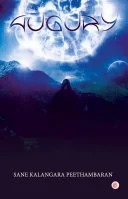
Augury
Sane Kalangara Peethambaran’s Augury presents a contemplative look at existence, framed through a distinctly Nietzschean lens. The author’s central thesis, that the world itself is a self-creating work of art, is compelling and offers a fresh perspective on our relationship with reality. Peethambaran’s personal reflections, particularly as he navigates the 'twilight of my life,' lend an authentic and vulnerable tone to the compositions. A notable strength is the direct engagement with Nietzsche's ideas, particularly the embrace of suffering as a catalyst for creation and beauty. However, the work occasionally leans into a generalized philosophical musing without always providing concrete examples or specific elaborations that might anchor these profound concepts more firmly for the reader. The blurb’s suggestion that these are 'humble attempts at crea' hints at an unfinished quality, which, while honest, might leave some readers wanting more definitive conclusions. Augury offers a thoughtful, albeit abstract, meditation on life's deeper questions.
📝 Description
72
Sane Kalangara Peethambaran's 2023 book, Augury, presents life as a self-creating work of art.
Published in December 2023, Augury by Sane Kalangara Peethambaran is a collection of philosophical reflections. The author draws heavily on Friedrich Nietzsche's ideas, particularly the assertion that art is a fundamental metaphysical activity and the concept of embracing suffering as a source of beauty. Peethambaran views the world itself as a self-creating work of art, a perspective that structures his personal contemplations as he enters the later stages of his life.
This work is for readers interested in existential contemplation and a deeper understanding of life's inherent difficulties. Those familiar with philosophy, especially existentialism and Nietzschean thought, will find much to consider. The book appeals to individuals who appreciate introspective writing that examines the search for substance and meaning, particularly as one ages and reflects on their life's path. It engages with the human experience of grappling with existence and finding value within it.
Augury engages with traditions of existential philosophy that emerged in the post-Nietzschean era. It aligns with a lineage of thought that seeks meaning not in external dogma but in the individual's affirmation of life, even its painful aspects. The book's focus on art as a primary mode of understanding and creating reality places it within a philosophical current that views aesthetic creation as a fundamental human drive, a way to impose order and significance onto a chaotic existence. This perspective echoes Gnostic ideas of the world as an illusion or a flawed creation that can be transcended or reinterpreted through conscious human effort.
💡 Why Read This Book?
• Gain a unique perspective on the world as a self-creating artwork, inspired by Nietzsche's philosophical framework, allowing for a re-evaluation of your own reality. • Understand the transformative potential of embracing suffering, learning how to potentially convert hardship into beauty and deeper meaning, a core tenet discussed in the book. • Explore introspective philosophical compositions that offer substance and meaning, particularly relevant for those contemplating their own life's journey and the search for pith in later years.
⭐ Reader Reviews
Honest opinions from readers who have explored this book.
❓ Frequently Asked Questions
What is the primary philosophical influence behind Augury?
The primary philosophical influence is Friedrich Nietzsche, particularly his ideas on art as a fundamental metaphysical activity and the concept of embracing suffering to create beauty.
When was Augury first published?
Augury was first published on December 8, 2023.
Who is the author of Augury?
The author of Augury is Sane Kalangara Peethambaran.
What is the main theme explored in the book?
The main theme is the contemplation of life's deeper meanings, viewing the world as a self-creating work of art, and transforming suffering into beauty.
What kind of reader would appreciate Augury?
Readers interested in existential philosophy, Nietzschean thought, and introspective reflections on life's meaning, especially from a later-life perspective, would appreciate Augury.
Does the book offer practical advice for dealing with suffering?
While inspired by Nietzsche's call to embrace suffering, the book focuses more on philosophical contemplation and the artistic transformation of hardship rather than providing direct, step-by-step practical advice.
🔮 Key Themes & Symbolism
Art as Metaphysical Activity
The work posits art not merely as an aesthetic pursuit but as the fundamental metaphysical activity of man, echoing Friedrich Nietzsche. This perspective suggests that creation and artistic expression are integral to understanding the nature of reality itself. Peethambaran explores how engaging with art, both as creators and observers, allows us to interact with existence on a deeper, ontological level. The compositions within Augury can be seen as attempts to embody this principle, turning personal reflection into a form of artistic endeavor that probes the essence of being.
Embracing Suffering for Beauty
Drawing from Nietzsche's philosophy, the book advocates for confronting and embracing suffering, not as something to be merely endured, but as a crucible for transformation and the creation of beauty. This involves a conscious shift in perspective, viewing life's difficulties as opportunities for profound personal growth and artistic expression. The author's reflections, particularly as he enters the 'twilight of my life,' suggest a mature understanding of this principle, finding substance and meaning through the integration of life's challenges.
The World as a Self-Creating Artwork
A core concept presented is the idea of the world as an organic, self-generating work of art. This viewpoint encourages a sense of wonder and appreciation for the dynamic processes of existence. Rather than seeing the world as static, Augury invites readers to perceive it as a continuous act of creation. This perspective aligns with existentialist themes of human agency and the subjective experience of reality, suggesting that our perception actively shapes our understanding of the world's artistic and inherent value.
Search for Pith and Substance
As the author approaches the latter stages of life, a significant theme is the earnest search for 'pith and substance'— a deeper, enduring meaning beyond superficial concerns. This introspective quest drives the philosophical compositions, aiming to distill essential truths from lived experience. The book serves as a personal evidence of this search, offering reflections that grapple with existential questions and the desire to find profound significance in the face of mortality and the passage of time.
💬 Memorable Quotes
Direct passages from the work, attributed to the author.
“The world is a work of art that gives birth to itself!”
— This opening statement captures the book's central metaphor, presenting existence as a dynamic, organic process akin to artistic creation, moving beyond static interpretations of reality.
“Art is the fundamental metaphysical activity of man.”
— A direct reference to Nietzsche, this idea elevates art from mere decoration or entertainment to a core human function tied to understanding and engaging with the nature of being.
“Urges one to not just endure their suffering but to embrace it; and turn it into art and beauty.”
— This highlights a key philosophical stance: transforming negative experiences through an artistic lens, finding value and aesthetic potential within hardship rather than solely avoiding it.
“As I am setting forth into the twilight of my life, I have been searching for things with pith and substance.”
— This reveals the author's personal motivation and the existential weight behind the work, indicating a mature search for profound meaning and lasting value.
“These compositions are my humble attempts at crea”
— This fragment suggests the book itself is an act of creation, a personal artistic endeavor reflecting the author's philosophical journey and his engagement with life's profound questions.
🌙 Esoteric Significance
Tradition
While not strictly adhering to a singular esoteric lineage like Hermeticism or Kabbalah, Augury engages with themes common in Western esotericism, particularly existential and philosophical currents influenced by figures like Nietzsche. Its focus on art as a metaphysical activity and the transformation of suffering aligns with esoteric aims of self-realization and finding deeper meaning beyond the material world. The emphasis on subjective experience and the creation of personal meaning speaks to Gnostic and Hermetic ideals of gnosis and self-mastery.
Symbolism
The primary symbolic motif is the 'world as a work of art,' representing existence as a dynamic, unfolding creation rather than a fixed entity. This symbolism invites contemplation on the aesthetic and intentional aspects of reality. Additionally, the 'twilight of life' serves as a symbol for a period of profound introspection and re-evaluation, a threshold where deeper truths and 'pith and substance' are sought, common in alchemical and spiritual transition narratives.
Modern Relevance
Augury's exploration of art as a metaphysical tool and the embrace of suffering finds relevance in contemporary fields like positive psychology (focusing on post-traumatic growth), existential therapy, and artistic practices that engage with personal struggle. Thinkers and artists who explore the intersection of philosophy, art, and personal transformation, particularly those influenced by existentialism, may find resonance with Peethambaran's perspective.
👥 Who Should Read This Book
• Readers interested in existential philosophy, particularly those familiar with or curious about Friedrich Nietzsche's ideas on art, suffering, and the affirmation of life. • Individuals seeking philosophical reflections on aging and the search for deeper meaning in life, offering a contemplative perspective on existence. • Those who appreciate introspective and personal philosophical writing that uses art as a lens through which to understand the world and human experience.
📜 Historical Context
Augury's publication in December 2023 places it within a contemporary era marked by a resurgence of interest in existentialist thought and the subjective experience of meaning. While not directly aligned with a specific historical movement, its philosophical roots are firmly planted in post-Nietzschean discourse. The work engages with ideas that circulated widely in the late 19th and 20th centuries, particularly concerning the role of art and individual will in confronting the perceived absurdity or challenges of existence. It emerges at a time when figures like Bernard-Henri Lévy continue to explore existential themes, and academic circles revisit the philosophical implications of art and suffering. The work's emphasis on personal reflection and finding substance in later life also taps into contemporary trends in memoir and philosophical autobiography.
📔 Journal Prompts
The world as a self-creating artwork: What aspects of your daily life reflect this continuous creation?
Transforming suffering: Identify a past hardship and describe how you could have turned it into a source of beauty or art.
Pith and substance: Reflect on what constitutes 'pith and substance' in your own life, beyond superficial achievements.
Art as metaphysical activity: How does engaging with art—creating or appreciating it—alter your perception of reality?
Nietzschean influence: How do the concepts of embracing suffering and creating beauty from it apply to your current challenges?
🗂️ Glossary
Augury
In this context, not the practice of divination, but rather philosophical compositions reflecting on life, meaning, and existence, akin to a form of profound contemplation or forecast of understanding.
Metaphysical activity
An action or process that relates to the fundamental nature of reality, existence, and being, going beyond the physical or empirical.
Pith and substance
The essential core, fundamental importance, or solid content of something; a search for deep meaning and lasting value.
Twilight of my life
A metaphorical expression referring to the later stages of one's life, often associated with reflection, wisdom, and a re-evaluation of existence.
Embrace suffering
A philosophical stance, particularly associated with Nietzsche, advocating for accepting and integrating life's hardships as potentially transformative elements rather than solely avoiding them.
Self-creating work of art
The concept that the world or reality possesses an inherent dynamism and artistry, continuously generating and shaping itself.
Compositions
In this book, refers to the author's philosophical writings, essays, or reflections presented as distinct pieces.
This book appears in 1 collection
🔮 Readers Also Liked
Browse all →







From the “Augury” Collection
View all →







More Free Occult Philosophy Books
View all →