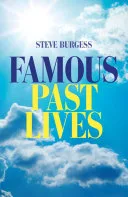
Famous Past Lives
 81
81

Famous Past Lives
Burgess's "Famous Past Lives" offers a direct glimpse into the phenomenon of past life regression, presenting anecdotal accounts of individuals seemingly embodying famous historical figures. The strength lies in its straightforward presentation of these sessions, allowing the reader to encounter the raw material of the regressions without excessive theoretical overlay. The inclusion of figures like Elizabeth I provides concrete anchors for the reader's imagination. However, a notable limitation is the lack of critical analysis or corroboration for the claims made within the regressions. The work remains descriptive rather than analytical, leaving the reader to grapple with the interpretation of these experiences independently. The book functions as a collection of case studies, which can be compelling but also demand significant reader skepticism and discernment. It serves as a record of unusual subjective experiences.
📝 Description
81
Steve Burgess's 2011 book, "Famous Past Lives," details hypnotherapy sessions where individuals recount lives as historical figures.
Published in 2011, "Famous Past Lives" by Steve Burgess presents transcripts from hypnotherapy sessions focused on past life regression. The book's central premise is that ordinary people, under hypnosis, can recall experiences as well-known historical personalities. Burgess documents these regressions, suggesting a potential for individuals to tap into subconscious connections with prominent figures from history. The work aims to examine these reported encounters, considering what they might reveal about the subjects' inner lives or their relationship to historical memory. It presents these accounts as anecdotal evidence within the broader discussion of consciousness and identity.
The exploration of past lives through hypnotic regression gained popularity in the late 20th century, a trend Burgess's 2011 work engages with. This period saw widespread interest in New Age spirituality and esoteric psychology, with topics like reincarnation and altered states of consciousness becoming common. Works like this contribute to a cultural conversation influenced by figures such as Edgar Cayce, examining the potential for the human mind to access information beyond the current lifetime.
💡 Why Read This Book?
• Understand the mechanics of past life regression sessions as described by hypnotherapist Steve Burgess, gaining insight into the techniques used to access alleged past lives of figures like Elizabeth I. • Explore the potential for subconscious identification with historical archetypes by examining the reported experiences of individuals who believe they have lived as famous personalities. • Consider the nature of memory and consciousness through documented regression cases, offering a unique perspective on how personal identity might connect to broader historical narratives.
⭐ Reader Reviews
Honest opinions from readers who have explored this book.
❓ Frequently Asked Questions
What is the primary methodology used in 'Famous Past Lives'?
The book primarily utilizes hypnotherapy and past life regression sessions. Subjects are guided into a hypnotic state to recall or re-experience what are presented as memories from previous lifetimes.
Which famous historical figures are mentioned as past lives in the book?
The book mentions individuals re-experiencing lives of famous figures such as Queen Elizabeth I and William Shakespeare, among others.
What is the publication year of Steve Burgess's 'Famous Past Lives'?
Steve Burgess's 'Famous Past Lives' was first published on April 16, 2011.
What is the main subject matter explored in 'Famous Past Lives'?
The book explores the phenomenon of ordinary people undergoing hypnotherapy to regress to past lives, specifically focusing on instances where they re-experience the lives of famous historical personalities.
Does the book offer scientific proof of past lives?
No, the book presents anecdotal accounts from hypnotherapy sessions. It focuses on the subjective experiences of individuals and does not claim to offer scientific proof of reincarnation.
Who is the author of 'Famous Past Lives'?
The author of 'Famous Past Lives' is Steve Burgess.
🔮 Key Themes & Symbolism
Hypnotic Regression Mechanics
The book details the process of past life regression through hypnotherapy. It focuses on the practical application of these techniques by Steve Burgess, guiding subjects into altered states of consciousness. The emphasis is on the subjective experience of regression, exploring how individuals access and articulate memories from purported previous existences. Burgess's approach documents the dialogue and imagery that emerge during these sessions, providing a procedural look at this esoteric practice.
Embodiment of Historical Figures
A central theme is the re-experiencing of lives lived by famous individuals. Burgess presents cases where subjects identify as figures such as Elizabeth I or Shakespeare. This exploration looks at the psychological and metaphysical implications of such identifications, questioning the source of these detailed accounts and their potential connection to collective memory or actual past existences. The book highlights the dramatic nature of these alleged reincarnations.
Nature of Consciousness and Memory
The work implicitly questions the boundaries of personal consciousness and the storage of memory. By presenting regressions where individuals recall lives vastly different from their current one, Burgess touches upon theories of reincarnation, ancestral memory, and the subconscious mind's capacity. The book invites contemplation on whether these recalled lives represent actual past events, symbolic representations, or psychological projections, engaging with profound questions about existence.
Esoteric Psychology in Practice
Burgess's book functions as a case study in esoteric psychology, specifically focusing on therapeutic applications of past life recall. It demonstrates how altered states of consciousness are used to explore deeper layers of the psyche, potentially uncovering unresolved issues or historical imprints. The book showcases a practical, albeit unconventional, method for psychological exploration within an esoteric framework.
💬 Memorable Quotes
Direct passages from the work, attributed to the author.
“Ordinary people re-experience the lives of very famous people.”
— This concise summary captures the book's core premise: the extraordinary nature of past life regressions documented by Burgess, where seemingly common individuals access memories of exceptionally prominent historical figures.
“Hypnotherapy past life regression sessions.”
— This phrase highlights the specific methodology employed in the book. It signifies the therapeutic context and the technique of guided regression used to explore alleged previous incarnations.
“Including Elizabeth I and Shakespeare.”
— These examples ground the abstract concept of past lives in concrete, recognizable historical figures, emphasizing the dramatic and specific nature of the experiences recounted in the book.
“Subjects recount detailed narratives of past existences.”
— This interpretation of the book's content points to the qualitative nature of the regressions, suggesting that the recalled lives are not vague impressions but fleshed-out accounts.
💡 Key Ideas
Editorial paraphrase of the work's core concepts — not direct quotes.
The exploration of subconscious connections to historical figures.
This paraphrased concept suggests that the book investigates the potential psychological links individuals might have to famous personalities, whether through past lives or other forms of deep identification.
🌙 Esoteric Significance
Tradition
While not strictly adhering to a single esoteric lineage, "Famous Past Lives" aligns with broader Western Esotericism's interest in the nature of consciousness, reincarnation, and the hidden potentials of the human mind. It draws from the practical application of therapeutic hypnosis, a method explored within various psychospiritual disciplines. The book's focus on accessing past existences speaks to concepts found in Theosophy and Anthroposophy, albeit presented through a more direct, client-centered hypnotherapy lens rather than intricate philosophical systems.
Symbolism
The primary symbols are the historical figures themselves—Elizabeth I representing sovereign power and potential patriarchal challenges, and Shakespeare embodying creative genius and profound human insight. These figures act as archetypal vessels, allowing subjects to explore themes of leadership, artistry, and the human condition across different epochs. The act of regression itself symbolizes a descent into the subconscious, a journey into the hidden layers of self and history.
Modern Relevance
Burgess's work remains relevant to contemporary discussions in consciousness studies, parapsychology, and depth psychology. Therapists and researchers exploring non-ordinary states, the nature of memory, and the potential for accessing transpersonal information find such case studies valuable. It informs practices that utilize guided imagery and altered states for self-discovery and healing, connecting to modern mindfulness and somatic experiencing techniques that acknowledge the body's role in holding memory.
👥 Who Should Read This Book
• Individuals curious about hypnotherapy and past life regression techniques, seeking direct accounts of sessions conducted by a practitioner. • Students of esoteric psychology and consciousness studies, wanting to examine anecdotal evidence related to memory, identity, and reincarnation. • Readers interested in historical figures like Elizabeth I or Shakespeare, who are open to exploring unconventional perspectives on their lives and potential connections to them.
📜 Historical Context
Published in 2011, Steve Burgess's "Famous Past Lives" emerged during a period of continued public fascination with New Age spirituality and parapsychology. The late 20th and early 21st centuries saw a proliferation of books and media exploring reincarnation, past life regression, and alternative consciousness states. This followed earlier waves of interest, notably spurred by figures like Edgar Cayce in the mid-20th century, whose psychic readings often included detailed past life narratives. Burgess's work can be seen as contributing to this ongoing discourse, offering anecdotal evidence from hypnotherapy sessions. While not engaging directly with academic spiritualism movements like Theosophy, which predated it, the book taps into a popular interest in esoteric psychology and the potential for accessing non-ordinary states of awareness. Its reception likely aligned with existing communities interested in paranormal phenomena and alternative healing modalities.
📔 Journal Prompts
The regression experience of Elizabeth I: what historical context does it illuminate?
Subject identification with Shakespeare: how does creative expression manifest in past life recall?
The process of hypnotic induction: what is its role in accessing deep memory?
Comparing past life narratives: what common themes emerge across different historical figures?
The interpretation of recalled lives: are they literal or symbolic?
🗂️ Glossary
Past Life Regression
A therapeutic technique, often involving hypnosis, aimed at accessing memories or experiences from previous incarnations or lifetimes. It is used to explore alleged past existences of an individual.
Hypnotherapy
The therapeutic use of hypnosis to help treat a variety of conditions and to promote psychological well-being. It involves inducing a trance-like state to access the subconscious mind.
Subconscious Mind
The part of the mind of which we are not aware but which influences actions and feelings. In the context of past life regression, it is believed to hold memories from previous lives.
Reincarnation
The philosophical or religious concept that the non-physical essence of a living being starts a new life in a different physical form or body after biological death.
Archetype
In psychology, a universal, inherited pattern of thought or imagery derived from the experience of the human race, present in the collective unconscious. Historical figures can function as archetypes.
Regression Session
A specific instance of undergoing a regression therapy, guided by a practitioner, to explore a particular theme or alleged past life.
Ordinary People
Refers to individuals who do not typically claim psychic abilities or esoteric knowledge in their daily lives, making their regression experiences noteworthy within the book's context.