Lazarus Effect

 73
73

Lazarus Effect
Sam Parnia's *Lazarus Effect* presents a compelling case for the continued exploration of consciousness post-mortem, moving beyond anecdotal accounts to engage with scientific methodology. Parnia's strength lies in his clinical perspective, meticulously detailing cases and the research infrastructure, such as AWARE (AWAREness during Resuscitation), designed to test the reality of NDEs. He effectively challenges the purely materialistic view of consciousness, which often dismisses NDEs as mere hallucinations. A notable aspect is the rigorous attempt to find empirical markers, like verifiable out-of-body observations. However, the book occasionally skirts the edge of definitive pronouncements, where the evidence, while suggestive, remains suggestive rather than conclusive. The exploration of the 'life review' phenomenon, while fascinating, is presented with less empirical scaffolding than the out-of-body observations. Ultimately, *Lazarus Effect* is a significant contribution to the literature on consciousness and mortality, urging a more open-minded scientific approach.
📝 Description
73
Sam Parnia's *Lazarus Effect* (2023) investigates consciousness persisting beyond physical death through near-death experiences.
Sam Parnia, a physician, examines near-death experiences (NDEs) in *Lazarus Effect*. He compiles medical, philosophical, and spiritual evidence to address the question of whether consciousness can survive bodily death. The book presents scientific investigations into NDEs, aiming for a view that is both grounded and expansive concerning what happens after life ends. Parnia's work challenges conventional scientific views by considering consciousness as potentially independent of the physical brain.
This book is for readers questioning the nature of life, death, and reality. It will interest those in medicine and psychology studying patient experiences at death's door. Philosophers, theologians, and those curious about the connections between science and spirituality will find much to consider. It also offers interpretive frameworks for individuals who have experienced NDEs or know someone who has.
The idea that consciousness persists after physical death has roots stretching back to ancient Egyptian texts and Platonic dialogues. Religious traditions worldwide also posit an afterlife or non-physical existence. In modern times, Raymond Moody Jr. popularized NDE research with his 1975 book *Life After Life*. Sam Parnia's research, starting around 2000, continues this lineage. He builds on earlier investigations by introducing new methodologies and collecting extensive data, situating his work within the ongoing scientific and philosophical inquiry into consciousness beyond the body.
💡 Why Read This Book?
• Learn about the AWARE studies, initiated in 2008, which attempted to gather empirical evidence of out-of-body experiences during cardiac arrest, providing a concrete scientific pursuit into NDE phenomena. • Understand the medical and psychological frameworks Parnia uses to analyze patient accounts of near-death experiences, moving beyond purely spiritual interpretations. • Gain insight into the philosophical implications of consciousness potentially existing independently of the brain, as explored through case studies and research findings presented in the book.
⭐ Reader Reviews
Honest opinions from readers who have explored this book.
❓ Frequently Asked Questions
What is the primary goal of Sam Parnia's research as presented in Lazarus Effect?
The primary goal is to scientifically investigate the possibility of consciousness continuing after the cessation of heartbeat and brain activity, challenging the notion that consciousness is solely a product of the physical brain.
What are some common elements of near-death experiences discussed in the book?
Common elements include out-of-body experiences, encountering a bright light, meeting deceased relatives or spiritual beings, a life review, and feelings of peace, often reported by individuals during cardiac arrest.
What is the AWARE study mentioned in Lazarus Effect?
The AWARE study, initiated around 2008, was a research project designed to test whether individuals undergoing cardiac arrest could accurately perceive and report specific visual or auditory stimuli placed in their environment during their out-of-body experience.
How does Lazarus Effect address the scientific skepticism surrounding near-death experiences?
The book addresses skepticism by presenting empirical research methodologies, detailed case studies, and scientific data, aiming to demonstrate that NDEs are not simply hallucinations but potentially genuine experiences with profound implications.
What is the significance of the 'Lazarus phenomenon' concept?
The 'Lazarus phenomenon' refers to the idea that consciousness may survive bodily death, drawing parallels to biblical accounts of resurrection and suggesting a continuity of self beyond physical demise.
When was Lazarus Effect first published?
Lazarus Effect was first published in 2013, building upon years of research and earlier works exploring near-death experiences.
🔮 Key Themes & Symbolism
Consciousness Beyond the Brain
The central thesis of Lazarus Effect revolves around the possibility that consciousness is not solely generated by the physical brain but may possess an independent existence. Parnia presents findings from near-death experiences (NDEs) where individuals report coherent awareness, perception, and even verifiable observations while their brain function is severely compromised or absent. This challenges the reductionist view of consciousness as a mere epiphenomenon of neural activity. The work explores how these reported experiences, often involving out-of-body perceptions and profound existential insights, necessitate a re-evaluation of our understanding of mind-body dualism or non-local consciousness.
Empirical Investigation of NDEs
Lazarus Effect details the scientific methodologies employed to study near-death experiences, most notably the AWARE (AWAREness during Resuscitation) studies. These projects aimed to introduce specific visual or auditory 'targets' in hospital environments, accessible only from certain vantage points, to verify out-of-body perceptions during cardiac arrest. The book scrutinizes the data collected, discussing both positive and negative findings and the challenges inherent in studying such extreme physiological states. It highlights the transition from anecdotal evidence to rigorous, albeit complex, scientific inquiry in this field.
The Nature of Death and Dying
The book re-frames the concept of death, moving away from a purely terminal event towards a potential transition. Parnia examines the commonalities in NDE narratives – the tunnel, the light, the life review, the feeling of peace – as indicative of a structured, albeit poorly understood, process. This perspective has significant implications for how society approaches end-of-life care, grief, and the existential anxieties surrounding mortality. By presenting evidence that suggests a form of awareness may persist, the work encourages a broader, more compassionate, and perhaps less fearful contemplation of the dying process.
Spiritual and Philosophical Implications
Beyond the scientific data, Lazarus Effect looks at the profound spiritual and philosophical questions raised by near-death experiences. The reported encounters with benevolent beings, feelings of unconditional love, and clear insights into the interconnectedness of life challenge materialistic worldviews. Parnia discusses how these experiences often lead to lasting positive changes in individuals' lives, fostering greater compassion, reduced fear of death, and a stronger sense of purpose. The work invites readers to consider the possibility of a non-physical reality and its impact on human existence and meaning.
💬 Memorable Quotes
Direct passages from the work, attributed to the author.
“The mind, or consciousness, may not be confined to the physical body.”
— This statement expresses the core hypothesis explored in Lazarus Effect. It suggests that our sense of self and awareness could transcend the biological limitations of the brain, offering a counterpoint to purely materialistic explanations of consciousness.
“Near-death experiences offer verifiable data points about the nature of consciousness.”
— This highlights Parnia's approach: treating NDEs not just as subjective reports but as phenomena that can yield empirical evidence, particularly through structured research like the AWARE studies.
“The tunnel and light are common features of the NDE landscape.”
— This refers to recurring symbolic imagery reported by individuals during near-death experiences, often interpreted as a passage or encounter with a higher form of consciousness or energy.
“Objective verification of out-of-body experiences during resuscitation is a key research goal.”
— This points to the specific scientific methodology used in projects like AWARE, aiming to find concrete, measurable proof of consciousness operating independently of the physical body during a critical event.
💡 Key Ideas
Editorial paraphrase of the work's core concepts — not direct quotes.
Death is not an end, but a transition.
This paraphrase reflects the overarching sentiment regarding mortality presented in the book. It suggests that the cessation of physical life might be a passage to another state of being or awareness.
🌙 Esoteric Significance
Tradition
While not explicitly aligning with a single esoteric lineage, *Lazarus Effect* engages with themes resonant within Hermeticism, Gnosticism, and Theosophy concerning the nature of the soul, the afterlife, and the limitations of material perception. It echoes Gnostic ideas of a divine spark trapped within the material world and seeking return, and Theosophical concepts of consciousness surviving physical death through various planes of existence. Parnia's scientific approach, however, attempts to ground these traditionally mystical notions in empirical observation, seeking to bridge the esoteric and the scientific.
Symbolism
The 'tunnel' and 'light' are potent symbols frequently discussed. The tunnel often represents the passage from the physical world to another state, a liminal space between life and what lies beyond. The 'light' symbolizes divine presence, ultimate truth, or pure consciousness, often associated with feelings of unconditional love and profound understanding. The 'life review' functions as a symbolic recapitulation of one's existence, offering a cosmic perspective on actions and their consequences, facilitating spiritual integration.
Modern Relevance
Parnia's work continues to influence contemporary discussions on consciousness, death, and dying. Thinkers and researchers in fields like consciousness studies, transpersonal psychology, and even palliative care draw upon the evidence and frameworks presented. It provides a scientific basis for exploring concepts previously relegated to spirituality or mysticism, resonating with modern movements that seek to integrate scientific understanding with subjective human experience and existential inquiry.
👥 Who Should Read This Book
• Individuals questioning the nature of consciousness and mortality: Those seeking to understand if awareness can persist beyond brain death will find research and case studies that challenge conventional materialistic explanations. • Medical professionals and researchers: Clinicians, psychologists, and scientists interested in the phenomenon of near-death experiences and the challenges of studying consciousness under extreme physiological conditions will benefit from the detailed methodology. • Spiritual seekers and philosophers: Anyone exploring the intersection of science, spirituality, and the existential questions surrounding life and death will find valuable perspectives and thought-provoking material.
📜 Historical Context
Published in 2013, *Lazarus Effect* emerged during a period of renewed scientific and public interest in consciousness studies, particularly concerning phenomena that challenge materialistic paradigms. This era saw continued dialogue between neuroscience and philosophy of mind, with figures like Daniel Dennett advocating for physicalist explanations of consciousness, often contrasting with researchers exploring non-local or emergent properties. Parnia’s work built upon the foundations laid by earlier NDE researchers such as Raymond Moody Jr., whose 1975 book *Life After Life* popularized the concept. The reception of such works often involved significant debate, with critics pointing to the difficulty of ruling out physiological explanations like anoxia or neurochemical surges. However, Parnia's emphasis on the AWARE (AWAREness during Resuscitation) studies, initiated around 2008, marked a concerted effort to introduce objective, testable elements into NDE research, aiming to provide empirical data that could bridge the gap between subjective experience and scientific verification.
📔 Journal Prompts
The reported out-of-body observations during cardiac arrest: What assumptions about consciousness do these challenge?
The 'life review' phenomenon: How might a cosmic perspective on one's life alter personal values?
The AWARE studies' methodology: What are the inherent difficulties in empirically verifying subjective states?
The symbolic meaning of the tunnel and light: How do these archetypes resonate with other traditions?
Parnia's redefinition of death: What are the practical implications for end-of-life care?
🗂️ Glossary
Near-Death Experience (NDE)
A profound personal experience associated with being close to death or undergoing a traumatic physical event, often involving altered states of consciousness, such as out-of-body sensations, seeing a light, or encountering deceased relatives.
Consciousness
The state or quality of awareness, or of being aware of an external object or something within oneself. In the context of Lazarus Effect, it is explored as potentially existing independently of brain function.
AWARE Study
A research project (AWAREness during Resuscitation) initiated by Sam Parnia and colleagues, designed to empirically test for verifiable out-of-body perceptions during cardiac arrest and resuscitation.
Cardiac Arrest
A sudden loss of heart function, breathing, and consciousness, typically resulting from an electrical disturbance in the heart. It is a critical event often associated with NDEs.
Out-of-Body Experience (OBE)
A sensation of floating outside one's physical body and, in some cases, perceiving events from a different vantage point. Frequently reported during NDEs.
Life Review
A common component of NDEs where individuals report experiencing a rapid, comprehensive overview of their life's events, often with an emotional or moral dimension.
Materialism
The philosophical view that matter is the fundamental substance in nature, and that all phenomena, including consciousness, are results of material interactions.
🔮 Readers Also Liked
Browse all →









More by Sam Parnia
All books →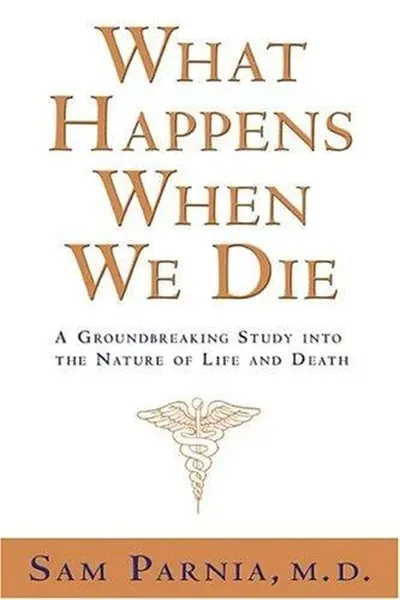

More Free Occult Philosophy Books
View all →![Tales of Mystery and Imagination [22 stories]](/img/thumb/tales-of-mystery-and-imagination-22-stories-edgar-allan-poe-520084.webp)