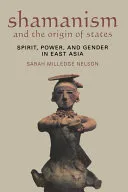
Shamanism and the Origin of States
 75
75

Shamanism and the Origin of States
Sarah Milledge Nelson’s "Shamanism and the Origin of States" presents a compelling, if ambitious, argument that the very architecture of early East Asian states owes a significant debt to shamanic leadership. Nelson’s strength lies in her meticulous interdisciplinary approach, adeptly blending archaeological data from sites like the Neolithic Yangshao culture with textual analysis of ancient myths and ethnographic studies. A notable limitation, however, is the inherent difficulty in definitively proving causation across such vast temporal and cultural distances; the interpretive leap from shamanic influence to state formation, while logically argued, remains an interpretation. The section discussing the role of female shamans as societal organizers, drawing parallels between ancient practices and contemporary ethnographies, is particularly insightful, highlighting a crucial, often-underestimated dimension of early political power. Ultimately, the book offers a valuable, revisionist perspective on the genesis of complex societies, urging a re-evaluation of spiritual authority's role in statecraft.
📝 Description
75
Sarah Milledge Nelson's 2019 book argues shamans initiated state formation in East Asia.
Sarah Milledge Nelson's "Shamanism and the Origin of States" reinterprets how complex political structures arose in East Asia. Nelson contends that shamans, acting as leaders in pre-state communities, directly influenced the emergence of states in regions like China, Japan, and Korea. She builds this case by drawing on a range of sources, including historical texts, foundational mythologies, archaeological findings, and ethnographic studies of existing shamanic practices.
This work is suited for scholars and students of archaeology, anthropology, religious studies, and East Asian history. It will interest those examining the beginnings of statehood, the social roles of religion, and the historical impact of marginalized figures. A basic familiarity with ancient East Asian cultures and an openness to interdisciplinary approaches are beneficial. The book presents a rigorous academic argument rather than a simple introduction.
Nelson's thesis, published in 2019, contrasts with scholarly views that emphasize economic or military factors in early state formation. She uses archaeological data from sites such as China's Yangshao culture (c. 5000 BCE) and compares it with developments in Japan's Yayoi period (c. 300 BCE – 300 CE). The focus on female shamans challenges interpretations that prioritize male-dominated hierarchies. It provides an alternative to theories centered on military conquest.
This book engages with the study of shamanism, a practice found across numerous cultures and historical periods. It situates shamanic roles not merely as spiritual activities but as critical components in the development of social and political organization. By examining shamanism's potential influence on the genesis of state-level societies, Nelson connects it to broader discussions about the origins of authority and governance within ancient traditions. The work considers how ritualistic and spiritual leadership might have laid groundwork for more formalized power structures.
💡 Why Read This Book?
• Gain a new perspective on state origins by understanding the proposed role of shamanic leadership in East Asian societies, as detailed in the analysis of archaeological data from the Yangshao culture. • Explore the sociological impact of spiritual practitioners by examining how shamans, particularly women, may have consolidated power and facilitated complex social organization. • Challenge traditional views of early political development by considering Nelson's thesis, which links the rise of states in regions like China and Japan to the foundational influence of shamanic authority.
⭐ Reader Reviews
Honest opinions from readers who have explored this book.
❓ Frequently Asked Questions
What is Sarah Milledge Nelson's central argument in "Shamanism and the Origin of States"?
Nelson's central thesis is that the development of complex states in East Asia, including China, Japan, and Korea, originated from the leadership provided by shamans within smaller communities, rather than solely from military or economic factors.
What types of evidence does Nelson use to support her claims?
Nelson employs a multidisciplinary approach, integrating historical documents, mythology, archaeological data from sites like the Yangshao culture, and ethnographic studies of contemporary shamans.
Does the book focus on shamans from a specific region or time period?
The book primarily focuses on the origins of states in East Asia, covering regions like China, Japan, and Korea, and examines evidence spanning from Neolithic periods to later historical developments.
What is the significance of female shamans in Nelson's theory?
Nelson highlights that in many East Asian contexts, shamans were predominantly women who utilized their access to the spirit world and mediation roles to exert significant leadership and organizational influence.
Who would benefit most from reading "Shamanism and the Origin of States"?
Scholars and students of archaeology, anthropology, religious studies, East Asian history, and anyone interested in the origins of statehood and the sociological functions of religion would find this book valuable.
When was "Shamanism and the Origin of States" first published?
The book was first published on July 23, 2019, presenting a modern synthesis of historical and anthropological research.
🔮 Key Themes & Symbolism
Shamanic Authority and State Formation
This theme explores Nelson's core argument: that the leadership roles of shamans in pre-state societies provided the essential groundwork for the emergence of complex political structures. By acting as mediators with the spirit world, healers, and diviners, shamans accumulated social capital and influence. This influence, Nelson posits, was crucial for social cohesion, resource management, and dispute resolution, laying the institutional and ideological foundations upon which early states in China, Japan, and Korea could later develop and consolidate power.
Gender and Early Leadership
A significant aspect of Nelson's work is its focus on the prevalent role of women as shamans in many East Asian societies. The book investigates how these female leaders leveraged their unique spiritual access and societal positions to guide communities and foster organization. This challenges traditional, often patriarchal, historical narratives that overlook or minimize the agency of women in the development of early political systems, suggesting their spiritual authority translated directly into practical, societal leadership.
Interdisciplinary Evidence Synthesis
Nelson's thesis is built upon a robust foundation of diverse evidence. The work meticulously synthesizes findings from archaeological excavations, such as those revealing Neolithic settlements like the Yangshao culture, with analyses of ancient myths and historical texts. Furthermore, it incorporates ethnographic data from contemporary shamanic practices, drawing parallels to illuminate ancient phenomena. This comprehensive approach underscores the complexity of understanding societal origins and the value of integrating multiple research methodologies.
Spiritual Foundation of Political Power
This theme examines the book's proposition that political power in early societies was not solely derived from secular or military might but was deeply intertwined with, and often preceded by, spiritual authority. Shamans acted as conduits for divine will and societal order, making their perceived connection to the supernatural a primary source of legitimacy and control. Nelson argues that this spiritual foundation was instrumental in shaping the hierarchical structures and governance models that characterized the nascent states of East Asia.
💬 Memorable Quotes
Direct passages from the work, attributed to the author.
“Shamans used their access to the spirit world to guide societal development.”
— This highlights the functional role of shamans, suggesting their perceived connection to supernatural realms provided them with authority and knowledge that enabled them to direct community affairs and influence the trajectory of societal complexity.
“Archaeological data, mythology, and ethnography converge to illustrate shamanic influence.”
— This reflects Nelson's methodology, emphasizing how she draws evidence from disparate fields – material remains, oral traditions, and contemporary practices – to build a cohesive case for the significant, often underestimated, role of shamans.
“In East Asia, shamans who led these formative communities were generally women.”
— This points to a specific demographic finding within Nelson's research, challenging conventional historical views by emphasizing the prominent leadership roles held by women in spiritual and, consequently, societal governance during early state formation.
“Complex societies blossomed under the guidance of spirit-world mediators.”
— This interpretation emphasizes the positive, generative aspect of shamanic leadership, framing shamans not just as leaders but as catalysts for cultural and social flourishing, leading to the complex societies observed in historical records.
💡 Key Ideas
Editorial paraphrase of the work's core concepts — not direct quotes.
The leadership in smaller communities guided by shamans was an outgrowth of the development of states in East Asia.
This paraphrased core assertion posits that state formation wasn't an independent event but a direct evolution from the organizational structures already established by shamanic figures in earlier, smaller societies across China, Japan, and Korea.
🌙 Esoteric Significance
Tradition
While not strictly belonging to a single named esoteric tradition like Hermeticism or Theosophy, Nelson's work engages with the universal archetypes and practices found within shamanism, a practice present across many indigenous and esoteric lineages globally. It aligns with perennialist philosophies that seek common threads in human spiritual experience, suggesting that the shamanic impulse—the mediation between the mundane and the spiritual—is a fundamental driver of human social and cultural evolution, fitting within a broader metaphysical understanding of consciousness shaping reality.
Symbolism
The book implicitly deals with the symbolism inherent in shamanic practice, such as the 'spirit world' itself, which represents a dimension of consciousness or reality accessible through altered states. Symbols of mediation, healing, and divination, often represented through animal spirits, plant lore, or celestial bodies in shamanic traditions, are central. These symbols function not just as representations but as active conduits of power and knowledge, crucial for the social and political organization that Nelson argues shamans facilitated.
Modern Relevance
Contemporary interest in neo-shamanism, altered states of consciousness research, and indigenous spiritual revival movements finds resonance in Nelson's work. Thinkers exploring the intersection of psychology, spirituality, and societal structures, as well as practitioners seeking to understand the roots of spiritual leadership, may draw upon her findings. Her emphasis on the foundational role of spiritual practitioners in societal development offers a framework for re-evaluating modern leadership models and the integration of holistic or spiritual perspectives in contemporary governance and community building.
👥 Who Should Read This Book
• Comparative religion scholars examining the sociological functions of spiritual practitioners and their role in societal development. • Archaeologists and anthropologists specializing in East Asian prehistory and the origins of statehood seeking alternative theoretical frameworks. • Students of mysticism and esoteric traditions interested in the historical agency of shamanic figures and their influence on early civilizations.
📜 Historical Context
Sarah Milledge Nelson's "Shamanism and the Origin of States," published in 2019, entered a discourse on state formation often dominated by archaeological interpretations focusing on material culture, subsistence strategies, and nascent economic hierarchies. Her work directly challenges these perspectives by foregrounding the role of non-material, spiritual authority. The book engages implicitly with the broader field of comparative religion and anthropology, fields that have long debated the origins and functions of religious specialists. While not directly engaging with contemporaries in a polemical manner within the text itself, Nelson's thesis offers a counter-narrative to established theories, potentially drawing parallels to earlier anthropological work on shamanism's social functions by figures like Mircea Eliade, while updating these with specific East Asian archaeological and textual evidence. The reception by the academic community would likely focus on the strength of her evidence in bridging the gap between shamanic practice and the material evidence of state-level organization, particularly concerning Neolithic China and later periods in Japan.
📔 Journal Prompts
The concept of shamanic authority as a precursor to state power.
Female shamans' roles in community organization, as discussed in the text.
Synthesizing archaeological evidence with mythological accounts of early leadership.
The spiritual foundation underpinning political legitimacy in early societies.
Interpreting the symbolism of the 'spirit world' in societal development.
🗂️ Glossary
Shamanism
A religious practice characterized by the belief that a practitioner (shaman) can mediate communication between the physical world and the spirit world, often through altered states of consciousness.
State Formation
The process by which a centralized political entity, characterized by a government, defined territory, and sovereignty, emerges and consolidates power over a population.
Yangshao Culture
A Neolithic culture that existed in the Yellow River valley in China from approximately 5000 to 3000 BCE, known for its painted pottery and settled agricultural communities.
Ethnographic Studies
The systematic study of people and cultures, involving the observation and documentation of their customs, behaviors, and social interactions, often through fieldwork.
Spirit World
In shamanic belief systems, the non-physical realm inhabited by spirits, deities, and ancestors, accessible to shamans through trance or other altered states of consciousness.
Societal Cohesion
The degree to which members of a society are united by shared values, beliefs, and norms, fostering a sense of belonging and collective identity.
Yayoi Period
A period in Japanese history (c. 300 BCE – 300 CE) marked by the introduction of new technologies and cultural practices, including wet-rice farming and metalworking.