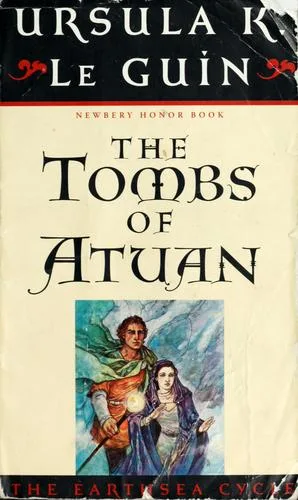
The Tombs of Atuan
 74
74

The Tombs of Atuan


Alaric Kestrel (Metaphysical Studies Reviewer) — Ursula K. Le Guin's 'The Tombs of Atuan' offers a compelling, albeit dark, descent into the arcane. Eschewing overt displays of power for psychological depth, the novel brilliantly dissects the mechanisms of spiritual control and the arduous birth of individual consciousness. Tenar's transformation from a pawn of oppressive religious authority to an agent of her own destiny is a profound illustration of liberating oneself from imposed identities. The narrative's strength lies in its subtle yet potent exploration of the shadow self and the courage required to confront it. Ideal for readers who appreciate nuanced metaphysical themes and character-driven narratives exploring the challenges of spiritual awakening.
📝 Description
74
Ursula K. Le Guin published 'The Tombs of Atuan' in 1971, a story set within the dark, ancient tombs of the priestess Tenar.
Ursula K. Le Guin's 1971 novel, 'The Tombs of Atuan,' follows Tenar, a young woman raised as the high priestess to the dark gods in the Labyrinth under the city of Atuan. Her life, dictated by rigid ritual and the oppressive worship of the Nameless Ones, is disrupted by the arrival of Ged, the Archmage. Ged enters the tombs seeking a lost artifact, the half of the Ring of Erreth-Akbe that was stolen from him.
Tenar's world is one of isolation, dogma, and fear. She serves beings who demand sacrifice and offer only darkness. When Ged confronts her, he challenges her beliefs and her understanding of the world beyond the tombs. Their encounter forces Tenar to question the nature of her gods, her own identity, and the reality of the power she wields. The narrative traces her difficult choice to leave the only existence she has ever known for an uncertain future and the search for truth.
Le Guin crafts a stark atmosphere within the labyrinthine tombs. The book contrasts the oppressive darkness of Tenar's religious life with the potential for freedom and selfhood represented by Ged and the outside world. It is a story about the struggle against ingrained belief systems and the courage required to forge one's own path.
This novel engages with themes found in Gnostic traditions, particularly the concept of a false, oppressive creator god (the Nameless Ones) and the search for true knowledge or gnosis, which liberates the individual. Tenar's journey from blind adherence to a dark deity to seeking personal truth mirrors the Gnostic idea of awakening from spiritual ignorance. The oppressive, tomb-like environment further evokes imagery of spiritual confinement, from which escape is possible only through understanding and confronting the true nature of reality and the self.
💡 Why Read This Book?
Embark on a journey into the heart of shadow and self-discovery. 'The Tombs of Atuan' offers a rare blend of visceral atmosphere and profound philosophical inquiry. It is essential reading for seekers of hidden knowledge, scholars of archetypal journeys, and practitioners interested in the psychological underpinnings of ritual and power. Discover the courage to confront your own inner darkness and claim your true name.
⭐ Reader Reviews
Honest opinions from readers who have explored this book.
❓ Frequently Asked Questions
What is the primary theme of 'The Tombs of Atuan'?
The primary theme is the arduous journey of self-discovery and liberation from oppressive dogma, focusing on the protagonist's struggle to break free from her predetermined role and embrace her true identity and power.
How does magic function in this novel?
Magic in 'The Tombs of Atuan' is deeply intertwined with ancient rites, spoken names, and the primal forces of the world. It is often subtle, tied to the manipulation of light and shadow, and the understanding of deep, hidden truths.
What makes this novel relevant to esoteric studies?
Its exploration of shadow work, the power of names, the psychology of religious control, and the archetypal journey of the hero's descent into the underworld makes it highly relevant to esoteric thought and practice.
Is this book suitable for younger readers?
While categorized as young adult fiction, its mature themes of existential dread, religious manipulation, and psychological trauma make it more suited for thoughtful adolescent and adult readers who can engage with its complex subject matter.
What is the significance of the Tombs themselves?
The Tombs of Atuan represent the oppressive, ancient power structure and the collective unconscious. They are a place of darkness, ritual, and hidden knowledge, symbolizing the internal and external prisons from which the protagonist must escape.
🔮 Key Themes & Symbolism
The Labyrinth of the Self
The Tombs of Atuan serve as a potent metaphor for the internal field of the psyche, a place of darkness, fear, and forgotten truths. Tenar's journey through its physical and metaphorical passages mirrors the arduous process of confronting one's shadow self, ancestral burdens, and societal conditioning. Le Guin masterfully illustrates how true liberation comes not from external escape, but from navigating and understanding the internal labyrinth, ultimately leading to the integration of disparate parts of the self and the reclamation of one's authentic power and name.
The Tyranny of Dogma and the Birth of True Faith
This novel offers a stark critique of rigid, unexamined religious dogma and the institutions that perpetuate it. The cult of the Nameless Ones, with its emphasis on sacrifice and fear, represents a spiritual path that stifles individual growth and genuine connection. Tenar's awakening is a proof of the courage required to question established doctrines and to forge a personal, authentic relationship with the divine or the fundamental forces of existence. It highlights the transition from blind adherence to enlightened understanding and the creation of a personal spiritual framework.
The Power of Names and True Identity
In the world of Earthsea, a person's true name holds immense power and is intrinsically linked to their identity and essence. 'The Tombs of Atuan' emphasizes the subjugation of identity through the denial of one's true name, a central tenet of the oppressive religious order. Tenar's journey is one of rediscovering and reclaiming her own name, which is the ultimate act of defiance and self-actualization. This theme resonates deeply with esoteric traditions that recognize the sonic and vibrational power of true names and their connection to the soul's unique frequency.
💬 Memorable Quotes
Direct passages from the work, attributed to the author.
“ONE HIGH HORN SHRILLED AND CEASED.”
— This opening evokes a sense of ancient ritual and the abrupt cessation of sacred sound, setting a tone of mystery and impending significance within the narrative.
“There are words that are not names.”
— This philosophical nugget points to the limitations of language and the existence of deeper, ineffable truths that lie beyond mere designation, hinting at a hidden reality.
“The darkness is not evil, it is the absence of light.”
— A profound statement on the nature of duality, suggesting that what is perceived as negative is simply a lack of the positive, and that understanding this distinction is key to overcoming fear.
“I have come to you to take my place.”
— A declaration of intent that signifies a profound shift in agency and a willingness to embrace a new destiny, moving from passive acceptance to active choice.
💡 Key Ideas
Editorial paraphrase of the work's core concepts — not direct quotes.
To be afraid is to be alive.
This quote challenges the conventional view of fear as purely detrimental, positioning it instead as an inherent and vital aspect of conscious existence and growth.
🌙 Esoteric Significance
Tradition
The novel draws heavily on archetypal mythologies and Gnostic themes, particularly concerning the descent into a dark, material world (the Tombs) to seek a hidden truth or spark of divinity. The emphasis on the power of true names aligns with Hermeticism and various mystical traditions that posit a fundamental connection between sound, vibration, and creation. The journey of the protagonist from ignorance and servitude to awareness and liberation is a classic narrative arc found in many initiatory traditions.
Symbolism
The Tombs themselves symbolize the unconscious mind, the collective shadow, and oppressive societal structures. Darkness represents ignorance and fear, while light signifies knowledge and self-awareness. The labyrinthine passages embody the complex and often confusing path of spiritual awakening. The concept of the 'Nameless Ones' can be interpreted as the primal, unmanifest forces of existence, or as a symbol of a corrupt, impersonal deity that demands blind obedience rather than fostering genuine connection.
Modern Relevance
In an age saturated with information yet often lacking in deeper meaning, 'The Tombs of Atuan' remains profoundly relevant. Its exploration of how power structures can manipulate belief, the importance of questioning authority, and the personal journey to reclaim one's authentic self appeals to contemporary struggles against misinformation and existential angst. The novel offers a timeless reminder that true strength lies not in external control, but in the internal fortitude to confront one's own shadows and speak one's true name.
👥 Who Should Read This Book
This profound work is essential for a diverse readership. **Beginners** to esoteric themes will find a compelling entry point through its accessible narrative and relatable protagonist. **Scholars** of literature, mythology, and comparative religion will appreciate its nuanced exploration of archetypes and spiritual traditions. **Seekers** on a path of personal growth and self-discovery will be moved by Tenar's journey of liberation and the courage it demands. **Practitioners** of spiritual disciplines, particularly those interested in shadow work and the power of identity, will find rich material for contemplation and reflection on the nature of true power.
📜 Historical Context
Published in 1971, 'The Tombs of Atuan' emerged during a period of significant cultural and societal upheaval. The late 1960s and early 1970s saw a surge of interest in Eastern philosophies, mysticism, and alternative spiritualities, often as a counterpoint to prevailing Western materialism and traditional religious structures. Ursula K. Le Guin, while firmly rooted in science fiction and fantasy, was deeply influenced by these broader intellectual currents, as well as her own anthropological studies and her parents' work as anthropologists. The novel's exploration of oppressive religious systems, the search for individual truth, and the power of ancient lore can be seen as a reflection of the era's questioning of authority and its burgeoning fascination with esoteric knowledge and personal liberation. It stands as a central to the 'New Wave' of science fiction that prioritized thematic depth and literary artistry.
📔 Journal Prompts
What 'tombs' or societal expectations currently confine your sense of self?
Explore the power and significance of your own true name. What qualities does it embody?
Reflect on a time you questioned a deeply held belief or dogma. What was the outcome?
How does fear influence your decisions? Can fear also be a catalyst for growth?
Consider the balance between light and shadow in your life. How do you integrate both?
🗂️ Glossary
Archmage
A master sorcerer or wizard of great power and knowledge, often holding a significant position within the magical hierarchy of a world.
Nameless Ones
The obscure, ancient deities worshipped in the Tombs of Atuan, associated with darkness, sacrifice, and a powerful, oppressive cult.
Ged
The protagonist of Ursula K. Le Guin's Earthsea series, an Archmage on a quest for forbidden knowledge within the Tombs of Atuan.
True Name
In the world of Earthsea, a person's true name is their fundamental essence and identity, possessing magical power when known and spoken.
The Open Sea
Represents freedom, the unknown, and the vast potential for exploration and self-discovery, contrasting with the confinement of the Tombs.
This book appears in 2 collections
🔮 Readers Also Liked
Browse all →


More by Ursula K. Le Guin
All books →



From the “Ceremonial Magic” Collection
View all →






More Free Magic & Ritual Books
View all →