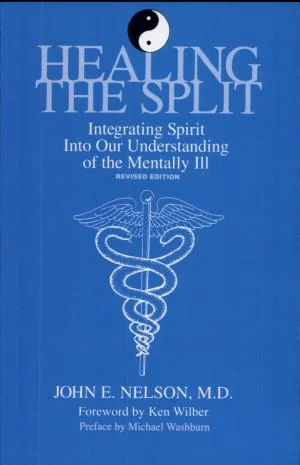
Healing the Split
 73
73

Healing the Split
Nelson’s "Healing the Split" offers a valuable, if dense, examination of the alleged continuum between madness and spiritual insight. His integration of neuropsychiatric data with Eastern philosophical traditions, particularly in his discussion of altered states, provides a compelling counterpoint to reductionist views of the mind. A particularly strong section details how the phenomenology of psychotic episodes can mirror descriptions of mystical experiences, challenging the reader to reconsider diagnostic categories. The primary limitation lies in the book's academic tone, which, while precise, can make the conceptual leaps challenging for a general audience. Nelson’s ambition to heal the divide between orthodox and unconventional psychology is commendable, even if the execution requires significant reader engagement. It’s a text that demands careful consideration, rewarding those willing to grapple with its intricate arguments.
📝 Description
73
In 1994, John E. Nelson's "Healing the Split" examined the link between consciousness states, creativity, and spiritual or psychotic experiences.
Published in 1994, John E. Nelson's "Healing the Split" investigates the connections between altered states of consciousness, creativity, and experiences often labeled spiritual or psychotic. Nelson aimed to bridge conventional neuropsychiatry with alternative psychological views, creating a framework to understand phenomena that appear dissimilar. The book is for readers interested in the intersection of psychology, philosophy, and spirituality, particularly those questioning the strict separation between mental health, genius, and mystical experiences. Individuals seeking to integrate scientific understanding with transpersonal viewpoints will find Nelson's approach relevant.
Nelson reframes mental states not as purely pathological or transcendent, but as points on a continuum of human consciousness. He looks at how experiences associated with psychosis might share characteristics with spiritual insights, suggesting that a "split" in understanding these phenomena causes suffering. The book proposes that integrating these experiences, rather than suppressing them, is vital for psychological and spiritual well-being. This work emerged during a time when transpersonal psychology was growing but still faced skepticism from mainstream psychiatry.
Nelson's "Healing the Split" emerged from the transpersonal psychology movement, which sought to expand the field beyond behaviorism and psychoanalysis to include spiritual and transcendent aspects of human experience. The book engaged with a growing interest in Eastern philosophies and non-ordinary states of consciousness, challenging the Western medical model's tendency to pathologize experiences outside the norm. It positioned itself within ongoing discussions about the nature of consciousness and the potential for profound psychological insights to arise from states that might otherwise be labeled as mental illness.
💡 Why Read This Book?
• Understand the shared phenomenology between psychotic episodes and mystical states, as explored through Nelson's neuropsychiatric and Eastern philosophy synthesis, offering a novel perspective on consciousness. • Gain practical methods for integrating seemingly extreme psychological experiences, drawing from Nelson's proposed "healing the split" framework, which reinterprets mental distress. • Appreciate the historical context of transpersonal psychology in 1994, understanding how "Healing the Split" addressed prevailing psychiatric views and engaged with contemporary debates on consciousness.
⭐ Reader Reviews
Honest opinions from readers who have explored this book.
❓ Frequently Asked Questions
What is the core argument of John E. Nelson's "Healing the Split"?
The core argument is that experiences labeled as madness, creative genius, and spiritual awakenings are not entirely separate but exist on a continuum of consciousness. Nelson advocates for healing the psychological "split" that dichotomizes these states.
When was "Healing the Split" first published?
"Healing the Split" by John E. Nelson was first published on March 15, 1994.
What disciplines does the book draw upon?
The book draws upon transpersonal psychology, mainstream neuropsychiatry, and Eastern philosophy to explain the effects of altered states on the human mind.
How does "Healing the Split" relate to traditional psychology?
It challenges the traditional separation in psychology between pathological mental states and profound spiritual or creative experiences, proposing a more integrated understanding.
Who is John E. Nelson?
John E. Nelson is an author and thinker who bridges psychological, philosophical, and esoteric perspectives, aiming to provide a unified view of human consciousness.
What is the 'split' that the book seeks to heal?
The 'split' refers to the artificial division in Western thought and medicine between the rational, everyday mind and the realms of madness, creativity, and spiritual experience.
🔮 Key Themes & Symbolism
Consciousness Continuum
Nelson proposes that the experiences associated with psychosis, creative breakthroughs, and profound spiritual insights are not isolated phenomena but points along a spectrum of human consciousness. He argues that conventional diagnostic approaches often create an artificial division, leading to a 'split' in understanding. The work explores how the subjective experience of these states can share common features, suggesting that a unified perspective is essential for psychological healing and spiritual integration.
Neuropsychiatry Meets Esotericism
A central theme is the synthesis of empirical data from neuropsychiatry with insights from Eastern philosophical traditions and esoteric thought. Nelson seeks to ground lofty transpersonal psychology concepts in practical application, using knowledge of brain function alongside spiritual philosophies to explain altered mental states. This interdisciplinary approach aims to reconcile seemingly opposing viewpoints on the nature of the mind and reality.
The Nature of Psychosis
The book critically examines the conventional understanding of 'madness' or psychosis. Instead of viewing it solely as pathology, Nelson explores its potential connections to states of heightened awareness, spiritual emergence, or intense creativity. He suggests that the suffering associated with psychotic episodes can often stem from the individual's or society's inability to integrate these powerful experiences, rather than the experiences themselves.
Integration and Healing
The ultimate goal presented in "Healing the Split" is the integration of disparate aspects of human experience. Nelson advocates for a therapeutic approach that honors the profound nature of altered states, whether they manifest as challenging psychological conditions or transcendent moments. Healing occurs not by eradicating these experiences, but by understanding their place within a broader spectrum of consciousness and integrating them into a coherent sense of self.
💬 Memorable Quotes
Direct passages from the work, attributed to the author.
“The links between madness, creative genius, and spiritual experiences have tantalized philosophers and scientists for centuries.”
— This foundational statement highlights the enduring mystery and fascination surrounding extreme states of human consciousness, setting the stage for Nelson's attempt to find common ground.
“He heals the split between orthodox and alternative views with a comprehensive approach.”
— This interpretation points to Nelson's central thesis: bridging the gap between mainstream science and alternative spiritual or psychological perspectives for a more holistic view of the mind.
“Explaining the bizarre effects of insanity on the human mind.”
— This phrase underscores the book's focus on understanding the often perplexing manifestations of altered mental states, seeking rational explanations beyond simple pathology.
“Drawing on a vast knowledge of Eastern philosophy and mainstream neuropsychiatry.”
— This highlights the unique interdisciplinary foundation of the work, combining scientific rigor with ancient wisdom traditions to explore consciousness.
💡 Key Ideas
Editorial paraphrase of the work's core concepts — not direct quotes.
Nelson brings the lofty ideas of transpersonal psychology down to earth so they can be applied in a practical way.
This paraphrased concept emphasizes the book's practical orientation, aiming to make complex psychological theories accessible and applicable to real-world understanding of mental states.
🌙 Esoteric Significance
Tradition
While not strictly adhering to a single lineage, "Healing the Split" draws heavily on the principles of transpersonal psychology, which itself integrates elements from Eastern philosophies (like Vedanta and Buddhism) and Western depth psychology. It aligns with esoteric traditions that view consciousness as multi-layered and capable of experiencing states beyond ordinary perception, often seeing clear insights within experiences typically labeled pathological.
Symbolism
The core symbolism revolves around the concept of the 'split' itself – representing fragmentation, dualistic thinking, and the artificial separation of mind and spirit, or sanity and madness. Nelson implicitly uses the symbolism of healing and integration, suggesting that restoring wholeness involves bridging these perceived divides. The book's approach can be seen as symbolic of the alchemical process of uniting opposites to achieve a higher state of understanding.
Modern Relevance
Nelson's work remains relevant for contemporary discussions in psychedelic-assisted therapy, integral psychology, and consciousness studies. Thinkers and practitioners exploring the therapeutic potential of altered states, or seeking to understand spiritual emergencies, often find his integrated approach prescient. His bridging of neurobiology and subjective experience speaks to current efforts to clarify and destigmatize non-ordinary states of consciousness.
👥 Who Should Read This Book
['• Students of transpersonal psychology seeking to understand the practical application of theories concerning consciousness and altered states.', '• Mental health professionals interested in alternative frameworks for understanding psychosis and spiritual emergence beyond purely pathological models.', '• Individuals exploring the intersections of spirituality, psychology, and neuroscience who wish to reconcile scientific and esoteric perspectives on the mind.']
📜 Historical Context
Published in 1994, "Healing the Split" emerged at a time when the boundaries of psychiatric understanding were being actively debated. Transpersonal psychology, championed by figures like Stanislav Grof and Abraham Maslow, was seeking greater recognition for its exploration of spiritual and transcendent experiences, often challenging the prevailing reductionism of mainstream psychiatry. Nelson's work directly addressed this tension, attempting to synthesize the phenomenological descriptions found in esoteric traditions and mystical literature with the empirical findings of neuropsychiatry. The book's publication coincided with a growing public interest in consciousness studies and alternative healing modalities. While not a direct engagement, it existed within an intellectual climate influenced by thinkers who explored altered states, such as Aldous Huxley and later, proponents of psychedelic research. The reception within orthodox circles was likely cautious, given the era's tendency to pathologize non-ordinary states.
📔 Journal Prompts
The experience of the 'split' in consciousness: how does it manifest in my life?
Mapping the continuum: identify parallels between personal altered states and described psychotic or spiritual experiences.
Integrating orthodox and alternative views: challenges and opportunities in understanding the mind.
Nelson's bridge between neuropsychiatry and Eastern philosophy: personal reflections on its validity.
The concept of 'healing the split': what does wholeness mean in the context of extreme mental states?
🗂️ Glossary
Transpersonal Psychology
A subfield of psychology that focuses on the spiritual, transcendent, and mystical aspects of human experience, integrating them with existing psychological frameworks.
Neuropsychiatry
A medical field that studies the relationship between the brain and behavior, often focusing on the biological and neurological basis of psychiatric disorders.
Altered States of Consciousness
Any mental state significantly different from a normal waking state, including those induced by meditation, dreams, psychoactive substances, or intense emotional/spiritual experiences.
Psychosis
A mental state characterized by a loss of contact with reality, often involving hallucinations, delusions, and disorganized thinking.
Spiritual Experience
Subjective experiences often described as involving a sense of unity, transcendence, the sacred, or connection to a higher power or reality.
The Split
In Nelson's context, the artificial division or dichotomy created in Western thought between ordinary consciousness and states associated with madness, genius, or spiritual phenomena.
Phenomenology
The philosophical study of the structures of experience and consciousness as experienced from the first-person point of view.
This book appears in 1 collection
🔮 Readers Also Liked
Browse all →









From the “Chakras” Collection
View all →




![Hindi Bangla Speaking Course[ S. P. Chakraborty]](/img/thumb/hindi-bangla-speaking-course-s-p-chakraborty.webp)



More Free Occult Philosophy Books
View all →