Kabbalah
 71
71

Kabbalah
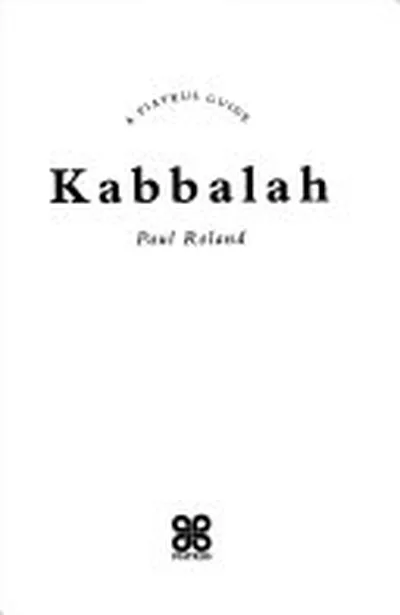
Paul Roland's "Kabbalah" succeeds admirably in its stated goal: making a notoriously difficult subject accessible. The author’s background as a teacher is evident, as he patiently unpacks the Tree of Life, the Sephirot, and the foundational principles of this Jewish mystical tradition. One of the book's strengths is its systematic approach; Roland doesn't shy away from the core concepts but presents them with clarity, avoiding the overly academic tone that can alienate beginners. For instance, his explanation of gematria, the numerological aspect of Hebrew letters, is particularly well-handled, offering a concrete entry point into a symbolic language. However, the book's accessibility comes at a cost. While it provides a solid foundation, readers seeking deep theoretical exploration or advanced mystical practices might find it somewhat superficial. The historical context, while present, could benefit from more engagement with contemporary Kabbalistic scholarship beyond Gershom Scholem. Nevertheless, for anyone embarking on their first exploration of Kabbalah, Roland's guide is a well-structured and encouraging starting point.
📝 Description
71
Paul Roland's 1999 book offers a focused introduction to Kabbalah's mystical system.
First published in 1999, Paul Roland's "Kabbalah" presents a clear path into a complex mystical tradition. It serves as a guide for those new to the subject, clarifying concepts often seen as esoteric. The book traces the development of Kabbalistic thought, explaining its core principles without requiring prior study. Roland aims this work at individuals curious about Kabbalah but daunted by its philosophical depth. It offers a step-by-step explanation of its main ideas, historical growth, and symbolic language.
Roland's approach addresses Kabbalah's historical context, especially in light of 20th-century scholarship. It situates the tradition within broader intellectual currents, making its historical and philosophical aspects more approachable. The book systematically details key Kabbalistic elements. Readers will find explanations of the Tree of Life, the Sephirot, and their connecting paths. Roland also discusses the role of Hebrew letters, gematria, and mystical Torah interpretation, aiming for a coherent overview of this cosmology and its practical uses.
Emerging in the late 20th century amidst renewed interest in esoteric studies, Roland's "Kabbalah" engages with a tradition whose roots are ancient. The book acknowledges modern scholarship, including the work of figures like Gershom Scholem, who significantly researched Kabbalistic texts and history. It places Kabbalah within a lineage of Jewish mysticism, seeking to make its historical and philosophical dimensions understandable to a wider audience.
💡 Why Read This Book?
• Gain a foundational understanding of the Kabbalistic Tree of Life, a central symbolic map of creation and consciousness, as explained by Roland. • Learn the basic principles of gematria, the numerological interpretation of Hebrew letters, enabling a new way to approach sacred texts. • Discover the origins of Kabbalah and its place within Jewish mysticism, providing crucial historical context for further study.
⭐ Reader Reviews
Honest opinions from readers who have explored this book.
❓ Frequently Asked Questions
What is the primary purpose of Paul Roland's book on Kabbalah?
The book's main aim is to demystify Kabbalah for beginners, offering an accessible introduction to its origins, core principles, and symbolic language, making it understandable for those without prior esoteric knowledge.
When was Paul Roland's Kabbalah guide first published?
Paul Roland's "Kabbalah" was first published in 1999 by Piatkus, a year that saw growing interest in esoteric subjects.
Does the book explain the Tree of Life?
Yes, the book provides a detailed explanation of the Kabbalistic Tree of Life, outlining its ten Sephirot and the paths that connect them, which are central to understanding Kabbalistic cosmology.
Is gematria covered in Roland's Kabbalah?
Indeed, the book includes an explanation of gematria, the system of assigning numerical values to Hebrew letters, as a method for interpreting sacred texts and understanding deeper meanings.
Who is Paul Roland, the author of this Kabbalah guide?
Paul Roland is presented as an expert and teacher of Kabbalah, bringing his pedagogical experience to bear in making the subject comprehensible to a wider audience.
What kind of esoteric tradition does this book focus on?
The book specifically focuses on Kabbalah, a Jewish mystical tradition, exploring its origins, core doctrines, and symbolic framework.
🔮 Key Themes & Symbolism
The Tree of Life
Central to Kabbalistic cosmology, the Tree of Life is presented as a map of divine emanation and human consciousness. Roland details its ten Sephirot, often described as divine attributes or vessels, and the 22 paths connecting them, which correspond to the Hebrew alphabet. Understanding this structure is key to grasping the Kabbalistic worldview, illustrating the relationship between the infinite divine and the manifest universe.
Gematria and Hebrew Numerology
This theme explores the mystical significance of Hebrew letters and their numerical values. Roland introduces gematria, a method of interpreting biblical texts by calculating the numerical equivalents of words and phrases. This practice reveals hidden meanings and connections within the Torah, demonstrating how the divine language itself encodes cosmic secrets and spiritual insights.
Origins and Development
The book traces the historical lineage of Kabbalah, situating it within Jewish mysticism. Roland discusses its development from early esoteric interpretations of scripture to more formalized systems like the Zohar. This contextualization helps readers appreciate Kabbalah not as a static doctrine but as a living tradition evolving over centuries, influenced by historical and cultural factors.
Sephirot as Divine Emanations
A core concept explored is the nature of the Sephirot, the ten emanations through which God interacts with creation. Roland explains each Sephirah, such as Keter (Crown), Chokhmah (Wisdom), and Binah (Understanding), detailing their individual characteristics and their collective role in the divine unfolding. This provides insight into the Kabbalistic understanding of God's relationship with the universe.
💬 Memorable Quotes
Direct passages from the work, attributed to the author.
“Kabbalah is often seen as a mystical interpretation of the Torah.”
— This interpretation highlights the book's focus on understanding Kabbalah not as an independent system, but as a method for accessing deeper, esoteric meanings within Jewish scripture.
“The Tree of Life serves as a fundamental diagram.”
— This points to the centrality of the Tree of Life in the book's exposition, emphasizing its role as a core visual and conceptual tool for understanding Kabbalistic principles.
“Hebrew letters possess numerical and symbolic weight.”
— This statement underscores the importance of gematria and the esoteric properties attributed to the Hebrew alphabet within the Kabbalistic tradition as presented in the text.
“Understanding the Sephirot is key to grasping divine emanation.”
— This emphasizes that a comprehension of the ten Sephirot, as explained in the book, is crucial for anyone seeking to understand how the divine manifests in the created world according to Kabbalah.
“Roland guides readers through the origins of this mystical tradition.”
— This highlights the book's pedagogical approach, focusing on providing a clear historical and conceptual pathway into the study of Kabbalah for the uninitiated.
🌙 Esoteric Significance
Tradition
This work firmly situates itself within the lineage of Jewish Kabbalah, a mystical tradition focused on understanding the divine nature and creation. It departs from purely theological or philosophical expositions by emphasizing the symbolic, meditative, and potentially practical applications of Kabbalistic concepts, aligning it with the broader Western esoteric movement's interest in experiential spiritual knowledge.
Symbolism
Central to the book's exploration are the Tree of Life, a diagrammatic representation of divine emanations, and the Hebrew alphabet. The Tree of Life, with its ten Sephirot, serves as a cosmic map, while the Hebrew letters are presented not just as linguistic units but as carriers of profound numerical and spiritual power, particularly through gematria.
Modern Relevance
Roland's guide provides a foundational understanding that remains relevant for contemporary practitioners of Western esotericism, comparative religion students, and those interested in the roots of various spiritual movements. Its clear presentation of core Kabbalistic concepts informs modern discussions on consciousness, spirituality, and the symbolic interpretation of reality.
👥 Who Should Read This Book
• Beginning students of Western Esotericism seeking a clear introduction to one of its foundational systems. • Individuals interested in Jewish mysticism who require a structured, non-academic overview of core Kabbalistic principles. • Comparative religion scholars needing a concise reference for the basic tenets and symbolism of Kabbalah.
📜 Historical Context
Published in 1999, Paul Roland's "Kabbalah" arrived during a period of significant public engagement with esoteric subjects, amplified by the burgeoning internet. The late 20th century saw a scholarly resurgence in Kabbalistic studies, notably building on the foundational work of Gershom Scholem, whose comprehensive historical analyses had reshaped academic understanding in the mid-20th century. Roland's guide implicitly engages with this scholarly tradition by aiming for clarity and accuracy, though it prioritizes accessibility over deep academic debate. It entered a market where various interpretations of Kabbalah coexisted, from traditional Jewish perspectives to more New Age appropriations. The book's accessible format positioned it as an introductory text, distinct from more specialized academic monographs or devotional works, seeking to bridge the gap for a curious general readership.
📔 Journal Prompts
The Sephirot as divine attributes, how might they manifest in personal decision-making?
Reflect on the concept of gematria and its potential for uncovering hidden meanings in everyday language.
Consider the structure of the Tree of Life as a map for personal growth.
How does the historical context of Kabbalah inform its modern interpretations?
Explore the symbolic relationship between Hebrew letters and cosmic forces.
🗂️ Glossary
Kabbalah
A system of Jewish mysticism concerned with the nature of God, creation, and the relationship between the divine and the human, often expressed through symbolic interpretation of scripture.
Tree of Life
A central symbolic diagram in Kabbalah, consisting of ten interconnected spheres (Sephirot) and 22 paths, representing the divine emanations and the structure of the cosmos.
Sephirot
The ten divine emanations or attributes through which God is understood to interact with and manifest in the created universe, as depicted on the Tree of Life.
Gematria
A method of Kabbalistic interpretation that assigns numerical values to Hebrew letters, allowing for the discovery of hidden meanings and connections within words and texts.
Torah
The first five books of the Hebrew Bible, considered by Kabbalists to contain profound mystical secrets accessible through esoteric interpretation methods.
Zohar
The foundational text of Kabbalah, a mystical commentary on the Torah written in medieval Aramaic, attributed to Rabbi Shimon bar Yochai.
Esotericism
Belief systems, practices, and teachings that are secret, hidden, or intended only for initiates, often focusing on spiritual or mystical knowledge.