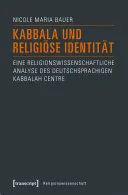
Kabbala und religiöse Identität
 84
84

Kabbala und religiöse Identität
Nicole Maria Bauer's "Kabbala und religiöse Identität" offers a sharp, much-needed examination of the Kabbalah Centre's rise. Rather than simply dismissing it as a fringe group, Bauer dissects its appeal with scholarly precision, particularly its ability to draw individuals from varied religious backgrounds in a secularizing Europe. The book's strength lies in its grounded analysis of the movement's strategies and its engagement with the complex interplay between tradition and modernity. A specific strength is the detailed exploration of how the Kabbalah Centre recontextualizes complex Kabbalistic concepts for a mass audience, a process Bauer meticulously documents. However, the academic tone, while appropriate, may present a barrier for casual readers seeking a more accessible overview. The limitation lies in its focus; it is a critical study of one specific movement, not a broad survey of modern Kabbalah. The section discussing the Centre's marketing efforts as a means of spiritual recruitment is particularly insightful, revealing the practical mechanisms behind its growth. This work is a valuable contribution for understanding contemporary religious phenomena.
📝 Description
84
Nicole Maria Bauer's "Kabbala und religiöse Identität" analyzes the Kabbalah Centre's growth since the late 1960s.
Nicole Maria Bauer's "Kabbala und religiöse Identität" offers a scholarly examination of the Kabbalah Centre, a spiritual movement established in the United States in the late 1960s that has since gained a significant presence in Germany. The book investigates the factors contributing to the Centre's success in attracting members, especially within societies experiencing secularization. Bauer scrutinizes the methods and teachings the organization uses to draw individuals from varied religious backgrounds.
The study considers the societal context of increasing secularization in Western Europe and North America. It questions how a movement rooted in Jewish Kabbalistic mysticism attracts a broad, non-denominational audience. Bauer traces the Kabbalah Centre's expansion from its American origins to Germany, assessing the societal conditions that aid such growth. The research centers on how religious identity forms in post-traditional societies, the function of outreach and marketing in spiritual groups, and the adaptation of esoteric traditions for a global reach.
This work places the Kabbalah Centre within the broader tradition of Kabbalah, a complex system of Jewish mysticism. Bauer examines how the Centre reinterprets and presents ancient Kabbalistic concepts for a contemporary, global audience, often detached from its traditional Jewish context. The book contrasts the modern, accessible presentation of these ideas with the historical development and deeper theological underpinnings of Kabbalistic thought, which traditionally required extensive study within specific rabbinic frameworks.
💡 Why Read This Book?
• Understand the specific appeal of the Kabbalah Centre, as detailed in Bauer's 2017 analysis, which explains its success in attracting diverse individuals beyond traditional religious affiliations. • Gain insight into the reinterpretation of Kabbalistic concepts for a modern, global audience, a key focus of the book's examination of contemporary esoteric movements. • Learn about the sociological factors and marketing strategies employed by new religious groups, as explored through the lens of the Kabbalah Centre's expansion into Germany.
⭐ Reader Reviews
Honest opinions from readers who have explored this book.
❓ Frequently Asked Questions
What is the primary focus of Nicole Maria Bauer's "Kabbala und religiöse Identität"?
The book primarily focuses on a religionswissenschaftliche analysis of the "Kabbalah Centre," a neoreligious movement founded in the USA in the late 1960s, examining its appeal and identity formation strategies.
When was "Kabbala und religiöse Identität" first published?
The book was first published on May 15, 2017.
What is the historical context of the Kabbalah Centre as discussed in the book?
The book places the Kabbalah Centre's growth in the context of increasing secularization, highlighting its successful recruitment of people from diverse religious backgrounds since its founding in the late 1960s.
Does the book explore traditional Kabbalah or its modern adaptations?
Bauer's work focuses on the modern adaptation and reinterpretation of Kabbalistic ideas as presented and practiced by the specific neoreligious movement, the Kabbalah Centre.
What academic field does this book contribute to?
This book contributes to the academic fields of religious studies, sociology of religion, and the study of new religious movements.
Who is the author of "Kabbala und religiöse Identität"?
The author is Nicole Maria Bauer, who published the work in 2017.
🔮 Key Themes & Symbolism
Religious Identity in Secular Times
Bauer investigates how groups like the Kabbalah Centre thrive despite widespread secularization. The work examines the mechanisms by which individuals forge new religious identities, often by adapting or adopting elements from esoteric traditions like Kabbalah. It scrutinizes the movement's success in appealing to those outside traditional religious structures, offering a compelling case study in contemporary spiritual seeking.
Marketing and Spiritual Attraction
A significant aspect of Bauer's analysis is the role of marketing strategies in the success of new religious movements. The book details how the Kabbalah Centre utilizes various outreach methods to attract hundreds of adherents annually. This theme explores the intersection of commercial techniques and spiritual recruitment, questioning how ancient mystical teachings are packaged and presented to a modern, diverse audience.
Adaptation of Esoteric Traditions
The work explores how the Kabbalah Centre reinterprets and disseminates Kabbalistic concepts. It examines the process of transforming a complex, historically Jewish mystical tradition into a format accessible and appealing to a global, non-denominational following. This theme highlights the challenges and successes involved in translating esoteric knowledge for contemporary spiritual consumers.
Comparative Religious Dynamics
By focusing on a movement that draws individuals from various religious backgrounds, Bauer's study offers insights into comparative religious dynamics. The book explores how people with different faith traditions engage with and integrate the teachings of the Kabbalah Centre into their existing belief systems or create entirely new spiritual frameworks. It sheds light on the fluid nature of religious adherence today.
💬 Memorable Quotes
Direct passages from the work, attributed to the author.
“New religious groups are very successful and attract hundreds of people annually through various marketing strategies, despite increasing secularization.”
— This highlights the core paradox Bauer explores: the continued appeal of organized spirituality in societies where traditional religious affiliation is declining, emphasizing the role of active recruitment and modern techniques.
“The Kabbalah Centre attracts people from different religious backgrounds.”
— This points to the movement's ecumenical or syncretic approach, suggesting its teachings are presented in a way that transcends traditional denominational boundaries, making it accessible to a broad spectrum of seekers.
“The analysis focuses on the strategies that constitute the attraction of these new religious movements.”
— This indicates that Bauer's research is not merely descriptive but analytical, aiming to uncover the specific mechanisms—whether doctrinal, social, or promotional—that draw individuals to groups like the Kabbalah Centre.
“The movement was founded in the USA in the late 1960s.”
— This provides a crucial historical anchor, situating the Kabbalah Centre within the broader range of new religious movements that emerged during that era of significant social and spiritual change.
“The group has established a presence in Germany in recent years.”
— This detail underscores the international reach and adaptability of the movement, showing its expansion beyond its American origins and its successful penetration into the European spiritual market.
🌙 Esoteric Significance
Tradition
This work engages with the Kabbalistic tradition, a mystical interpretation of Judaism, but focuses specifically on its adaptation by a modern neoreligious movement, the Kabbalah Centre. It examines how core Kabbalistic concepts are secularized and popularized, departing significantly from traditional rabbinic frameworks. Bauer's analysis fits within the broader study of esoteric spirituality's encounter with modernity and globalization.
Symbolism
The book likely explores how Kabbalistic symbols, such as the Tree of Life (Etz Chaim) or specific divine names, are utilized by the Kabbalah Centre. These symbols, traditionally rich with complex theological and cosmological meaning within Jewish mysticism, are likely presented by the Centre in a more accessible, psychological, or self-help oriented manner, stripping some of their original esoteric depth.
Modern Relevance
Bauer's research is highly relevant to contemporary discussions about the commercialization of spirituality, the impact of the internet and mass media on religious dissemination, and the search for meaning in secularized societies. Thinkers in the sociology of religion and cultural studies who examine post-traditional spiritualities often cite studies on movements like the Kabbalah Centre.
👥 Who Should Read This Book
• Students of religious studies and sociology of religion: Gain a detailed case study on the dynamics of new religious movements, their recruitment strategies, and identity formation processes. • Researchers of contemporary esoteric traditions: Understand how ancient mystical systems like Kabbalah are reinterpreted and marketed to a global audience. • Individuals interested in the cultural impact of spirituality: Explore the intersection of marketing, globalization, and the search for meaning in secularized Western societies, using the Kabbalah Centre as a specific example.
📜 Historical Context
Nicole Maria Bauer's "Kabbala und religiöse Identität" emerges from a fertile ground of late 20th and early 21st-century scholarship on new religious movements (NRMs) and the sociology of religion. Published in 2017, it engages with debates surrounding secularization theories and the persistence of religious belief and practice in post-traditional societies. The late 1960s, when the Kabbalah Centre was founded in the USA, was a period marked by intense social upheaval, counter-cultural movements, and a widespread questioning of established institutions, including traditional religions. This era saw the rise of numerous NRMs, many drawing on Eastern philosophies or reinterpreting Western esoteric traditions. Bauer's work situates the Kabbalah Centre within this lineage, contrasting its approach with more established esoteric schools and contemporary spiritual alternatives. The book's examination of the movement's expansion into Germany also reflects broader trends of globalization and the international diffusion of spiritual ideas. While not directly engaging with specific censorship events for this particular movement, Bauer's research implicitly addresses how such groups navigate public perception and religious pluralism in contemporary Europe.
📔 Journal Prompts
The Kabbalah Centre's strategies for attracting adherents from diverse backgrounds.
The reinterpretation of Kabbalistic concepts for a global audience.
Formation of religious identity within a secularizing society.
The role of marketing in contemporary spiritual movements.
Comparing the Kabbalah Centre's approach to traditional Jewish mysticism.
🗂️ Glossary
Kabbalah Centre
A neoreligious movement founded in the USA in the late 1960s, which presents Kabbalistic teachings to a broad, international audience seeking spiritual growth.
Neoreligious Movement
A religious or spiritual group that has emerged relatively recently, often characterized by innovative beliefs, practices, and organizational structures distinct from established religions.
Secularization
The process by which religious institutions, beliefs, and practices lose social significance and influence in a society, often associated with the rise of scientific rationalism and individualism.
Religious Identity
An individual's sense of self in relation to religious beliefs, practices, and community, which can be fluid and subject to change, especially in contemporary, pluralistic societies.
Esoteric Traditions
Systems of knowledge or spiritual practice that are typically intended for or understood by only a small number of people with specialized knowledge or initiation.
Religionswissenschaft
The academic study of religions, employing methods from sociology, history, anthropology, and philosophy to understand religious phenomena objectively.
Syncretism
The merging or blending of different, often contradictory, beliefs, traditions, or practices, particularly in the area of religion and culture.