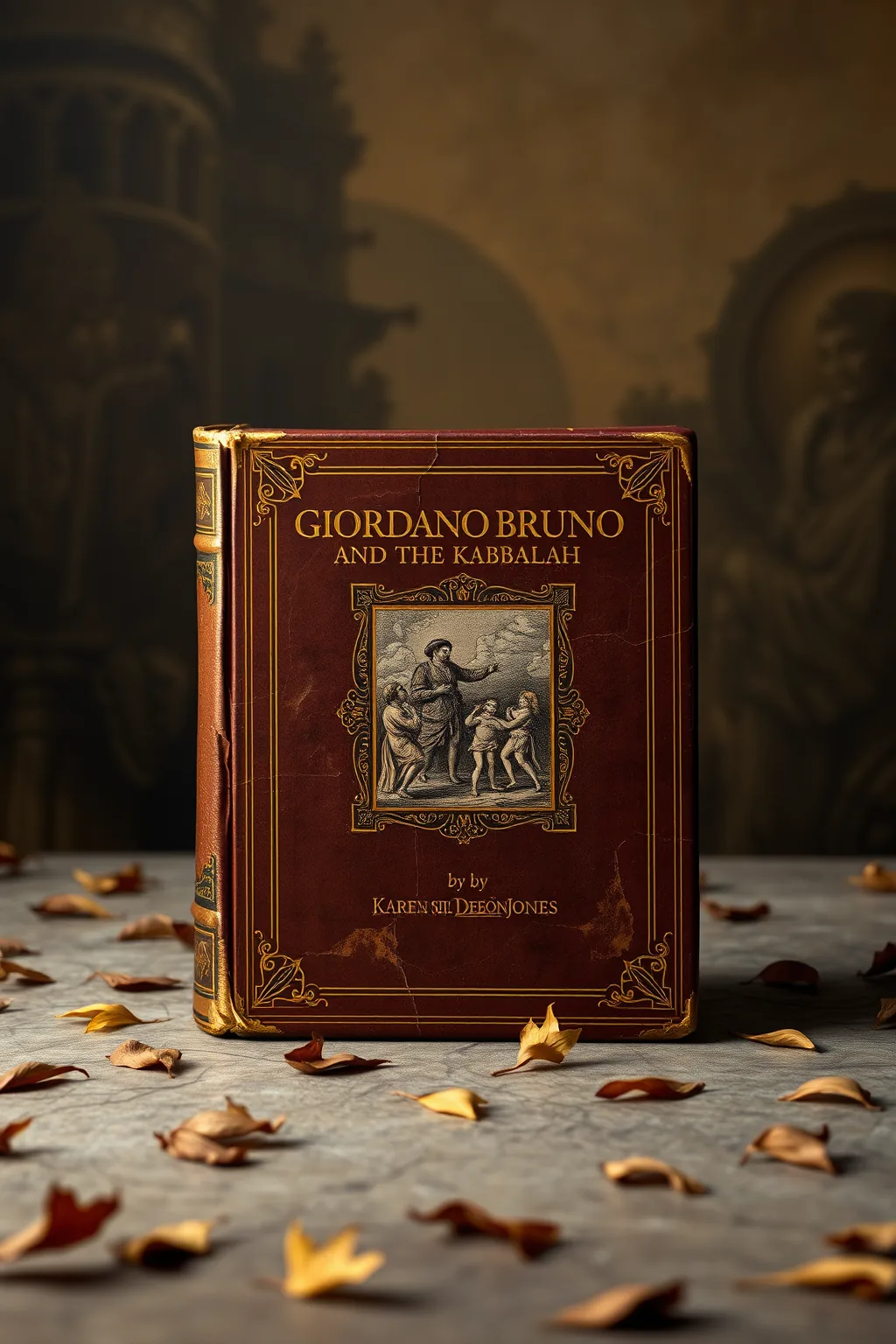
Giordano Bruno and the Kabbalah
 63
63

Giordano Bruno and the Kabbalah



Karen Silvia DeLeón-Jones's "Giordano Bruno and the Kabbalah" is a monumental achievement in the study of Renaissance esoteric thought. DeLeón-Jones navigates the complex intersection of Bruno's cosmology and Kabbalistic doctrine with scholarly precision and an evident deep understanding of mystical currents. Her work reveals the subtle yet profound influence of Kabbalah on Bruno's revolutionary ideas, particularly concerning the infinite universe and the divine spark within all creation. This book is essential for scholars of Renaissance philosophy, occult history, and Jewish mysticism, offering unparalleled insights into how disparate traditions converged to forge new pathways of spiritual and intellectual exploration. It is a testament to the enduring power of hidden knowledge to shape the course of human thought.
📝 Description
63
Karen Silvia DeLeón-Jones's 2008 book examines Giordano Bruno's engagement with Kabbalah.
Karen Silvia DeLeón-Jones's "Giordano Bruno and the Kabbalah" investigates the connections between the 16th-century philosopher Giordano Bruno and Jewish mystical traditions. The book details how Bruno incorporated Kabbalistic ideas into his own cosmological and philosophical system. DeLeón-Jones shows how Bruno's radical views on the infinite universe and the nature of divinity found conceptual allies within Kabbalistic thought, particularly concerning divine emanations and the symbolic power of Hebrew letters.
The work traces the intellectual currents of Renaissance esotericism, including Neoplatonism and Hermeticism, and how they interacted with Kabbalah. It argues that Bruno's synthesis of these traditions was not merely superficial but represented a significant attempt to reform Christian thought through Jewish mysticism. This study highlights the cross cultural exchange of esoteric knowledge during the period, demonstrating how Bruno's cosmology was informed by, and in turn influenced, these mystical frameworks. The book offers a detailed analysis of this complex intellectual relationship.
This book sits within the study of Renaissance esotericism, a period marked by intense interest in ancient wisdom and the synthesis of diverse mystical traditions. Specifically, it addresses the intersection of Christian Kabbalah, Hermeticism, and Neoplatonism, which were prevalent currents among intellectual elites seeking alternative frameworks to scholasticism. Bruno's work exemplifies this syncretic impulse, and DeLeón-Jones situates his engagement with Kabbalah within this broader historical and intellectual milieu, demonstrating how esoteric ideas circulated and transformed across religious and philosophical boundaries.
💡 Why Read This Book?
Uncover the hidden intellectual lineage connecting one of history's most audacious thinkers with the profound mysticism of the Kabbalah. This book offers a unique lens through which to understand the Renaissance's vibrant esoteric landscape. Ideal for seekers of forgotten wisdom, scholars of occult philosophy, and practitioners interested in the cross-pollination of spiritual traditions. Discover how ancient Jewish mystical concepts fueled revolutionary cosmological theories.
⭐ Reader Reviews
Honest opinions from readers who have explored this book.
❓ Frequently Asked Questions
What is the primary focus of this book?
The book's primary focus is exploring the profound connections and influences between Giordano Bruno's philosophical and cosmological ideas and the esoteric traditions of Kabbalah, revealing a unique synthesis of Renaissance thought and Jewish mysticism.
Who was Giordano Bruno?
Giordano Bruno was an Italian philosopher, cosmologist, and occultist of the Renaissance whose theories about the infinity of the universe and the plurality of worlds were revolutionary, leading to his condemnation and execution for heresy.
What is Kabbalah?
Kabbalah is the esoteric tradition of Jewish mysticism, seeking to understand the divine nature and the creation of the universe through mystical interpretation of the Torah, often involving symbolic language, numerical correspondences, and meditative practices.
How did Kabbalah influence Bruno?
DeLeón-Jones demonstrates how Kabbalistic concepts, such as divine emanations (sefirot) and the mystical properties of Hebrew letters, likely informed Bruno's ideas on the divine immanence in nature and the interconnectedness of all things.
Is this book suitable for beginners in Kabbalah?
While the book delves into complex esoteric themes, DeLeón-Jones provides context that makes it accessible to diligent readers interested in the intersection of philosophy and mysticism, even if they are new to Kabbalah specifically.
🔮 Key Themes & Symbolism
The Infinite Cosmos and Divine Emanation
This theme studies Bruno's revolutionary concept of an infinite universe, a radical departure from Aristotelian cosmology. DeLeón-Jones meticulously illustrates how Kabbalistic doctrines, particularly the emanation of the divine through the Sefirot, provided a framework for understanding this boundless creation. The book explores how Bruno integrated the idea of God's immanence within this infinite expanse, mirroring the Kabbalistic view of the divine presence pervading all of existence. This synthesis offered a potent philosophical and mystical reinterpretation of the cosmos, challenging existing paradigms and opening new avenues for spiritual contemplation.
Hermeticism, Neoplatonism, and Kabbalistic Integration
The book meticulously traces the confluence of various esoteric streams that shaped Bruno's thought, with a particular emphasis on the integration of Kabbalistic principles into established Hermetic and Neoplatonic traditions. DeLeón-Jones highlights how Bruno, already steeped in the wisdom of Hermes Trismegistus and Plato, found in Kabbalah a powerful symbolic language and conceptual toolkit. This cross-pollination allowed for a richer understanding of magic, astrology, and the interconnectedness of the macrocosm and microcosm, demonstrating a sophisticated intellectual dialogue between Jewish mysticism and broader Western esoteric currents of the Renaissance.
The Power of Sacred Language and Symbolism
Central to the exploration is the profound role of language and symbolism in both Bruno's philosophy and Kabbalistic practice. DeLeón-Jones elucidates how Bruno's interest in the power of words and their potential to unlock hidden truths resonated deeply with the Kabbalistic emphasis on the mystical properties of the Hebrew alphabet and divine names. The book examines how symbolic interpretations of scripture, numerical Gematria, and the sacred geometry inherent in Kabbalistic diagrams provided Bruno with a means to articulate his complex cosmological and metaphysical ideas, revealing a shared belief in the universe as a divinely encoded text.
💬 Memorable Quotes
Direct passages from the work, attributed to the author.
“Within the infinite, all forms find their divine echo.”
— Reflecting Bruno's concept of an infinite universe and Kabbalistic emanation, this suggests that every manifestation in existence is a reflection of the divine source, interconnected and imbued with sacred essence.
“The alphabet of God is the key to the soul's ascent.”
— This highlights the Kabbalistic belief in the power of Hebrew letters as divine tools for spiritual growth and understanding, a concept that likely resonated with Bruno's fascination with the power of language.
“To know the world is to know the divine within.”
— This speaks to the core of Bruno's immanentist philosophy and Kabbalistic mysticism, emphasizing that the study of the natural world leads to an understanding of the divine presence pervading it.
“Hidden symmetries bind the cosmos and the human heart.”
— This suggests a profound universal order, where the macrocosmic patterns of the universe are mirrored in the micro-level of human consciousness and spirituality, a common theme in esoteric traditions.
💡 Key Ideas
Editorial paraphrase of the work's core concepts — not direct quotes.
The universe is a divine book, and its letters are the stars.
This quote captures the Bruno-Kabbalistic worldview, suggesting that the cosmos is a divinely authored text to be deciphered through mystical insight, with celestial bodies holding profound symbolic meaning.
🌙 Esoteric Significance
Tradition
This book is deeply rooted in the Western Esoteric Tradition, specifically focusing on the Renaissance period's synthesis of Hermeticism, Neoplatonism, and Kabbalah. It explores how these streams of thought converged to create new cosmological and metaphysical frameworks. The work illuminates the esoteric underpinnings of Bruno's philosophy, positioning him as a key figure in the transmission and transformation of ancient mystical wisdom within a Christian European context.
Symbolism
The symbolism explored is rich and complex, drawing heavily from Kabbalistic concepts such as the Tree of Life, the Sefirot, and the mystical properties of the Hebrew alphabet. DeLeón-Jones examines how Bruno interpreted these symbols, integrating them into his own cosmology to represent divine emanation, the infinite nature of existence, and the interconnectedness of all things. The book studies the symbolic language of stars, numbers, and divine names as conduits for understanding the hidden order of the universe.
Modern Relevance
The relevance of 'Giordano Bruno and the Kabbalah' in the modern era lies in its exploration of intellectual courage, the pursuit of forbidden knowledge, and the enduring power of cross-cultural mystical traditions. It offers insights into how different spiritual and philosophical systems can inform and enrich one another, a crucial lesson in our increasingly interconnected world. The book encourages a deeper appreciation for the historical roots of esoteric thought and its potential to inspire contemporary seekers of wisdom and spiritual understanding.
👥 Who Should Read This Book
This book is a treasure for several distinct groups. For the seasoned scholar of Renaissance philosophy, occult history, or comparative mysticism, it offers outstanding depth and original insight into a key intellectual nexus. Aspiring practitioners of Kabbalah or those interested in its historical applications will find a collection of how these ancient teachings influenced later Western thought. Seekers of esoteric knowledge, who are drawn to the mysteries of the cosmos and the hidden workings of reality, will find Bruno's synthesis a profound and informative study. Beginners curious about the intersection of philosophy, religion, and mysticism will be guided through complex ideas with clarity and evocative prose.
📜 Historical Context
The Renaissance, a period of profound intellectual and artistic rebirth in Europe (roughly 14th-17th centuries), was a fertile ground for the exploration of esoteric traditions. Amidst a reawakening interest in classical philosophy, Hermeticism, Neoplatonism, and the Kabbalah flourished, often intertwining with emerging scientific inquiries. Giordano Bruno (1548-1600) was a product of this dynamic era, a philosopher whose radical ideas challenged the geocentric worldview and the dogmas of the Church. His engagement with Kabbalah, a mystical tradition primarily rooted in Jewish thought, demonstrates the era's intellectual curiosity and the willingness of thinkers to draw upon diverse sources of hidden knowledge. This period saw a complex interplay between traditional religious frameworks, burgeoning humanism, and a fervent search for occult truths, all contributing to a unique intellectual climate where ideas like Bruno's could take root and, paradoxically, lead to severe persecution.
📔 Journal Prompts
How might Bruno's concept of an infinite universe be understood through the Kabbalistic Sefirot?
Reflect on a time when you felt a profound connection between the macrocosm (universe) and the microcosm (yourself).
What power do you believe lies in the symbolic interpretation of language, as seen in Kabbalah and Bruno's work?
Consider the challenges and risks associated with holding radical philosophical or spiritual beliefs in any era.
Explore the parallels between the pursuit of scientific discovery and the quest for esoteric knowledge.
🗂️ Glossary
Kabbalah
An esoteric system of Jewish mysticism concerned with the nature of God, the creation of the universe, and the spiritual significance of the Torah, often employing symbolic and allegorical interpretations.
Sefirot
The ten divine emanations or attributes through which God, the Infinite, is believed to manifest and interact with the created world in Kabbalistic cosmology, forming the structure of the Tree of Life.
Hermeticism
A philosophical and religious tradition based on the writings attributed to Hermes Trismegistus, emphasizing divine knowledge, magic, astrology, and the principle of 'as above, so below'.
Neoplatonism
A philosophical system derived from Plato, emphasizing the transcendent nature of the One, from which all reality emanates through a hierarchy of being, and advocating for mystical union with the divine.
Gematria
A method of interpreting Hebrew scripture by assigning a numerical value to each letter and finding connections between words or phrases with the same numerical sum.
This book appears in 1 collection
🔮 Readers Also Liked
Browse all →









From the “Kabbalah” Collection
View all →









More Free Kabbalah & Jewish Mysticism Books
View all →