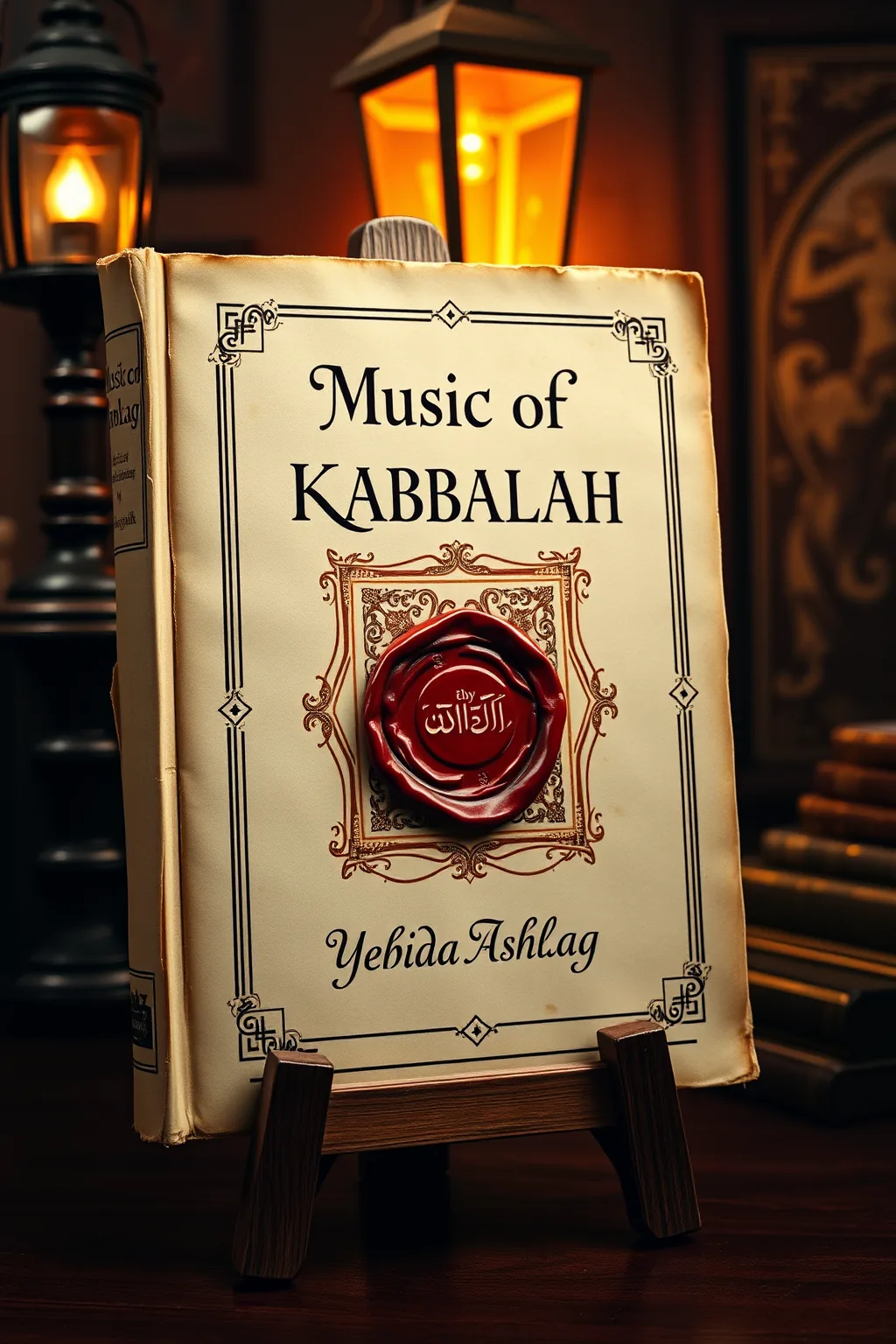
Music of Kabbalah
 61
61

Music of Kabbalah


Yehuda Ashlag's "Music of Kabbalah" is an indispensable text for any serious student of Jewish mysticism. Ophelia Vance, a seasoned reviewer of esoteric literature, finds Ashlag's exposition on the Sefirot and the nature of divine emanation to be exceptionally lucid and spiritually potent. The work masterfully bridges ancient wisdom with contemporary spiritual inquiry, offering profound insights into the interconnectedness of all existence. Vance highlights the book's strength in demystifying complex Kabbalistic concepts without sacrificing their inherent depth and mystery. This is a foundational read for those seeking to grasp the intricate architecture of the spiritual realms and their profound impact on our material lives. An essential addition to any occult library.
📝 Description
61
Yehuda Ashlag's 1961 "Music of Kabbalah" deciphers the cosmic harmonies.
Yehuda Ashlag's "Music of Kabbalah" examines the spiritual significance of sound and music within the framework of Kabbalistic thought. Ashlag, a major figure in 20th-century Kabbalah, connects the concept of "music" not to audible melodies but to the underlying spiritual vibrations and divine emanations that structure reality. He proposes that the creation process itself can be understood through a musical analogy, with different spiritual worlds and levels corresponding to distinct harmonic structures.
The book details how these spiritual "melodies" influence human perception and spiritual development. Ashlag outlines methods for individuals to attune themselves to these divine vibrations, leading to spiritual awakening and a deeper comprehension of existence. The text aims to guide readers toward understanding the essential unity of creation and their place within it, using the metaphor of music to explain complex metaphysical concepts. It is a deep dive into the mechanics of spiritual reality as interpreted through Ashlag's unique lens.
This work is situated within the Lurianic Kabbalah tradition, particularly as interpreted and expanded by Yehuda Ashlag. Ashlag, known for his commentary on the Zohar, sought to make Kabbalistic concepts accessible to a wider audience in the 20th century. "Music of Kabbalah" builds upon the Lurianic ideas of divine contraction (Tzimtzum), emanations (Sefirot), and the spiritual worlds, reinterpreting them through the lens of sound and harmony as fundamental principles of existence. It reflects a modern attempt to synthesize ancient mystical teachings with contemporary philosophical inquiry, aiming to reveal the underlying structure of reality.
💡 Why Read This Book?
"Music of Kabbalah" offers a direct portal to the foundational principles of Jewish mysticism, revealing the divine architecture of existence. It is essential for seekers yearning for deeper spiritual comprehension, scholars desiring rigorous textual analysis of esoteric traditions, and practitioners aiming to integrate Kabbalistic insights into their daily lives. Experience the profound resonance of hidden knowledge.
⭐ Reader Reviews
Honest opinions from readers who have explored this book.
❓ Frequently Asked Questions
What is the core concept of "Music of Kabbalah"?
The core concept is that the spiritual universe operates according to divine laws and emanations, akin to a harmonious 'music' that governs creation, which can be understood and experienced through Kabbalistic study.
Who was Yehuda Ashlag?
Yehuda Ashlag (Baal HaSulam) was a highly influential 20th-century Kabbalist renowned for his comprehensive commentary on the Zohar and his efforts to make Kabbalistic wisdom accessible to a broader audience.
Is prior knowledge of Kabbalah necessary to read this book?
While prior knowledge can enhance understanding, Ashlag's work is structured to guide newcomers. However, a sincere desire to learn and an open mind are the most crucial prerequisites.
What is the significance of the 'Sefirot' in this book?
The Sefirot, divine attributes or emanations, are central to understanding the structure of creation and the pathways of divine energy as explained in "Music of Kabbalah."
How does this book relate to practical Kabbalah?
While primarily theoretical and philosophical, the insights gained from "Music of Kabbalah" provide the essential theoretical framework for any practical application or spiritual development within the Kabbalistic tradition.
🔮 Key Themes & Symbolism
The Divine Symphony of Creation
This theme examines the Kabbalistic understanding of the universe as a divinely orchestrated symphony, where each emanation and creation plays a vital role in the grand cosmic composition. Ashlag reveals how the 'music' of Kabbalah is not merely metaphorical but represents the underlying energetic frequencies and divine intentions that shape reality. Readers will explore the interconnectedness of all existence, understanding how human actions resonate within this cosmic harmony and the potential to attune oneself to its higher frequencies.
Unveiling the Sefirotic Architecture
The book meticulously dissects the Sefirot, the ten divine emanations that form the blueprint of all existence. Ashlag provides clear insights into the nature, function, and interconnectedness of each Sefirah, from Keter (Crown) to Malkhut (Kingdom). This exploration unveils the hidden pathways of divine energy, clear how these archetypal forces manifest in both the spiritual and material realms, offering a comprehensive map for spiritual ascent and understanding.
The Ascent of the Soul and Spiritual Attainment
Central to Ashlag's teachings is the concept of spiritual ascent, the journey of the soul towards its divine source. 'Music of Kabbalah' outlines the inner transformations and ethical disciplines required to purify the soul and align oneself with the divine will. It emphasizes the practical application of Kabbalistic wisdom, guiding the reader on how to transcend egoistic desires and perceive the underlying unity of all things, thereby achieving true spiritual fulfillment and connection.
💬 Memorable Quotes
Direct passages from the work, attributed to the author.
“To know the Creator is to understand His works.”
— This highlights the Kabbalistic principle that spiritual understanding is achieved through the study and contemplation of the divine manifestations in the created world.
“The Sefirot are the vessels of divine light.”
— This points to the function of the Sefirot as channels through which divine energy flows, shaping and sustaining all of existence.
“True perception transcends the senses.”
— This emphasizes the esoteric goal of Kabbalah: to develop spiritual sight and intuition that can perceive realities beyond the ordinary physical realm.
“Unity is the source of all harmony.”
— This profound statement underscores the ultimate Kabbalistic truth of monotheism and the underlying oneness of all creation, from which all apparent diversity arises.
💡 Key Ideas
Editorial paraphrase of the work's core concepts — not direct quotes.
The universe speaks to a divine melody.
This quote expresses the core mystical concept that creation is not random but structured and harmonious, guided by an unseen, divine intelligence.
🌙 Esoteric Significance
Tradition
This work is firmly rooted in the Lurianic and Zoharic traditions of Kabbalah, representing a modern interpretation and systematization of its core tenets. It examines the esoteric cosmology, divine emanations (Sefirot), and the spiritual journey of the soul as understood within Jewish mysticism. Ashlag's approach emphasizes the practical and experiential aspects of Kabbalah, positioning it as a science of spiritual perception and connection.
Symbolism
The text is rich with symbolic language, with the 'music' itself serving as a primary metaphor for the harmonious, energetic structure of the universe. Key symbols include the Sefirot, the Tree of Life, divine light (Ohr), vessels (Kelim), and the concept of 'desire to receive' (Ratzon Lekabel). Ashlag deciphers these symbols to reveal the underlying divine principles and the mechanics of creation and spiritual evolution.
Modern Relevance
In an era often characterized by fragmentation and existential searching, "Music of Kabbalah" offers a profound framework for understanding the interconnectedness of all things and the underlying unity of existence. It provides tools for inner transformation, ethical development, and the cultivation of spiritual consciousness, making ancient Kabbalistic wisdom directly applicable to contemporary challenges and the universal human quest for meaning and purpose.
👥 Who Should Read This Book
This profound work is useful for a diverse audience. Beginners in Kabbalah will find Ashlag's clear explanations and systematic approach to be an excellent entry point, guiding them through complex concepts with clarity. Scholars of religious studies and comparative mysticism will appreciate the depth of his analysis and his contribution to the evolution of Kabbalistic thought. Spiritual seekers yearning for a deeper understanding of the divine nature of reality and their place within it will find profound guidance and inspiration. Practitioners of contemplative traditions may discover new dimensions for their meditation and ethical practices, integrating Kabbalistic principles into their spiritual discipline.
📜 Historical Context
Yehuda Ashlag (1884-1954), known as Baal HaSulam ('Master of the Ladder'), emerged during a period of significant intellectual and spiritual ferment in the early to mid-20th century. Living in Mandatory Palestine and later Israel, he was deeply influenced by the rich tradition of Kabbalah, particularly the Zohar, but also engaged with philosophical and scientific currents of his time. Ashlag sought to present Kabbalah not as an arcane, esoteric practice solely for a select few, but as a universal science of spirituality relevant to all of humanity. His work represents a crucial bridge between classical Kabbalistic thought and modern spiritual seekers, aiming to explain its profound teachings and make them accessible through clear, systematic explanations, often in response to the existential questions and challenges of a rapidly changing world.
📔 Journal Prompts
How does the concept of 'divine music' resonate with your personal experience of the universe?
Reflect on a moment when you felt a profound sense of connection or harmony. How might this relate to the 'music of Kabbalah'?
Which of the Sefirot currently feels most prominent in your life, and why?
In what ways can you consciously align your actions with the 'divine will' described in the text?
Consider the 'vessels' of your spiritual life. Are they open and receptive to divine light, or are they constricted?
🗂️ Glossary
Sefirot
The ten divine emanations or attributes through which God reveals Himself and creates the universe. They form the structure of the Tree of Life.
Ohr
Hebrew for 'light,' specifically referring to divine light or spiritual energy that emanates from the Creator and sustains all existence.
Kelim
Hebrew for 'vessels,' referring to the spiritual structures or receptacles designed to contain and manifest divine light.
Tzimtzum
The act of 'contraction' or withdrawal by the Creator, creating a spiritual vacuum or space for creation to exist.
Baal HaSulam
The Hebrew appellation for Rabbi Yehuda Ashlag, meaning 'Master of the Ladder,' signifying his role in clear the path of spiritual ascent.
This book appears in 1 collection
🔮 Readers Also Liked
Browse all →






More by Yehuda Ashlag
All books →
From the “Kabbalah” Collection
View all →









More Free Kabbalah & Jewish Mysticism Books
View all →