Kabbalah for the Layman/Hebrew

 61
61

Kabbalah for the Layman/Hebrew

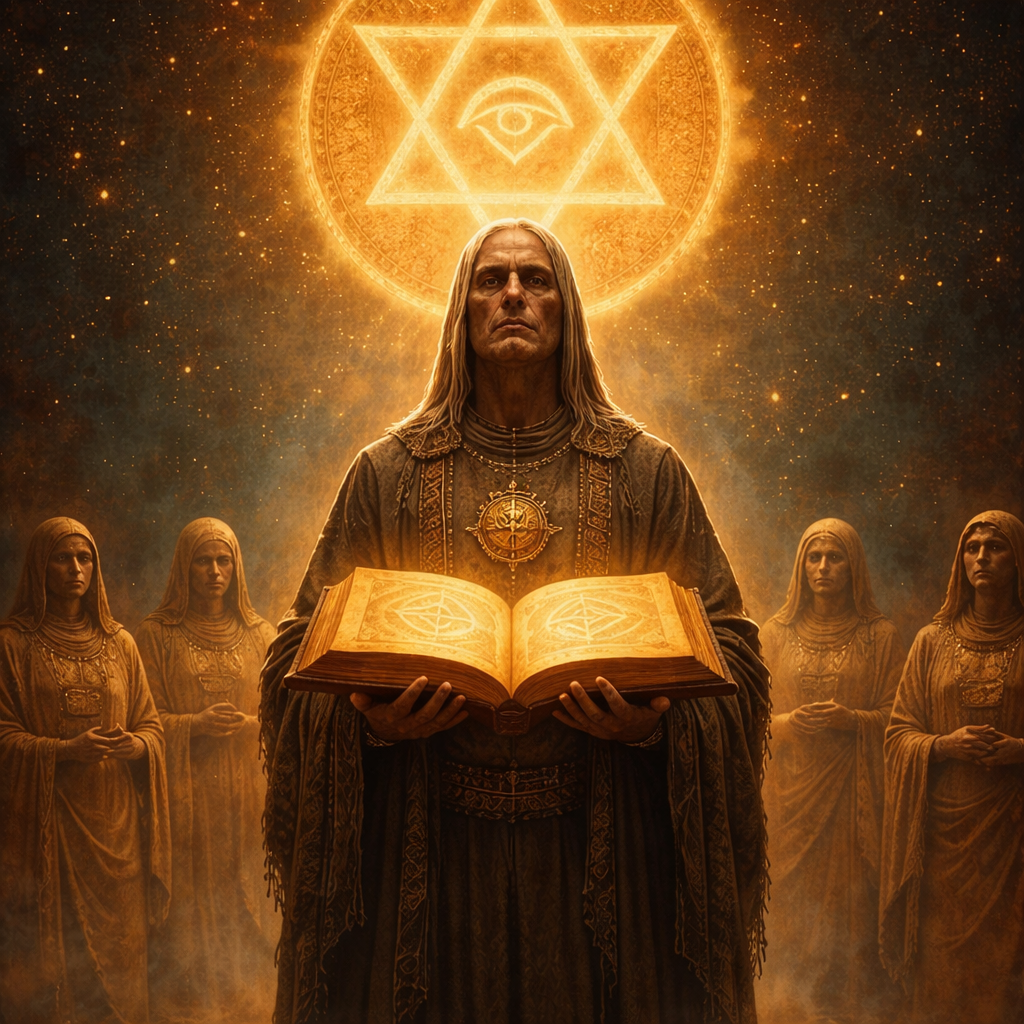

Sophia Crane (Associate Editor) — Phillip S. Berg's 'Kabbalah for the Layman/Hebrew' stands as a beacon for those venturing into the luminous depths of Jewish mysticism. Berg's strength lies in his ability to distill complex, often arcane, concepts into a comprehensible yet spiritually resonant narrative. He navigates the Tree of Life and its sefirot with clarity, illuminating the esoteric pathways to divine consciousness. This book is an indispensable primer for sincere seekers, students of comparative mysticism, and anyone eager to grasp the philosophical and spiritual architecture of Kabbalistic thought. It offers a foundational understanding that empowers further exploration.
📝 Description
61
Phillip S. Berg's 'Kabbalah for the Layman/Hebrew' was published to make complex Kabbalistic ideas understandable.
Phillip S. Berg wrote 'Kabbalah for the Layman/Hebrew' to demystify the principles of Kabbalah for a general audience. The book breaks down the symbolic language and core philosophies of this Jewish mystical tradition. Berg aims to translate esoteric concepts into a form that is comprehensible to those new to its study. It covers the structure of the cosmos, divine emanations, and the nature of existence as understood within Kabbalah.
The text encourages a contemplative approach to spiritual learning. It presents Kabbalah as a path for self-understanding and a deeper grasp of the universe. The work intends to serve as an introduction, fostering intellectual and spiritual growth for the interested reader. It focuses on making these profound ideas accessible without requiring prior specialized knowledge.
This book engages with Kabbalah, a Jewish mystical tradition that developed over centuries, particularly from medieval Spain. It seeks to explain core Kabbalistic concepts such as the Sefirot (divine attributes or emanations) and the Tree of Life, which map the divine flow and creation. Berg's work aims to make these intricate theological and cosmological frameworks accessible beyond the confines of traditional rabbinic scholarship. It positions itself as a guide to understanding the esoteric underpinnings of Jewish thought and spirituality.
💡 Why Read This Book?
This book is essential for anyone seeking to unravel the profound mysteries of Kabbalah. It offers a clear, accessible entry point into Jewish mysticism, demystifying complex concepts like the Tree of Life and divine emanations. Ideal for spiritual seekers, students of ancient wisdom traditions, and practitioners looking to deepen their understanding of the universe's energetic flow and their place within it. Read it to unlock a new perspective on reality and personal growth.
⭐ Reader Reviews
Honest opinions from readers who have explored this book.
❓ Frequently Asked Questions
What is the primary focus of 'Kabbalah for the Layman/Hebrew'?
The book's primary focus is to introduce the fundamental principles and esoteric concepts of Kabbalah to a general audience, making this ancient Jewish mystical tradition accessible and understandable without requiring prior deep knowledge.
Does this book require prior knowledge of Hebrew?
While the title includes 'Hebrew,' the book is designed for the 'Layman' and aims to explain concepts in English. Familiarity with Hebrew is not a prerequisite for understanding the core teachings presented.
What are the key elements of Kabbalah discussed in the book?
Key elements include the Tree of Life, the Sefirot (divine emanations), the nature of God, creation, and the spiritual journey of the soul, all explained through a mystical and symbolic lens.
Who is the intended audience for this book?
The intended audience includes spiritual seekers, students of mysticism, individuals interested in Jewish philosophy and esotericism, and anyone curious about the deeper meaning of life and the universe.
How does this book differ from other introductions to Kabbalah?
Berg's approach often emphasizes practical application and the experiential aspects of Kabbalistic study, aiming to bridge the gap between theoretical knowledge and personal spiritual growth, making it a more integrated experience.
🔮 Key Themes & Symbolism
The Tree of Life: Cosmic Blueprint
Central to Kabbalistic cosmology, the Tree of Life serves as a map of creation, detailing the ten Sefirot – divine emanations that bridge the Infinite (Ein Sof) with the material world. Berg meticulously unpacks its structure, illustrating the dynamic interplay of divine forces and the pathways of consciousness. It's presented not just as a symbol, but as a living, breathing diagram of spiritual evolution and the interconnectedness of all existence, offering useful insights into the divine nature and humanity's place within it.
Divine Emanations (Sefirot)
The Sefirot are the vessels through which the Infinite Light manifests. This book examines the unique qualities of each Sefirah, from Keter (Crown) to Malkhut (Kingdom), explaining their role in the creation process and their influence on human experience. Understanding these divine attributes provides a framework for comprehending the complexities of the universe and the subtle energies that govern it. Berg illuminates how these emanations can be recognized and integrated within oneself for spiritual growth and alignment.
Symbolism and Hidden Meanings
Kabbalah is a language of symbols, and Berg masterfully deciphers these sacred signs. From the Hebrew alphabet to ancient biblical narratives, the book reveals the multilayered meanings encoded within. Each symbol is a key, unlocking deeper spiritual truths and offering a unique perspective on reality. This exploration encourages readers to look beyond the literal, engaging with a symbolic language that speaks directly to the soul, fostering intuition and a more profound connection to the mystical dimensions of existence.
💬 Memorable Quotes
Direct passages from the work, attributed to the author.
“To know the Creator, we must first know ourselves.”
— Highlights the introspective path central to Kabbalah, asserting that self-awareness is the prerequisite for comprehending the divine nature and our connection to it.
“The universe is a reflection of the divine.”
— Emphasizes the interconnectedness of all existence, positing that the material world is a manifestation or echo of the spiritual realm and its divine principles.
“Every letter in the Torah has a secret.”
— Points to the profound symbolic depth of sacred texts within Kabbalah, suggesting that divine messages are encoded even in the smallest components of scripture.
“Wisdom is the path to understanding.”
— A simple yet powerful statement reinforcing the value of knowledge and intellectual pursuit as the primary means to achieve spiritual insight and comprehension.
💡 Key Ideas
Editorial paraphrase of the work's core concepts — not direct quotes.
The Kabbalah is the light of God.
This quote underscores the divine origin and clear nature of Kabbalistic wisdom, suggesting it serves as a conduit for understanding the divine will and essence.
🌙 Esoteric Significance
Tradition
This book is firmly rooted in the tradition of Lurianic Kabbalah, a prominent school of Jewish mysticism that flourished in 16th-century Safed. Berg's interpretation draws heavily from the concepts of Tzimtzum (Divine Contraction), Shevirat HaKelim (Shattering of the Vessels), and Tikkun (Rectification), providing a framework for understanding cosmic processes and the human role in restoring spiritual harmony. It offers a lens through which to view the intricate divine plan for creation and the means by which individuals can participate in this ongoing cosmic restoration.
Symbolism
The book meticulously deciphers the rich symbolic language of Kabbalah, with the Tree of Life serving as its central symbolic map. Each of the ten Sefirot represents a distinct divine attribute and stage of manifestation, intricately interconnected. The Hebrew alphabet, gematria (numerical value of letters), and various scriptural narratives are also explored as symbolic keys to unlocking deeper spiritual truths. Berg highlights how these symbols are not mere decorative elements but represent fundamental energetic forces and pathways of consciousness essential for understanding divine mechanics.
Modern Relevance
In an era often characterized by existential questions and a search for purpose, 'Kabbalah for the Layman/Hebrew' offers profound relevance. It provides tools for self-understanding, spiritual growth, and a deeper connection to the universe. The book's emphasis on the interconnectedness of all things, the power of consciousness, and the potential for personal transformation resonates strongly with contemporary spiritual seekers. It offers a timeless wisdom that helps read through the complexities of modern life by revealing underlying spiritual principles and guiding individuals toward a more meaningful existence.
👥 Who Should Read This Book
This book is an invaluable resource for a diverse range of readers. Absolute beginners to Kabbalah will find it an accessible and enlightening introduction, clarifying complex concepts. Scholars of comparative religion and mysticism will appreciate Berg's clear exposition of foundational Kabbalistic principles. Spiritual seekers yearning for a deeper understanding of the universe and their connection to the divine will find it profoundly inspiring. Practitioners of meditation or other spiritual disciplines may discover new frameworks for their practice and a richer understanding of energetic pathways. It is a gateway for anyone curious about the esoteric dimensions of Jewish tradition and universal wisdom.
📜 Historical Context
Phillip S. Berg's 'Kabbalah for the Layman/Hebrew' emerged during a period of renewed global interest in esoteric and spiritual traditions, particularly in the latter half of the 20th century. As societal structures shifted and traditional belief systems were re-examined, individuals increasingly sought deeper meaning and alternative pathways to understanding the universe and their place within it. Berg, a prolific scholar and teacher, responded to this burgeoning curiosity by making the complex and often inaccessible teachings of Kabbalah more digestible. His work capitalized on a growing desire for spiritual knowledge that transcended dogma, offering a structured yet mystical approach that resonated with seekers worldwide, bridging ancient wisdom with modern sensibilities and contributing significantly to the popularization of Kabbalistic studies.
📔 Journal Prompts
Reflect on the concept of divine emanations (Sefirot). Which Sefirah resonates most with you today, and why?
Consider the Tree of Life as a map. Where do you see yourself on this map, and what 'paths' are you currently traversing?
How can the symbolic language of Kabbalah inform your daily life and spiritual practice?
Meditate on the idea of interconnectedness as presented in Kabbalah. How does this perspective change your view of your relationships and the world?
What does 'Tikkun' (rectification) mean to you personally, and what actions can you take to contribute to it?
🗂️ Glossary
Ein Sof
The Kabbalistic term for the Infinite or Limitless God, representing the absolute, unknowable essence of divinity before any manifestation or emanation.
Sefirot
The ten divine emanations or attributes through which God creates and sustains the universe, forming the structure of the Tree of Life.
Tree of Life (Etz Chaim)
A central diagram in Kabbalah, representing the structure of the cosmos and the pathways of divine energy, composed of ten Sefirot connected by 22 paths.
Gematria
A Kabbalistic method of interpreting scripture by calculating the numerical value of Hebrew words and phrases to reveal hidden meanings and connections.
Tzimtzum
The Kabbalistic concept of divine contraction, where God 'withdrew' to create a conceptual space for the existence of the universe and free will.
This book appears in 1 collection
🔮 Readers Also Liked
Browse all →







From the “Kabbalah” Collection
View all →









More Free Kabbalah & Jewish Mysticism Books
View all →