Kabbalah
 68
68

Kabbalah


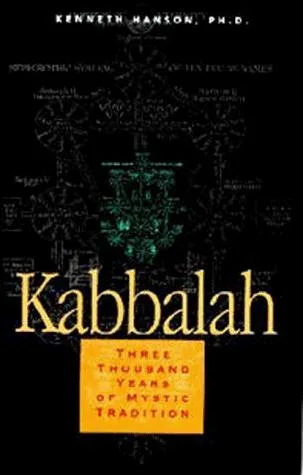
Kenneth Hanson's 'Kabbalah' is a masterfully crafted exposition, shedding luminous clarity on a subject often shrouded in arcane mystery. His unexpected personal journey into Judaic studies lends a unique and engaging perspective. Hanson navigates the complex currents of Kabbalistic thought with scholarly rigor and an intuitive grasp of its esoteric heart, from the foundational texts to the symbolic language of the sefirot. This work is indispensable for serious students of mysticism, providing a solid foundation for further exploration. It is particularly resonant for those drawn to the intersection of history, philosophy, and the sacred.
📝 Description
68
Kenneth Hanson's 2009 book illuminates Kabbalah from its earliest traces to medieval developments.
Kenneth Hanson's work examines Kabbalah, a Jewish mystical tradition. He traces its origins to the Dead Sea Scrolls and the Qumran community, moving through its development into complex medieval thought. The book explains esoteric symbols and the concept of divine emanations central to Kabbalistic ideas. It also discusses the pursuit of hidden knowledge that defines this tradition. Hanson's approach makes this complex subject understandable. The book considers Kabbalah's perspective on the cosmos and the human spirit. It is for those interested in Judaism's mystical aspects and its broader impact on Western esoteric thought. The text invites readers to reflect on creation, consciousness, and sacred matters.
Kabbalah represents a significant stream within Jewish mysticism, focusing on divine secrets and the nature of God's creation. Its development spans centuries, with roots often connected to ancient texts like the Sefer Yetzirah and later flourishing into sophisticated systems in medieval Spain and Germany. Key concepts include *sefirot* (divine emanations), *tzimtzum* (divine contraction), and the practical application of mystical knowledge for spiritual ascent. This tradition has long engaged practitioners and thinkers seeking deeper understanding of the divine reality and humanity's place within it, influencing various other esoteric movements.
💡 Why Read This Book?
Embark on a journey of profound spiritual discovery. 'Kabbalah' offers a clear pathway into the esoteric heart of Jewish mysticism, revealing ancient wisdom and hidden symbolism. Ideal for seekers of deeper meaning, students of comparative religion, and practitioners of contemplative traditions who wish to explore the divine architecture of existence and the pathways to spiritual illumination.
⭐ Reader Reviews
Honest opinions from readers who have explored this book.
❓ Frequently Asked Questions
What are the primary origins of Kabbalah discussed in this book?
This book explores the origins of Kabbalah, tracing its lineage to ancient texts like the Dead Sea Scrolls and the communal practices of the Qumran community, before delving into its medieval development.
Is this book suitable for beginners interested in Kabbalah?
Yes, Kenneth Hanson's approach is designed to be both scholarly and accessible, making it an excellent starting point for those new to the complexities of Kabbalistic thought and its rich symbolism.
What is the significance of the Dead Sea Scrolls in relation to Kabbalah?
The Dead Sea Scrolls are presented as crucial early evidence and potential precursors to Kabbalistic ideas, offering insights into mystical interpretations of scripture and communal spiritual practices prevalent in ancient Jewish sects.
How does the book address the personal journey of the author?
The author's personal narrative, particularly his Scandinavian heritage in the field of Judaica, adds a unique and relatable dimension, illustrating how diverse backgrounds can lead to profound engagement with ancient wisdom.
What kind of esoteric knowledge can one expect to find within these pages?
Readers can expect to uncover insights into divine emanations, the Tree of Life, gematria, angelic hierarchies, and the mystical interpretation of the Torah, all central to the esoteric framework of Kabbalah.
🔮 Key Themes & Symbolism
The Tree of Life: Divine Architecture and Cosmic Order
This theme looks at the central symbol of Kabbalah, the Tree of Life (Etz Chaim), exploring its ten Sefirot as divine emanations and the structure of reality. Hanson elucidates how this intricate diagram represents the flow of divine energy, the creation of the cosmos, and the spiritual ascent of the soul. Understanding the Sefirot provides a framework for comprehending the relationship between the Infinite, the manifest world, and the human consciousness, offering a map for spiritual development and the attainment of divine wisdom.
Gematria and the Mystical Power of Hebrew Letters
The book illuminates the esoteric practice of Gematria, the numerological interpretation of Hebrew words and phrases. Hanson explains how each Hebrew letter possesses not only phonetic value but also symbolic and mystical significance, allowing for the uncovering of hidden meanings within sacred texts. This practice reveals the interconnectedness of all things, suggesting that the divine mind is encoded within the very fabric of language, offering clear insights into the Torah and the nature of reality through the manipulation of letters and numbers.
The Qumran Community and Early Mystical Currents
Hanson examines the historical context of the Qumran community, the custodians of the Dead Sea Scrolls, and their potential contribution to the nascent stages of Kabbalistic thought. The exploration focuses on their ascetic practices, apocalyptic visions, and unique interpretations of scripture, suggesting a fertile ground for the development of mystical ideas. This section highlights how communal spiritual striving and a deep engagement with esoteric interpretations of biblical prophecies laid foundational stones for later Kabbalistic traditions, emphasizing the importance of community in spiritual awakening.
💬 Memorable Quotes
Direct passages from the work, attributed to the author.
“Within the silence, the Sefirot whisper their secrets.”
— This evokes the contemplative aspect of Kabbalah, suggesting that deep introspection and meditative practices allow one to perceive the subtle emanations of the divine, the Sefirot.
“The Qumran scrolls echo with ancient longings for the divine.”
— This points to the historical significance of the Dead Sea Scrolls as early expressions of mystical yearning and esoteric inquiry within Judaism, foreshadowing Kabbalistic developments.
“To know the self is to glimpse the Infinite.”
— This profound statement underscores the Kabbalistic principle of 'as above, so below,' emphasizing the connection between inner spiritual exploration and the understanding of the divine and the universe.
💡 Key Ideas
Editorial paraphrase of the work's core concepts — not direct quotes.
The universe is a divine utterance waiting to be deciphered.
This quote expresses the Kabbalistic belief that creation is imbued with divine meaning, accessible through mystical interpretation and symbolic understanding of sacred texts and the cosmos.
Every letter is a key, every number a gate.
Highlighting the importance of Gematria and the mystical power of Hebrew letters, this quote signifies that language itself holds the codes to unlock profound spiritual truths.
🌙 Esoteric Significance
Tradition
This work is a gateway into the rich esoteric tradition of Kabbalah, a branch of Jewish mysticism that seeks to understand the divine nature, the creation of the universe, and humanity's relationship with God. It explores the hidden, symbolic, and contemplative dimensions of Judaism, offering a path to spiritual gnosis and direct experience of the divine. Kabbalah provides a complex cosmological map and a guide for spiritual ascent.
Symbolism
The core symbolism revolves around the Tree of Life (Etz Chaim), representing the ten Sefirot (divine emanations) and their interconnections, illustrating the flow of divine energy from the Infinite to the manifest world. Other key symbols include Hebrew letters, numbers (Gematria), angels, and divine names, each imbued with mystical power and interpreted to reveal deeper spiritual truths and the underlying structure of reality.
Modern Relevance
In contemporary times, Kabbalah continues to offer clear insights into consciousness, spiritual growth, and the interconnectedness of all things. Its symbolic language and contemplative practices resonate with modern seekers looking for meaning beyond materialistic paradigms. The principles explored in this book provide frameworks for understanding personal transformation, ethical living, and a deeper appreciation of the sacred mystery inherent in existence, bridging ancient wisdom with contemporary spiritual inquiry.
👥 Who Should Read This Book
This book is a treasure for a diverse audience. **Beginners** will find Kenneth Hanson's clear exposition an accessible entry point into the complex world of Kabbalah. **Scholars** of religion and philosophy will appreciate the meticulous research and historical context provided. **Seekers** of spiritual enlightenment will discover clear insights into the nature of God, the universe, and the self. **Practitioners** of contemplative arts and mystical traditions will find valuable tools and perspectives for deepening their practice and understanding the esoteric underpinnings of various spiritual paths.
📜 Historical Context
Kenneth Hanson's 'Kabbalah' is firmly rooted in the vibrant intellectual and spiritual range of medieval Europe, particularly the flourishing of Jewish mystical thought in Spain and Germany. This era, marked by a deep engagement with ancient texts and a desire to understand the divine essence, saw the codification of Kabbalistic doctrines. The book also reaches back to the pre-Christian era, examining the possible influences and parallels found in the Dead Sea Scrolls and the Qumran community, suggesting a long and evolving tradition of esoteric interpretation within Judaism. This historical grounding provides essential context for understanding the development of Kabbalistic concepts like the Sefirot, divine emanations, and the mystical interpretation of the Torah, influencing not only Jewish thought but also later Christian and Western esoteric traditions.
📔 Journal Prompts
Reflect on a personal experience that felt divinely orchestrated. How might the concept of divine emanations explain this feeling?
Consider a Hebrew letter or a number that holds personal significance. Explore its potential symbolic meanings in a Kabbalistic context.
Imagine you are a member of the Qumran community. What spiritual practices would you engage in to feel closer to the divine?
How can the concept of 'as above, so below' be applied to your daily life and relationships?
Meditate on the idea of the universe as a 'divine utterance.' What messages might you discern in the natural world around you?
🗂️ Glossary
Sefirot
The ten divine emanations or attributes through which God manifests and interacts with the created universe, forming the central structure of the Kabbalistic Tree of Life.
Gematria
A system of Jewish mysticism that assigns numerical values to Hebrew letters and words, used to interpret hidden meanings and connections within sacred texts.
Ein Sof
The Kabbalistic concept of God's absolute, unknowable, and infinite essence, beyond all description and comprehension, the primordial source of all existence.
Malkhut
The tenth and final Sefirah, representing the physical world, kingship, and the divine presence within creation, often associated with the Shekhinah (Divine Presence).
Keter
The first and highest Sefirah, representing the Crown, divine will, and the ultimate source of all emanation, symbolizing the primordial unity and the 'Divine Idea'.
This book appears in 1 collection
🔮 Readers Also Liked
Browse all →









From the “Kabbalah” Collection
View all →






More Free Kabbalah & Jewish Mysticism Books
View all →