Kabbalah for the student

 61
61

Kabbalah for the student

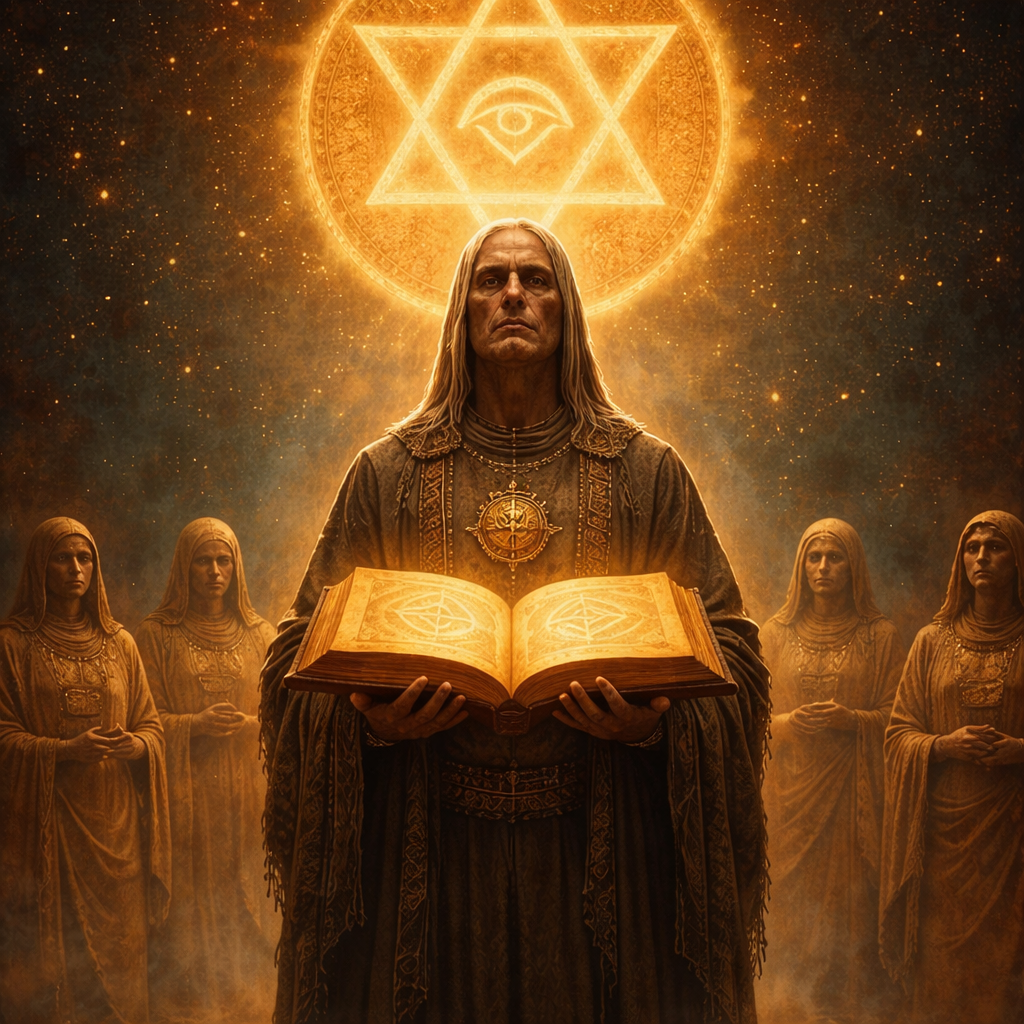

Lorelei Sage, Contemplative Literature Editor: Yehudah Ashlag's "Kabbalah for the Student" is an indispensable gateway for those drawn to the deeper currents of Jewish mysticism. Ashlag, a luminary in modern Kabbalistic thought, presents complex concepts with remarkable clarity and profound spiritual insight. This text is a treasure trove of esoteric knowledge, demystifying the Tree of Life and its intricate emanations. Its strength lies in its ability to ground abstract principles in practical spiritual development, making it ideal for serious students and practitioners seeking authentic understanding and transformative growth. A must-read for anyone yearning to explore the profound spiritual architecture of reality.
📝 Description
61
Yehudah Ashlag published "Kabbalah for the Student" to make complex Kabbalistic concepts accessible.
Yehudah Ashlag's "Kabbalah for the Student" aims to clarify the core principles of Kabbalistic thought. The book addresses the structure of the Tree of Life, explaining its relationship to creation and the divine. Ashlag details the nature of the soul and its connection to the spiritual worlds, outlining a path for personal spiritual growth. This text is intended for those seriously studying Kabbalah, moving beyond simple theory to practical comprehension.
It covers the mechanics of spiritual perception and the underlying order of the universe. Ashlag's writing seeks to provide a framework for understanding existence and humanity's place within it. The book encourages a shift in perspective, facilitating a deeper awareness of spiritual realities and their influence on the human experience.
This work is situated within the tradition of Kabbalah, a system of Jewish mysticism. It follows in the lineage of thinkers who sought to interpret the esoteric meanings within Jewish scripture and tradition. Ashlag's approach aims to systematize these teachings, making them understandable to a broader audience of students. It connects to a long history of Kabbalistic literature that discusses cosmology, divine emanations, and the human soul's journey.
💡 Why Read This Book?
Unlock the profound secrets of Jewish mysticism. "Kabbalah for the Student" offers a clear yet deeply insightful exploration of ancient esoteric principles. Ideal for spiritual seekers, students of comparative religion, and practitioners of contemplative traditions who wish to understand the hidden architecture of the cosmos and their place within it. Discover the symbolic language that bridges the material and the divine.
⭐ Reader Reviews
Honest opinions from readers who have explored this book.
❓ Frequently Asked Questions
What is the primary goal of studying Kabbalah according to Ashlag?
Ashlag emphasizes that the primary goal of Kabbalistic study is the attainment of spiritual perception and the direct experience of Divinity. It's a path to understanding the Creator and one's relationship with the divine essence.
Is this book suitable for complete beginners?
While comprehensive, Ashlag's work is intended for the earnest student. Beginners will find it an accessible yet profound introduction, though a willingness to engage deeply with complex ideas is recommended for maximum benefit.
What is the significance of the Tree of Life in Kabbalah?
The Tree of Life is the central symbolic map in Kabbalah, representing the divine emanations and the structure of creation. It illustrates the pathways of spiritual ascent and the interconnectedness of all existence.
Does this book require prior knowledge of Hebrew or Jewish scripture?
While familiarity with Jewish concepts enhances understanding, Ashlag's explanations are designed to guide the reader. The text itself provides the necessary framework to comprehend the esoteric meanings presented.
How does Kabbalah relate to personal spiritual development?
Kabbalah offers a profound system for personal spiritual growth by revealing the underlying spiritual realities and providing practical insights into overcoming ego, cultivating altruism, and aligning with divine will.
🔮 Key Themes & Symbolism
The Divine Emanations and the Tree of Life
This theme looks at the fundamental Kabbalistic concept of the Sefirot, the ten divine emanations that constitute the structure of reality. Ashlag meticulously unpacks the symbolic meaning and energetic flow of each Sefira, illustrating how they form the 'Tree of Life.' This intricate diagram serves as a cosmic map, guiding the student through the descent of divine light into the material world and the subsequent ascent of the soul towards its source. Understanding these emanations is crucial for grasping the interconnectedness of all creation and the divine blueprint that governs existence.
The Nature of the Soul and Spiritual Ascent
A central tenet explored is the divine origin and many-sided nature of the human soul. Ashlag illuminates the different levels of the soul and the spiritual journey required for its purification and elevation. This involves understanding the ego's limitations and the process of transcending self-interest to achieve spiritual unification. The book provides a framework for personal transformation, emphasizing the importance of inner work and the pursuit of spiritual knowledge as pathways to reconnecting with the divine essence and realizing one's true potential.
The Language of Symbolism and Hidden Meanings
Kabbalah is inherently a symbolic language, and Ashlag excels at decoding its profound allegorical depth. This theme focuses on interpreting the detailed symbolism found in Jewish scripture and tradition, revealing the hidden spiritual messages embedded within. From biblical narratives to mystical concepts, Ashlag demonstrates how these symbols serve as keys to unlocking higher levels of consciousness and understanding the fundamental forces at play in the universe. The book empowers the student to perceive the spiritual significance underlying everyday reality.
💬 Memorable Quotes
Direct passages from the work, attributed to the author.
“To receive is to be illuminated.”
— This highlights the Kabbalistic emphasis on receptivity. True spiritual understanding and divine connection are achieved not through striving, but through an open and willing heart to receive the divine flow.
“The purpose of creation is to bestow.”
— This profound statement points to the selfless nature of the Creator and the underlying motive for existence. It suggests that divine intention is rooted in an unceasing act of giving and revealing.
“Man is a microcosm of the macrocosm.”
— This emphasizes the inherent connection between the individual and the universe. It suggests that the same divine principles governing the cosmos are reflected within the human being.
“The hidden is revealed to the worthy.”
— This speaks to the esoteric nature of Kabbalistic knowledge. Access to deeper spiritual truths is often contingent upon inner purity, dedication, and the development of spiritual discernment.
💡 Key Ideas
Editorial paraphrase of the work's core concepts — not direct quotes.
The light returns to its source.
This quote captures the core Kabbalistic principle of spiritual return and unification. It signifies the soul's ultimate journey back to its divine origin after experiencing the multiplicity of creation.
🌙 Esoteric Significance
Tradition
This work is firmly rooted in the Lurianic Kabbalah, a major school of Jewish mysticism developed by Rabbi Isaac Luria in the 16th century. Ashlag, however, synthesized and expanded upon these teachings, creating his own highly influential school known as the 'Sulam' (Ladder) commentary. His approach emphasizes the practical application of Kabbalistic principles for spiritual development and the correction of the soul, focusing on the attainment of altruistic love and the experience of Divinity.
Symbolism
The core of the symbolism revolves around the Tree of Life, a diagram representing the ten divine emanations (Sefirot) and their interconnections. Ashlag meticulously decodes the symbolic language of Hebrew letters, biblical narratives, and mystical concepts, revealing their hidden spiritual meanings. These symbols are not mere decoration but vital keys to understanding the structure of reality, the nature of the soul, and the path of spiritual ascent, serving as a blueprint for divine consciousness.
Modern Relevance
In an era often characterized by materialism and spiritual seeking, Ashlag's teachings offer a profound framework for understanding the interconnectedness of all things and the deeper purpose of human existence. His emphasis on transcending ego, cultivating altruism, and achieving spiritual unity resonates powerfully with contemporary desires for personal growth and a more meaningful life. The book provides a timeless map for working through the complexities of the inner world and aligning with universal spiritual laws.
👥 Who Should Read This Book
This comprehensive guide is useful for a diverse range of readers. **Beginners** seeking an authentic introduction to the foundational concepts of Kabbalah will find Ashlag's exposition clear and useful. **Scholars** of religious studies and mysticism will appreciate the depth and historical significance of his unique interpretation. **Spiritual seekers** yearning for a deeper understanding of the universe, the soul, and the divine will find a profound roadmap for personal transformation. **Practitioners** of contemplative traditions will discover powerful insights and tools for enhancing their spiritual discipline and achieving higher states of consciousness.
📜 Historical Context
Yehudah Ashlag (Baal HaSulam) lived and wrote during a central period in the early to mid-20th century, a time marked by profound global upheaval and a burgeoning interest in esoteric philosophies. Emerging from the traditional yeshiva world of Eastern Europe and later settling in Jerusalem, Ashlag was deeply influenced by the rich, ancient Kabbalistic traditions. However, he also responded to the spiritual yearnings of a modernizing world. His work sought to make the complex teachings of Kabbalah accessible to a wider audience, translating dense Aramaic texts and reinterpreting them for contemporary seekers. His efforts aimed to bridge the gap between ancient mystical wisdom and the challenges of modern life, positioning Kabbalah not just as a historical curiosity, but as a living, dynamic path to spiritual understanding and societal betterment.
📔 Journal Prompts
Reflect on a time you experienced a feeling of profound interconnectedness. How does this relate to the Kabbalistic concept of unity?
Consider the Sefirot as different facets of your own personality. Which Sefirah do you feel most aligned with, and which presents a challenge?
How can the principle of 'to bestow' be integrated into your daily interactions and personal goals?
What does the concept of 'the light returning to its source' mean for your personal spiritual aspirations?
Identify a personal belief or habit that stems from ego. How can you begin to transcend this using Kabbalistic principles of altruism?
🗂️ Glossary
Sefirot
The ten divine emanations or attributes through which God reveals Himself and creates the universe. They form the structure of the Tree of Life.
Ein Sof
The Kabbalistic term for God's infinite, unknowable essence, the absolute transcendent reality that exists beyond all form and limitation.
Tzimtzum
The Kabbalistic concept of divine 'contraction' or 'withdrawal,' which created a vacuum or space for creation to exist, allowing for multiplicity.
Keter
The first Sefirah, representing the 'Crown' or primordial will, the highest point of emanation, closest to Ein Sof, signifying pure potential and divine thought.
Malkhut
The tenth and final Sefirah, representing the 'Kingdom' or 'Presence,' the manifested reality, the receptacle of divine light, and the earthly realm.
This book appears in 1 collection
🔮 Readers Also Liked
Browse all →








More by Yehudah Ashlag
All books →


From the “Kabbalah” Collection
View all →








More Free Kabbalah & Jewish Mysticism Books
View all →