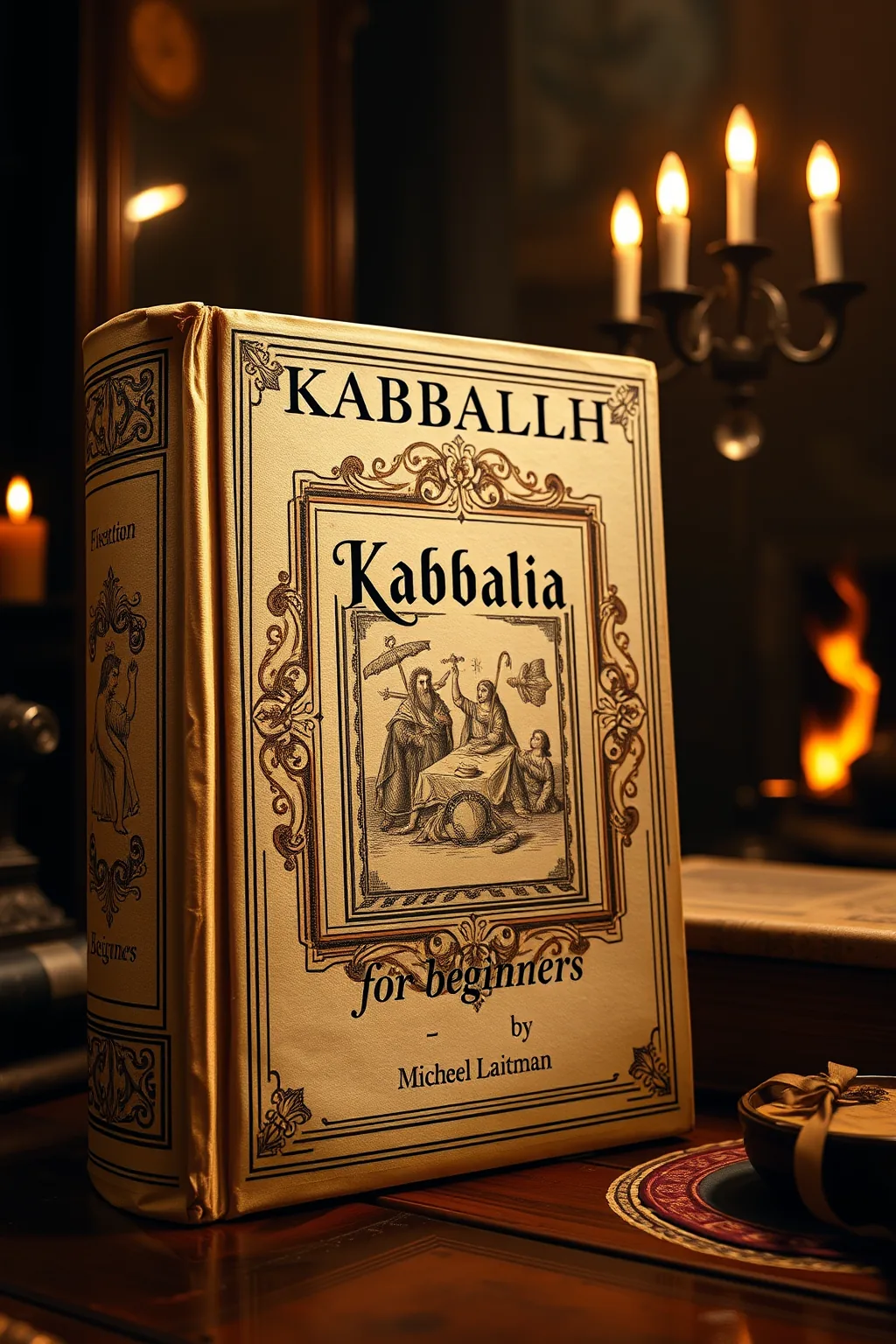
Kabbalah for Beginners
 74
74

Kabbalah for Beginners
Michael Laitman’s "Kabbalah for Beginners," first published in 2007, attempts to distill the often-intimidating corpus of Kabbalistic literature into digestible portions. The book’s strength lies in its systematic approach, breaking down the historical development and core tenets of this ancient wisdom tradition. Laitman’s explanation of the structure of the world, particularly the concept of the Creator as the force of bestowal, offers a clear entry point for those unfamiliar with the subject. However, the work sometimes leans towards a very specific interpretation of Kabbalah, primarily that of the Laitman's own disseminative organization, which may feel less inclusive to those exploring broader Kabbalistic schools of thought. The section on making life better feels somewhat idealistic, though the intention is undeniably constructive. It is a competent primer, particularly for those aligned with its specific pedagogical approach.
📝 Description
74
Michael Laitman's Kabbalah for Beginners was first published in 2010.
This book introduces the core ideas of Kabbalah, a tradition of Jewish mysticism. It aims to make complex spiritual concepts understandable for people curious about life's deeper questions. The text covers the history of Kabbalah, from its origins to its development through key figures and periods. It explains the fundamental worldview of Kabbalah, including how reality is structured and the forces that shape it.
The book then moves to practical applications. It suggests methods for using Kabbalistic principles to improve personal life and contribute to the well-being of future generations. It addresses common questions about the purpose of existence and ways to find greater satisfaction in life. The goal is to provide a clear framework for understanding the world and one's place within it.
Kabbalah for Beginners situates itself within the lineage of Kabbalistic thought, a mystical interpretation of the Torah originating in medieval Spain and earlier Jewish sources. This tradition seeks to understand the divine nature and the hidden connections within creation. It often employs symbolic language and allegorical interpretations to describe spiritual realities and the path toward spiritual attainment. The book draws on this rich, often esoteric, heritage to offer a structured approach to its study.
💡 Why Read This Book?
• Understand the historical genesis of Kabbalah, including its foundational figures and the initial discoveries made by ancient Kabbalists, providing context beyond mere spiritual theory. • Grasp the Kabbalistic model of reality and the Creator as the force of bestowal, offering a unique metaphysical framework for understanding existence. • Learn practical methods for improving one's life and fostering well-being for future generations, directly applying principles discussed within the text.
⭐ Reader Reviews
Honest opinions from readers who have explored this book.
❓ Frequently Asked Questions
When was Kabbalah for Beginners first published?
Kabbalah for Beginners by Michael Laitman was first published on January 1, 2007. This edition aimed to make the complex wisdom of Kabbalah accessible to a wider audience seeking answers to life's essential questions.
What are the main subjects covered in Kabbalah for Beginners?
The book covers the origins and development of Kabbalah, the discoveries made by its ancient practitioners, the structure of the world according to Kabbalistic thought, and practical methods for improving one's life.
Who is Michael Laitman?
Michael Laitman is an Israeli physicist and author who became a disciple of Rabbi Baruch Ashlag. He is known for his extensive writings and teachings on Kabbalah, aiming to disseminate its wisdom globally.
Is this book suitable for someone with no prior knowledge of Kabbalah?
Yes, the book is specifically designed as an introduction for beginners. It breaks down complex concepts into understandable parts, guiding readers from the historical context to practical applications of Kabbalistic wisdom.
What kind of questions does the book aim to answer?
It addresses fundamental questions about life's purpose, the reasons for pain and suffering, and how to lead a more enjoyable and fulfilling existence, all through the lens of Kabbalistic teachings.
Does the book discuss the historical development of Kabbalah?
Yes, a significant portion of the book is dedicated to explaining how the wisdom of Kabbalah came about, who discovered and developed it, and its historical progression over time.
🔮 Key Themes & Symbolism
The Structure of Reality
The book posits that reality is governed by a higher spiritual force, termed the Creator, whose fundamental nature is bestowal and love. It explains that the perceived multiplicity of the world stems from a single spiritual source, and that human existence is designed to perceive this unity. Laitman details how this singular force manifests through various levels and worlds, all interconnected and orchestrated for the ultimate purpose of bestowing goodness upon creation. Understanding this structure is presented as the key to comprehending one's place and purpose within the grand design.
The Purpose of Life
According to the Kabbalistic framework presented, the ultimate purpose of life is for creation to attain the likeness of the Creator, meaning to achieve a state of complete bestowal and love. This journey involves the gradual revelation of the Creator to the created beings. The book suggests that humanity's current state of egoism and separation is a necessary phase for this revelation to occur, providing the contrast needed to appreciate the spiritual goal. The process is seen as an unfolding, guided by inherent spiritual laws.
Kabbalah as a Science
Laitman presents Kabbalah not merely as a philosophy or religion, but as a science that explores the spiritual realms with the same rigor as physics explores the material world. It claims to offer verifiable laws and principles governing spiritual phenomena. The book emphasizes that Kabbalah was discovered and developed by individuals who attained direct experience of these higher realities, providing a method for others to achieve similar perceptions and understanding through specific practices and study.
Personal Transformation
A central theme is the potential for personal transformation through the study and application of Kabbalistic principles. The book outlines how understanding the structure of reality and the purpose of life can fundamentally alter one's perception and approach to daily challenges. It provides guidance on how to shift from an egoistic orientation to a more altruistic one, thereby aligning oneself with the Creator's nature and achieving inner peace and fulfillment.
💬 Memorable Quotes
Direct passages from the work, attributed to the author.
“We want to know why we are here, why there is pain and how we can make life more enjoyable.”
— This statement captures the universal human yearning for meaning and relief from suffering, which the book positions as the primary impetus for exploring the wisdom of Kabbalah.
“The four parts of this book tell us exactly how the wisdom of Kabbalah came about, who discovered and developed it, and what they discovered.”
— This highlights the book's structured approach to introducing Kabbalah, promising a comprehensive overview of its origins, key figures, and foundational discoveries.
“Afterwards, the book tells us about the world we live in and finally, it explains how we can make our lives better for ourselves and for our children.”
— This outlines the book's progression from theoretical understanding of the world to practical application, emphasizing the generational impact of applying Kabbalistic principles.
“A book for everyone who is seeking answers to life's essential questions.”
— This broad claim positions the work as a universally relevant guide for anyone questioning their existence, purpose, or the nature of reality.
“Part One discusses...”
— This suggests a methodical and segmented approach to learning, indicating that the initial sections lay the groundwork for subsequent, more complex discussions.
🌙 Esoteric Significance
Tradition
This work aligns with the modern dissemination of Kabbalah, specifically the tradition originating from Rabbi Yehuda Ashlag and continued by his disciples, including Michael Laitman. It represents a contemporary effort to present Kabbalistic wisdom, traditionally transmitted orally and through dense, often allegorical texts, in a format accessible to a global, secular audience. It departs from older forms by emphasizing Kabbalah as a practical science for self-improvement and understanding the universe, rather than solely focusing on mystical experience or divine revelation in the traditional sense.
Symbolism
Key symbols within Kabbalah, often explored in such introductory texts, include the Tree of Life (Etz Chaim), which symbolizes the structure of the spiritual worlds and the path of emanation from the Creator to creation. Another crucial symbol is the concept of 'Light' (Ohr), representing divine energy and consciousness that fills the universe and is the essence of bestowal. The book likely interprets these symbols not just as abstract representations but as integral components of a spiritual science that governs reality and human consciousness.
Modern Relevance
Laitman's approach to Kabbalah has influenced contemporary spiritual seekers interested in a structured, rational understanding of esoteric concepts. His teachings, disseminated globally through various media, connect with individuals looking for frameworks beyond mainstream religions or purely secular philosophies. This work serves as an entry point for those drawn to Kabbalistic ideas but perhaps intimidated by traditional texts, resonating with a modern desire for practical spiritual tools and a coherent worldview.
👥 Who Should Read This Book
• Absolute beginners curious about the foundational principles of Kabbalah seeking a structured, non-intimidating introduction. • Individuals grappling with existential questions about life's purpose, suffering, and meaning who desire a spiritual or metaphysical framework. • Students of comparative religion or esoteric traditions interested in understanding a specific, modern interpretation of Kabbalistic thought and its historical context.
📜 Historical Context
Published in 2007, Michael Laitman's "Kabbalah for Beginners" emerged during a period of increased global interest in esoteric and spiritual traditions, partly fueled by New Age movements and a growing dissatisfaction with purely materialistic worldviews. Kabbalah, in particular, had seen a resurgence in popular consciousness, often filtered through popular culture or simplified interpretations. This work aimed to provide a more systematic and traditional approach, contrasting with some of the more eclectic or less structured presentations of Kabbalistic ideas circulating at the time. It situates itself within the lineage of Kabbalah as transmitted through figures like Rabbi Yehuda Ashlag, positioning its teachings as a continuation of this specific interpretive school. While not directly engaging with contemporary academic scholarship on Kabbalah, it addressed a public hunger for understanding a tradition with roots stretching back to medieval Spain and earlier, offering an alternative to mystical traditions like Christian Cabala, which had a different historical trajectory.
📔 Journal Prompts
The Creator as the force of bestowal: how does this concept challenge your current understanding of divine nature?
Reflect on the historical development of Kabbalah, noting one key figure or period that stands out.
Analyze the book's explanation of the world's structure: what are the implications for your daily life?
Consider the purpose of life as presented: how does this goal compare to your personal aspirations?
The concept of 'Light' as divine energy: what does this symbolic meaning evoke for you?
🗂️ Glossary
Kabbalah
An esoteric tradition within Judaism that seeks to understand the nature of God and the universe through mystical interpretation of the Torah and other sacred texts. It offers a framework for spiritual ascent and connection.
Creator
In Kabbalistic terminology, the ultimate spiritual force or source of all existence, characterized by its nature of bestowal and love. It is not necessarily anthropomorphic but represents the underlying principle of giving.
Bestowal
The fundamental attribute of the Creator and the ultimate goal for creation in Kabbalah. It refers to the act of giving, loving, and uniting, contrasting with egoism or reception for one's own sake.
Worlds (Olamot)
Kabbalah describes a series of spiritual realms or worlds through which divine emanation descends, becoming progressively more concealed. These worlds represent different levels of reality and consciousness.
Egoism
The inherent desire to receive pleasure and benefit for oneself. In Kabbalah, excessive egoism is seen as the primary obstacle to spiritual attainment and connection with the Creator.
Torah
The first five books of the Hebrew Bible, considered by Kabbalists to be a profound source of mystical wisdom containing secrets about the creation and spiritual laws of the universe.
Light (Ohr)
Represents divine energy, consciousness, and bestowal that emanates from the Creator. It is the fundamental substance of spiritual reality and the force that sustains all existence.