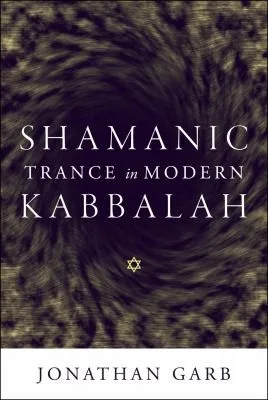
Shamanic trance in modern Kabbalah
 62
62

Shamanic trance in modern Kabbalah


Ophelia Vance (Mystical Literature Reviewer) — Jonathan Garb's "Shamanic Trance in Modern Kabbalah" is a groundbreaking exploration that masterfully bridges the seemingly disparate worlds of shamanic ecstasy and Kabbalistic mysticism. Garb's erudition shines as he unveils the profound parallels and potential syncretisms between these ancient traditions. This book offers invaluable insights into the transformative power of altered states of consciousness as a pathway to divine revelation, challenging conventional interpretations of both Kabbalah and shamanism. For the dedicated practitioner and the discerning scholar alike, Garb provides a rich tapestry of thought, revealing hidden connections and offering a compelling new lens through which to view spiritual ascent.
📝 Description
62
Jonathan Garb's 2019 book examines shamanic trance within modern Kabbalistic practice.
Jonathan Garb's "Shamanic Trance in Modern Kabbalah" investigates the connections between shamanic ecstatic states and Kabbalistic mysticism. The book argues that trance, a key element in shamanism, offers a framework for understanding and deepening Kabbalistic experiences. Garb analyzes how symbolic languages and rituals, common to both traditions, can lead to altered states of consciousness. He explores the ways these practices aim for direct experience of the divine.
The work synthesizes elements from these distinct spiritual paths. It highlights a shared human aspiration for transcendence and the varied methods developed to achieve it. Garb's analysis provides a bridge between the experiential aspects of shamanism and the theoretical structure of Kabbalah. This allows for a reevaluation of both traditions through a comparative lens.
This book engages with the esoteric study of Kabbalah, a Jewish mystical tradition focused on divine emanations and the nature of God. It situates modern Kabbalistic interpretations within a broader context of altered states of consciousness, drawing parallels with shamanic practices found across various cultures. The work explores how these ecstatic techniques, often aimed at achieving direct spiritual apprehension, can be seen as complementary rather than contradictory to the systematic approach of Kabbalistic thought. It contributes to discussions on the experiential dimensions of esoteric traditions.
💡 Why Read This Book?
Uncover the hidden resonances between shamanic altered states and the profound ascent of Kabbalistic mysticism. This book offers a unique perspective for spiritual seekers and scholars interested in experiential spirituality and the universal quest for divine connection. Explore how trance practices can deepen Kabbalistic understanding and unlock esoteric knowledge, providing a path to profound personal transformation and a richer appreciation of ancient wisdom traditions.
⭐ Reader Reviews
Honest opinions from readers who have explored this book.
❓ Frequently Asked Questions
What is the primary focus of this book?
The book's core focus is the intricate relationship and potential integration between shamanic trance practices and the esoteric teachings of modern Kabbalah, exploring how altered states can enhance Kabbalistic understanding.
Is prior knowledge of Kabbalah or Shamanism required?
While some familiarity is beneficial, Garb's accessible writing style makes the complex concepts understandable for serious students and intellectually curious readers new to these traditions.
What kind of reader would most appreciate this book?
This book is ideal for students of mysticism, Kabbalah, comparative religion, and those interested in altered states of consciousness, spiritual exploration, and the intersection of ancient wisdom traditions.
Does the book offer practical applications of trance techniques?
The book discusses the theoretical and historical applications of trance within Kabbalistic contexts, encouraging deeper personal contemplation and study rather than providing direct instructional techniques.
What makes this book unique in its field?
Its uniqueness lies in the unprecedented synthesis of shamanic trance methodologies with the intricate symbolic and mystical framework of Kabbalah, offering a novel perspective on spiritual practice.
🔮 Key Themes & Symbolism
The Convergence of Ecstasy and Contemplation
This theme examines the profound synergy between the ecstatic, altered states characteristic of shamanic traditions and the contemplative, intellectual rigor of Kabbalistic study. It explores how the direct, often visceral, experience of trance can serve as a potent catalyst for unlocking deeper layers of meaning within the complex symbolic universe of Kabbalah. Garb investigates the historical and psychological bridges that allow these seemingly disparate paths to inform and enrich one another, revealing a universal human drive towards divine communion facilitated by diverse techniques.
Symbolism and the Unseen Realms
Central to this theme is the exploration of how both shamanism and Kabbalah utilize rich symbolic language to navigate and articulate experiences of the unseen realms. Garb examines the archetypal imagery, divine names, and visionary landscapes that populate these traditions. The book scrutinizes how the trance state can amplify the perception and understanding of these symbols, transforming them from abstract concepts into living, dynamic forces that guide the practitioner through spiritual ascent and revelation. It highlights the shared human endeavor to map the ineffable through metaphor and sign.
Modern Relevance of Ancient Practices
This theme addresses the enduring power and applicability of these ancient mystical disciplines in the contemporary world. Garb posits that the techniques and insights derived from shamanic trance and Kabbalistic contemplation offer potent tools for personal growth, spiritual liberation, and a deeper connection to the sacred in an often fragmented and materialistic age. The book seeks to demonstrate that these traditions are not relics of the past but vibrant, living systems capable of providing profound guidance and transformative experiences for modern seekers.
💬 Memorable Quotes
Direct passages from the work, attributed to the author.
“Kabbalah's Tree of Life becomes a cosmic map for the soul's ascent.”
— This highlights the Kabbalistic Tree of Life as a symbolic framework for spiritual journeying, implying that its intricate structure guides the practitioner through various planes of existence towards higher consciousness.
“Where the shaman journeys outward, the Kabbalist ascends inward.”
— This contrasts the outward-focused exploration of the shaman with the inward-directed spiritual ascent of the Kabbalist, suggesting different but potentially complementary paths to transcendence.
“Ancient wisdom whispers through the traces of the trance.”
— This emphasizes the idea that trance states can act as conduits for receiving ancient, forgotten knowledge or divine insights that resonate deeply with primal spiritual truths.
“The divine is not found, but remembered in the depths of consciousness.”
— This suggests that the spiritual essence is an inherent part of our being, and mystical practices like trance and Kabbalah help us to recollect or reawaken this innate divine connection.
💡 Key Ideas
Editorial paraphrase of the work's core concepts — not direct quotes.
The veil between worlds thins in the ecstatic dance.
This quote suggests that altered states of consciousness, akin to those achieved in shamanic trance, can facilitate direct perception of spiritual realities, thinning the perceived boundary between the material and the mystical.
🌙 Esoteric Significance
Tradition
This work directly engages with the esoteric traditions of Kabbalah, a mystical interpretation of Jewish scripture and tradition, and Shamanism, a set of indigenous spiritual practices focused on journeying into the spirit world. It seeks to find common ground and potential synergistic applications between these distinct yet profoundly potent paths of spiritual exploration and divine communion.
Symbolism
The book examines the rich symbolic landscapes of both traditions. For Kabbalah, this includes the Sephirot of the Tree of Life, divine names, and angelic hierarchies. For Shamanism, it encompasses spirit animals, visionary journeys, and elemental forces. Garb explores how altered states of consciousness can activate and deepen the understanding of these potent symbols, revealing their interconnectedness and their role in facilitating spiritual transformation.
Modern Relevance
In an age often characterized by secularism and disconnection, the book underscores the enduring relevance of shamanic trance and Kabbalistic mysticism as pathways to authentic spiritual experience and profound self-understanding. It offers modern seekers potent frameworks and conceptual tools for reading through the inner realms, fostering a deeper connection to the sacred, and cultivating a more integrated and meaningful existence.
👥 Who Should Read This Book
This book is a vital resource for dedicated students of Kabbalah seeking to deepen their experiential understanding beyond textual study. It is also essential for practitioners and scholars of Shamanism interested in the potential for syncretism with Western esoteric traditions. Spiritual seekers exploring the nature of consciousness, altered states, and the universal quest for transcendence will find invaluable insights. Furthermore, academics in comparative religion, mysticism, and psychology will appreciate its scholarly rigor and its innovative approach to bridging disparate spiritual paradigms.
📜 Historical Context
Jonathan Garb's "Shamanic Trance in Modern Kabbalah" emerges from a contemporary intellectual milieu fascinated by the resurgence of interest in both Western esotericism and indigenous spiritual practices. Written in an era where globalization and digital connectivity have fostered unprecedented cross-cultural exchange, the book reflects a scholarly and spiritual desire to find unifying principles across diverse traditions. The late 20th and early 21st centuries have seen a significant academic and popular engagement with altered states of consciousness, mysticism, and the exploration of non-ordinary reality. Garb's work is situated within this broader context, offering a sophisticated synthesis that moves beyond mere comparison to suggest a potential for deeper integration and understanding of humanity's perennial quest for the divine.
📔 Journal Prompts
Reflect on a personal experience that felt like a 'thinning of the veil' between worlds. How did it impact your perception?
Consider the Kabbalistic Tree of Life. If you were to map a personal spiritual journey onto it, what would be your primary points of focus?
What symbols from nature or your inner landscape resonate most strongly with you? How might these relate to archetypal spiritual imagery?
Imagine a dialogue between a Kabbalist and a shaman. What common ground and what differences in their spiritual quest might emerge?
How can the concept of 'remembering' the divine, rather than 'finding' it, shift your approach to spiritual practice?
🗂️ Glossary
Kabbalah
A system of Jewish mysticism that explores the nature of God, the creation of the universe, and the spiritual journey of the soul through esoteric interpretation of religious texts.
Shamanism
A broad category of indigenous spiritual practices characterized by a practitioner's ability to enter into a trance state to communicate with the spirit world.
Trance State
An altered state of consciousness characterized by a deep relaxation, heightened suggestibility, and a profound sense of detachment from ordinary reality.
Sephirot
The ten divine emanations or attributes described in Kabbalistic cosmology, forming the structure of the Tree of Life.
Esotericism
Teachings or practices that are intended for or understood by only a small number of people with a specialized knowledge or interest.
This book appears in 1 collection
🔮 Readers Also Liked
Browse all →









More by Jonathan Garb
All books →
From the “Kabbalah” Collection
View all →








More Free Kabbalah & Jewish Mysticism Books
View all →