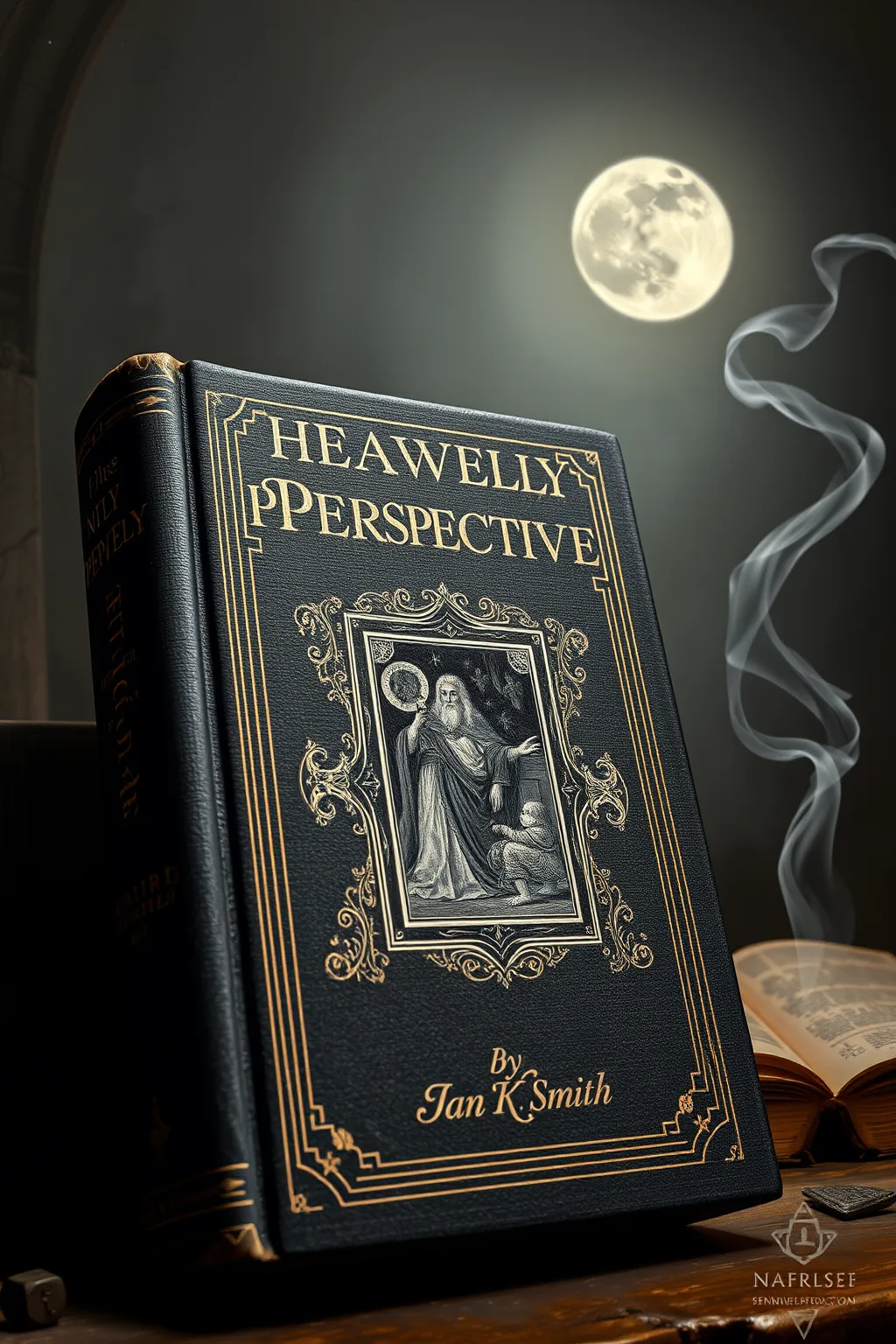
Heavenly Perspective
 61
61

Heavenly Perspective



Celeste Moreau (Divination & Symbolism Reviewer) — Ian K. Smith's 'Heavenly Perspective' is a luminous exposition, illuminating the profound mystical currents within Kabbalah and Jewish thought. Smith’s scholarly yet accessible approach makes complex theological and historical interpretations of Paul's letters digestible for the modern reader. He expertly navigates the intricate symbolism, offering esoteric insights that resonate deeply with seekers of hidden knowledge. This book is an essential companion for anyone drawn to the contemplative traditions of Judaism, offering a rigorous yet inspiring guide to a more profound understanding of faith and divine connection. Its strength lies in bridging historical scholarship with authentic mystical experience, making it invaluable for both practitioners and academic students of esotericism.
📝 Description
61
Ian K. Smith's 'Heavenly Perspective' (2023) deciphers esoteric meanings in biblical texts, especially Paul's epistles.
Ian K. Smith's 'Heavenly Perspective' examines the Kabbalistic framework underlying Jewish mysticism. The book focuses on interpreting biblical passages, particularly the epistles of Paul, to reveal hidden layers of meaning. Smith uses mystical interpretation to decode the symbolism present in Jewish history and texts. The aim is to help readers move beyond ordinary perception towards a more spiritual awareness.
This work is intended for those seeking spiritual insight and direct experience of the sacred. It suggests a path toward inner illumination where divine truths become accessible. The book promises to reshape understanding of ancient spiritual concepts and expand one's spiritual outlook.
This book sits within the tradition of Kabbalah, a system of Jewish mysticism that seeks to understand the divine nature and the creation of the universe. It draws upon the Zohar and other foundational Kabbalistic texts to interpret biblical narratives and laws. The work connects these ancient teachings to the concept of divine communion, suggesting pathways for individuals to experience the sacred directly. It is part of a long history of esoteric interpretation within Judaism that aims to uncover deeper, hidden meanings beyond the literal text.
💡 Why Read This Book?
Embark on an illuminating journey into the heart of Jewish mysticism. 'Heavenly Perspective' offers a unique lens through which to understand biblical texts, particularly the epistles of Paul, revealing their profound esoteric dimensions. Ideal for seekers of spiritual wisdom, scholars of Kabbalah, and practitioners of contemplative prayer, this book unlocks hidden layers of meaning, fostering a deeper connection to the divine. Discover ancient symbolism and historical insights that will transform your understanding of faith.
⭐ Reader Reviews
Honest opinions from readers who have explored this book.
❓ Frequently Asked Questions
What is the primary focus of 'Heavenly Perspective'?
The book primarily focuses on the esoteric interpretations of biblical texts, particularly the epistles of Paul, within the framework of Kabbalah and Jewish Mysticism, exploring hidden knowledge and divine symbolism.
Is prior knowledge of Kabbalah required to read this book?
While prior knowledge can enhance understanding, Smith's writing is crafted to be accessible. He guides readers through complex concepts, making it suitable for both initiates and those new to Jewish mysticism.
What is the historical scope of the book?
The book delves into the historical context of early Christianity and Judaism, examining how mystical interpretations evolved and influenced these traditions, particularly in relation to Paul's writings.
How does 'Heavenly Perspective' relate to the study of Paul's letters?
It offers a fresh, mystical perspective on Paul's epistles, moving beyond literal readings to uncover symbolic meanings and spiritual insights that were central to ancient esoteric traditions.
Who is the intended audience for this book?
The intended audience includes scholars of religion, students of mysticism and Kabbalah, spiritual seekers, and anyone interested in a deeper, esoteric understanding of biblical texts and Jewish tradition.
🔮 Key Themes & Symbolism
Kabbalistic Interpretation of Scripture
This theme looks at the practice of viewing sacred texts not merely as historical or narrative accounts, but as layered repositories of divine wisdom, accessible through esoteric methods. Smith explores how the principles of Kabbalah, such as gematria, notarikon, and temurah, can unlock profound spiritual meanings within biblical passages, revealing a cosmic blueprint and the divine interconnectedness of all things. It emphasizes the transformation of the reader's consciousness through scriptural contemplation, fostering a direct apprehension of the divine presence.
The Mystical Theology of St. Paul
This section re-examines the epistles of St. Paul through the lens of Jewish mysticism, proposing that his teachings are deeply rooted in esoteric traditions. Smith unpacks concepts such as the 'Christ within,' the nature of spiritual resurrection, and the heavenly realms as described by Paul, interpreting them as allegorical representations of mystical states and divine realities. The focus is on identifying the common ground between Paul's Gnostic-tinged theology and the mystical practices and beliefs prevalent in ancient Judaism, offering a harmonized understanding.
The Ascent of the Soul
Central to the book is the concept of the soul's journey towards divine union, a core tenet in many mystical traditions. Smith outlines the stages and challenges inherent in this spiritual ascent, drawing parallels between Kabbalistic concepts of the Sephirot and Paul's descriptions of heavenly ascent. The theme explores the practical application of mystical knowledge for personal transformation, emphasizing the purification of the self and the cultivation of divine consciousness as pathways to experiencing the 'heavenly perspective' in this life.
💬 Memorable Quotes
Direct passages from the work, attributed to the author.
“Within the letter lies the spirit, and within the spirit, the divine.”
— This highlights the book's approach to scripture: the literal text (letter) contains deeper spiritual truths (spirit), which in turn reveal the essence of the divine.
“Paul's words are keys, not mere pronouncements.”
— This suggests that the epistles of Paul are not static doctrines, but dynamic tools that, when understood mystically, can unlock deeper spiritual understanding and experience.
“The celestial is not distant, but an inner landscape waiting to be explored.”
— This emphasizes the immanence of the divine and the spiritual realms, positioning them not as external locations, but as dimensions of consciousness accessible through inner work.
“To see with the divine eye is to perceive the unity beneath all multiplicity.”
— This speaks to the transformative power of a spiritualized consciousness, where the ordinary distinctions and divisions of the material world dissolve into an awareness of fundamental oneness.
💡 Key Ideas
Editorial paraphrase of the work's core concepts — not direct quotes.
The veil between worlds is thinner than we perceive.
This quote speaks to the inherent presence of the divine and the spiritual realm, suggesting that access is often obstructed by our own limited perception, rather than by an insurmountable cosmic barrier.
🌙 Esoteric Significance
Tradition
This work is deeply rooted in the Kabbalistic tradition of Judaism, a mystical path that seeks to understand the divine nature and the creation of the universe through symbolic interpretation of scripture and contemplation of divine emanations. It also engages with early Christian Gnosticism and Hermeticism, highlighting shared esoteric principles and the pursuit of direct spiritual experience and divine knowledge, often referred to as Gnosis.
Symbolism
The book extensively explores the strong symbolism inherent in Kabbalistic cosmology, such as the Tree of Life, and the numerical and alphabetical significance within Hebrew scripture. It deciphers the symbolic language employed by St. Paul, interpreting concepts like 'spiritual body' and 'heavenly realms' as metaphors for mystical states of consciousness and divine realities, revealing a profound symbolic grammar of the soul's journey.
Modern Relevance
In an age often characterized by materialism and spiritual searching, 'Heavenly Perspective' offers a timeless guide to inner transformation. Its exploration of divine symbolism, scriptural depth, and the ascent of the soul provides practical wisdom for contemporary seekers. The book’s emphasis on a holistic, integrated understanding of faith and consciousness remains highly relevant for those seeking to reconcile intellectual inquiry with profound spiritual experience.
👥 Who Should Read This Book
This book is a treasure for the dedicated spiritual seeker, offering pathways to deeper contemplation and divine connection. Scholars of religious studies, particularly those focused on Jewish Mysticism, Kabbalah, and early Christian theology, will find Smith's nuanced interpretations invaluable. Practitioners of meditation and contemplative prayer will discover rich material for their devotional practices, enhancing their understanding of the soul's journey. Beginners to esoteric studies will find a well-guided introduction to complex mystical concepts, presented with clarity and clear insights, making it accessible yet deeply rewarding.
📜 Historical Context
Published in an era of renewed interest in comparative religion and esoteric studies, 'Heavenly Perspective' emerged as a significant contribution to understanding the mystical underpinnings of Western religious thought. It stands against a backdrop where scholars and seekers alike were re-evaluating traditional interpretations of biblical texts, seeking deeper, often mystical, meanings. The book draws heavily on the rich intellectual heritage of Kabbalah, a Jewish mystical tradition that flourished for centuries, and contextualizes the writings of St. Paul within this vibrant, often hidden, stream of spiritual inquiry. By bridging early Christian theology with Jewish mysticism, Smith's work reflects a broader movement towards ecumenical understanding and the recognition of shared spiritual roots across different faiths and historical periods.
📔 Journal Prompts
Reflect on a biblical passage that has always resonated with you. How might a Kabbalistic lens reveal new layers of meaning?
Consider St. Paul's concept of the 'spiritual body.' What does this mean to you experientially, and how can one cultivate this aspect of being?
What does the 'heavenly perspective' mean in the context of your daily life? How can you integrate this awareness into mundane activities?
Explore the symbolism of the Tree of Life. How do its Sephirot relate to your own personal growth and spiritual development?
If the 'veil between worlds' is thinner than we perceive, what practices can help you to perceive more clearly?
🗂️ Glossary
Kabbalah
A system of Jewish mysticism that seeks to understand the divine nature and the creation of the universe through symbolic interpretation of scripture and contemplation of divine emanations, often visualized through the Tree of Life.
Gnosis
A Greek term meaning 'knowledge,' often referring to esoteric or spiritual knowledge that leads to salvation or enlightenment. In mystical traditions, it signifies direct, intuitive apprehension of divine truths.
Sephirot
The ten divine emanations or attributes of God in Kabbalistic cosmology, forming the structure of the Tree of Life, through which God's energy flows into creation.
Esoteric
Intended for or likely to be understood by only a small number of people with a specialized knowledge or interest; relating to mystical, spiritual, or occult truths.
Mysticism
The pursuit of achieving communion with, identity with, or conscious awareness of an ultimate reality, the divine, spiritual truth, or God, through direct experience, intuition, and contemplation.
This book appears in 1 collection
🔮 Readers Also Liked
Browse all →







From the “Kabbalah” Collection
View all →






More Free Kabbalah & Jewish Mysticism Books
View all →