Law of Attraction
 73
73

Law of Attraction
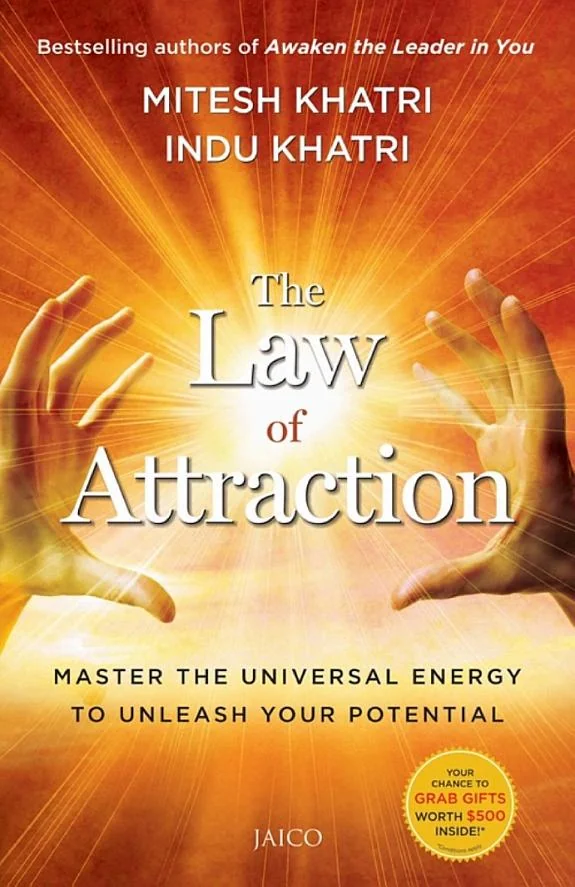
Mitesh and Indu Khatri's "Law of Attraction" functions as a direct-access manual for those ready to believe in their own generative power. The book’s strength lies in its unvarnished, actionable approach, cutting through theoretical dense explanations to provide clear directives. It avoids overly spiritual jargon, instead focusing on the practical application of thought and emotion as tools for life alteration. The concept of "hidden energy within you" is presented not as a mystical enigma but as a latent force to be consciously wielded. A point of contention might be the book's directness; while effective for some, it could feel simplistic to those seeking a deeper philosophical or scientific underpinning. The section discussing the necessity of aligning actions with desires, to avoid merely wishing without doing, offers a crucial, grounded perspective. Ultimately, the work serves its purpose as a catalyst for self-directed change.
📝 Description
73
Mitesh and Indu Khatri's 2016 book presents the Law of Attraction as a practical energetic mechanism.
This book frames the Law of Attraction not as abstract philosophy but as a functional energetic process. It proposes that individuals can shape their external circumstances by directing their internal energy. The central idea is that by consciously managing thoughts and emotions, people can draw desired outcomes and deflect unwanted ones. This allows them to take an active role in creating their lives.
The work is intended for individuals seeking concrete improvements in their lives, particularly in achieving happiness and success. It speaks to those whose present situations do not match their ambitions and who are open to using energetic principles for personal change. Readers interested in self-help, manifestation practices, and the link between internal states and external events will find this book directly applicable.
The Law of Attraction concept gained prominence in the early 20th century through New Thought writers like Wallace Wattles and William Walker Atkinson. This book connects to that tradition by framing manifestation within a modern self-help approach. It echoes the idea that thoughts broadcast an energetic signal, influencing reality, a concept explored in various spiritual and metaphysical traditions. The book touches on how focused belief and the release of negative emotions are seen as crucial for aligning with desired outcomes.
💡 Why Read This Book?
• Understand the practical mechanics of focused intent as presented by Mitesh and Indu Khatri, moving beyond abstract notions to actionable mental exercises for personal transformation. • Learn to identify and recalibrate your emotional output, a core concept in the book, to actively attract desired outcomes rather than passively accepting circumstances. • Grasp the principle of conscious energy manipulation, a central theme in the 2016 publication, to actively shape your reality towards greater happiness and success.
⭐ Reader Reviews
Honest opinions from readers who have explored this book.
❓ Frequently Asked Questions
When was "Law of Attraction" by Mitesh Khatri and Indu Khatri first published?
The book "Law of Attraction" by Mitesh Khatri and Indu Khatri was first published on January 22, 2016. This publication date places it within a period of renewed interest in manifestation and self-empowerment literature.
What is the core principle of the Law of Attraction as explained in the book?
The core principle is that your thoughts and feelings emit an energetic frequency. According to the book, this frequency attracts experiences, people, and circumstances that match it, meaning you attract more of what you focus on, whether positive or negative.
Does the book offer practical steps for applying the Law of Attraction?
Yes, the book is designed to be practical. It guides readers on how to consciously use their thoughts and emotions, visualize desires, and cultivate belief to alter their life circumstances and attract abundance and happiness.
Who are the authors, Mitesh Khatri and Indu Khatri?
Mitesh Khatri and Indu Khatri are the authors of "Law of Attraction." They present themselves as guides to unlocking personal potential through the principles of this energetic law.
Is this book suitable for beginners interested in manifestation?
Absolutely. The book is written to be accessible to beginners, explaining complex energetic concepts in straightforward terms and providing actionable advice for those new to the Law of Attraction.
What kind of transformation does the book promise?
The book promises a transformation of one's life into anything desired, focusing on attracting abundance, happiness, and success. It suggests that by mastering the Law of Attraction, readers can consciously create their ideal reality.
🔮 Key Themes & Symbolism
Energetic Attraction
The work posits that everything, including thoughts and emotions, possesses an energetic vibration. This energy, when focused with intent, acts as a magnet, drawing similar energies and circumstances into one's life. The authors emphasize that this is not mere wishful thinking but a fundamental principle of universal interaction. By understanding and directing this internal energy, individuals can consciously influence their external reality, shifting from passive recipients of fate to active creators of their destiny. This theme underpins the entire premise of the book, making it a guide to energetic manipulation for personal gain.
Conscious Creation
This theme centers on the idea that individuals have the innate power to consciously design their lives. The book argues that circumstances are not random but are the direct result of one's dominant thoughts and feelings. Therefore, achieving desired outcomes requires a deliberate and consistent focus on what is wanted, rather than what is feared or disliked. It encourages readers to take responsibility for their creations and to actively engage in the process of visualization and affirmation to manifest their goals, moving away from a victim mentality towards empowered self-authorship.
Emotional Alignment
A critical component of the Law of Attraction, as presented here, is the alignment of one's emotional state with their desires. The book explains that simply thinking about a goal is insufficient; one must also *feel* as though the goal has already been achieved. This emotional resonance is presented as the key to broadcasting a powerful signal to the universe. Negative emotions like doubt, fear, and worry are seen as counterproductive, creating a dissonance that repels desired outcomes. Cultivating positive emotions and a sense of gratitude is therefore paramount for effective manifestation.
Unlocking Destiny
The book frames the Law of Attraction as a 'power key' to unlocking one's true potential and predetermined destiny. It suggests that individuals often operate with their potential untapped, unaware of the forces they can command. By applying the principles outlined, readers can break free from limiting beliefs and circumstances, accessing a higher level of existence and fulfillment. This involves recognizing the inherent power within and learning to use it to shape a life that is abundant, happy, and successful, thereby fulfilling one's unique path.
💬 Memorable Quotes
Direct passages from the work, attributed to the author.
“You already have everything to transform your life into anything you desire.”
— This statement emphasizes the inherent potential within each individual. It suggests that the power for change doesn't come from external sources but from internal resources that are often overlooked or underestimated, setting a foundational belief for the book's teachings.
“The Law of Attraction is the power key to unlock your destiny.”
— This highlights the central role of the Law of Attraction as a tool for accessing one's full potential and predetermined life path. It positions the concept not just as a philosophical idea but as an active mechanism for self-realization and empowerment.
“consciously attract more of what you want and less of what you don’t want.”
— This succinctly defines the practical application of the Law of Attraction. It underscores the importance of intentionality in directing one's energetic focus towards desired outcomes, thereby gaining control over life experiences.
“use the hidden energy within you to alter your life circumstances”
— This phrase points to the internal, yet often unrecognized, power individuals possess. It frames personal transformation as an act of tapping into and consciously directing this latent energy to effect tangible changes in one's reality.
“Once you read this book, there is no turning back.”
— This is an assertion of the lasting impact the knowledge contained within the book is intended to have. It suggests that understanding the Law of Attraction fundamentally changes one's perspective and empowers them to act differently, initiating an irreversible process of self-directed change.
🌙 Esoteric Significance
Tradition
The Law of Attraction, as explored in this work, draws heavily from the New Thought tradition, which itself is a syncretic blend of various esoteric and religious influences, including Christian Science, Eastern philosophies (particularly Vedanta), and Hermeticism. It departs from some stricter Hermetic principles by emphasizing direct, personal manifestation over a more complex understanding of cosmic law and divine will. However, it retains the core Hermetic idea that "as above, so below," interpreting it through a lens of personal energetic resonance rather than broader cosmic correspondence.
Symbolism
While the book is more focused on direct energetic principles than overt symbolism, the concept of 'energy' itself functions as a primary symbol. This energy, often described as vibrational, represents the unseen forces that govern reality, akin to the concept of 'Prana' in yogic traditions or 'Aether' in older Western philosophies. The 'hidden energy within you' symbolizes untapped potential and the divine spark, suggesting that the power to create lies not externally but within the self, awaiting conscious activation and direction.
Modern Relevance
The principles discussed in "Law of Attraction" remain highly relevant in contemporary self-help, manifestation coaching, and positive psychology circles. Thinkers and practitioners in fields like life coaching, abundance mindset training, and even certain branches of mindfulness often implicitly or explicitly draw upon these ideas. The book's accessible language makes it a gateway for many into exploring concepts that echo in practices found in modern spiritual movements and online manifestation communities.
👥 Who Should Read This Book
• Individuals seeking practical methods to influence their life circumstances, especially those feeling stuck or unfulfilled, will find actionable advice for applying energetic principles. • Beginners to metaphysical concepts and self-help literature can use this book as an accessible entry point to understanding manifestation and personal power. • Those interested in the intersection of thought, emotion, and reality, who are open to exploring non-traditional approaches to achieving happiness and success.
📜 Historical Context
The early 20th century saw a burgeoning interest in spiritual and metaphysical self-improvement, heavily influenced by the New Thought movement. Figures like Wallace Wattles, author of "The Science of Getting Rich" (1910), and William Walker Atkinson, who wrote extensively under pseudonyms about mental science and attraction, laid much of the groundwork. These thinkers proposed that thought could directly influence material reality, a concept that challenged prevailing materialistic scientific views. Mitesh and Indu Khatri's 2016 book, "Law of Attraction," emerges in a later era where these ideas have been repackaged for a mass audience, often intersecting with popular psychology and wellness trends. While not directly engaging with academic debates of the time, this work benefits from and contributes to the ongoing popularization of metaphysical principles, standing in contrast to more skeptical or scientific philosophical currents of the same period.
📔 Journal Prompts
Your current dominant emotions and their potential energetic attraction.
The clearest visualization of your ultimate desire.
Beliefs that might be blocking your manifestation of abundance.
A specific desired outcome and the feeling of its fulfillment.
Identifying 'hidden energy' within you for conscious use.
🗂️ Glossary
Law of Attraction
The principle that positive or negative thoughts bring positive or negative experiences into a person's life, based on the idea that like attracts like through energetic resonance.
Manifestation
The process of bringing something into physical reality through the focused application of thought, emotion, and belief, as guided by the Law of Attraction.
Energetic Frequency
The vibrational rate at which thoughts and emotions are believed to operate, influencing what individuals attract into their lives according to the Law of Attraction.
Visualization
The mental practice of creating vivid images of desired outcomes, used to impress upon the subconscious mind and broadcast a clear energetic signal.
Abundance
A state of having plentiful resources, opportunities, happiness, and success, actively attracted through the principles of the Law of Attraction.
Destiny
An individual's predetermined path or ultimate outcome, which the book suggests can be consciously shaped and unlocked through the application of the Law of Attraction.
Hidden Energy
The latent power or potential residing within an individual, which can be consciously harnessed and directed to alter life circumstances and achieve desired results.
This book appears in 1 collection
🔮 Readers Also Liked
Browse all →








From the “Law of Attraction” Collection
View all →









More Free Occult Philosophy Books
View all →